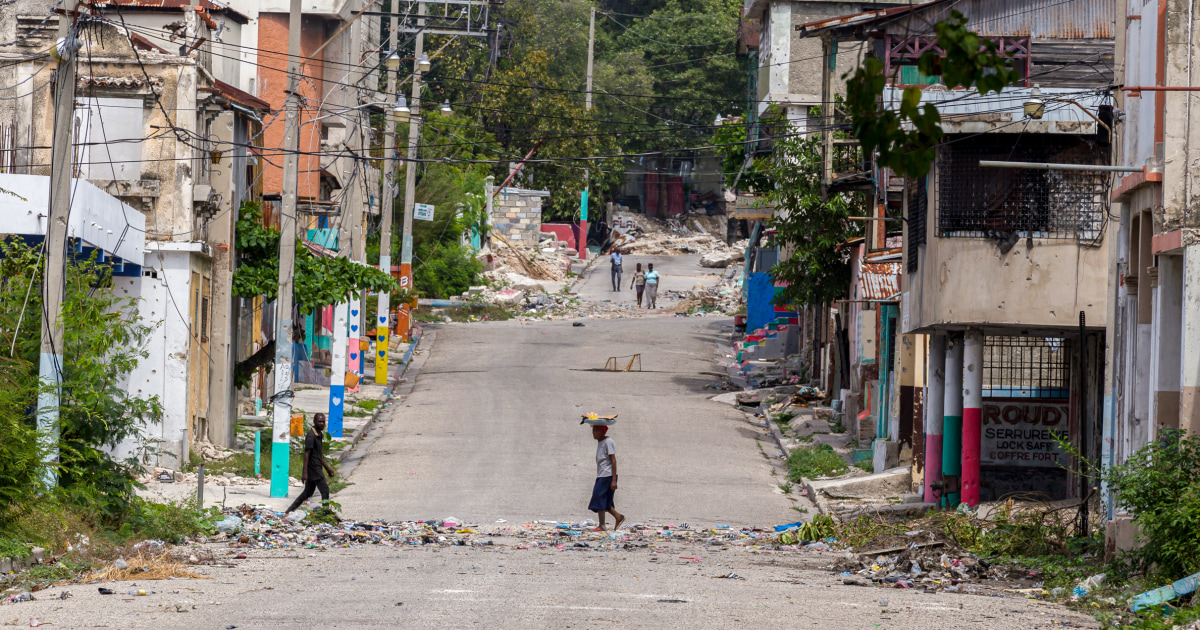
Armed Men in Haiti’s Capital Seize a Top Security Official in Rare High-Level Abduction
Armed men kidnapped a high-ranking security official in Port-au-Prince, Haiti, marking a significant escalation in gang activity. According to reports, this rare high-level abduction signals a growing defiance by criminal groups against the state’s remaining security apparatus and highlights the precarious nature of government authority in the capital.
Details of the Abduction in Port-au-Prince
Armed gangs operating in Haiti’s capital seized a top security official in a targeted operation, an event described by analysts as a rare high-level abduction. While kidnapping has become a pervasive industry in Haiti, the targeting of a senior official within the security architecture suggests a strategic shift in how gangs engage with the state.
The abduction took place in Port-au-Prince, where criminal coalitions now control vast swaths of the city. According to available reports, the operation was carried out by armed men who managed to bypass the official’s security detail, demonstrating a level of intelligence and coordination that exceeds typical opportunistic kidnappings. The official’s identity and specific rank remain central to the ongoing security response, though the act itself serves as a public demonstration of the gangs’ reach.
This incident differs from the thousands of kidnappings affecting the general population. Most abductions in Haiti target middle-class professionals or business owners for financial ransom. Targeting a top security official, however, is often viewed as a political statement or an attempt to extract sensitive intelligence and leverage from the government.
Why This High-Level Abduction Signals a Shift in Gang Strategy
The seizure of a security official is not merely a criminal act but a tactical blow to the Haitian state. For years, gangs have operated with relative impunity, but they typically avoided direct, high-profile confrontations with the highest tiers of the security leadership to avoid triggering massive military crackdowns. This shift indicates a new level of confidence among gang leaders.
- Erosion of State Deterrence: The ability to snatch a top official suggests that the gangs no longer fear the retaliatory capacity of the Haitian National Police (PNH) or the Transitional Presidential Council.
- Psychological Warfare: By targeting the very people responsible for security, gangs send a message to other government employees that no one is safe, regardless of their rank or protection.
- Political Leverage: High-level captives are often used as bargaining chips to demand the release of imprisoned gang members or to force the government to cease specific offensive operations in gang-controlled territories.
According to security analysts, this event reflects the consolidation of power by gang coalitions. Rather than fragmented groups fighting for small neighborhoods, the rise of alliances like “Viv Ansanm” (Live Together) has allowed gangs to pool resources and execute more complex operations, including the abduction of state actors.
The Current State of Gang Control in Haiti
Port-au-Prince is currently divided into a patchwork of territories controlled by rival gang coalitions. These groups have transitioned from street-level crime to exercising quasi-governmental control over the populations living in their zones. They collect “taxes,” control the movement of goods, and manage the distribution of food and water.
The gangs’ influence extends beyond the slums into the heart of the capital. They have previously attacked the National Palace, the main airport, and various police stations. The kidnapping of a top security official is the logical next step in a campaign to completely dismantle the state’s ability to govern.
“The gangs are no longer just fighting for turf; they are fighting for the state itself,” according to regional security reports on the Caribbean crisis.
The gangs utilize high-caliber weapons, often smuggled from the United States, which gives them a firepower advantage over the under-equipped Haitian National Police. This disparity in weaponry makes the protection of high-level officials nearly impossible when gangs decide to launch a coordinated strike.
Timeline of Haiti’s Security Collapse
The current crisis did not emerge in a vacuum. It is the result of a decade of political instability, compounded by a catastrophic assassination and the collapse of formal democratic institutions.
| Year/Period | Key Event | Impact on Security |
|---|---|---|
| 2018-2021 | Political Deadlock | Failure to hold elections led to a power vacuum and the rise of localized gang lords. |
| July 2021 | Assassination of Jovenel Moïse | The killing of the president effectively ended the formal government structure, leaving gangs to fill the void. |
| 2022-2023 | Gang Coalition Formation | Rival groups formed alliances to coordinate attacks on the police and state infrastructure. |
| Early 2024 | Massive Coordinated Attacks | Gangs seized the airport and attacked prisons, releasing thousands of inmates. |
| Present | High-Level Abductions | Gangs move from attacking infrastructure to targeting top-tier security officials. |
This timeline demonstrates a clear trajectory: the gangs have moved from the periphery of society to the very center of political power. The seizure of a security official is a symptom of a state that has lost the monopoly on the legitimate use of force.
The Role of the Multinational Security Support (MSS) Mission
In response to the chaos, an international effort led by Kenya has begun deploying a Multinational Security Support (MSS) mission. The goal is to stabilize Port-au-Prince, secure critical infrastructure like the port and airport, and provide the Haitian National Police with the support needed to reclaim territory from gangs.
However, the deployment has faced significant hurdles. Legal challenges in Kenyan courts and funding shortages have slowed the arrival of personnel. The abduction of a top security official while international forces are attempting to enter the country creates a precarious timing issue. It suggests that the gangs are attempting to “clear the board” or establish absolute dominance before the MSS mission can reach full operational capacity.
The MSS mission is not a UN peacekeeping force in the traditional sense; it is a police-led mission. This means they are tasked with supporting the PNH rather than replacing them. The effectiveness of this mission depends entirely on the ability of the remaining Haitian security forces to collaborate—a task made harder when their own leaders are being kidnapped by the enemy.
For more context on international interventions, see a related explainer on the MSS mission mandate.
Implications for the Transitional Presidential Council
Haiti is currently governed by a Transitional Presidential Council (TPC), a body designed to lead the country back to democratic elections. The kidnapping of a security official is a direct challenge to the TPC’s legitimacy. If the council cannot protect its own security chiefs, it cannot convincingly claim to be providing security for the Haitian people.
The TPC faces a dual crisis: it must negotiate with gang leaders to restore some semblance of order while simultaneously attempting to empower a police force that is plagued by desertion and fear. Many police officers have fled the country or joined the gangs for better pay and protection.
This abduction may force the TPC into a difficult position. They may be pressured to negotiate with gangs to secure the official’s release, which would essentially legitimize the gangs as political actors. Conversely, a failed rescue attempt or the execution of the official would further demoralize the security forces and signal a total surrender of the capital.
Common Misconceptions About the Haiti Crisis
Public perception of the violence in Haiti often oversimplifies the conflict as “random chaos.” However, a closer look at the evidence reveals a more calculated reality.
Misconception 1: Gangs are purely criminal organizations
While they engage in crime, many of Haiti’s gangs have deep ties to the political and business elite. For years, some politicians used gangs as “street muscle” to suppress voters or intimidate rivals. The current violence is partly a result of these “tools” becoming more powerful than the people who originally hired them.
Misconception 2: Kidnappings are only for money
As seen in the case of the top security official, abductions are frequently used as political weapons. Kidnapping is a tool for territorial control, intelligence gathering, and psychological dominance. It is a form of governance by terror.
Misconception 3: The PNH is simply unwilling to fight
The Haitian National Police are often outgunned and unsupported. Many officers operate without basic equipment, fuel for vehicles, or a clear chain of command. The abduction of a top official highlights that the vulnerability isn’t just at the bottom of the ranks, but at the top.
The Humanitarian Toll of Security Instability
Beyond the political drama of high-level abductions, the general population of Port-au-Prince lives in a state of constant peril. The instability that allows gangs to kidnap security officials also prevents the delivery of food, medicine, and humanitarian aid.
According to humanitarian agencies, hundreds of thousands of people are facing acute food insecurity. Gangs control the main roads leading into the city, meaning they decide who eats and who starves. Hospitals are frequently attacked, and medical staff are often kidnapped for ransom, leaving the city with almost no functioning healthcare system.
The “rare high-level abduction” of a security official is a headline-grabbing event, but for the average citizen, it is another sign that the state is absent. When the people responsible for the law are themselves victims of the lawless, the social contract is completely severed.
Comparing Current Abductions to Past Trends
To understand the gravity of the current situation, it is helpful to compare the current wave of kidnappings with previous years of instability in Haiti.
| Feature | Traditional Kidnappings (Pre-2021) | Current Wave (2024) |
|---|---|---|
| Primary Target | Wealthy individuals, expats | Government officials, police, general public |
| Primary Motive | Financial profit (Ransom) | Political leverage and territorial dominance |
| Organization | Small, independent cells | Large, coordinated gang coalitions |
| State Response | Police raids, targeted arrests | State paralysis, reliance on foreign missions |
This comparison shows that kidnapping has evolved from a criminal enterprise into a strategic tool of war. The shift toward targeting state officials marks the transition from a “crime wave” to a “state collapse.”
What to Monitor in the Coming Weeks
The resolution of this abduction will likely set the tone for the next phase of the conflict in Port-au-Prince. Observers should watch for several key indicators:
- The Terms of Release: If the official is released in exchange for political concessions, it will signal a formal recognition of gang power by the TPC.
- The MSS Deployment Speed: Any acceleration in the arrival of Kenyan and other international police may be a direct response to the increasing boldness of the gangs.
- PNH Internal Reaction: Watch for whether this event triggers further desertions within the police force or sparks a renewed, desperate effort to reclaim the capital.
- Gang Communication: Any public statements from coalitions like Viv Ansanm regarding the abduction will reveal their current political goals and demands.
The abduction of a top security official is a stark reminder that in Port-au-Prince, the line between the governor and the governed has blurred. The ability of armed men to seize the state’s own protectors is the ultimate expression of a city under siege.
Frequently Asked Questions
Who was kidnapped in Haiti’s capital?
A top security official was seized by armed men in Port-au-Prince. While specific names are often withheld during active negotiations, the victim is a high-ranking member of the security apparatus responsible for maintaining order in the capital.
Why is this abduction considered “rare”?
While kidnapping is common in Haiti, it typically targets civilians for money. Targeting a high-level security official is rare because it directly challenges the state’s authority and usually triggers a much more aggressive government response.
Which gangs are responsible for the violence in Port-au-Prince?
Much of the current violence is driven by gang coalitions, most notably “Viv Ansanm,” which consists of several smaller gangs that have united to fight the government and control the city’s infrastructure.
What is the international community doing to help?
A Multinational Security Support (MSS) mission, led by Kenya, is currently deploying police officers to Haiti to assist the Haitian National Police in reclaiming territory and securing critical sites.
How has the security situation changed since 2021?
Since the assassination of President Jovenel Moïse in 2021, the central government has effectively collapsed, allowing gangs to expand their territory and move from street crime to political warfare.
For further reading on the regional impact of this crisis, you may find a related analysis on Caribbean security trends useful.
