Urgent: 5.0-Magnitude Quake Hits 33 km ESE of Sarangani, Philippines — USGS – Xinhua
A 5.0-magnitude earthquake struck 33 kilometers east-southeast of Sarangani, Philippines, according to data released by the United States Geological Survey (USGS) and reported by Xinhua. The seismic event occurred offshore, triggering monitoring protocols in a region characterized by frequent tectonic activity. No immediate reports of casualties or widespread structural damage were included in the initial urgent alerts.
Details of the Sarangani Seismic Event
The earthquake was recorded at a magnitude of 5.0, a level categorized as “moderate” on the moment magnitude scale. According to the USGS, the epicenter was located approximately 33 kilometers east-southeast of Sarangani, placing the origin of the quake in the waters bordering the southern tip of Mindanao. Xinhua reported the event as an urgent update, signaling the immediate nature of the seismic detection.
Seismic waves from a 5.0-magnitude event are typically felt by most people in the immediate vicinity. Depending on the depth of the quake—a detail often refined in the hours following the initial alert—the shaking can range from light to strong. In coastal regions like Sarangani, such events often prompt local authorities to monitor for potential sea-level changes, although a 5.0-magnitude quake is generally below the threshold required to trigger a major regional tsunami.
Key Event Data:
- Magnitude: 5.0
- Location: 33 km East-Southeast (ESE) of Sarangani, Philippines
- Primary Sources: United States Geological Survey (USGS), Xinhua
- Classification: Moderate earthquake
Understanding the Magnitude 5.0 Threshold
To understand the impact of the report that an Urgent: 5.0-magnitude quake hits 33 km ESE of Sarangani, Philippines — USGS – Xinhua, it is necessary to examine how seismic energy is measured. The USGS uses the moment magnitude scale, which measures the total energy released by an earthquake.
A magnitude 5.0 earthquake releases significantly more energy than a 4.0, but far less than a 6.0. Because the scale is logarithmic, each whole number increase represents approximately 32 times more energy release. A 5.0 quake is strong enough to cause damage to poorly constructed buildings and can be felt over a wide area, but it rarely causes the total collapse of modern, earthquake-resistant infrastructure.
| Magnitude Range | Classification | Typical Effects |
|---|---|---|
| 2.5 or less | Minor | Usually not felt, but recorded by seismographs. |
| 2.5 to 5.4 | Light/Moderate | Often felt; may cause slight damage to fragile objects. |
| 5.5 to 6.0 | Strong | Can cause slight damage to well-built structures. |
| 6.1 to 6.9 | Strong | Can cause significant damage in populated areas. |
| 7.0 or higher | Major | Serious damage over large areas. |
Geological Context: Why Sarangani is Prone to Quakes
The location of this earthquake is not coincidental. The Philippines sits atop a complex junction of tectonic plates, making it one of the most seismically active countries in the world. Sarangani, located in the southern part of Mindanao, is particularly vulnerable due to its proximity to several major fault systems and trenches.
The region is influenced by the interaction between the Philippine Sea Plate and the Eurasian Plate. Specifically, the Cotabato Trench, which runs along the southern coast of Mindanao, is a primary driver of seismic activity in the Sarangani area. This subduction zone, where one tectonic plate is forced beneath another, creates immense pressure that is periodically released in the form of earthquakes.
Geologists note that the southern Philippines often experiences “swarms” of earthquakes—sequences of events that occur in a relatively short period in a concentrated area. While a 5.0-magnitude quake is moderate, it can sometimes act as a precursor or a follow-up to larger movements within the Cotabato Trench system.
The Philippine Fault System
Beyond the offshore trenches, the mainland is crisscrossed by the Philippine Fault System. This 1,200-kilometer-long fault accommodates the oblique motion between the Philippine Sea Plate and the Sunda Plate. While the Sarangani event was centered ESE of the coast, the interaction between offshore subduction and onshore faulting creates a high-risk environment for the entire Mindanao region.

The Role of USGS and Xinhua in Global Reporting
The rapid dissemination of the news that an Urgent: 5.0-magnitude quake hits 33 km ESE of Sarangani, Philippines — USGS – Xinhua highlights the synergy between scientific monitoring and global news agencies.
The United States Geological Survey (USGS) operates a global network of seismometers. When a quake occurs, the USGS analyzes the wave patterns to determine the epicenter, depth, and magnitude. This data is made available in real-time to governments and the public to facilitate emergency responses.
Xinhua, as a major news agency, serves as a conduit for this technical data, translating scientific alerts into urgent news bulletins. This ensures that local populations and international observers are notified of potential hazards quickly. In the Philippines, the local counterpart to the USGS is the Philippine Institute of Volcanology and Seismology (PHIVOLCS), which provides more granular, localized intensity reports (the “PEIS” scale) to determine how much shaking was actually felt on the ground.
Potential Impacts and Immediate Risks
While a 5.0-magnitude earthquake is rarely catastrophic, the risks are determined by three main factors: depth, distance to population centers, and building quality.
1. Seismic Depth
If the quake is shallow (less than 30 km deep), the shaking is felt more intensely at the surface. If the event 33 km ESE of Sarangani was shallow, residents in the coastal towns of Sarangani and neighboring Davao Occidental likely felt strong jolts. Deeper quakes tend to dissipate more energy before reaching the surface, reducing the risk of damage.
2. Building Vulnerability
In many parts of the Philippines, construction varies widely. Reinforced concrete buildings designed to current seismic codes are likely to withstand a 5.0 event with minimal cracking. However, older structures, informal settlements, or buildings made of lightweight materials may suffer structural failures or collapse.

3. Secondary Hazards
The primary concern following any offshore quake in the Philippines is the potential for a tsunami. However, according to standard seismic protocols, a 5.0-magnitude event is generally insufficient to displace the volume of water necessary to create a destructive tsunami. The second major risk is landslides, particularly in the mountainous terrain of Mindanao, where saturated soil from seasonal rains can be destabilized by moderate shaking.
Comparative Analysis: Recent Seismic Activity in Mindanao
Mindanao has a history of significant seismic events that provide a baseline for evaluating the Sarangani quake. For instance, the region has experienced earthquakes exceeding magnitude 6.0 in recent years, which caused substantial damage to infrastructure and displaced thousands of residents.
Comparing the 5.0 event to these larger quakes shows a marked difference in destructive potential. While a 6.0+ event can level villages, a 5.0 event typically results in “nuisance” damage—broken glass, fallen shelves, or minor cracks in plaster. However, the psychological impact of frequent moderate quakes can lead to “seismic anxiety” among the local population, who remain vigilant for a larger “Big One.”
For those interested in the broader patterns of regional activity, a related explainer on the Pacific Ring of Fire provides context on why this specific geography is so volatile.
Emergency Protocols for Residents in Seismic Zones
Given the frequency of events like the one reported by the USGS and Xinhua, the Philippine government and international disaster agencies emphasize a set of standard operating procedures for residents of Sarangani and surrounding areas.
- Drop, Cover, and Hold On: The universal standard for immediate safety during shaking to prevent injury from falling debris.
- Evacuation to High Ground: While a 5.0 quake is unlikely to cause a tsunami, residents in low-lying coastal areas are encouraged to move inland if shaking is prolonged or if official sirens sound.
- Infrastructure Checks: After a moderate quake, residents are advised to check gas lines and electrical wiring for leaks or frays before returning to normal activity.
- Monitoring Official Channels: Relying on PHIVOLCS and the National Disaster Risk Reduction and Management Council (NDRRMC) for verified updates rather than social media rumors.
Common Misconceptions About Earthquakes
In the wake of reports like Urgent: 5.0-magnitude quake hits 33 km ESE of Sarangani, Philippines — USGS – Xinhua, several myths often circulate. It is important to clarify these through a scientific lens.
Myth: Earthquakes can be predicted.
Contrary to popular belief, no scientist or agency, including the USGS, can predict the exact day, time, or location of an earthquake. They can only provide probabilities based on historical data and stress accumulation in fault lines.
Myth: A 5.0 quake is always “small.”
While 5.0 is moderate on a global scale, its impact is relative. If a 5.0 quake occurs directly beneath a densely populated city with poor building codes, it can be far more destructive than a 7.0 quake occurring in a remote, uninhabited desert.
Myth: Aftershocks are always smaller.
While most aftershocks are smaller than the mainshock, it is possible for a moderate quake to trigger a larger event on a nearby fault. This is why monitoring continues long after the initial 5.0 event has passed.
FAQs About the Sarangani Earthquake
Was a tsunami warning issued for the Sarangani earthquake?
Based on the 5.0 magnitude reported by the USGS, this event typically does not meet the threshold for a regional tsunami warning. However, residents are always advised to follow local NDRRMC and PHIVOLCS directives for real-time coastal safety.
How far away was the epicenter from the coast?
The epicenter was located 33 kilometers east-southeast (ESE) of Sarangani, meaning the earthquake originated offshore in the sea.
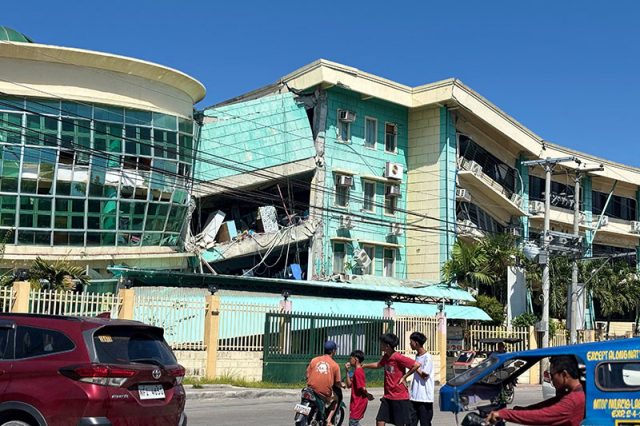
Is a 5.0 magnitude earthquake dangerous?
A 5.0 magnitude earthquake is considered moderate. It can cause damage to poorly constructed buildings and is felt strongly by people nearby, but it rarely causes widespread catastrophe in areas with modern building standards.
Why did Xinhua and USGS both report the event?
The USGS provides the scientific detection and data analysis, while Xinhua acts as a news agency that distributes this urgent information to a global audience to ensure rapid awareness.
What should I do if I feel an aftershock in Mindanao?
The safest action is to “Drop, Cover, and Hold On.” Stay away from glass, heavy furniture, and exterior walls until the shaking stops, then check for structural damage to your immediate surroundings.
Monitoring and Future Outlook
The seismic event 33 km ESE of Sarangani serves as a reminder of the constant tectonic pressure in the southern Philippines. Seismologists continue to monitor the Cotabato Trench for any signs of increased activity or shifts in pressure that could indicate a larger event.
Local government units (LGUs) in Sarangani and the wider Mindanao region typically use these moderate events to test their emergency response systems and conduct community drills. By analyzing the shaking patterns of a 5.0-magnitude quake, engineers can better identify which structures are vulnerable and require retrofitting to survive a more powerful earthquake.
For continued updates, the public is encouraged to follow the USGS Earthquake Hazards Program and the official bulletins of PHIVOLCS, which provide the most accurate and updated data on the Philippine archipelago’s seismic status.
