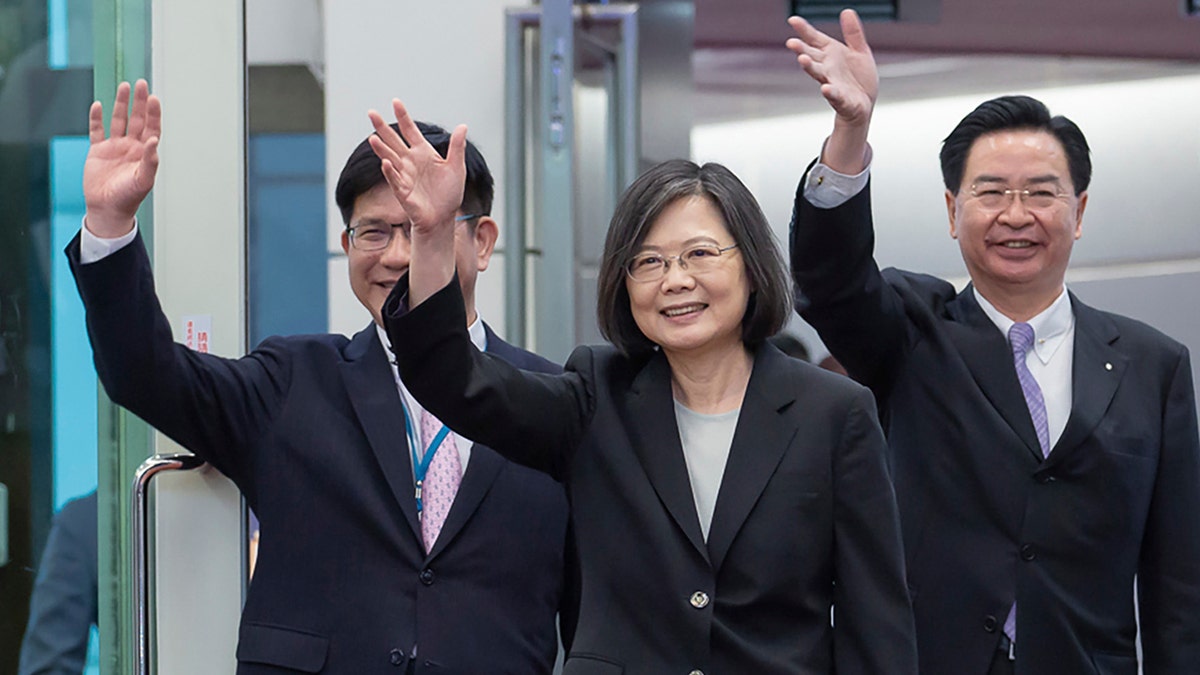
Taiwan President Cancels Africa Trip Amid Chinese Pressure on Flight Permits
Taiwan’s President Lai Ching-te has postponed a planned visit to Eswatini after three African island nations withdrew flight clearance for his presidential aircraft, citing pressure from Beijing as the cause. The cancellation, announced on Tuesday, marks another flashpoint in the escalating diplomatic contest between Taiwan and China, particularly over Taiwan’s remaining formal allies in Africa. Lai was scheduled to travel from April 22 to 26 to attend celebrations marking the 40th anniversary of King Mswati III’s reign in Eswatini, the island nation in Southern Africa that remains one of only twelve countries maintaining official diplomatic relations with Taipei.
The decision followed the sudden revocation of overflight permissions by Seychelles, Mauritius, and Madagascar — nations along the typical flight path from Taiwan to southeastern Africa. According to Taiwan’s Presidential Office, the withdrawals occurred without prior notice and were directly tied to coercive tactics employed by Chinese authorities. Secretary-General to the President Pan Meng-an told reporters in Taipei that the cancellations were not administrative oversights but the result of “strong pressure” and “economic coercion” from China, which views any official engagement with Taiwan as a violation of its sovereignty claims.
China considers Taiwan a breakaway province and has long sought to isolate the island diplomatically by pressuring countries to sever ties with Taipei. While Taiwan maintains unofficial relations with most nations through trade offices and cultural institutes, its number of formal diplomatic allies has dwindled to just twelve, with Eswatini being the last in Africa. The island’s foreign ministry has repeatedly accused Beijing of using economic incentives, aid packages, and political pressure to sway these remaining allies.
Timeline of Events Leading to the Cancellation
The trip had been in preparation for several weeks, with Taiwanese officials coordinating logistics, security, and ceremonial arrangements with Eswatini’s government. Lai’s itinerary included meetings with King Mswati III, participation in national festivities, and discussions on strengthening bilateral cooperation in agriculture, healthcare, and education.
Ten days before departure, Taiwan’s foreign ministry confirmed that flight clearance requests had been submitted to the relevant aviation authorities in Seychelles, Mauritius, and Madagascar — standard procedure for international flights crossing their airspace. Initially, no objections were raised.
However, on April 19, all three nations issued last-minute notices denying overflight permission. The timing and uniformity of the decisions raised immediate suspicion in Taipei. Presidential Office officials noted that none of the countries provided detailed explanations for the reversals, despite Taiwan’s requests for clarification.
By April 21, mounting evidence pointed to external influence. Pan Meng-an stated that intelligence and diplomatic channels indicated that Chinese envoys had engaged directly with officials in the three countries, warning of consequences should they allow the Taiwanese president’s plane to pass. These warnings reportedly included references to potential impacts on trade agreements, investment projects, and access to Chinese financial markets.
In response, Lai announced the postponement of the trip, emphasizing that the decision was made to avoid putting host nations in a difficult position and to prevent any perception that Taiwan was pressuring its allies to defy external demands.
Statements from Taiwanese Leadership
Addressing the nation in a televised statement, President Lai framed the incident as part of a broader pattern of authoritarian interference in international affairs. He condemned the actions as “blatant interference” that undermines the sovereignty of smaller nations and disrupts regional stability.
The cancellation of flight permits by Seychelles, Mauritius and Madagascar without prior warning was actually due to strong pressure from the Chinese authorities, including economic coercion.
Lai further asserted that such tactics would not deter Taiwan from pursuing meaningful engagement with the global community. He reiterated the island’s commitment to contributing to international peace, public health, climate resilience, and technological innovation — areas where Taiwan has sought to expand its participation despite diplomatic constraints.
The president also highlighted the symbolic importance of the Eswatini visit, noting that it was intended to commemorate four decades of stable relations between Taipei and Mbabane. He expressed disappointment that external forces had disrupted what should have been a celebration of enduring partnership.
Reactions from Affected African Nations
As of the announcement, Seychelles, Mauritius, and Madagascar had not issued detailed public responses to Taiwan’s allegations. Madagascar’s foreign ministry acknowledged receipt of the overflight request but declined to elaborate on the reasons for its denial, citing internal procedural matters.
Diplomatic observers noted that all three countries maintain formal relations with Beijing and have accepted significant Chinese investment in infrastructure, fisheries, and tourism in recent years. Seychelles, for instance, has participated in China’s Belt and Road Initiative, while Mauritius has deepened financial ties through offshore banking cooperation. Madagascar has received Chinese funding for road upgrades and agricultural development zones.
Analysts suggest that these economic dependencies may have made the nations more susceptible to diplomatic pressure, even if they wished to avoid appearing to yield to coercion. Some regional experts cautioned against assuming automatic compliance, pointing out that African states often balance relationships with multiple global powers, including the United States, the European Union, India, and Gulf nations.
Nevertheless, the near-simultaneous withdrawal of permissions across three geographically dispersed countries fueled speculation in Taipei and among international monitors that a coordinated effort had taken place.
China’s Position and Broader Diplomatic Strategy
China’s Foreign Ministry did not respond to requests for comment from Taiwanese or international media following the announcement. However, Beijing’s longstanding stance on Taiwan’s international participation remains clear: it opposes any form of official interaction that could be interpreted as recognizing Taiwan as a sovereign state.
In the days preceding the cancellation, Chinese President Xi Jinping met with Mozambican President Daniel Chapo in Beijing, where he reiterated China’s commitment to African development and pledged increased support for infrastructure, industrialization, and food security initiatives. While the meeting’s official readout did not mention Taiwan, the timing underscored Beijing’s simultaneous engagement with the continent as it sought to limit Taipei’s visibility there.

China employs a multifaceted approach to isolate Taiwan diplomatically, combining economic inducements with diplomatic dissuasion. Countries that switch recognition from Taipei to Beijing often receive promises of aid, loans, trade preferences, and investment projects. Conversely, those perceived as leaning toward Taiwan may face delays in project approvals, reduced access to Chinese markets, or subtle warnings about future cooperation.
Taiwan’s government argues that this creates an uneven playing field, where smaller nations are forced to choose between tangible material benefits from China and intangible but principled support from Taipei, which lacks the financial capacity to match Beijing’s scale of offerings.
Historical Context: Taiwan’s Dwindling Diplomatic Allies
At its peak in the 1960s, Taiwan maintained diplomatic relations with over 70 countries. That number began a steady decline in the 1970s after the United Nations transferred China’s seat to the People’s Republic in 1971 and Washington switched recognition to Beijing in 1979.
The pace of losses accelerated in the 2010s and 2020s, particularly after Tsai Ing-wen’s election in 2016, which Beijing viewed as a shift toward formal independence advocacy — a red line for the Chinese Communist Party. Since then, Taiwan has lost nine diplomatic allies, including Burkina Faso, El Salvador, the Dominican Republic, Nicaragua, and Honduras.
Eswatini’s continued recognition of Taiwan is thus seen as both a diplomatic victory and a vulnerability. Surrounded by South Africa and Mozambique — both of which recognize Beijing — Eswatini stands as a geopolitical outlier. Its monarchy has maintained ties with Taipei since 1968, citing shared values of sovereignty and mutual respect, though critics note that the kingdom also benefits from Taiwanese aid in education, healthcare, and agricultural training.
The cancellation of Lai’s visit raises concerns about whether Eswatini might face similar pressure in the future, potentially becoming the next country to switch allegiance. Taiwan’s officials have warned that any such loss would depart the island with zero formal allies on the African continent, further constraining its ability to participate in regional organizations like the African Union, where observer status often depends on state recognition.
Implications for Taiwan’s International Engagement
While Taiwan is excluded from the United Nations and most specialized agencies due to Chinese opposition, it has pursued alternative avenues for global participation. These include joining non-governmental forums, contributing to humanitarian missions, and sharing expertise in areas such as pandemic response, digital governance, and semiconductor technology.
The inability of its leaders to travel freely, however, hampers these efforts. High-level visits are often critical for building trust, negotiating agreements, and demonstrating commitment. When flight denials occur, even if trips are merely postponed, they signal to other nations that engaging with Taiwan carries risks — a perception that Beijing actively cultivates.
Nonetheless, Taiwan has adapted by strengthening unofficial ties. Its representative offices in Washington, Tokyo, Paris, and other capitals function de facto as embassies, handling visa issues, trade promotion, and consular services. Lai himself has used video addresses to participate in international conferences, and Taiwanese officials frequently attend global summits under passports issued by other countries or through invitations as experts rather than state officials.
Still, analysts agree that the absence of formal diplomatic recognition limits Taiwan’s ability to sign binding treaties, access certain international funds, or claim full consular protection for its citizens abroad.
Regional and Global Reactions
The incident drew concern from Taiwan’s informal partners. Japan, which maintains a robust bilateral relationship with Taipei despite lacking formal diplomatic ties, expressed regret over the cancellation and reaffirmed its support for Taiwan’s meaningful participation in international affairs. Japanese officials noted that freedom of movement for elected leaders is a basic tenet of democratic engagement.
In the United States, State Department officials declined to comment directly on the allegations of Chinese coercion but reiterated Washington’s longstanding policy of opposing unilateral changes to the status quo across the Taiwan Strait. American scholars and former diplomats pointed to the episode as evidence of China’s growing assertiveness in using economic statecraft to achieve strategic goals.
Within Africa, reactions were more muted. South Africa, which hosts Taiwan’s largest unofficial office on the continent, did not issue a public statement. However, academic institutions and policy suppose tanks in Johannesburg and Cape Town have increasingly hosted discussions on Taiwan-Africa relations, focusing on cooperation in renewable energy, ICT, and public health — areas where Taipei offers technical assistance without political strings attached.
What Lies Ahead
President Lai’s office indicated that the Eswatini trip would be rescheduled once flight clearance could be reliably secured. No modern date has been announced, but officials said they are exploring alternative routes and engaging in diplomatic outreach to prevent recurrence.
Taiwan’s foreign ministry is reportedly reviewing its protocols for high-level travel, including advance coordination with aviation authorities and contingency planning for sudden permit withdrawals. Some officials have advocated for greater transparency in publishing flight plans earlier to allow for multilateral scrutiny, though others warn that doing so could invite preemptive interference.
In Eswatini, preparations for the anniversary celebrations continue. The government has not commented on whether it will proceed with the events in the president’s absence, though King Mswati III is expected to preside over the festivities as planned.
For now, the cancellation serves as a stark reminder of the geopolitical pressures confronting Taiwan as it seeks to maintain its international presence amid sustained opposition from Beijing. While the island continues to expand its global footprint through trade, technology, and people-to-people exchanges, the ability of its leaders to travel freely remains a critical — and increasingly contested — aspect of its sovereignty.
Key Points at a Glance
- Taiwan President Lai Ching-te postponed a visit to Eswatini after Seychelles, Mauritius, and Madagascar withdrew flight clearance.
- Taiwan’s government alleges the cancellations resulted from pressure and economic coercion by China.
- Eswatini is Taiwan’s last remaining diplomatic ally in Africa and one of only twelve globally.
- The incident reflects Beijing’s broader strategy to isolate Taiwan diplomatically through economic inducements and political pressure.
- Taiwan continues to pursue international engagement through unofficial channels, but official travel remains increasingly difficult.
Frequently Asked Questions
Why did Taiwan’s president cancel his trip to Eswatini?
President Lai Ching-te postponed the trip after Seychelles, Mauritius, and Madagascar withdrew overflight permissions for his aircraft, which Taiwan’s government says was due to pressure from China.
What is Eswatini’s relationship with Taiwan?
Eswatini is one of only twelve countries that maintain formal diplomatic relations with Taiwan, and the last such ally in Africa. The two nations have maintained ties since 1968.
How does China respond to Taiwan’s international engagements?
China opposes any official interaction that implies Taiwan’s sovereignty and often pressures countries to cut ties with Taipei through economic incentives or diplomatic dissuasion.
Has Taiwan lost other African allies recently?
Yes. Taiwan once had several diplomatic partners in Africa, but most have switched recognition to Beijing in the past decade, leaving Eswatini as the sole remaining ally on the continent.
Can Taiwan’s president still travel internationally despite these challenges?
While official travel has grow more difficult due to flight denials and pressure on transit countries, Taiwan’s leaders continue to engage globally through video addresses, unofficial offices, and participation in international forums as experts or private citizens.
