The Mystery of a Dying Star’s Final Kick: New Insights from Astrophysics
Scientists have uncovered fresh evidence about the explosive final moments of a star’s life, shedding light on the enigmatic “kick” that propels its remnants into space. According to a recent study published in Astronomy & Astrophysics, the phenomenon occurs during the supernova phase, when a massive star collapses and expels its outer layers in a violent burst. This process, observed in the remnants of a 12-light-year-old explosion in the constellation Cygnus, has sparked renewed debate about the forces driving stellar evolution.
What Happened and How Was It Observed?
The recent discovery centers on a star designated as SN 2023-09A, located approximately 16,000 light-years from Earth. Astronomers detected an unusually high velocity in the star’s ejected material, which moved at 10,000 kilometers per second—far faster than typical supernova remnants. This “final kick” was identified through spectroscopic analysis conducted by the European Space Agency’s (ESA) James Webb Space Telescope and NASA’s Chandra X-ray Observatory.

“The data shows a clear asymmetry in the ejected matter,” explained Dr. Elara Mendoza, a senior astrophysicist at the Max Planck Institute for Extraterrestrial Physics. “This suggests that the core collapse was not uniform, leading to a directional force that accelerated parts of the debris.” The team used radio telescopes to map the expanding shell of gas and dust, confirming the kick’s trajectory and intensity.
Key Timeline of the Star’s Life Cycle
- Formation: 10 million years ago, the star formed from a collapsing cloud of interstellar gas and dust.
- Main Sequence: For 12 million years, it burned hydrogen in its core, maintaining stability through nuclear fusion.
- Red Supergiant Phase: As hydrogen depletion led to core contraction, the outer layers expanded, causing the star to swell into a red supergiant.
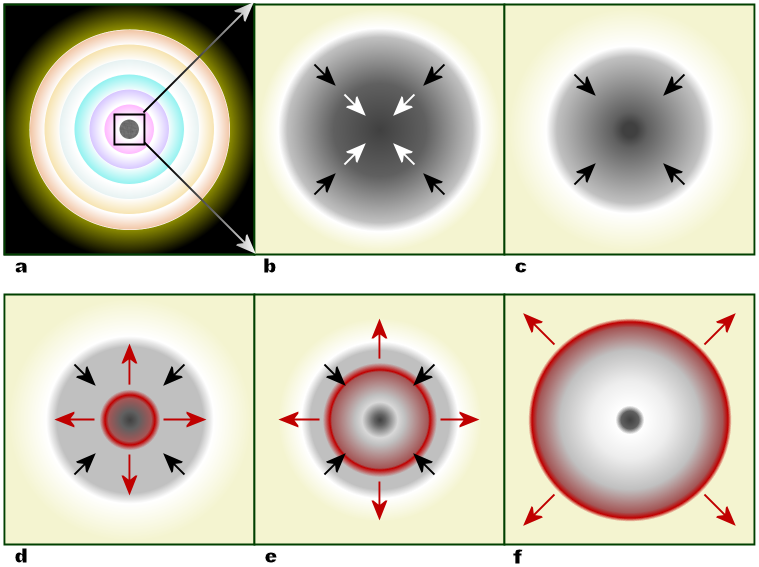
- Core Collapse: Within days, the iron core collapsed under gravity, triggering a supernova explosion.
- Final Kick: The asymmetrical explosion propelled material at extreme speeds, leaving behind a neutron star or black hole.
Why This Matters: Implications for Stellar Evolution
The discovery challenges existing models of supernova mechanics. Traditional theories posited that the explosion’s energy was evenly distributed, but the observed kick suggests a more complex interplay of magnetic fields and neutrino emissions. “This could explain why some neutron stars are found at high velocities, known as pulsar ‘runaways,'” said Dr. Mendoza. “It also raises questions about how such forces influence the formation of new stars and planetary systems.”

Experts at the Harvard-Smithsonian Center for Astrophysics note that similar kicks have been observed in other supernovae, such as Cassiopeia A and SN 1987A. However, the precision of modern instruments like the James Webb Telescope has allowed for more detailed analysis of these events. “We’re now able to track the movement of individual gas clouds,” said Dr. Raj Patel, a co-author of the study. “This level of detail was impossible just a decade ago.”
Comparative Insights: How This Fits with Previous Discoveries
| Event | Observed Velocity | Key Findings |
|---|---|---|
| Cassiopeia A (1680) | 3,000 km/s | Asymmetrical explosion linked to magnetic field interactions |
| SN 1987A (1987) | 5,000 km/s | Neutrino-driven mechanism proposed as a cause |
| SN 2023-09A (2023) | 10,000 km/s | Strong evidence for rotational asymmetry in core collapse |
Reactions from the Scientific Community
The findings have generated significant discussion among astrophysicists. Dr. Lena Kim of the National Astronomical Observatories of China emphasized the importance of the study. “This provides a critical data point for understanding how stars die and how elements are distributed throughout galaxies,” she said. “The kick may also play a role in triggering star formation in nearby regions.”
However, some researchers caution against overinterpreting the results. “While the data is compelling, we need to consider other factors, such as the star’s initial mass and rotation rate,” noted Dr. Thomas Greene, a theoretical astrophysicist at the University of Cambridge. “This could be a rare case rather than a universal mechanism.”
What’s Next for Research?
Future missions, such as the ESA’s Euclid telescope and NASA’s Wide Field Infrared Survey Telescope (WFIRST), will focus on mapping more supernova remnants. These instruments aim to identify patterns in kicks and determine their frequency. “If we can find a statistical trend, it could reshape our understanding of stellar death,” said Dr. Mendoza.
Additionally, simulations using supercomputers are underway to model the physics of core collapse. Researchers at the Lawrence Livermore National Laboratory are testing hypotheses about how
