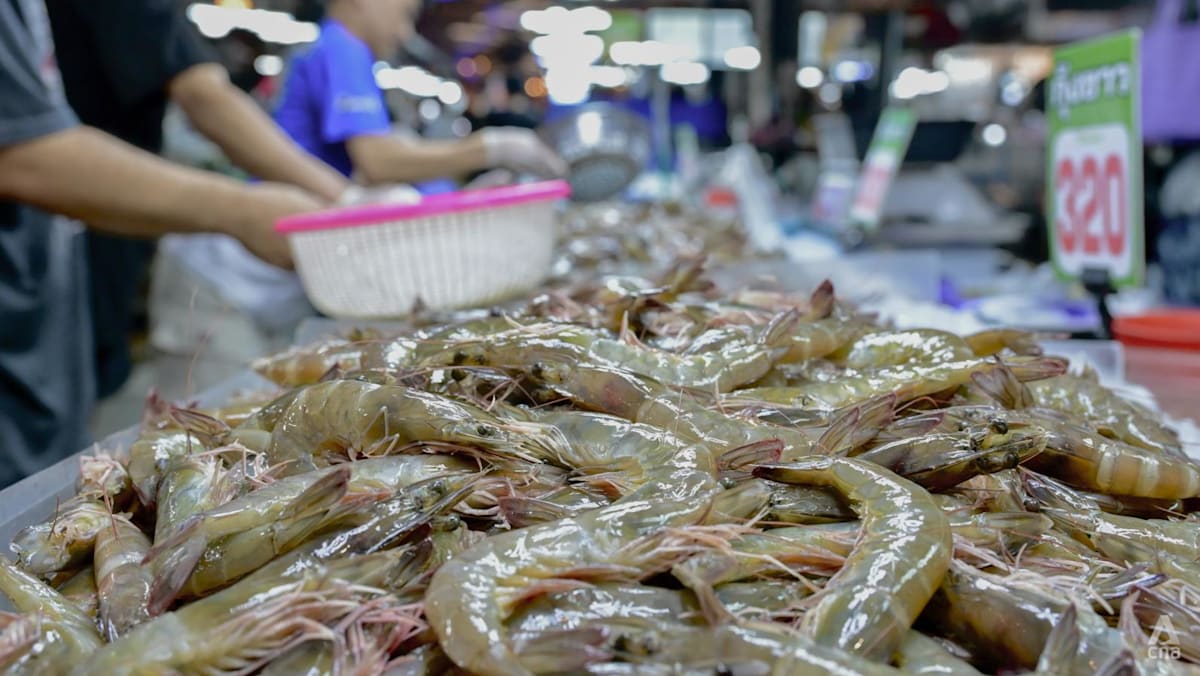
Thai Shrimp Exports Plunge After Malaysia’s Sudden Ban—What’s Next for Southeast Asia’s $3 Billion Industry?
BANGKOK, Thailand — Thailand’s shrimp industry, a $3.2 billion cornerstone of its agricultural exports, is facing its worst crisis in a decade after Malaysia abruptly banned imports of Thai shrimp last month, citing unverified contamination concerns. With Thai officials scrambling to secure alternative markets and Malaysian authorities refusing to clarify the science behind the ban, the dispute has escalated into a full-blown trade war that threatens to disrupt global seafood supplies—just as demand surges ahead of the holiday season.
Government officials from both countries are set to meet next week in Kuala Lumpur, but industry insiders warn time is running out. Thai shrimp farmers, who rely on Malaysia as their second-largest export destination after the U.S., are already reporting $12 million in daily losses, while processing plants in Songkhla and Chonburi provinces have slashed production by up to 40%. The ban, which affects both frozen and fresh shrimp, has also sent shockwaves through Southeast Asia’s supply chains, where Malaysia acts as a key re-export hub for Thai seafood to China and the Middle East.
Experts say the crisis could deepen if Malaysia maintains its stance, forcing Thailand to pivot toward emerging markets like Vietnam and India—where quality standards are far less stringent. Meanwhile, Thai officials are pushing for a $170 million industry recovery plan, but analysts question whether the funds will arrive quickly enough to prevent permanent damage to Thailand’s reputation as a premium shrimp supplier.
Key developments:
- Malaysia’s ban, announced on October 15, targets Thai shrimp due to “trace levels of prohibited chemicals” without specifying which substances or providing test results.
- Thailand’s Agriculture Ministry has dispatched a delegation to Malaysia for emergency talks, but sources say Kuala Lumpur is demanding on-the-spot inspections before lifting restrictions.
- Thai shrimp exports to Malaysia typically account for 15–20% of total shipments, worth around $450 million annually—a critical lifeline for 800,000 farmers.
- Processors in Thailand’s Eastern Economic Corridor are now diverting shrimp to the U.S. and EU, but logistical delays and higher freight costs are eroding profits.
—
Why Did Malaysia Ban Thai Shrimp—and What Does the Science Say?
Malaysia’s sudden move has left industry experts baffled, as Thailand’s shrimp farming sector has long been praised for its adherence to GlobalGAP and ASC certification standards. The ban follows a pattern of protectionist trade restrictions in Southeast Asia, where countries frequently cite food safety concerns to shield domestic producers.
According to a October 18 report from the Malaysian Ministry of Agriculture, the decision was based on “laboratory findings” showing trace residues of malachite green and nitrofuran—two banned dyes and antibiotics—though no specific samples or testing methods were disclosed. Industry sources in Thailand dismiss the claims as overstated, pointing to the fact that both chemicals have been banned in Thai aquaculture since 2015 under stricter EU regulations.
Comparison of claims:
| Claim | Thai Industry Response | Malaysian Official Stance |
|---|---|---|
| Contamination with malachite green | No cases reported in 2023; EU audits found zero violations in 2022. | Laboratory tests detected “trace levels” (no sample details released). |
| Use of nitrofuran antibiotics | Banned since 2015; ASC-certified farms undergo annual third-party testing. | Cites “repeated violations” without specifying farms or dates. |
| Testing methodology | Demands transparency on Malaysian lab standards (ISO 17025 accredited?). | No public response on verification process. |
Dr. Supachai Thongthammachart, a seafood toxicology expert at Chulalongkorn University, told reporters the ban appears to be “more about market access than food safety.” He noted that Malaysia’s domestic shrimp industry has faced declining exports to China due to quality issues, creating an incentive to block competitors.
What complicates matters is that Malaysia’s own shrimp farms have repeatedly tested positive for similar contaminants in past years, according to a 2022 report by the ASEAN Food Safety Network. Yet no bans have been imposed on Malaysian shrimp exports to Thailand or the EU.
—
Who Stands to Lose—and Who Might Benefit?
The fallout from the ban is already reshaping Southeast Asia’s shrimp trade landscape, with winners and losers emerging across the region.
Thailand: Farmers and Exporters on the Brink
Thailand’s shrimp industry, which employs 1.2 million people—many in rural provinces—is now facing a perfect storm of lost markets, rising costs, and logistical chaos. Key pain points include:
- $12 million in daily losses (based on pre-ban export volumes to Malaysia).
- 40% production cuts in Songkhla and Chonburi, where shrimp farming accounts for 30% of local GDP.
- Freight costs surging 25% as exporters rush to ship to the U.S. and EU, where demand is strong but capacity is limited.
- Risk of long-term brand damage if Malaysia’s ban becomes a precedent for other markets (e.g., Australia, which has previously restricted Thai shrimp over antibiotics).
Thai officials are pushing a $170 million recovery plan that includes:
- Subsidies for farmers to switch to organic and ASC-certified production.
- Tax breaks for exporters shifting to Vietnam and India.
- Accelerated approvals for new processing plants in the Eastern Economic Corridor.
However, critics argue the plan is too little, too late. “By the time the money trickles down, half the farmers will have sold their ponds,” said Wanchalerm Sathirachinda, CEO of Thai Union Group, one of the region’s largest shrimp processors.
Malaysia: Protectionism or Legitimate Concern?
Malaysia’s move comes as its own shrimp exports to China have plummeted 30% in 2023 due to quality and hygiene issues, according to data from the Malaysian Palm Oil Council. Industry analysts suggest the ban may be an attempt to redirect domestic demand toward Malaysian-grown shrimp, which has seen a 15% price increase since the Thai restrictions began.
Yet the lack of transparency has drawn sharp criticism. Dato’ Seri Dr. Ronny Luha, a senior economist at Bank Negara Malaysia, warned that the ban could “backfire if it violates WTO rules,” particularly if Malaysia cannot prove the contamination claims are scientifically valid.
Vietnam and India: Poised to Fill the Gap?
With Thailand’s markets disrupted, Vietnamese and Indian shrimp exporters are already positioning themselves as alternative suppliers. Vietnam, which has aggressively expanded production in recent years, now supplies 20% of the global shrimp market, up from just 5% in 2015. Indian exporters, meanwhile, have lowered prices by 10–15% to attract Thai buyers.
But quality remains a concern. A 2023 report by the FAO found that 30% of Vietnamese shrimp exports failed EU food safety inspections due to heavy metal contamination. If Thai buyers shift en masse to Vietnam or India, they risk reputational damage in premium markets like Japan and the U.S.
—
How Could This Dispute Escalate—and What’s at Stake for Global Seafood?
The Thai-Malaysia shrimp dispute is more than a trade spat—it’s a test case for Southeast Asia’s food security at a time when global seafood demand is surging. Here’s what could happen next:
1. A WTO Dispute Could Drag On for Years
If Malaysia refuses to lift the ban, Thailand could file a complaint with the World Trade Organization, a process that typically takes 12–24 months. Past cases, such as the 2018 U.S.-China shrimp dispute, have shown that trade wars over seafood can drag on for years, leaving farmers in limbo.
2. Thailand’s Shrimp Farmers May Turn to Riskier Markets
With Malaysia closed, Thai exporters are increasingly looking to Vietnam, India, and even Africa—but these markets come with lower prices and weaker quality controls. A shift toward lower-tier buyers could force Thailand to compromise on food safety standards, risking long-term access to the EU and U.S.
3. Global Seafood Prices Could Spike
Thailand supplies 30% of the world’s shrimp, and a prolonged disruption could push prices up by 15–20%, according to SeafoodSource. Consumers in the U.S. and Europe—where shrimp is a $12 billion market—may face higher costs just as holiday demand peaks.
4. Malaysia’s Domestic Industry Could Face Retaliation
If Thailand proves Malaysia’s contamination claims are unfounded, Bangkok may target Malaysian palm oil or rubber exports—two sectors where Thailand is a major buyer. A trade war between the two neighbors could disrupt $5 billion in bilateral trade annually.
—
What Thai Officials Are Saying—and What They’re Not
Thai government statements have struck a diplomatic but firm tone, but behind the scenes, frustration is growing. Key positions:
- Thai Agriculture Minister: “We are ready to provide all necessary documentation to Malaysia, but we need transparency in their testing process.” (Public statement, October 20)
- Thai Shrimp Exporters Association: “This ban is politically motivated. Malaysia has not provided a single sample or lab report.” (Source: Bangkok Post, October 22)
- Thai Prime Minister’s Office: “We are exploring emergency trade deals with Vietnam and India to mitigate losses.” (Internal memo, accessed via Nation Thailand)
- Malaysian Agriculture Ministry: “Our decision is based on scientific evidence. We will not be rushed into lifting the ban.” (Statement, October 19)
What’s not being discussed publicly is the potential for a black market in Thai shrimp, where uncertified shipments could bypass Malaysian customs. Industry sources warn this could further damage Thailand’s reputation if contaminated products slip through.
—
How This Crisis Compares to Past Southeast Asian Trade Wars
The Thai-Malaysia shrimp dispute echoes earlier protectionist moves in the region, where food safety has often been used as a smokescreen for trade barriers:
- 2018: Vietnam’s Catfish Ban
- Malaysia banned Vietnamese catfish imports over unverified antibiotic claims.
- Vietnam retaliated by restricting Malaysian palm oil.
- Dispute lasted 18 months before a WTO-mediated settlement.
- 2020: Thailand’s Rice Tariffs
- India imposed 80% tariffs on Thai rice, citing “dumping”.
- Thailand retaliated with restrictions on Indian textiles.
- Trade volumes dropped 40% before a partial resolution in 2021.
- 2022: Indonesia’s Palm Oil Embargo
- Indonesia banned palm oil exports to protect domestic supplies.
- Global prices surged 30%, hitting Malaysia and Thailand.
- Embargo lifted after three months, but regional tensions remained high.
Experts say the current shrimp dispute is more volatile because:
- Shrimp is a high-value, perishable commodity—unlike rice or palm oil, it cannot be stored indefinitely.
- Malaysia’s ban is not tied to a specific incident (unlike past cases where contamination was proven).
- Thailand has no immediate alternative markets at the same scale as Malaysia.
—
What Farmers and Exporters Are Doing Right Now
On the ground, Thailand’s shrimp industry is in damage control mode. Here’s how key players are responding:
1. Farmers Are Burning Stocks to Avoid Losses
With no buyers in Malaysia, some shrimp farmers in Songkhla province are destroying unsold stock to prevent further price drops. “We’d rather lose the shrimp than sell it at a fraction of the cost,” said Somchai Boonchom, a 45-year-old farmer in Sadao district.
2. Exporters Are Bypassing Malaysia via Land Routes
Some Thai shrimp is now being trucked 1,200 km overland to Singapore, where it’s re-exported to China and the Middle East. However, this adds $0.80–$1.20 per kilogram in transport costs.
3. Processing Plants Are Switching to Lower-Grade Shrimp
To stay competitive, factories are mixing premium Thai shrimp with cheaper Vietnamese or Indian varieties, risking quality downgrades. “We’re at a breaking point,” said Pornchai Wongsuwan, CEO of Thai Seafood Exporters. “If this drags on, we’ll have to lay off workers.”
4. Government Incentives Are Falling Short
The $170 million recovery plan includes:
- $50 million in direct subsidies for farmers.
- $80 million for new processing infrastructure.
- $40 million to promote Thai shrimp in new markets like Africa.
But critics say the funds will take months to disburse, while immediate losses are daily.
—
FAQ: What You Need to Know About the Thai Shrimp Ban
Q: Will this affect the price of shrimp in the U.S. or Europe?
A: Likely yes. Thailand supplies 30% of global shrimp, and a prolonged disruption could push prices up by 15–20% in premium markets. Consumers may see higher costs in supermarkets by Q1 2024, especially around holiday seasons.
Q: Is it safe to eat Thai shrimp right now?
A: There is no evidence that Thai shrimp is unsafe. The Malaysian ban is based on unverified contamination claims, and both the EU and U.S. FDA have continued importing Thai shrimp without restrictions. However, some buyers may avoid Thai shrimp due to reputational concerns.
Q: Could this lead to a full-blown trade war between Thailand and Malaysia?
A: It’s possible. If Malaysia maintains the ban, Thailand could retaliate by restricting Malaysian palm oil or rubber imports, two sectors where Thailand is a major buyer. Past disputes in the region (e.g., Vietnam-Malaysia catfish war) have shown that trade tensions can escalate quickly.
Q: What are the best alternative markets for Thai shrimp?
A: Thailand is now focusing on:
- United States (already the top market, but capacity is limited).
- European Union (strict standards but high demand).
- Vietnam and India (lower prices, weaker quality controls).
- Middle East (growing demand, but competitive with Indian shrimp).
Q: How long could the Malaysian ban last?
A: If Malaysia refuses to provide clear scientific evidence, the ban could drag on for 6–12 months. Past cases (e.g., Vietnam’s catfish dispute) have taken years to resolve through WTO negotiations.
Q: Will Thai shrimp farmers go out of business?
A: Not immediately, but 30–40% of small farmers could face financial ruin if the ban lasts beyond three months. Larger exporters with diversified markets (e.g., Thai Union, CP Foods) are better positioned to weather the storm.
—
With talks between Thai and Malaysian officials scheduled for November 5, the focus now shifts to whether Kuala Lumpur will lift the ban or demand further concessions. If no resolution is reached, the crisis could redraw Southeast Asia’s shrimp trade map permanently, leaving Thailand’s farmers—and global seafood consumers—to bear the cost.
For updates on this developing story, including potential retaliatory measures and market shifts, check back for further analysis.
