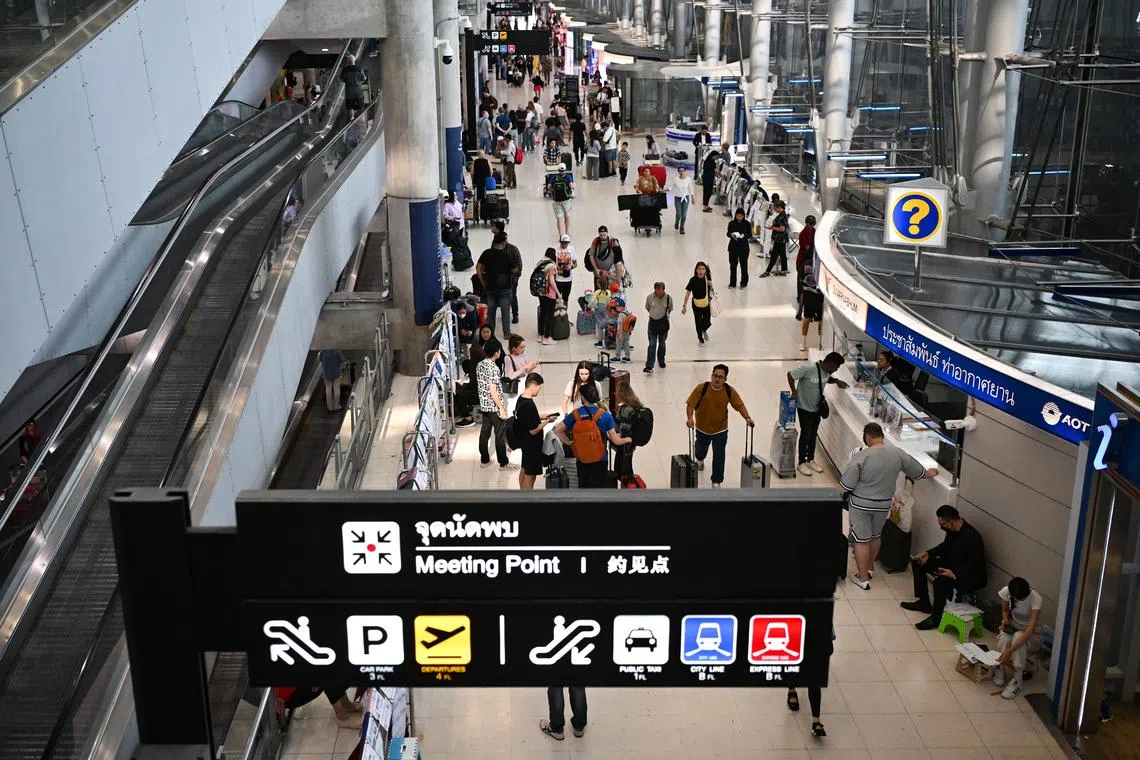
International Departure Fee Goes Up to $44 at 6 Thai Airports from June 20
International departure fees at six major Thai airports will increase to approximately $44 starting June 20, according to reports from The Straits Times. This adjustment applies to passengers departing from hubs managed by Airports of Thailand (AOT), marking a shift in the Passenger Service Charge (PSC) to support infrastructure upgrades and operational costs.
Which Thai airports are affected by the departure fee increase?
The fee hike applies specifically to the six primary gateways managed by Airports of Thailand (AOT). While the report from The Straits Times highlights the $44 ceiling, the impact is felt across the country’s most high-traffic international hubs.
The affected airports include:
- Suvarnabhumi Airport (BKK): The primary international gateway to Bangkok.
- Don Mueang International Airport (DMK): The main hub for low-cost carriers in Bangkok.
- Phuket International Airport (HKT): The primary entry point for Thailand’s southern islands.
- Chiang Mai International Airport (CNX): The central hub for northern Thailand.
- Hat Yai International Airport (HDY): A key gateway for travel to and from Malaysia.
- Mae Fah Luang-Chiang Rai International Airport (CEI): A critical northern border gateway.
Passengers utilizing smaller, provincial airports not managed by AOT will not see this specific increase, as those facilities operate under different regulatory frameworks and fee schedules.
Why is the international departure fee increasing to $44?
The increase in the Passenger Service Charge (PSC) is tied to the ongoing expansion of Thailand’s aviation infrastructure. According to industry data and reports, AOT requires increased capital to manage the surge in passenger volumes following the full reopening of borders post-pandemic.
The funds generated from these fees typically go toward several key operational areas:
- Terminal Expansion: Expanding passenger lounges and boarding gates to reduce congestion.
- Technology Integration: Implementing biometric scanning and automated baggage handling systems to speed up processing times.
- Runway Maintenance: Ensuring safety standards are met as flight frequencies increase.
- Sustainability Initiatives: Investing in “green airport” technologies to reduce the carbon footprint of ground operations.
By raising the fee to roughly $44, the Thai government aims to ensure that the cost of maintaining world-class facilities is borne by the users of the infrastructure rather than solely through state subsidies.
| Airport Category | Management Body | Fee Status (Post-June 20) |
|---|---|---|
| Major Hubs (BKK, DMK, HKT, etc.) | Airports of Thailand (AOT) | Increased to ~$44 |
| Provincial/Small Airports | Department of Airports (DoA) | No change reported |
How will the new departure fee be collected from passengers?
For the vast majority of international travelers, the departure fee will not be a separate payment made at the airport counter. Instead, it is integrated into the cost of the airline ticket.

According to standard aviation pricing models, the PSC is listed as a “tax” or “airport fee” during the checkout process on airline websites or travel agency platforms. When a passenger purchases a ticket for a flight departing from one of the six affected airports after June 20, the updated fee is automatically added to the total fare.
Travelers should be aware of the following:
- Pre-booked tickets: Passengers who purchased tickets before the June 20 deadline may not see an immediate price jump, as the fee is usually locked in at the time of purchase.
- Ticket breakdowns: If you review your e-ticket itinerary, the $44 (or the equivalent in Thai Baht) will appear under the “Taxes and Fees” section.
- Currency fluctuations: Because the fee is set in Thai Baht, the exact USD or SGD equivalent may fluctuate slightly based on exchange rates.
This integrated collection method prevents bottlenecks at airport exits and ensures that AOT receives the funds directly from the carriers.
How does Thailand’s departure fee compare to other regional hubs?
The increase to $44 puts Thailand in a competitive but higher-cost bracket compared to some of its Southeast Asian neighbors. Airport fees are a common tool for revenue generation in the region, but the pricing varies significantly based on the airport’s strategy.
In Singapore, for example, the Passenger Service Charge at Changi Airport is often bundled into the ticket, though the total cost can vary depending on the destination and the class of travel. Malaysia’s Kuala Lumpur International Airport (KLIA) also employs a similar PSC system, though historically, Thailand’s fees have been adjusted more frequently to match rapid expansion goals.
Industry analysts suggest that while a $44 fee is higher than in previous years, it remains within the acceptable range for “premium” hubs in Asia. The primary concern for budget travelers is not the fee itself, but the cumulative effect of rising airfares and airport taxes on the total cost of a trip.
“The adjustment of passenger service charges is a standard mechanism used by airport operators globally to align revenue with the cost of providing enhanced services and infrastructure.”
What is the potential impact on Thai tourism and budget travel?
Thailand relies heavily on tourism, and any increase in the cost of visiting—even a relatively small amount like $44—can be scrutinized by budget-conscious travelers. However, the impact is expected to be marginal for most international tourists.
Impact on Low-Cost Carriers (LCCs)
Passengers using Don Mueang (DMK) are typically more price-sensitive. For a traveler booking a round-trip flight that costs $150, an additional $44 departure fee represents a significant percentage increase in the total cost. This could potentially influence short-haul travelers from neighboring countries to reconsider their frequency of visits.
Impact on Luxury and Long-Haul Travel
For travelers arriving at Suvarnabhumi (BKK) from Europe or North America, a $44 fee is negligible compared to the overall cost of the flight and accommodation. These passengers are more likely to prioritize the efficiency and quality of the airport experience over a small increase in taxes.
Competitive Positioning
The Thai government has consistently pushed for “high-value tourism” over “mass tourism.” By investing in better infrastructure via higher fees, the goal is to attract travelers who are willing to pay more for a superior, less crowded experience. This shift aligns with the broader national strategy to increase the average spend per tourist.
Key considerations for travelers:
- Budgeting: Travelers should account for a slightly higher ticket price when planning trips departing from Thailand after June 20.
- Booking Timing: Booking flights well in advance of the June 20 implementation may save a small amount on the departure tax.
- Airport Choice: While the fee is consistent across the six AOT airports, the overall cost of the trip still depends heavily on whether the traveler uses a full-service carrier at BKK or an LCC at DMK.
Are there any common misconceptions about this fee increase?
There is often confusion regarding how airport taxes work, leading to several common misconceptions about the June 20 update.
Misconception 1: “I have to pay the fee in cash at the airport.”
This is incorrect. As noted, the fee is almost always embedded in the airline ticket. Travelers do not need to carry extra cash specifically for the departure tax upon leaving the airport.
Misconception 2: “The fee applies to all airports in Thailand.”
The increase specifically targets the six airports managed by AOT. Smaller airports managed by the Department of Airports (DoA) operate under different fee structures and are not part of this specific $44 hike.
Misconception 3: “The fee is a new ‘Tourist Tax’.”
The Passenger Service Charge (PSC) is not a new tax but an update to an existing fee. It is a service charge for the use of airport facilities, distinct from entry visas or other government-imposed tourist levies.
For more information on traveling to the region, you may find a related explainer on Thai visa requirements useful for your planning.
Frequently Asked Questions
When does the new departure fee take effect?
The international departure fee increase goes into effect on June 20. Tickets issued for travel on or after this date will reflect the updated pricing.

How much is the increase exactly?
The fee goes up to approximately $44 for international departures from the six major AOT-managed airports. The exact amount in local currency may vary slightly based on current exchange rates.
Which airports are included in the $44 fee?
The fee applies to Suvarnabhumi, Don Mueang, Phuket, Chiang Mai, Hat Yai, and Mae Fah Luang-Chiang Rai airports.
Do I need to pay this fee separately at the airport?
No. The departure fee is typically included in the price of your airline ticket as a tax or passenger service charge (PSC).
Will this affect my flight if I already bought my ticket?
Generally, if your ticket was purchased and issued before June 20, the fee at the time of purchase is what you pay. However, travelers should check their specific airline’s terms and conditions.
Is this fee the same for domestic flights?
No, this specific increase applies to international departure fees. Domestic travel fees are governed by different rates.
Travelers are encouraged to monitor official announcements from Airports of Thailand (AOT) or their respective airlines for any further adjustments to travel costs. As Thailand continues to expand its aviation capacity, these fees serve as the primary financial engine for maintaining the gateways that support the nation’s tourism industry.
