Teenager Charged for Damaging East End Home – VOCM: Legal Process and Community Impact
A teenager faces legal charges after allegedly causing damage to a residence in the East End, according to reports. The incident has prompted local discussions regarding youth accountability and property crime in residential neighborhoods. Authorities have initiated formal proceedings against the youth following an investigation into the property damage.
What are the specifics of the East End property damage case?
The case involving a teenager charged for damaging East End home – VOCM centers on an act of mischief where a residential property sustained physical damage. While the specific nature of the damage—whether it involved graffiti, broken windows, or structural harm—remains part of the ongoing legal record, the primary charge relates to the intentional destruction or deterioration of property.
Police reports indicate that the suspect was identified and apprehended after an investigation into the scene. In cases of residential damage, investigators typically rely on a combination of witness statements, surveillance footage, and physical evidence to link a suspect to the crime. The charges were filed after the evidence suggested a direct link between the youth and the damage caused to the East End home.
Key facts regarding the incident include:
- Location: A residential property situated in the East End.
- Suspect: A teenager, whose identity is protected under youth privacy laws.
- Core Charge: Property damage/mischief.
- Status: Formal charges have been laid, and the matter is moving through the judicial system.
How does the Youth Criminal Justice Act (YCJA) apply to these charges?
Because the accused is a teenager, the case is governed by the Youth Criminal Justice Act (YCJA). This federal legislation dictates how young people who commit crimes are processed through the Canadian legal system. The YCJA differs significantly from the adult criminal code, as its primary objective is rehabilitation rather than purely punitive measures.
According to the YCJA, the court must consider the youth’s age, maturity, and the circumstances of the offense. For a charge like the one seen in the teenager charged for damaging East End home – VOCM case, the legal system evaluates whether the act was a spontaneous lapse in judgment or part of a larger pattern of behavior.
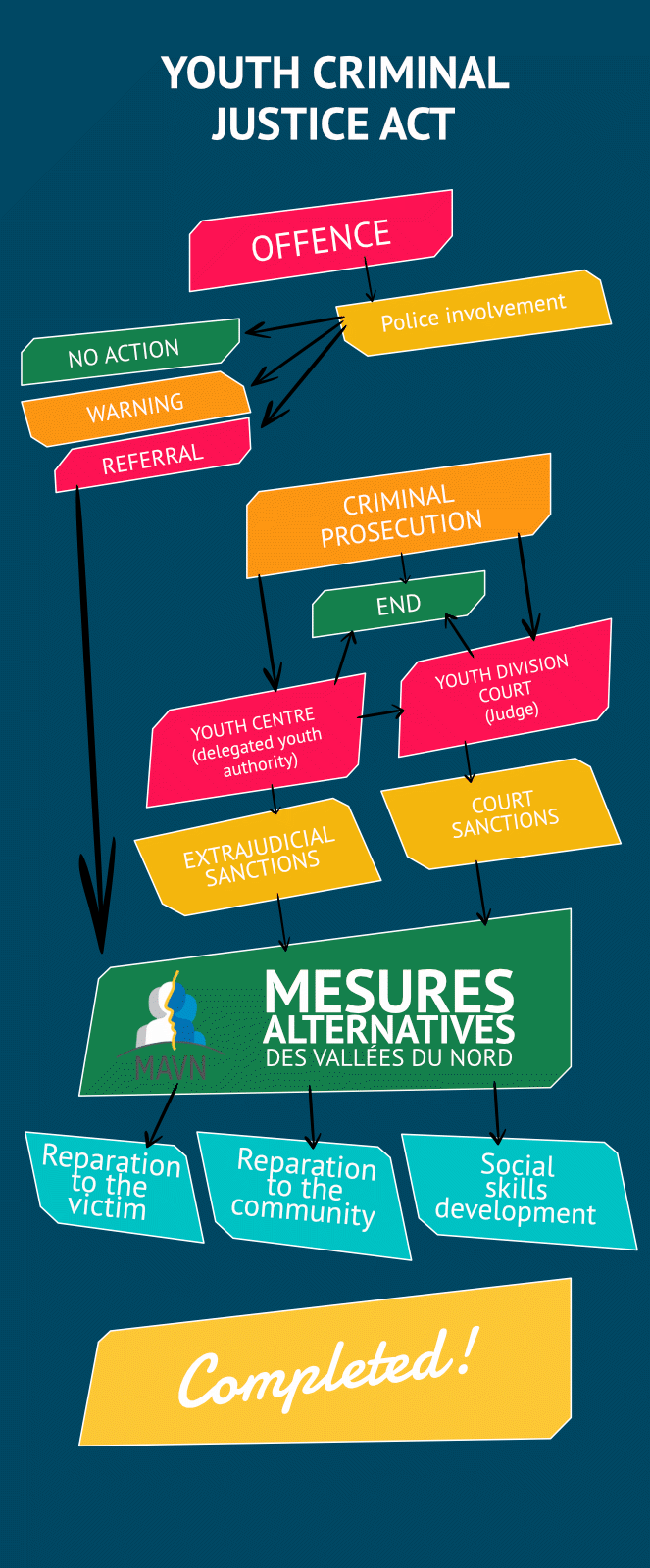
The YCJA provides several pathways for dealing with youth offenders:
- Extrajudicial Measures: For less serious offenses, police or prosecutors may use warnings, cautions, or referrals to community programs to avoid a formal court appearance.
- Extrajudicial Sanctions: These are more formal than measures but still keep the youth out of court. They often involve a program or a requirement to make restitution to the victim.
- Youth Court: If the offense is severe or the youth has a prior record, the case proceeds to a youth justice court where a judge determines the sentence.
“The YCJA emphasizes the importance of rehabilitation and reintegration into society, ensuring that the response to a crime is proportionate to the seriousness of the offense and the circumstances of the young person.” — Legal standard for youth justice in Canada.
What are the common penalties for youth property damage?
When a teenager is charged with damaging property, the court focuses on “meaningful consequences.” In the context of the teenager charged for damaging East End home – VOCM, the legal outcome will likely depend on the monetary value of the damage and the youth’s prior history.
Common sanctions for property damage include:
- Restitution: The court frequently orders the youth (or their guardians) to pay for the repair or replacement of the damaged property.
- Community Service: The youth may be required to perform a set number of hours of unpaid work to give back to the community.
- Apology Letters: A formal, written apology to the homeowner is often mandated as part of a rehabilitative process.
- Probation: A period of supervision where the youth must adhere to specific conditions, such as attending school or avoiding certain areas.
The following table compares the typical approach to property damage charges for youth versus adults:
| Feature | Youth (YCJA) | Adult (Criminal Code) |
|---|---|---|
| Primary Goal | Rehabilitation and reintegration | Punishment and deterrence |
| Privacy | Identity generally protected (Publication Ban) | Public record (usually) |
| Sentencing | Focus on community-based sanctions | Fines, probation, or incarceration |
| Court System | Youth Justice Court | Provincial or Superior Court |
Why does residential vandalism impact community safety perceptions?
While property damage may be viewed by some as a “victimless” or minor crime, the impact on residential neighborhoods is often psychological. When a teenager is charged for damaging East End home – VOCM, the event sends a ripple effect through the immediate community, affecting how residents perceive their own security.
Sociological research on “Broken Windows Theory” suggests that visible signs of crime and civil disorder—such as vandalism or damaged homes—can create an environment that encourages further crime. If a home is damaged and left unrepaired, or if youth crime goes unaddressed, residents may feel that the neighborhood is declining, leading to increased anxiety and a decreased sense of safety.
The impact on the homeowner is also significant. Beyond the financial cost of repairs, the violation of a private residence can lead to:
- Increased Stress: A feeling of vulnerability within one’s own living space.
- Financial Burden: Unexpected costs for repairs or increases in insurance premiums.
- Loss of Trust: A diminished sense of trust in the youth within the community.
Community leaders often argue that prompt legal action and visible restitution are necessary to restore the balance of safety and trust in the East End.
What steps follow a teenager being charged with mischief?
The legal journey for a teenager charged with property damage involves several distinct stages. In the case of the teenager charged for damaging East End home – VOCM, the process begins with the laying of charges and moves toward a resolution.
The Initial Appearance
The youth first appears in court, often accompanied by a parent or legal guardian. At this stage, the charges are read, and the defense determines whether to enter a plea. Because of the YCJA, the proceedings are closed to the general public to protect the minor’s identity.
The Discovery Process
The defense lawyer reviews the evidence provided by the police, known as “disclosure.” This includes witness statements, photos of the damaged East End home, and any digital evidence. The defense may negotiate with the Crown prosecutor to see if the matter can be resolved through extrajudicial sanctions rather than a full trial.
The Adjudication or Sentencing
If the youth pleads guilty or is found guilty after a trial, the judge moves to the sentencing phase. The judge considers a “Pre-Sentence Report,” which provides background on the youth’s home life, school performance, and mental health. This ensures the sentence targets the root cause of the behavior.
For more information on how the legal system handles minors, you may find a related explainer on youth justice laws helpful.
Addressing common misconceptions about youth crime
Public reaction to events like the teenager charged for damaging East End home – VOCM often involves misconceptions about how the law treats minors. One common belief is that teenagers “get off easy” because they are not sent to adult prisons.
However, legal experts point out that the YCJA is not designed to be “easy,” but rather “effective.” The goal is to stop a youth from becoming a lifelong criminal. Research indicates that early intervention, restitution, and community-based sanctions are more effective at reducing recidivism than harsh incarceration for non-violent property crimes.
Another misconception is that the parents are legally responsible for the damages. While parents may be civilly liable in some jurisdictions—meaning the homeowner could potentially sue the parents in civil court for damages—the criminal charges are focused solely on the individual who committed the act.
The role of community support and prevention
Preventing future incidents similar to the teenager charged for damaging East End home – VOCM requires a multi-faceted approach. Law enforcement and community organizers often emphasize the need for youth engagement programs to provide alternatives to destructive behavior.
Effective prevention strategies include:
- After-School Programming: Providing safe spaces for teenagers to socialize and develop skills.
- Youth Mentorship: Connecting at-risk youth with positive adult role models.
- Community Policing: Building relationships between police and youth to foster mutual respect.
- Restorative Justice: Encouraging the offender to meet with the victim (if the victim agrees) to understand the human impact of their actions.
By focusing on the “why” behind the property damage, communities can address the underlying issues—such as boredom, peer pressure, or mental health struggles—that lead to such incidents.
Frequently Asked Questions
Can the name of the teenager charged for damaging the East End home be released?
No. Under the Youth Criminal Justice Act (YCJA) in Canada, there is a general publication ban on the identity of young persons charged with a crime. This is intended to protect the youth’s privacy and facilitate their rehabilitation.
What happens if the teenager refuses to pay for the damage?
If the court orders restitution and the youth cannot pay, the court may allow the debt to be paid over time or through community service. In some cases, the homeowner may seek a separate civil judgment against the youth’s legal guardians to recover costs.
Is property damage considered a violent crime?
No, damaging a home is generally classified as “mischief,” which is a property crime. Unless the damage was done in a way that threatened lives or involved an intrusion that caused physical harm, it is not categorized as a violent offense.
How long does the legal process take for youth charges?
The timeline varies. Some cases are resolved quickly through extrajudicial sanctions within a few weeks. Others may take several months to reach a court date and final sentencing, depending on the complexity of the evidence and the court’s schedule.
Can a teenager be sent to jail for damaging a home?
Incarceration is a last resort for youth. It is typically reserved for violent offenses or for youth who have failed multiple other sanctions. For a first-time property damage offense, community-based sanctions are far more likely.
The incident involving the teenager charged for damaging East End home – VOCM highlights the ongoing tension between the need for community accountability and the legal mandate to rehabilitate young offenders. As the case proceeds through the youth justice system, the focus will remain on ensuring the homeowner is compensated and the youth understands the consequences of their actions.
