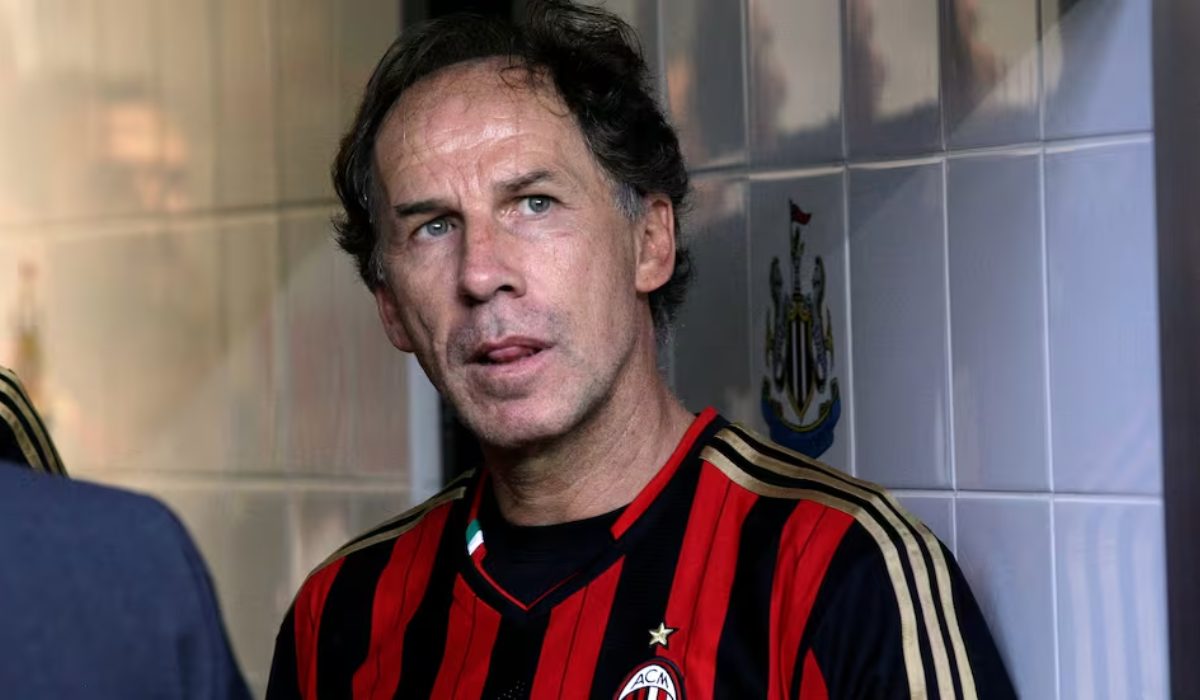
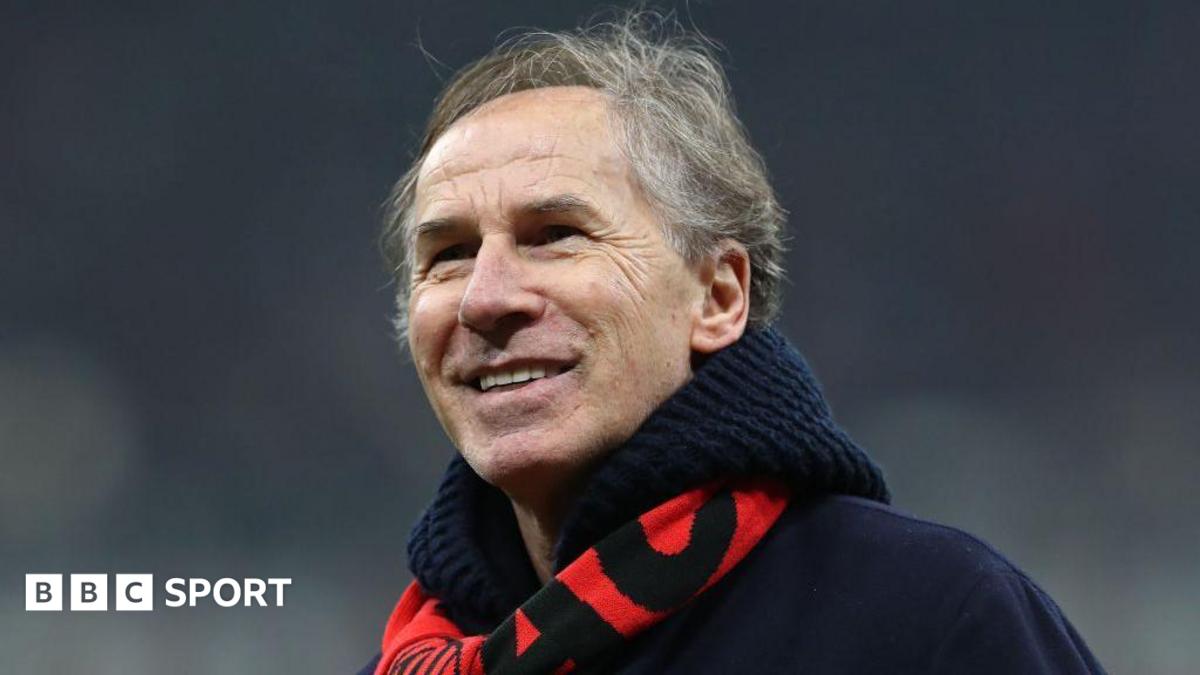
Franco Baresi, legendary AC Milan and Italy defender, dies at 66
The legendary AC Milan captain spent twenty seasons with the Rossoneri, redefining modern defending and securing six Serie A titles and three European Cups.
At 12 years old, Franco Baresi was rejected by Inter Milan. The New York Times reports that Inter questioned if he was big enough to succeed, ultimately choosing his older brother, Giuseppe. That perceived physical fragility earned him the nickname Piscinin
— Milan dialect for a fragile, thin youngster — from journalist Gianni Brera. Instead of following his brother to the Nerazzurri, Baresi joined the youth ranks of their cross-city rivals, AC Milan, beginning a 20-year tenure that would culminate in his recognition as the club's Player of the Century.
The death of Baresi at age 66 was announced Friday, July 31, 2026, by AC Milan. His passing marks the loss of a player who became the "flag" of the club, embodying a rare one-club loyalty that saw him remain with the Rossoneri through two relegations to Serie B in the early 1980s. For Baresi, who lost his parents before the age of 16, The Guardian notes that the club served as a surrogate family.
Related video and Instagram post
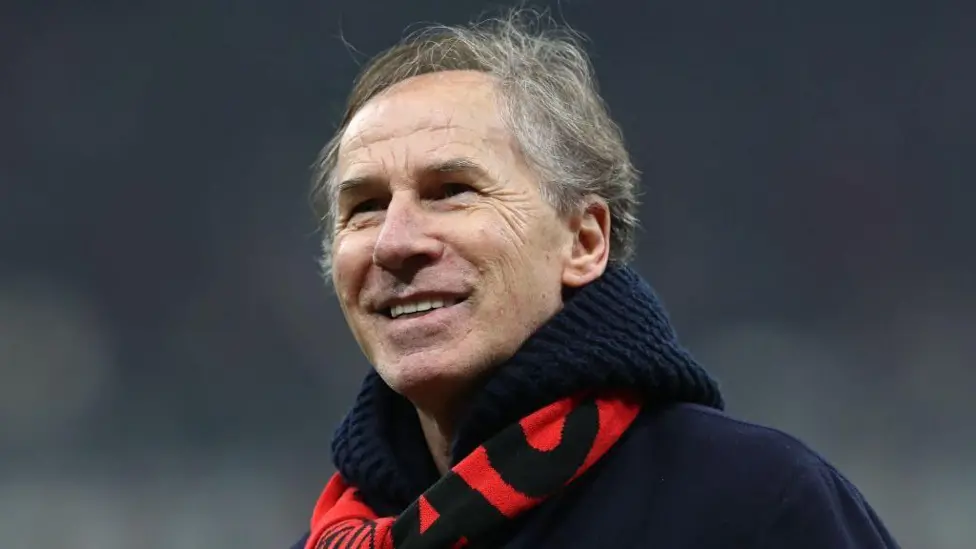
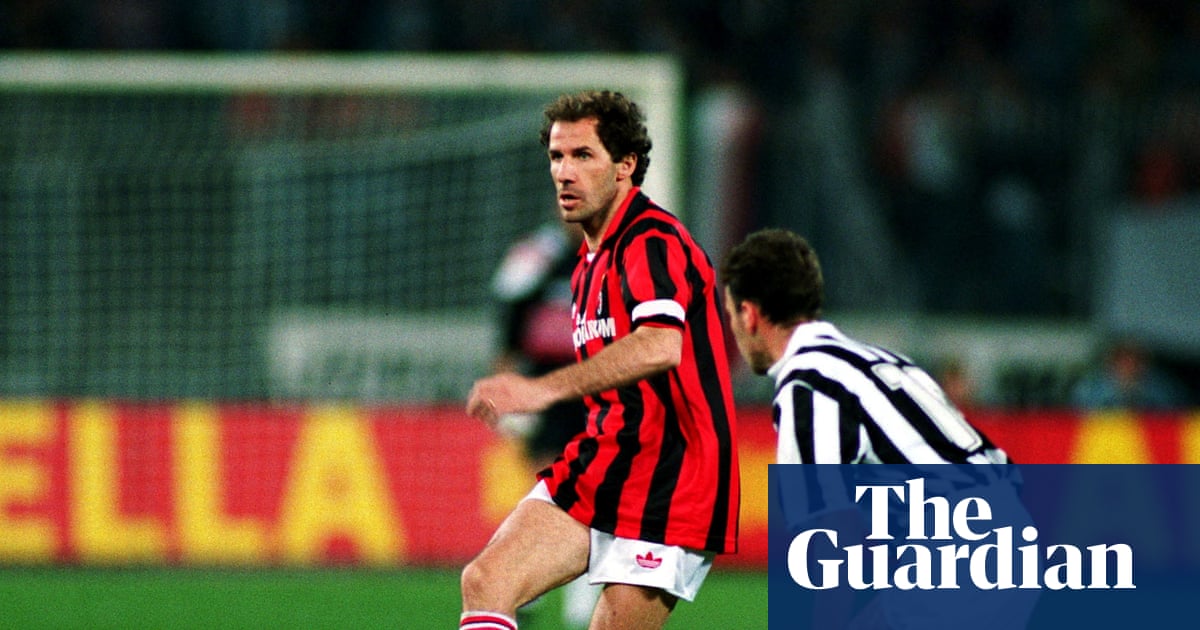
Baresi’s career was defined by a tactical evolution that shifted Italian defending away from catenaccio. Under the guidance of Nils Liedholm, Baresi transitioned from an old-school libero, a cover player detached from the defensive line, into a center-back utilizing zonal marking. This system prioritized space over man-to-man physical battles, a shift that favored Baresi’s reading of the game over his 5ft 9in stature. According to his own memoirs, this aggressiveness and speed in tight spaces allowed him to overcome his lack of physical height.
This foundation enabled the radical revolution of Arrigo Sacchi, who introduced a flat back four and high-intensity pressing. The transition was initially met with skepticism; after a string of early defeats, some critics joked that Sacchi would not last until November 1. The turning point came when Sacchi eased training to avoid overworking his players. Baresi, as captain and the "moral heart" of the squad, intervened and begged Sacchi to push the players harder. He argued that the new, instinctive way of positioning relative to teammates and opponents had to be internalized through rigor.
The result was global dominance. Baresi captained Milan for 15 seasons, making 719 appearances and scoring 33 goals. His tenure saw the club achieve a feat not repeated until 2017 by Real Madrid: winning consecutive European Cups in 1989 and 1990. By 1989, Baresi had come closer to the Ballon d'Or than almost any defender in history, finishing runner-up to teammate Marco van Basten.
| Competition | Trophies |
|---|---|
| Serie A Titles | 6 |
| Champions League / European Cup | 3 |
| Intercontinental Cup | 2 |
| European Super Cup | 2-3* |
| Supercoppa Italiana | 4 |
*Sources provide varying counts of 2 or 3 European Super Cups.
While his club career was defined by triumph, his international experience with Italy provided a sharper contrast. He was part of the 1982 World Cup-winning squad but did not play a single minute. His most storied moment for the Azzurri came in the 1994 World Cup final. After tearing cartilage in the second group game and undergoing knee surgery, Baresi returned to the lineup just three weeks later. He successfully neutralized Brazil's Romario and Bebeto in a 0-0 draw, but the match ended in a historic first shootout. Baresi missed the first penalty in a 3-2 defeat.
The brotherhood between Franco and Giuseppe Baresi became a cultural symbol of the city; the image of the two captains exchanging pennants before the Milan derby defined the rivalry of the late 1980s. Even after his 1997 retirement, which saw Milan retire his No. 6 shirt for the first time in club history, Baresi remained an institutional fixture, becoming honorary vice-president in 2020.
His final year was marked by a struggle with health. In August 2025, Baresi underwent surgery to remove a pulmonary nodule and began a course of immunotherapy. His last public appearance occurred in February 2026, when he and former Inter defender Giuseppe Bergomi carried the Olympic torch into the San Siro for the opening ceremony of the Milan Cortina Winter Olympics.
The specific cause of death was not provided by the club.
A Legacy of One-Club Loyalty
Baresi’s career was not merely a series of victories but a timeline of resilience. He made his first-team debut in April 1978 at age 17. While he eventually achieved global fame, his journey included a traumatic period in 1979 when he won his first scudetto at 19, only for the club to be relegated following the Totonero betting scandal. He remained with the Rossoneri throughout subsequent financial chaos and further relegations, a commitment described by Italian football federation president Giovanni Malagò as a romantic choice
.
His defensive dominance was built on a partnership with other icons. Baresi anchored a celebrated back line alongside Alessandro Costacurta, Mauro Tassotti, and Paolo Maldini. This unit helped Milan achieve a record 58 league games without defeat after Arrigo Sacchi departed to lead the national team. His impact was such that he was voted Milan’s Player of the Century two years after his 1997 retirement.
The depth of Baresi's influence extended to his opponents. Inter Milan, his career-long rivals, issued a statement calling him a flagbearer of AC Milan
who defined the history of the derby. Former Italy captain Gianluigi Buffon recalled his own Serie A debut on November 19, 1995, as a 17-year-old facing Baresi, noting that the experience provided a clear understanding of class, leadership, and respect
. Similarly, former teammate Paolo Maldini described Baresi as the greatest footballer he ever played with, noting how the captain had protected and guided him from childhood into adulthood.
Following his death, tributes emerged from across the Italian game, including official messages of solidarity from Juventus, Napoli. According to Giovanni Malagò via AP, the next step for the national team will be to hold a tribute in his memory the next time Italy plays.
Archypedia is dedicated to independent, evidence-backed reporting. This briefing was synthesized from primary source reporting, corroborated across independent newsrooms, and verified against our Editorial Standards.
Transparency record
Evidence behind this report
This report synthesizes 7 distinct sources. Open the source ledger below to compare the underlying coverage.
- myjoyonline.com
- sports.yahoo.com
- theguardian.com
- bbc.co.uk
- nytimes.com
- mirror.co.uk
- ca.sports.yahoo.com
Prepared under the Archypedia Editorial Policy by the Rafael Ortega editorial desk profile. AI-assisted tools may support drafting and verification; public accountability remains with Archypedia. Report an error.