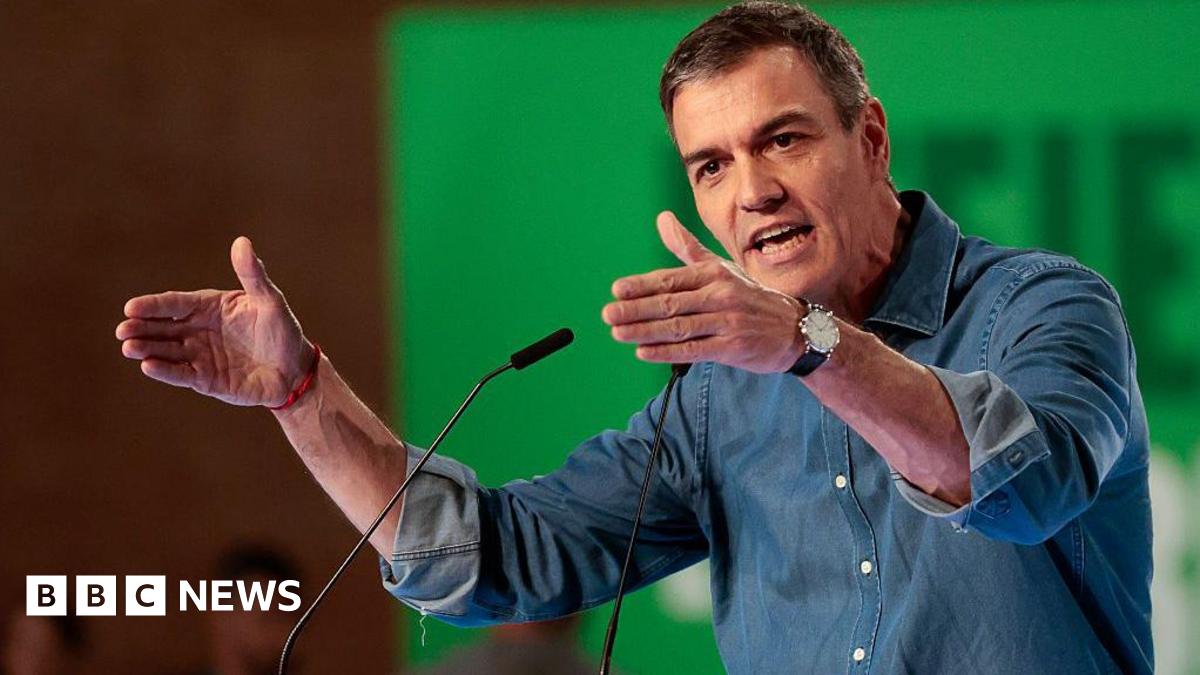
Crisis in Madrid: Spain’s Sánchez Digs In After Eight Years as PM as Wave of Scandals Threatens Survival
The political atmosphere in Madrid has reached a fever pitch as Pedro Sánchez, the leader of Spain’s Socialist Workers’ Party (PSOE), faces one of the most precarious moments of his premiership. In a dramatic escalation of legal and political pressure, Spanish authorities recently conducted high-profile raids on the headquarters of the ruling party, signaling that the judicial scrutiny surrounding the administration has moved from the periphery to the very heart of government power. As the narrative unfolds, Spain’s Sánchez digs in after eight years as PM as wave of scandals threatens survival – BBC, reflecting a broader pattern of resilience and defiance in the face of mounting corruption allegations.
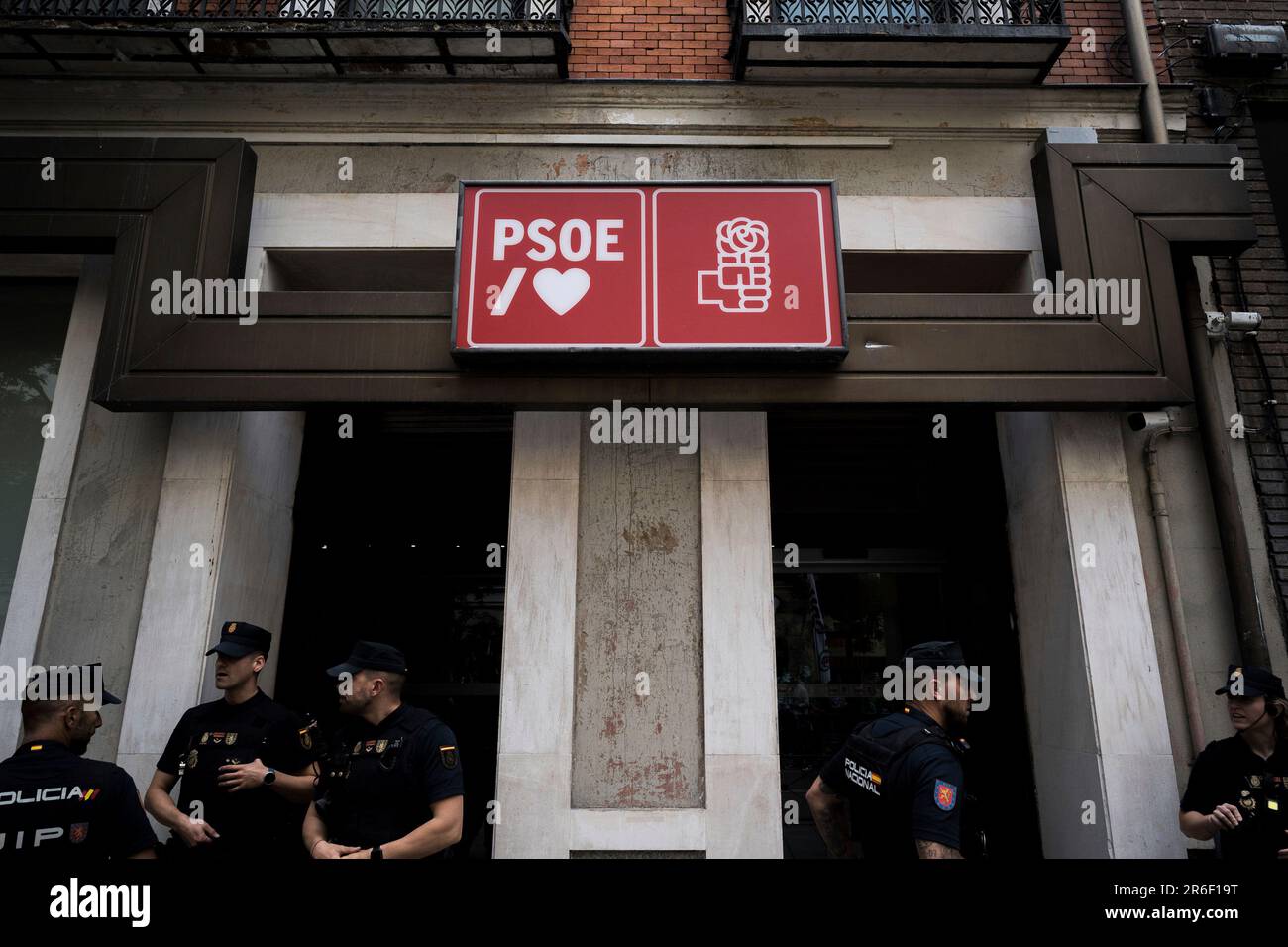
For nearly a decade, Sánchez has navigated the volatile waters of Spanish politics, surviving multiple crises and shifting alliances. However, the current wave of investigations—ranging from allegations of influence peddling to financial irregularities involving close associates—threatens to erode his remaining political capital. The sight of police officers searching the offices of the PSOE is not merely a legal procedure; it is a potent symbol of a government under siege, raising fundamental questions about the stability of the Spanish executive and the integrity of its leadership.
The Raid on PSOE Headquarters: A Turning Point
The recent police operation at the Socialist party’s Madrid headquarters marks a significant escalation in the ongoing judicial probes. While investigations into political figures are not uncommon in Spain, the direct targeting of the ruling party’s central nervous system is a rare and aggressive move. The raids were aimed at securing documents and digital evidence related to suspected corruption and the misuse of public funds.
This operation is part of a wider judicial effort to determine if party officials or government insiders leveraged their positions for personal gain or to favor specific business interests. The timing of these raids is particularly damaging, coinciding with a period of heightened political polarization and a fragile parliamentary majority that relies on a patchwork of regionalist and separatist parties.
“The entry of law enforcement into the headquarters of a governing party is a moment of profound institutional tension. It suggests that the judiciary believes there is sufficient evidence to warrant an intrusive search, bypassing the usual channels of request and delivery.”
Key Objectives of the Judicial Investigation
- Evidence Recovery: Seizing internal communications, emails, and financial ledgers that may link party leadership to illicit activities.
- Tracing Influence: Investigating whether government contracts were awarded in exchange for political favors or financial contributions.
- Verifying Allegations: Cross-referencing testimony from whistleblowers and suspects with physical and digital records found on-site.
Unpacking the Wave of Scandals
The pressure on Pedro Sánchez is not the result of a single event, but rather a cumulative “wave” of scandals that have systematically chipped away at his image as a reformer. For years, the PSOE positioned itself as the clean alternative to the corruption-riddled administrations of the previous right-wing governments. Now, that narrative is being challenged by a series of interlocking probes.
Central to these scandals are allegations involving the “inner circle” of the Prime Minister. While Sánchez himself has avoided direct legal indictment, the proximity of those under investigation—including family members and high-ranking party strategists—has created a “guilt by association” dynamic that the opposition is aggressively exploiting. The allegations typically center on tráfico de influencias (influence peddling), where the power of the office is allegedly used to secure lucrative deals for associates.
The Anatomy of the Current Corruption Probes
The investigations are multi-faceted, involving several different judicial branches. Some focus on the misappropriation of public funds during the pandemic, while others look into the financial dealings of individuals closely tied to the Prime Minister’s personal and professional life.
| Nature of Allegation | Primary Target/Focus | Potential Impact |
|---|---|---|
| Influence Peddling | Close associates and family ties | Loss of moral authority and public trust |
| Financial Irregularities | Party funding and campaign expenses | Legal penalties for the PSOE as an organization |
| Contractual Favoritism | Government procurement processes | Administrative overhaul and potential resignations |
These probes are not happening in a vacuum. They are being amplified by a highly adversarial media landscape and a judicial system that is often viewed through a partisan lens. To his supporters, Sánchez is the victim of a “lawfare” campaign—a coordinated attempt by conservative judges and political rivals to remove a progressive leader through the courts. To his detractors, this is a long-overdue reckoning for a government that has grown arrogant in its longevity.
The Psychology of Survival: Why Sánchez “Digs In”
To understand why Pedro Sánchez is choosing to fight rather than resign, one must look at his political history. Sánchez is widely regarded as one of the most resilient survivors in modern European politics. He has a proven track record of returning from the brink of political extinction.
The most notable example occurred in 2018, when he faced a motion of no confidence brought by the conservative People’s Party (PP). Not only did he survive the vote, but he managed to oust the incumbent Prime Minister, Mariano Rajoy, and take power himself. This experience taught him that in the fragmented landscape of the Spanish Congress, survival is possible as long as one can maintain a coalition of convenience.
Strategies for Political Endurance
- Framing the Narrative: Sánchez frequently frames legal challenges as attacks on the democratic mandate of the Spanish people, effectively turning a legal issue into a political battle for the “soul” of the country.
- Coalition Management: By granting concessions to regionalist parties (such as those in Catalonia and the Basque Country), he ensures that his parliamentary numbers remain intact, even if those concessions are unpopular with the general public.
- Controlled Communication: The Prime Minister often utilizes strategic silence or high-impact public appearances to shift the news cycle away from judicial developments and toward policy achievements or external threats.
However, the “digging in” strategy has a ceiling. While it may work to keep him in the Moncloa Palace for now, the constant noise of corruption probes creates a climate of instability that can alienate moderate voters and complicate Spain’s relationship with its European partners.
The Broader Political and Social Context
The crisis surrounding the Prime Minister is a symptom of a deeper malaise in Spanish politics. Since the 2008 financial crisis, Spain has struggled with systemic corruption and a deep ideological divide. The transition from a two-party system to a multi-party system has made governance exponentially more difficult, requiring complex negotiations for every single piece of legislation.
The current tension is exacerbated by the socio-economic challenges facing the Spanish population. High housing costs, youth unemployment, and inflation have left many citizens disillusioned. When the public sees police raiding the offices of the ruling party, it reinforces a cynical belief that the political class—regardless of ideology—is fundamentally disconnected from the struggles of ordinary people.
the role of the judiciary in Spain has become increasingly politicized. Judges are often accused of leaning toward either the left or the right, meaning that any legal action against a politician is immediately interpreted as a political act. This erosion of trust in the neutrality of the courts makes the current scandals even more volatile.
For more on the regional dynamics affecting the government, see our related explainer on Spanish regional autonomy and separatism.
Implications for the European Union and Global Stability
Spain is the fourth-largest economy in the Eurozone, and its stability is of critical importance to the European Union. A prolonged political crisis in Madrid, potentially leading to a government collapse or a snap election, could create ripples across the continent.

The EU generally prefers stability and predictability. While Brussels maintains a policy of non-interference in the internal affairs of member states, the perception of systemic corruption at the top of a major EU government is never viewed favorably. If Sánchez’s government becomes completely paralyzed by legal battles, Spain’s ability to implement EU-mandated reforms—particularly those related to the Recovery and Resilience Facility—could be compromised.
Potential Scenarios for the Near Future
- The War of Attrition: Sánchez continues to fight the allegations in court, maintaining his coalition and hoping that the scandals fade from the public consciousness over time.
- The Internal Coup: Pressure from within the PSOE becomes too great, and party elders convince Sánchez that he is a liability to the party’s future, leading to a negotiated exit.
- The Parliamentary Collapse: A key coalition partner, fearing the contagion of the corruption scandals, withdraws its support, triggering a vote of no confidence or a collapse of the government.
Common Misconceptions About the Crisis
In the rush to report on the raids and the scandals, several oversimplifications have entered the public discourse. It is important to clarify these points to understand the true nature of the crisis.
Misconception 1: The Prime Minister has been formally charged with a crime.
As of the current reporting, the investigations are primarily focused on the party apparatus and close associates. While the “shadow” of the investigation falls on Sánchez, he has not been the primary target of an indictment in these specific recent raids. The political threat is currently greater than the immediate legal threat to his person.
Misconception 2: The raids guarantee a conviction.
In the Spanish legal system, searches and seizures are investigative tools, not proof of guilt. Many high-profile raids in Spanish history have resulted in cases being dismissed due to lack of evidence or procedural errors. However, the political damage of a raid is often permanent, regardless of the legal outcome.
Misconception 3: The opposition is united in its approach.
While the PP and Vox both want Sánchez gone, they differ on the method. Some prefer a slow erosion of his support, while others push for immediate, aggressive legal action. This fragmentation occasionally gives Sánchez the breathing room he needs to survive.
Evaluating the Long-Term Outlook
The trajectory of Pedro Sánchez’s premiership is now inextricably linked to the findings of the judiciary. If the evidence seized during the raids provides a “smoking gun” that directly links the Prime Minister to illicit activity, his survival becomes mathematically and politically impossible. However, if the investigations result in the downfall of a few mid-level officials without reaching the top, Sánchez may actually emerge stronger, claiming he has “cleaned house” and survived a partisan witch hunt.
The central tension remains the balance between legal legitimacy and political viability. In a healthy democracy, the law applies equally to all. In a polarized democracy, the law is often viewed as a weapon. Spain currently finds itself in the latter category, where every court ruling is a political event and every police raid is a campaign rally.
As the legal process unfolds, the Spanish public will be watching to see if the “digging in” strategy is a sign of strength or a desperate attempt to hold onto power. The outcome will not only determine the fate of one man but will signal the direction of Spanish democracy for the next decade. For those following the intersection of law and power, the current situation in Madrid serves as a masterclass in political survival and the perils of long-term incumbency.
For further analysis on how this affects the broader Mediterranean region, explore our related analysis on Southern European political instability.
Frequently Asked Questions
Why did the police raid the PSOE headquarters?
The raids were conducted as part of ongoing judicial investigations into allegations of corruption, specifically focusing on influence peddling and the potential misuse of public funds. The goal was to secure documents and digital evidence that could link party officials to illegal activities.
Is Pedro Sánchez likely to resign?
While the pressure is immense, Sánchez has a history of surviving severe political crises. Whether he resigns depends on two factors: the strength of the evidence found in the raids and whether his coalition partners in parliament decide that he has become too great a liability to support.
How does this affect the average citizen in Spain?
Beyond the political drama, these scandals can lead to government instability, which may delay important legislative reforms and economic policies. Socially, it often increases polarization and deepens public distrust in political institutions.
What is “lawfare” in the context of Spanish politics?
Lawfare refers to the use of legal systems and institutions to damage or delegitimize a political opponent. Supporters of Sánchez argue that the current probes are a form of lawfare designed to remove a progressive government that cannot be defeated at the ballot box.
Who are the main political opponents pushing for Sánchez’s removal?
The primary opposition comes from the People’s Party (PP), the main center-right party, and Vox, a far-right party. Both have called for transparency and, in many cases, the immediate resignation of the Prime Minister.
