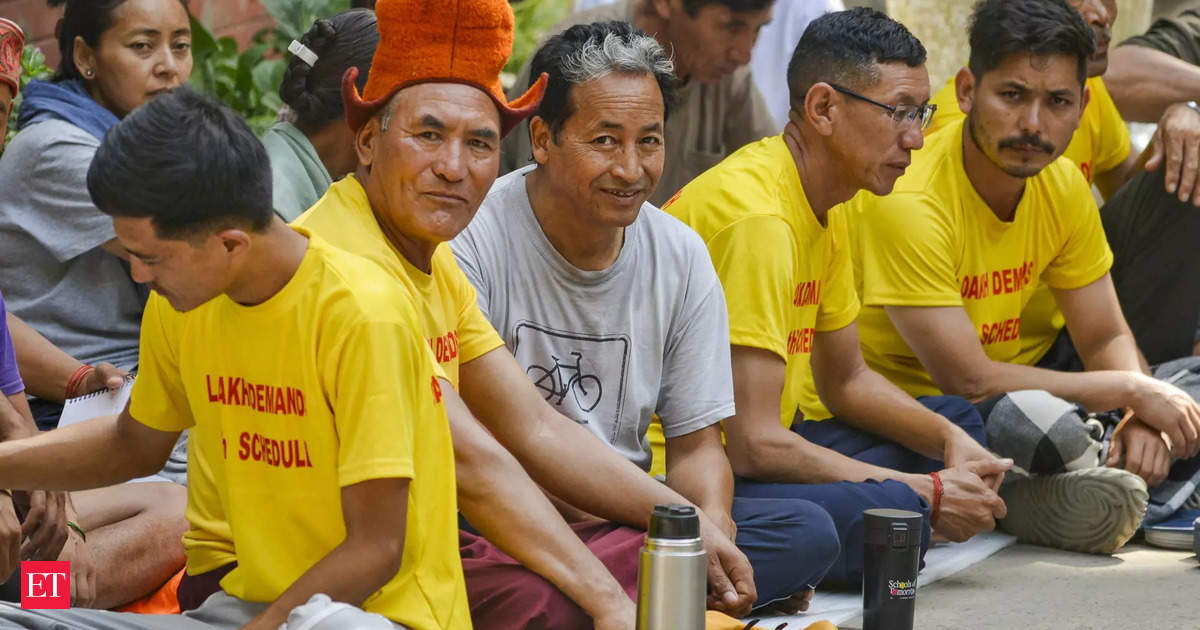
‘How Long Will We Live in Fear?’ Abhijeet Dipke’s CJP Protest Gains Momentum with Sonam Wangchuk’s Backing
In a bold display of youth-led dissent, the Cockroach Janta Party (CJP) staged a high-profile protest at Delhi’s Jantar Mantar on June 6, 2026, with education reformer Sonam Wangchuk publicly endorsing the movement. The event, marked by impassioned speeches and a growing coalition of supporters, has reignited debates about accountability, transparency, and the role of civil society in India’s democratic framework. As Abhijeet Dipke, the CJP’s founder, posed the haunting question “How long will we live in fear?” to a crowd of hundreds, the protest underscored a broader societal frustration over systemic issues, particularly in education and governance.
What Happened: A Protest Rooted in Accountability
The CJP’s protest at Jantar Mantar was the culmination of weeks of online activism and grassroots mobilization. Initially a satirical social media initiative, the group has evolved into a structured movement demanding transparency in exam systems and government accountability. On June 6, Dipke returned to Delhi after a brief absence, leading a sit-in that drew participants from diverse age groups and backgrounds. The protest, described as “creative and constructive” by activist Sonam Wangchuk, centered on grievances tied to recent controversies, including allegations of exam irregularities and perceived judicial overreach.

Wangchuk, known for his unconventional educational philosophy and advocacy for student rights, addressed the crowd, praising the government for allowing the demonstration to proceed. “This is a major achievement and a victory for India,” he stated, emphasizing the importance of peaceful dissent in a democracy. His remarks, however, were not without nuance. While acknowledging the government’s tolerance of the protest, Wangchuk urged leaders to address systemic issues rather than suppress dissent.
The CJP’s demands, as outlined in their public statements, include a comprehensive audit of examination processes, stricter penalties for malpractice, and greater transparency in decision-making. Dipke, in his speech, linked these issues to broader concerns about public trust in institutions, arguing that “fear of retribution has silenced a generation of reformers.”
Who Is Involved: The Faces Behind the Movement
The CJP’s leadership includes Abhijeet Dipke, a young entrepreneur and social media strategist who founded the group in response to a series of high-profile controversies. Dipke’s decision to return to Delhi for the protest marked a shift from online activism to on-ground mobilization. His leadership has been characterized by a blend of digital savvy and grassroots engagement, with the group leveraging platforms like X (formerly Twitter) to amplify their message.
Sonam Wangchuk, the movement’s most prominent public ally, brings a unique credibility to the cause. A former teacher and advocate for alternative education models, Wangchuk gained national attention for his role in the 2018-2019 protests against the National Council of Educational Research and Training (NCERT) curriculum. His endorsement of the CJP has been interpreted as a strategic move to bridge the gap between youth activism and established civil society figures.
The protest also featured contributions from journalist Saurav Das, who served as the CJP’s spokesperson. Das, a veteran of Delhi’s activist circles, highlighted the group’s commitment to non-violence, stating, “We are not here to disrupt, but to demand accountability.” His presence underscored the movement’s effort to align itself with mainstream media and legal frameworks.
Timeline: From Online Satire to Public Demonstration
The CJP’s journey from a satirical social media group to a recognized protest movement followed a clear trajectory:

- April 2026: The group emerges online, criticizing the judiciary’s handling of exam-related cases and using humor to highlight systemic flaws.
- May 2026: The CJP formalizes its structure, appointing spokespersons and launching a campaign for exam transparency.
- June 2026: Dipke’s return to Delhi and the Jantar Mantar protest mark a turning point, with widespread media coverage and public participation.
This rapid evolution reflects the group’s ability to adapt to shifting political and social dynamics. The protest on June 6 was the organization’s first major public event, signaling a deliberate move toward institutional engagement.
Context and Background: The Broader Landscape of Youth Activism
The CJP’s rise coincides with a surge in youth-driven movements across India, many of which focus on education, climate change, and governance. These groups often operate at the intersection of digital activism and traditional protest methods, leveraging social media to bypass conventional media gatekeepers. The CJP’s emphasis on “creative dissent” aligns with this trend, positioning itself as a modern alternative to older, more established movements.
The protests also reflect deeper societal anxieties about the state of education in India. Recent controversies, including allegations of exam paper leaks and biased grading, have eroded public confidence in institutional fairness. The CJP’s focus on these issues taps into a widespread perception that systemic corruption is undermining meritocracy.
Wangchuk’s involvement
