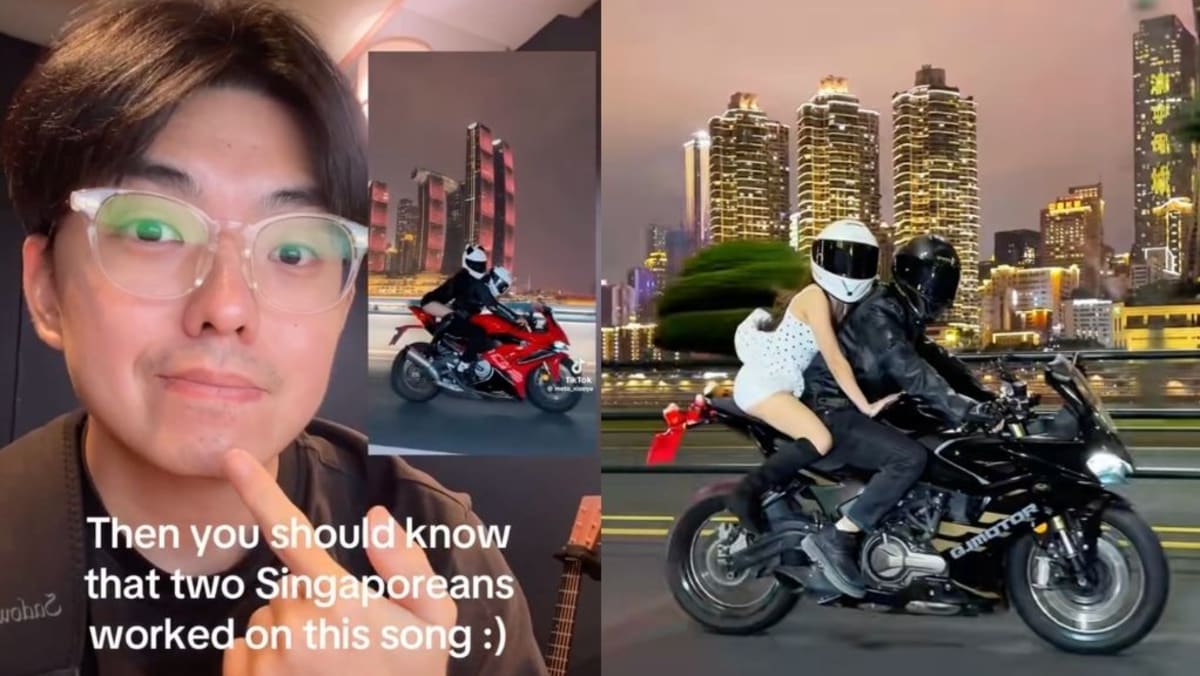
Behind the Beat: How Singapore Musicians Helped Create the Song Behind Chongqing’s Viral Motorbike Trend
In the digital age, a song can travel from a quiet recording studio to millions of smartphone screens in a matter of days, often crossing international borders without the creators even realizing the scale of the impact. This is exactly what happened with the soundtrack accompanying the viral “Chongqing motorbike trend,” a visual phenomenon that has captured the imagination of social media users across TikTok, Instagram, and Xiaohongshu. While the face of the music is Chinese singer Silence Wang, a closer look at the production reveals that Singapore musicians helped create the song behind Chongqing’s viral motorbike trend – CNA Lifestyle reporting has highlighted the surprising local connections embedded in this global hit.
The trend typically follows a cinematic formula: a tourist climbs onto the back of a motorbike, a dramatic musical swell begins, and the camera captures a high-speed journey through the neon-lit, futuristic skyline of Chongqing. The result is a sequence that feels less like a vacation video and more like a scene from a cyberpunk blockbuster. However, the “cyberpunk” energy of the visuals is matched by a sophisticated musical arrangement that owes its polish to talent from the Republic of Singapore.
The Singaporean Influence in a Global Viral Hit
While viral trends are often viewed as spontaneous bursts of internet culture, the audio that drives them is usually the result of meticulous professional craftsmanship. In the case of the Chongqing motorbike trend, the track’s sonic identity was shaped by two key Singaporean professionals: music arranger James Yeo and session guitarist Pan Zai En.
The division of labor in a high-end music production is often invisible to the listener, but it is critical to the final product. For this particular track, the roles were clearly defined to create a sound that could cut through the noise of a social media feed and evoke a specific emotional response.
| Contributor | Role in Production | Contribution to the Viral Track |
|---|---|---|
| Silence Wang | Lead Performer | Vocals and primary artistry for the song. |
| James Yeo | Music Arranger | Structured the musical elements and overall soundscape. |
| Pan Zai En | Session Guitarist | Recorded the specific guitar parts heard in the track. |
The Role of the Music Arranger
James Yeo served as the arranger for the track. In the music industry, the arranger is the architect of the song. While a songwriter provides the melody and lyrics, the arranger decides which instruments are used, how they enter and exit the song, and the overall “mood” of the piece. To achieve the dramatic, high-energy feel required for a “cyberpunk” aesthetic, the arrangement must balance tension and release, ensuring that the music peaks exactly when the visual action—such as the motorbike speeding through the city—intensifies.
The Precision of the Session Musician
Complementing the arrangement were the guitar recordings provided by Pan Zai En. As a session guitarist, Pan’s role is to execute a specific vision with technical precision. Session musicians are the “hired guns” of the music world, brought in for their ability to deliver a perfect take that fits the producer’s requirements. The guitar work in the viral track provides the necessary edge and drive that complements the neon-lit visuals of Chongqing, adding a layer of organic energy to the production.
The “Accidental” Fame: A Session Musician’s Perspective
One of the most compelling aspects of this story is the disconnect between the global reach of the music and the awareness of its creators. In an era where artists obsessively track their streaming numbers and “likes,” the experience of Pan Zai En serves as a reminder of the often-anonymous nature of session work.
“The funniest part? Pan had absolutely no idea how viral the song had become.”
The 32-year-old musician discovered the magnitude of the song’s success not through a professional notification or a label report, but by complete accident. While commuting on the MRT (Mass Rapid Transit), Pan realized that the track he had contributed to had blown up globally. This experience highlights a unique quirk of the modern music economy: a piece of work can become a cultural touchstone for millions of people while the technicians who built it continue their daily routines, unaware of their contribution to a global trend.
Decoding the Chongqing Motorbike Trend
To understand why this specific song became the heartbeat of the Chongqing trend, one must look at the intersection of geography, aesthetics, and algorithm.
The Cyberpunk Appeal of Chongqing
Chongqing is often cited as one of the most visually striking cities in the world. Its mountainous terrain, multi-layered roads, and dense concentration of neon signage create a natural “cyberpunk” atmosphere. When users pair these visuals with dramatic music, they are not just sharing a travel clip; they are creating a narrative of futuristic urban exploration.
The Mechanics of Short-Form Audio
On platforms like TikTok and Xiaohongshu, audio functions as a “template.” Once a specific sound is associated with a successful visual format (in this case, the motorbike ride), other users adopt the same audio to signal that their video belongs to that specific trend. This creates a feedback loop: the more the song is used, the more the algorithm pushes it, and the more “essential” the song becomes to the trend’s identity.
The success of the track performed by Silence Wang, arranged by James Yeo, and featuring Pan Zai En’s guitar work, is a testament to the power of audio-visual synergy. The music does not just accompany the video; it validates the “blockbuster” feel of the Chongqing skyline.
The Broader Impact of Cross-Border Collaborations
The involvement of Singaporean talent in a track for a Chinese singer that eventually went viral globally underscores a growing trend in the Asian entertainment industry: the rise of regional hubs of expertise.
Singapore as a Production Hub
Singapore has long been a crossroads for trade and culture, and this extends to the creative arts. By hosting highly skilled session musicians and arrangers, the city-state contributes to the “invisible” infrastructure of the regional music industry. When international artists seek a specific sound or a high level of technical polish, they often turn to specialists in hubs like Singapore who can deliver world-class production standards.
The Globalization of Local Talent
This case study demonstrates how local talent can achieve global reach without traditional promotion. Pan Zai En and James Yeo did not need a marketing campaign to reach millions of listeners; their work traveled via the “algorithmic rails” of social media. This shifts the paradigm of success for musicians, where technical excellence in a session can lead to massive, albeit sometimes unexpected, exposure.
- Diversification of Credit: While the lead singer receives the primary credit, the “behind-the-scenes” team (arrangers, session players) are the ones who define the sonic texture.
- Digital Distribution: Social media removes the need for a centralized distributor to make a song a “hit.”
- Cultural Exchange: The blend of Chinese performance and Singaporean production creates a hybrid product that appeals to a broad, international audience.
Common Misconceptions About Viral Music Production
When a song goes viral, there are often several misconceptions about how it happened and who was involved. This story provides a useful opportunity to correct some of these narratives.
Misconception 1: Viral songs are “simple” or “lo-fi”
Many believe that the songs that trend on TikTok are simple, amateur recordings. In reality, many of the most successful “sounds” are professionally produced tracks. The Chongqing trend’s music is a prime example, featuring professional arrangement and session recording to achieve a high-fidelity, cinematic sound.
Misconception 2: The artist is the sole creator of the “vibe”
While Silence Wang is the voice of the track, the “vibe”—the dramatic, driving energy that makes it perfect for a motorbike video—is largely the result of the arrangement (James Yeo) and the instrumentation (Pan Zai En). The “vibe” is a collaborative effort between the performer and the production team.
Misconception 3: Artists are always aware of their virality in real-time
As seen with Pan Zai En’s MRT discovery, the people behind the music are not always plugged into the social media trends their work fuels. The gap between production and consumption can be vast, especially for session musicians who may move on to the next project before the previous one hits the algorithm’s “sweet spot.”
Analyzing the “Soundtrack Economy”
The phenomenon of the Chongqing motorbike trend is part of a larger shift toward what can be called the “soundtrack economy.” In this model, the value of a song is no longer measured solely by album sales or radio play, but by its “utility” as a background for user-generated content (UGC).
For a song to be “useful” in this economy, it must possess certain qualities:
- Strong Hook: A recognizable melodic or rhythmic peak that coincides with a visual “drop.”
- Atmospheric Depth: The ability to evoke a specific setting (e.g., the neon, futuristic feel of Chongqing).
- Emotional Resonance: A feeling of excitement, luxury, or adventure that the user wants to associate with their own life.
By hitting these markers, the collaboration between Silence Wang, James Yeo, and Pan Zai En created a piece of audio that became a tool for millions of creators to enhance their own digital storytelling.
For those interested in how regional music hubs operate, this story serves as a perfect entry point. You might also find a related explainer on the role of session musicians in modern pop useful for understanding how these professional relationships function across the industry.
Frequently Asked Questions
Who are the Singaporean musicians involved in the Chongqing motorbike trend song?
The Singaporean contributors are music arranger James Yeo, who structured the track’s sound, and session guitarist Pan Zai En, who recorded the guitar parts.

What is the “Chongqing motorbike trend”?
It is a viral social media trend on platforms like TikTok, Instagram, and Xiaohongshu where users post cinematic videos of themselves riding on the back of a motorbike through the neon-lit, futuristic streets of Chongqing, usually set to dramatic music.
Who is the singer of the viral track?
The song is performed by the Chinese singer Silence Wang.
How did Pan Zai En find out the song went viral?
Pan Zai En, the session guitarist, discovered the trend by accident while he was traveling on the MRT.
Why is the song described as having a “cyberpunk” feel?
The combination of the high-energy musical arrangement and the visuals of Chongqing’s futuristic, neon-drenched skyline evokes the “cyberpunk” aesthetic, which is characterized by high-tech urban environments and a gritty, cinematic atmosphere.
The intersection of professional music production and organic social media growth continues to redefine how we discover art. The fact that Singapore musicians helped create the song behind Chongqing’s viral motorbike trend – CNA Lifestyle highlights the invisible but essential role that regional specialists play in the global cultural landscape. As the “soundtrack economy” grows, the bridge between a recording studio in Singapore and a neon street in Chongqing becomes shorter, proving that technical excellence knows no borders.
