How Shanghai Film Festival Is Grooming Asia’s Next Generation of Filmmakers—and Why It Matters for Global Cinema
The 26th Shanghai International Film Festival (SIFF) has emerged as a pivotal platform for Asia’s emerging talent, blending star power with a strategic push into technology and cross-border collaboration. This year’s edition, running from June 15 to 25, marks a deliberate shift toward nurturing new voices in filmmaking while integrating artificial intelligence and immersive storytelling—moves that signal a broader ambition to position Shanghai as a hub for both artistic innovation and industry disruption.
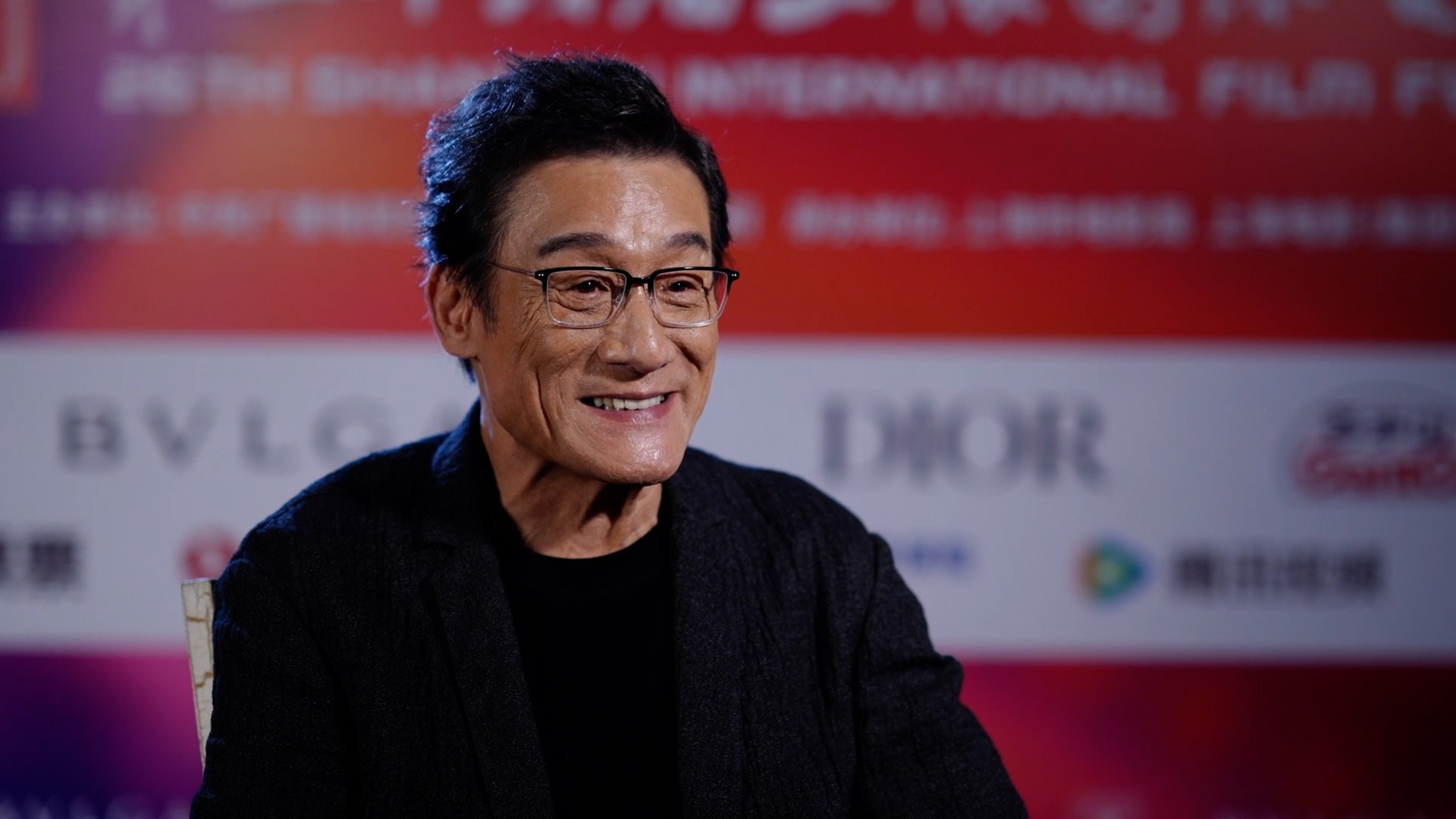
At the festival’s opening gala, Oscar winner Michelle Yeoh and Hong Kong icon Tony Leung headlined a red carpet that underscored the event’s dual focus: celebrating established Asian cinema while spotlighting the next wave of directors, screenwriters, and producers. Behind the scenes, organizers unveiled a dedicated AI and film technology initiative, aiming to accelerate the adoption of machine learning in everything from script development to post-production. Industry observers say the festival’s approach reflects a calculated bet on Asia’s growing creative economy—a sector poised to rival Hollywood’s dominance in the coming decade.
This strategy isn’t just about prestige. With China’s film industry recovering from pandemic-era slowdowns and global streaming platforms aggressively scouting Asian content, SIFF’s focus on technology and talent development could redefine how Asian stories are told—and who gets to tell them.
What’s New at This Year’s Shanghai Film Festival?
The festival’s 2024 edition stands out for three major developments:
A record emphasis on emerging Asian talent, with dedicated sections for first-time directors and cross-border co-productions.
The launch of an AI Film Lab, a collaboration with tech firms to explore generative AI in screenwriting, visual effects, and audience engagement.
Expanded partnerships with international distributors, including platforms like Netflix and Amazon Prime, to ensure Asian films reach global audiences.
According to festival organizers, over 40% of the competitive lineup features films by directors under 40, a deliberate departure from past editions that often centered on established auteurs. “We’re not just looking for finished products,” said a spokesperson for SIFF. “We want to identify the filmmakers who will shape the next 20 years of Asian cinema.”
The AI initiative, announced in partnership with Baidu’s AI research division and Shanghai Media Group, will offer grants to filmmakers experimenting with AI tools. Early projects include a Korean thriller using AI-generated dialogue and a Chinese documentary employing machine learning to reconstruct historical footage.
Who’s Behind the Push for Asia’s Next Generation?
SIFF’s transformation reflects broader industry trends. Three key players are driving the shift:
Festival organizers cite China’s 14th Five-Year Plan, which prioritizes cultural exports and technological innovation as economic growth drivers. “Film is no longer just entertainment—it’s a strategic asset,” said a senior official at the Shanghai Municipal Culture Bureau, who requested anonymity.
Tech companies like Baidu and Tencent are investing in film-related AI to secure influence in a sector where creativity meets data. Baidu’s AI lab, for instance, has already partnered with Shanghai Film Academy to train students in AI-assisted storytelling.
Global streaming platforms are increasingly viewing Asian content as a growth market. Netflix’s Asia Originals team, which has invested heavily in Korean and Japanese productions, sees SIFF as a key discovery platform. “We’re not just buying finished films anymore,” said a source familiar with Netflix’s strategy. “We’re looking for the people who will create the next wave of hits.”
Yet the festival’s ambitions face challenges. Critics point to censorship concerns, particularly around politically sensitive themes, which could limit the creative freedom of emerging filmmakers. “The pressure to align with state narratives is real,” noted Wang Xiaoshuai, a veteran Chinese director whose work has navigated these tensions. “But the festival’s tech push offers a way around some of those constraints—by focusing on form over content.”
Why Does This Matter for Global Cinema?
Asia’s film industry is at a crossroads. Here’s how SIFF’s strategy fits into the bigger picture:
Market Shift: Asia’s box office revenue hit $28.6 billion in 2023, surpassing North America for the first time, according to MPA – Motion Picture Association. SIFF’s focus on new talent aligns with this growth, as platforms like Netflix and Disney+ compete for Asian content.
Technological Race: Hollywood studios are investing in AI tools, but Asia’s approach—integrating AI with traditional filmmaking—could offer a distinct advantage. “The West sees AI as a tool for efficiency,” said Dr. Li Wei, a film technology researcher at Beijing Film Academy. “In Asia, it’s being used to redefine storytelling itself.”
Cultural Influence: Films like Parasite (2019) and Drive My Car (2021) proved that Asian stories can dominate global awards. SIFF’s talent development could produce the next generation of Oscar contenders.
However, the festival’s success hinges on balancing commercial viability with artistic integrity. “The risk is that tech-driven filmmaking becomes a gimmick,” warned Park Chan-wook, whose Decision to Leave premiered at SIFF in 2022. “But if done right, it could unlock entirely new creative possibilities.”
How Is the Industry Reacting?
Responses to SIFF’s new direction fall into three camps:
RSIFF 2024: Emily Blunt, Michelle Yeoh, Eva Longoria Attend Women in Cinema Gala Dinner
Supportive: Netflix and Amazon Prime have publicly praised the festival’s focus on emerging talent, with executives calling it a “game-changer for Asian storytelling.” A spokesperson for Warner Bros. Discovery’s Asia division noted that the festival’s AI initiatives “align perfectly with our own experiments in generative media.”
Cautious: Some Western studios express skepticism about the festival’s ability to produce commercially viable films under potential censorship constraints. “The creative freedom has to be there,” said a source at a major Hollywood studio.
Experimental: Independent filmmakers and tech startups are embracing the AI push. Korean director Lee Chang-dong, whose Burning (2018) was a SIFF highlight, has begun collaborating with AI researchers to explore non-linear narratives. “This could be the start of a new language in cinema,” he said.
On the ground, the festival’s red carpet has drawn comparisons to Cannes and Venice, but with a distinctly Asian flavor. Unlike its European counterparts, SIFF’s opening night featured a traditional Chinese opera performance alongside the red carpet, blending cultural heritage with modern glamour. “It’s not just about the films anymore,” said a festival attendee. “It’s about the ecosystem.”
What Comes Next for Shanghai’s Film Ambitions?
SIFF’s 2024 edition is just the beginning. Three developments to watch:
Expansion of the AI Film Lab: Organizers plan to announce additional grants in 2025, with a focus on virtual production and AI-driven script analysis. Early adopters include Shanghai Film Group, which is testing AI in its upcoming blockbuster.
Stronger ties with Southeast Asia: The festival is in talks with Singapore’s Golden Screen Awards and Thailand’s Sukhothai Film Festival to create a regional talent exchange program.
A potential IPO for SIFF’s tech arm: Rumors suggest organizers may spin off the AI initiative into a separate entity, with backing from China’s state-owned media funds. If realized, it could model a new pathway for film-tech hybrids.
For now, the festival’s immediate focus remains on its core mission: identifying and supporting Asia’s next generation of filmmakers. “We’re not just hosting a film festival,” said a festival insider. “We’re building an industry.”
As Hollywood grapples with labor strikes and streaming saturation, Shanghai’s bet on talent and technology offers a blueprint for how cinema can evolve in the AI era. Whether it succeeds will depend on one question: Can innovation coexist with creativity in an industry still shaped by tradition?
Key Questions About Shanghai Film Festival’s New Direction
How will AI change filmmaking at SIFF?
AI tools will assist in scriptwriting, visual effects, and even audience engagement. For example, Baidu’s AI can generate dialogue based on cultural themes, while post-production teams are testing AI to enhance visuals in low-budget films.
Will censorship limit creative freedom?
Organizers emphasize that the AI push focuses on technical innovation rather than content, reducing direct censorship risks. However, politically sensitive themes may still face scrutiny, as seen in past festival selections.
How does SIFF compare to Cannes or Venice?
While Cannes prioritizes artistic prestige and Venice focuses on auteurs, SIFF’s blend of star power, tech integration, and commercial partnerships makes it unique. Its red carpet, for instance, often features more Asian stars than its Western counterparts.
Can Asian films compete globally with Hollywood?
Yes—but it requires strategic distribution. Films like Parasite and The Wailing proved that Asian stories can dominate awards and box offices. SIFF’s focus on talent development aims to produce more such hits.
What’s the timeline for SIFF’s AI initiatives?
Pilot projects are underway now, with full integration planned by 2025. The first AI-assisted films are expected in the festival’s 2026 lineup.
How can filmmakers get involved?
SIFF’s AI Film Lab will open applications in late 2024. Eligible projects must demonstrate innovative use of AI in storytelling, with a focus on Asian narratives. Details will be announced on the official SIFF website.
Finn O’Connell leads the Entertainment desk at archypedia.news, covering film, television, music, streaming, and internet culture. Finn began as an indie film critic, writing long-form reviews and festival coverage, before branching into music journalism and podcasting. His storytelling blends enthusiasm for pop culture with a sharp critical lens.
At ArchyPedia, Finn focuses on what audiences are actually watching, listening to, and sharing—from blockbuster releases and prestige dramas to viral online phenomena. His team’s summaries capture the key facts (release dates, viewership milestones, awards, controversies) while also highlighting why a story matters: how it reflects cultural shifts, business model changes, or new creative voices.
Finn is particularly fascinated by how streaming platforms and social media are reshaping the entertainment industry. He works closely with the Business and Technology desks on stories about mergers, platform wars, creator economies, and the future of media.