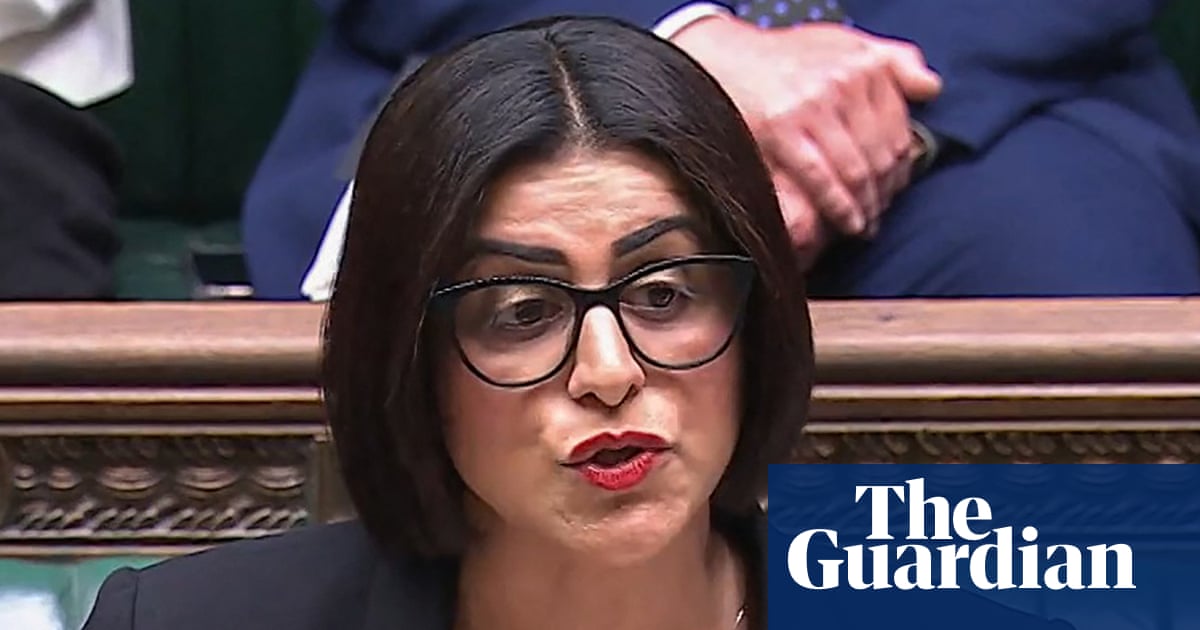
Shabana Mahmood Warns of ‘Dangerous Undercurrent’ Following the Murder of Henry Nowak: A Deep Dive into UK Social Tensions
The United Kingdom is currently grappling with a volatile mixture of grief, anger, and systemic distrust following the brutal murder of Henry Nowak, a student in Southampton. While the legal system has moved toward a conviction, the aftermath of the crime has spiraled into a broader national conversation about social cohesion, policing tactics, and the fragility of community relations. The situation reached a critical point when the Justice Secretary, Shabana Mahmood, issued a stark warning regarding a “dangerous undercurrent” simmering within the population—a sentiment that suggests the Nowak case is not merely an isolated tragedy but a catalyst for deeper, latent societal frictions.
The intersection of a violent crime, controversial police conduct, and the rapid spread of provocative digital media has created a perfect storm. From clashes between protesters and law enforcement to viral videos that have reignited debates over police brutality and racial profiling, the murder of Henry Nowak has become a flashpoint for a nation struggling to reconcile its diversity with its desire for security, and justice.
The Tragedy in Southampton: The Murder of Henry Nowak
The core of this crisis began with the killing of Henry Nowak, a young student whose life was cut short in an act of violence that shocked the city of Southampton. The details of the case, which emerged through court proceedings and police reports, painted a picture of a senseless crime that left a family devastated and a community searching for answers.
Following an intensive investigation by the Hampshire Constabulary, a man was eventually apprehended and convicted of the murder. While the legal resolution provided a sense of closure for the judicial process, it did little to quell the public unrest. The nature of the crime, and the perceived delays or handling of the initial investigation, fueled a narrative of inadequacy that resonated far beyond the borders of Southampton.
Timeline of Key Events
To understand how a local murder evolved into a national security concern, it is necessary to look at the sequence of events that led to the current state of unrest.
| Phase | Key Event | Impact |
|---|---|---|
| The Incident | Murder of Henry Nowak in Southampton | Immediate local shock and mourning. |
| Investigation | Police pursuit and eventual arrest of the suspect | Initial public scrutiny over police response times. |
| Legal Process | Conviction of the perpetrator in court | Formal justice served, but public anger persists. |
| Escalation | Release of controversial arrest footage | Shift from grief to systemic outrage and protests. |
| Political Response | Shabana Mahmood warns of “dangerous undercurrents” | Recognition of the event as a symptom of wider social instability. |
Analyzing the ‘Dangerous Undercurrent’: Shabana Mahmood’s Warning
When Shabana Mahmood spoke of a “dangerous undercurrent,” she was not referring solely to the specific details of the Nowak case. Instead, she was identifying a pattern of volatility that has become increasingly common in the UK’s socio-political landscape. This “undercurrent” refers to the latent tensions—often rooted in race, class, and national identity—that remain dormant until a high-profile event triggers a violent or chaotic eruption.
The Justice Secretary’s warning highlights several critical vulnerabilities in the current social fabric:

- Erosion of Trust in Institutions: There is a growing perception that the police and the judiciary do not apply the law equally to all citizens, regardless of their background.
- The Echo Chamber Effect: Social media has accelerated the speed at which outrage spreads, often stripping away nuance and replacing it with inflammatory narratives.
- Polarization of Identity: The tragedy has been weaponized by various factions to push narratives of “us versus them,” turning a murder investigation into a cultural war.
“The danger lies not just in the act of violence itself, but in how that violence is interpreted and amplified to fuel division across our communities.”
By framing the situation as an “undercurrent,” Mahmood suggests that the protests and clashes are merely the visible tip of a much larger iceberg of discontent. This suggests that unless the root causes of this instability are addressed, similar tragedies will continue to spark disproportionate social unrest.
The Catalyst: Police Conduct and the “I Can’t Breathe” Controversy
While the murder of Henry Nowak provided the spark, the subsequent reaction of the police acted as the accelerant. Public outrage reached a fever pitch following the circulation of a video showing the arrest of a teenager who had been stabbed by an Indian national. In the footage, the dying youth appears to struggle for air, leading to widespread comparisons to the “I can’t breathe” cries associated with global movements against police brutality.
The optics of the arrest—police appearing to prioritize restraint and procedure over immediate life-saving intervention for a critically wounded individual—outraged a significant portion of the public. This specific incident shifted the narrative from the crime committed by the murderer to the conduct of the state.
The Psychology of the Outrage
The phrase “the arrest that outraged a nation” captures the essence of this shift. For many, the video was not seen as a standard police operation in a high-stress environment, but as a symbol of a cold, detached, or even hostile state apparatus. This perception is particularly potent when the incident involves different ethnic or national identities, as it allows the public to project existing grievances regarding racism and systemic bias onto a single, visceral image.
The clash between protesters and police in the wake of this video was not just about the Nowak case; it was a manifestation of a deeper struggle over who is protected by the law and who is targeted by it. When pleas for calm were ignored, it indicated that the level of distrust had reached a point where official government or police communication was no longer viewed as credible.
Wider Implications for UK Social Cohesion
The fallout from the Henry Nowak murder and the subsequent political warnings underscore a precarious moment for the United Kingdom. The ability of a single crime to trigger national instability suggests that the “social contract”—the unspoken agreement between citizens and the state—is fraying.

The Role of Digital Disinformation
In the modern era, news does not travel in a linear fashion. The “dangerous undercurrent” Mahmood warns of is often fed by algorithmic amplification. When a video of a police arrest goes viral, it is frequently stripped of context and shared within communities already predisposed to distrust authority. This creates a feedback loop where the emotional response overrides the factual record, making it nearly impossible for authorities to “de-escalate” the situation through traditional press releases.
The Intersection of Crime and Identity Politics
The fact that the perpetrator and the victim belonged to different backgrounds added a layer of complexity to the case. In a polarized environment, crimes are rarely viewed as individual failures of morality or mental health; instead, they are often interpreted as representative of a specific group. This “group-blaming” mechanism transforms a criminal trial into a referendum on immigration, integration, and national identity.
To navigate this, experts suggest a shift toward community-led policing and more transparent communication. However, as the Nowak case demonstrates, when the public perceives a lack of empathy from the state, these structural changes can feel like “too little, too late.”
Addressing Misconceptions About the Case
In the wake of such high-profile unrest, several misconceptions often take root. It is vital to clarify these points to maintain a factual understanding of the events.
- Misconception: The protests were solely about the murder.
Reality: While the murder was the catalyst, the protests were largely driven by the subsequent police response and the viral footage of the arrest, reflecting broader grievances about policing. - Misconception: The legal system failed because the unrest continued.
Reality: From a purely judicial standpoint, the system functioned—a suspect was caught, tried, and convicted. The “failure” was social and communicative, not necessarily legal. - Misconception: The “I can’t breathe” comparisons were purely political.
Reality: For many, these comparisons were a visceral reaction to the perceived lack of medical urgency during a police arrest, regardless of the political affiliations of those involved.
Comparing the Nowak Unrest to Previous Social Flashpoints
The reaction to the Nowak case mirrors other recent instances of civil unrest in the UK, where a single incident of violence or a perceived injustice acted as a lightning rod for wider frustrations. Whether it be riots sparked by misinformation or protests against austerity and policing, the pattern remains consistent: a trigger event $rightarrow$ viral amplification $rightarrow$ physical manifestation of unrest $rightarrow$ political warning.
However, the Nowak case is distinct in how it highlights the specific tension between the justice system’s need for “due process” and the public’s demand for “immediate empathy.” The gap between these two needs is where the “dangerous undercurrent” resides.
Key Takeaways for Understanding the Current Climate
- Emotional Truth vs. Factual Truth: In the digital age, the “emotional truth” of a viral video often carries more weight than the “factual truth” of a court verdict.
- Institutional Fragility: Trust in the police is at a critical low, meaning even standard procedures can be interpreted as malicious.
- The Necessity of Nuance: Addressing the “dangerous undercurrent” requires moving beyond simple condemnation of protests and toward an understanding of the underlying grievances.
Frequently Asked Questions
Who is Henry Nowak and why is his case so significant?
Henry Nowak was a student in Southampton whose murder sparked significant public outcry. The case became a national story not only because of the crime itself but because of the subsequent social unrest and the warnings from the Justice Secretary about the state of UK social cohesion.
:max_bytes(150000):strip_icc():focal(984x727:986x729)/Henry-Nowak-120725-d4a8a910bfca4528978e2938ffd9e19c.jpg "The Guardian Henry Nowak")
What did Shabana Mahmood mean by a “dangerous undercurrent”?
Justice Secretary Shabana Mahmood was referring to the latent social and racial tensions within the UK that can be triggered by high-profile crimes. She warned that these tensions can lead to volatility and violence if the public feels the justice system is unfair or if social divisions are exploited.
Why did the police arrest of a dying teen cause so much outrage?
The outrage stemmed from video footage that appeared to show police prioritizing the arrest process over the immediate medical needs of a stabbing victim. The phrase “I can’t breathe” was used by critics to draw parallels to systemic police brutality, leading to a perception of cruelty or negligence.
Was the person responsible for Henry Nowak’s murder convicted?
Yes, a man was convicted of the murder following an investigation by the Hampshire Constabulary. Despite the legal conviction, the social unrest continued due to the surrounding controversies regarding policing and community relations.
How has social media influenced the reaction to this case?
Social media acted as an accelerant, spreading controversial footage rapidly and allowing narratives of systemic failure to grow without the tempering effect of traditional journalistic fact-checking. This contributed to the speed and scale of the protests.
As the UK continues to navigate the aftermath of the Henry Nowak tragedy, the focus must shift from the courtroom to the community. The legal conviction of a murderer is a necessary step, but it is not a cure for the “dangerous undercurrent” identified by Shabana Mahmood. True stability will require a concerted effort to rebuild trust between the public and the institutions sworn to protect them, ensuring that justice is not only served but is seen to be served with empathy and equity. The events in Southampton serve as a stark reminder that in a deeply divided society, the way a tragedy is handled can be just as impactful as the tragedy itself.
