Sepp Kuss’s Giro d’Italia Stage Win Proves Greatness Isn’t a Trend—It’s a Legacy
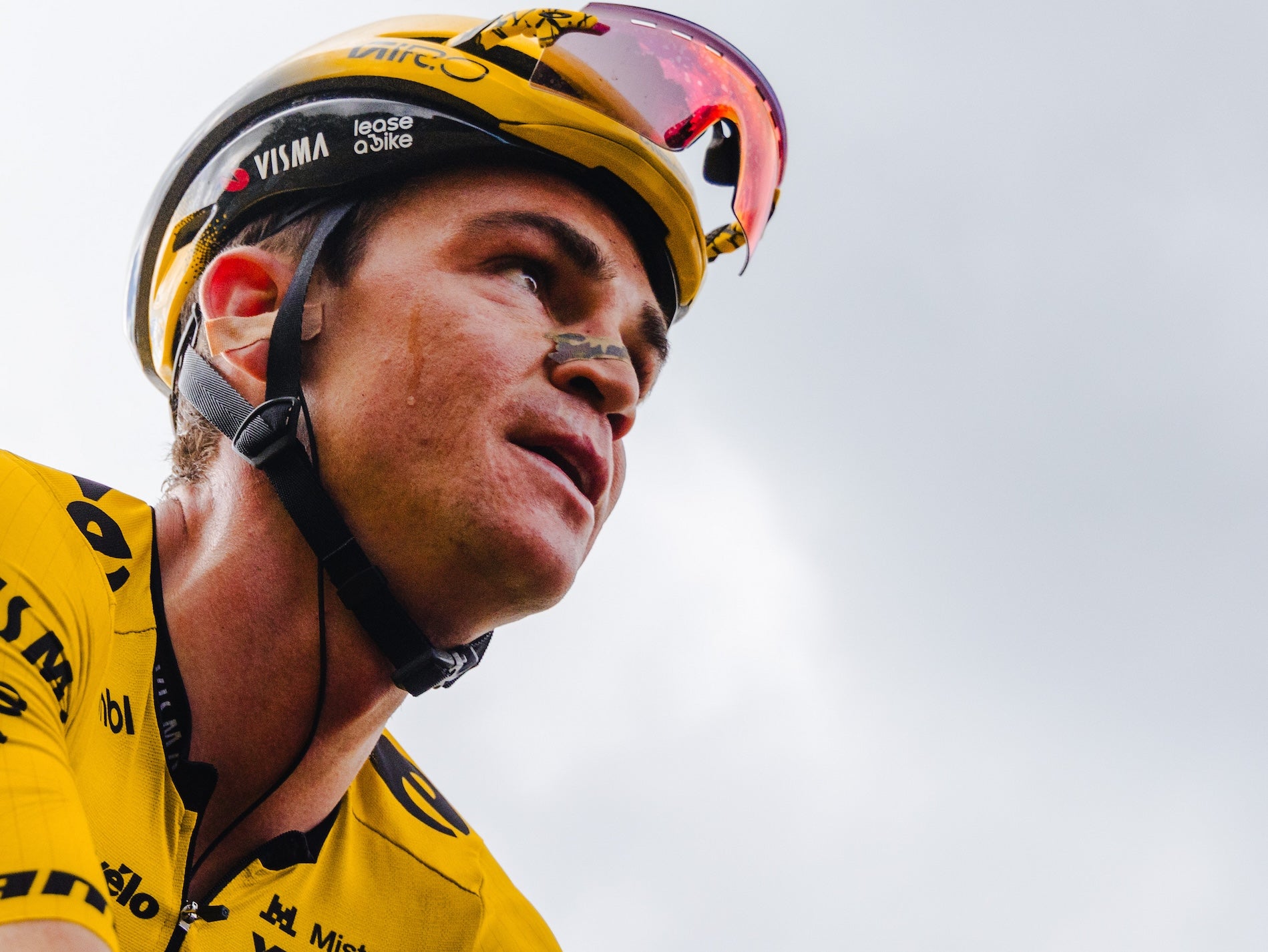
The mountains of the Dolomites don’t forgive hesitation. On Tuesday, June 2, 2026, Sepp Kuss climbed them with the quiet confidence of a rider who has spent years mastering the art of dominance. In a stage that tested every facet of a cyclist’s physical and mental endurance—150 kilometers, six categorized climbs, and a final ascent that would break even the most seasoned pros—Kuss didn’t just win. He redefined what it means to be a champion in an era where talent is abundant but true greatness is rare.
With a solo attack on the final climb to Piani di Pezze, Kuss outdueled Giulio Ciccone in the last 2.2 kilometers, crossing the line alone after a day that saw the peloton fracture under the weight of the Alps. The victory wasn’t just another stage win; it was the completion of a trilogy. For the first time in his career, Kuss had claimed a stage in all three Grand Tours—the Giro d’Italia, Tour de France, and Vuelta a España. In an sport where consistency is fleeting and peaks are temporary, this achievement cemented something far more enduring: the idea that Kuss isn’t just another climber, but a classic.
As the 31-year-old American stood on the podium, his team’s captain, Jonas Vingegaard, remained in the pink jersey. But the day belonged to Kuss—a reminder that even in the shadow of a Danish legend, there are riders who carry their own kind of immortality.
— ###
The Stage That Separated the Legends from the Rest
The nineteenth stage of the 2026 Giro d’Italia was designed to separate the men from the boys. Starting in Feltre, the route snaked through the Veneto region before ascending six categorized climbs, including the fearsome Passo Falzarego and the final, punishing ascent to Piani di Pezze. The stage was a masterclass in course selection, crafted to reward those who could endure the relentless rhythm of the Alps while punishing the rest.
From the outset, the breakaway was the story. A large group of riders escaped early, including Kuss, who found himself in a select group that would dictate the day’s narrative. The breakaway held together through the first two climbs—Passo Duran and Passo Giau—before the real battles began. On Passo Falzarego, Giulio Ciccone, the Italian rider, launched a solo attack, building a lead of over a minute. The gap was too much for the chasing group, but Kuss, riding for Team Visma | Lease a Bike, set the pace in the descent, ensuring no one would be left behind.
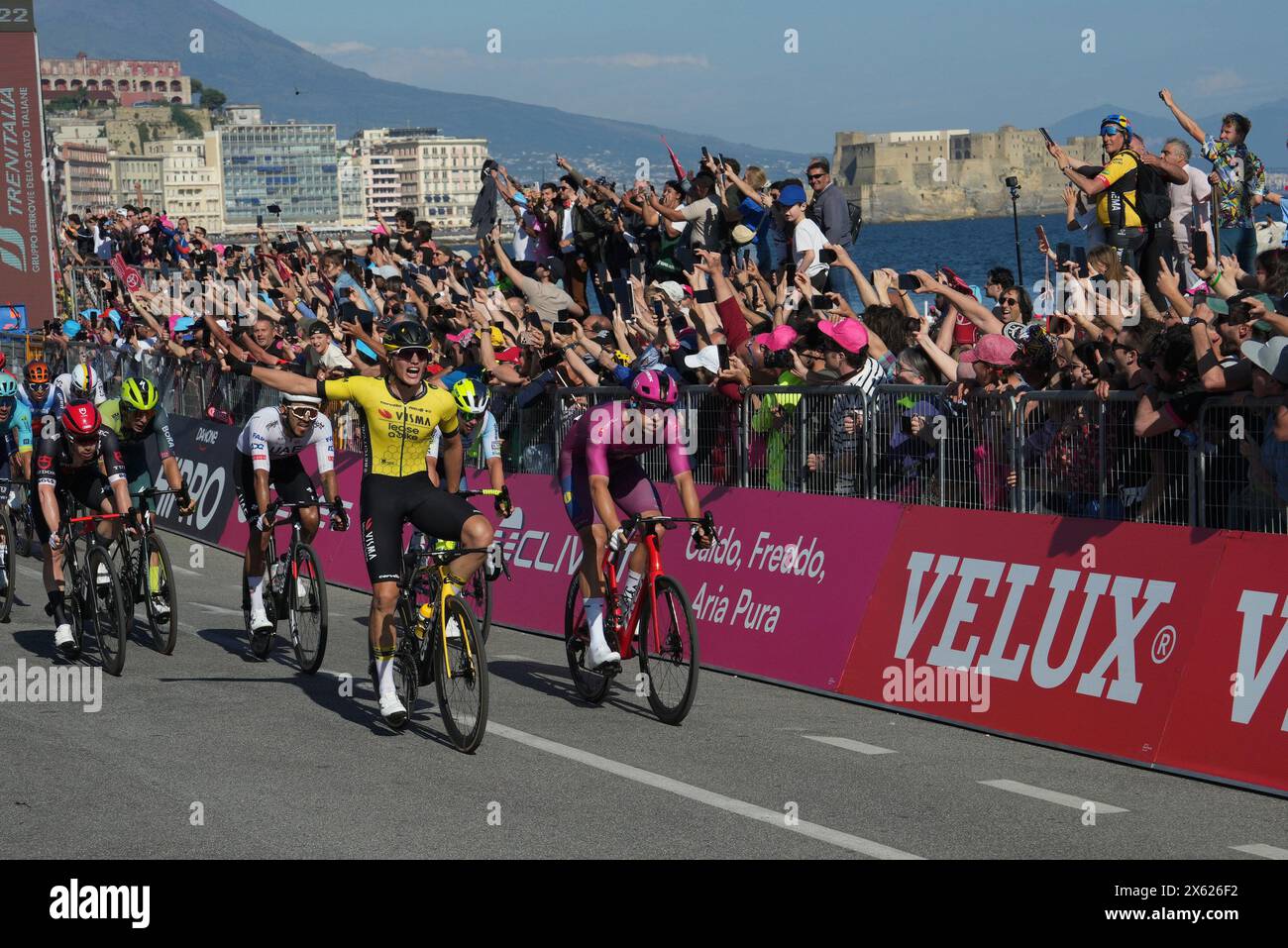
Then came the final climb. As the peloton thinned, Kuss dropped his remaining companions and went after Ciccone. The Italian had a comfortable lead, but Kuss was relentless. With 2.2 kilometers remaining, he caught and passed Ciccone, then accelerated into the unknown. The crowd roared as he soloed to victory, his arms raised in triumph. The message was clear: on this day, no one could match his will to win.
Key moments of the stage:
- Early breakaway: Kuss and a group of riders escaped in the opening kilometers, setting the stage for a day of attrition.
- Ciccone’s attack: On Passo Falzarego, the Italian rider built a lead that seemed insurmountable.
- Kuss’s chase: The American controlled the pace in the descent, ensuring no one could exploit Ciccone’s lead.
- The final assault: Kuss caught and passed Ciccone with 2.2km to go, then soloed to victory.
- Vingegaard’s protection: While Kuss was winning the stage, Team Visma | Lease a Bike managed the peloton to keep Vingegaard in the pink jersey.
By the time Kuss crossed the line, the stage had become more than a race—it was a statement. In an era where cycling’s biggest stars are often defined by their ability to dominate a single Grand Tour, Kuss had done something far rarer: he had proven himself across all three.
— ###
Why This Win Matters: The Trilogy That Redefines a Career
Kuss’s victory wasn’t just about beating Ciccone or outlasting the peloton. It was about completing a trilogy that had eluded him for years. In cycling, winning a stage in all three Grand Tours is a benchmark of true excellence—a testament to a rider’s ability to adapt, endure, and perform at the highest level across different terrains, and conditions.
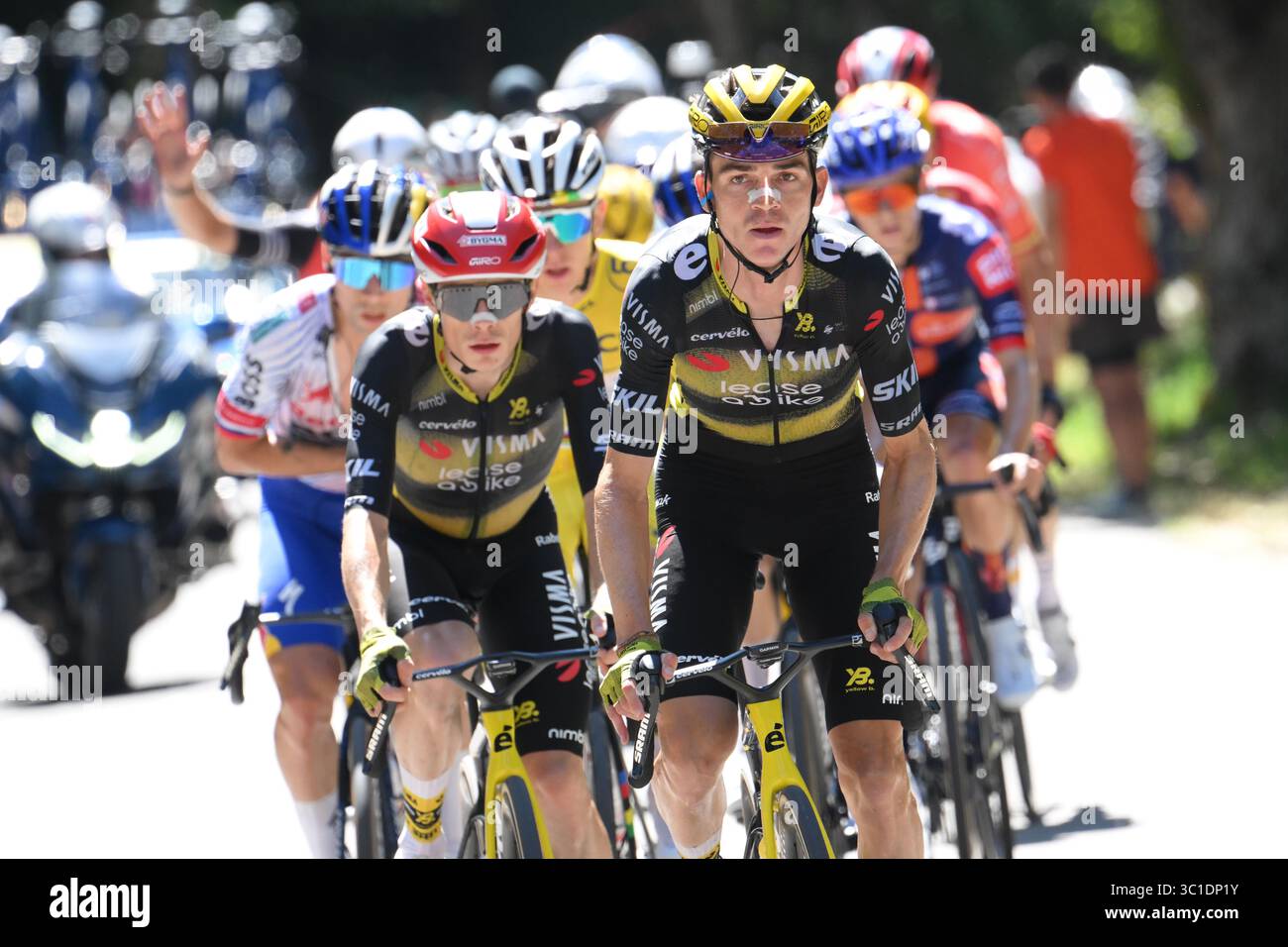
For Kuss, this wasn’t a fluke. It was the culmination of a career built on consistency. Unlike some climbers who peak early and fade quickly, Kuss has maintained his form well into his 30s. His ability to climb, descend, and race in the peloton has made him one of the most complete riders in the peloton today.
Kuss’s Grand Tour stage wins before this victory:
- Tour de France: Stage 17, 2023 (Alpe d’Huez)
- Vuelta a España: Stage 12, 2024 (Angliru)
But this win was different. The Giro d’Italia is often considered the most demanding of the three Grand Tours, with its relentless climbing and unpredictable weather. To win a stage here was to prove that Kuss wasn’t just a climber—he was a complete rider, capable of dictating a race from start to finish.
As Kuss himself said afterward, “I still can’t believe I won this stage. It’s something I’ve dreamed about for a long time, but I also knew it would be difficult to achieve. Every year the level gets higher, so I knew I wouldn’t have many chances left to win a stage in the Giro. Today, everything finally came together. This is special.”
His words carried weight. In an era where riders are often defined by their ability to win a single Grand Tour, Kuss had done something far more enduring: he had proven that greatness isn’t a trend—it’s a legacy.
— ###
Who Is Sepp Kuss? The American Climber Who Defies Expectations
Sepp Kuss didn’t start as a climber. Born in South Dakota in 1992, he began his career as a time trialist, excelling in the flat stages of the Tour de France. But it was his ability to adapt that set him apart. By 2020, he had transitioned into a climber, and by 2023, he was winning stages in the Tour de France.

What makes Kuss unique is his versatility. Unlike some climbers who struggle in the peloton or on descents, Kuss is a complete rider. He can attack from the front, control the pace in the peloton, and descend with the best of them. This adaptability has made him a key player for Team Visma | Lease a Bike, where he has formed a formidable partnership with Jonas Vingegaard.
Kuss’s career highlights:
- 2018: Won the national road race championship, signaling his rise as a pro.
- 2020: Transitioned to climbing, winning stages in the Tour de Suisse and Vuelta a España.
- 2023: Won Stage 17 of the Tour de France (Alpe d’Huez), his first Grand Tour stage.
- 2024: Won Stage 12 of the Vuelta a España (Angliru), solidifying his reputation as a climber.
- 2026: Completed the Grand Tour trilogy with a solo victory in the Giro d’Italia.
Kuss’s rise hasn’t been without challenges. Injuries and setbacks have tested his resilience, but his ability to bounce back has only strengthened his reputation. Now, at 31, he stands at the peak of his powers, proving that age is just a number when talent and determination are in play.
— ###
The Bigger Picture: What Kuss’s Win Says About Cycling Today
Kuss’s victory comes at a time when cycling is more competitive than ever. The peloton is deeper than it’s been in decades, with riders from Europe, South America, and North America pushing each other to new limits. In this environment, standing out isn’t uncomplicated.
Yet Kuss has done just that. His ability to win in all three Grand Tours—each with its own unique challenges—sets him apart from his peers. While some riders dominate a single race, Kuss has proven he can excel across the board.
This win also highlights the strength of Team Visma | Lease a Bike. Under the leadership of Jonas Vingegaard, the team has become a force to be reckoned with, combining tactical brilliance with raw athleticism. Kuss’s victory was a testament to the team’s depth, showing that even when Vingegaard isn’t winning stages, his teammates are more than capable of delivering.
For cycling fans, Kuss’s win is a reminder that greatness isn’t about trends or fads. It’s about consistency, adaptability, and the willingness to take risks when it matters most. In a sport where one bad day can define a career, Kuss has shown that true champions don’t just win—they endure.
— ###
Reactions: How the Peloton and Fans Responded
Kuss’s victory didn’t go unnoticed. Across the peloton, riders and fans alike praised his performance, recognizing that this was more than just a stage win—it was a career-defining moment.
Giulio Ciccone: Though he finished second, Ciccone acknowledged Kuss’s dominance. “He’s a special rider. Today, he was unstoppable. I knew he was coming for me, but I didn’t think he’d go that hard in the final kilometers.”
Jonas Vingegaard: While Vingegaard remained focused on his own race for the pink jersey, he couldn’t help but admire his teammate’s effort. “Sepp has always been a rider who can do it all. Today was a perfect example of that. He didn’t just win the stage—he made it look easy.”
Cycling pundits: Many analysts have compared Kuss to past legends like Marco Pantani and Alberto Contador, riders who defined an era with their climbing prowess. While Kuss may not have the same flamboyance as Pantani or the aggression of Contador, his consistency and adaptability have earned him a place among cycling’s all-time greats.
For fans, Kuss’s win was a moment of pure excitement. In an era where cycling is often dominated by a handful of superteams, Kuss’s ability to win on his own terms has made him a fan favorite. His humility and sportsmanship have only added to his appeal, making him one of the most beloved riders in the peloton today.
— ###
What’s Next for Kuss and the Giro d’Italia?
With this victory, Kuss has cemented his place in cycling history. But the Giro d’Italia isn’t over yet. Vingegaard remains in the pink jersey, and the race is far from decided. The final week promises more challenges, with stages that could see the lead change hands.
For Kuss, the focus now shifts to the rest of the season. The Tour de France and Vuelta a España are still ahead, and he will be looking to build on this momentum. At 31, he is at the peak of his powers, and the question now is whether he can maintain this form for years to come.
One thing is certain: cycling will never be the same. Kuss has reminded everyone that greatness isn’t a trend—it’s a legacy. And in a sport where legends are few and far between, he may just be the next one.
— ###
FAQ: Everything You Need to Know About Sepp Kuss’s Giro d’Italia Victory
Q: What does it mean to complete a Grand Tour trilogy?
A: Winning a stage in all three Grand Tours—the Giro d’Italia, Tour de France, and Vuelta a España—is considered one of the highest achievements in cycling. It proves a rider can excel across different terrains and conditions, making them one of the most complete cyclists in the sport.
Q: How did Kuss win the stage?
A: Kuss won by attacking Giulio Ciccone in the final 2.2 kilometers of the stage. After Ciccone had built a lead on Passo Falzarego, Kuss controlled the pace in the descent, ensuring no one could exploit the gap. Then, on the final climb, he caught and passed Ciccone before soloing to victory.
Q: Is Kuss a contender for the Giro d’Italia overall win?
A: While Kuss is a strong climber, Jonas Vingegaard remains the favorite for the overall victory. Kuss’s role is more about supporting Vingegaard and delivering stage wins, which he did spectacularly on this day.
Q: How does Kuss compare to other American climbers?
A: Kuss is one of the most successful American climbers in history, alongside riders like Andy Hampsten and George Hincapie. However, his ability to win in all three Grand Tours sets him apart from his peers, making him one of the most accomplished climbers in the world today.
Q: What’s next for Kuss after the Giro?
A: After the Giro, Kuss will likely focus on the Tour de France and Vuelta a España. He will be looking to maintain his form and potentially add more stage wins to his resume, solidifying his place among cycling’s all-time greats.
Q: Why is the Giro d’Italia considered the toughest Grand Tour?
A: The Giro is often considered the toughest due to its relentless climbing, unpredictable weather, and the sheer physical and mental demands of the route. Unlike the Tour de France, which has more flat stages, or the Vuelta, which is often held in warmer conditions, the Giro’s alpine stages are brutal tests of endurance.
—
