
Security forces kill 6 Indian sponsored terrorists in Panjgur – RADIO PAKISTAN: Full Analysis of the Balochistan Operation
In a significant security development within the Panjgur region of Balochistan, Pakistani security forces have neutralized six individuals identified as Indian-sponsored terrorists. This high-stakes engagement, described as a targeted strike against insurgent elements, marks the latest escalation in the ongoing effort to stabilize the province and curb foreign-backed militancy. The operation, which has drawn high-level praise from the upper echelons of the Pakistani government, underscores the intensifying security apparatus deployed to safeguard the strategic borders of the country.
The event, widely reported under the headline Security forces kill 6 Indian sponsored terrorists in Panjgur – RADIO PAKISTAN, highlights a critical intersection of national security, intelligence gathering, and geopolitical tension. While the state frames the operation as a victory against foreign-funded destabilization, the incident has also surfaced the complex and often contradictory narratives that define the conflict in Balochistan.
The Panjgur Operation: Tactical Execution and Immediate Outcomes
The operation in Panjgur was not a random encounter but a calculated, intelligence-based operation (IBO). According to reports from the Inter-Services Public Relations (ISPR), the security forces acted upon precise intelligence to target a cell of militants operating within the district. The precision of such operations is designed to minimize collateral damage while maximizing the impact on the leadership and operational capabilities of terrorist networks.
During the engagement, security forces successfully eliminated six terrorists. The terminology used by state media, specifically the attribution of these individuals as “Indian sponsored,” points to a broader strategic narrative. By linking the militants to foreign intelligence agencies, the Pakistani state emphasizes that the instability in Balochistan is not merely an internal grievance but a product of external interference aimed at undermining the country’s sovereignty.
Key Details of the Engagement
- Location: Panjgur, Balochistan.
- Operation Type: Intelligence-based operation (IBO).
- Outcome: Six terrorists killed.
- Attribution: Identified as Indian-sponsored militants.
- Primary Agency: Security forces, with coordination via ISPR.
The use of intelligence-based operations represents a shift toward more surgical counter-terrorism efforts. Unlike traditional military sweeps, which can involve large-scale troop movements and wide-area searches, IBOs rely on human intelligence (HUMINT) and signals intelligence (SIGINT) to pin down specific targets. This approach is intended to disrupt the command-and-control structures of militant groups without alienating the local population.
Official State Reactions and Political Endorsements
The success of the Panjgur operation has triggered a wave of official endorsements from Pakistan’s top leadership. Such public displays of support are intended to boost the morale of the security forces and signal to both domestic and international audiences that the state remains committed to its counter-terrorism mandate.
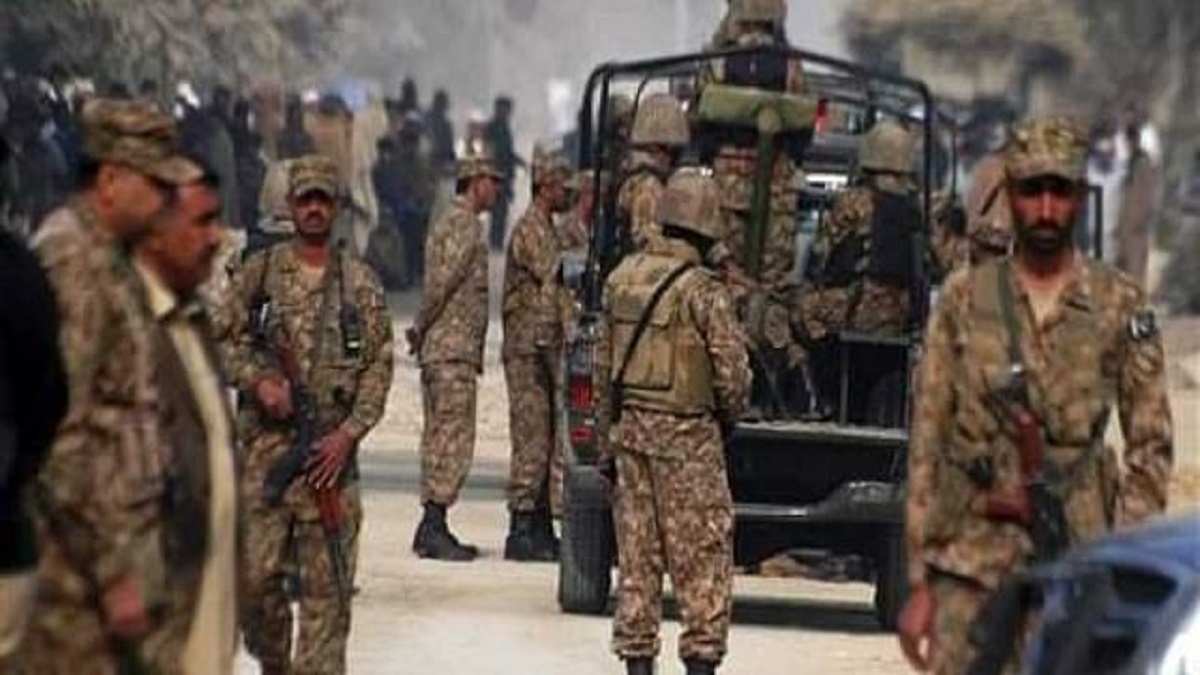
The President and the Prime Minister of Pakistan both lauded the security forces for the successful execution of the operation. Their statements emphasize the necessity of these actions in maintaining national integrity and ensuring the safety of citizens in the border regions. By publicly praising the operation, the executive branch aligns itself fully with the military’s strategy in Balochistan.
Mohsin Naqvi has expressed strong praise for the security forces, highlighting the “successful counterterrorism operation” as a testament to the vigilance and bravery of the personnel involved. Naqvi’s endorsement underscores the administrative and political backing for the military’s approach to neutralizing threats in the province.
The coordinated praise from the President, Prime Minister, and senior officials like Mohsin Naqvi serves as a powerful signal of state unity in the face of perceived foreign-sponsored militancy.
The Geopolitical Dimension: The “Indian-Sponsored” Narrative
A central element of the reporting on this event is the claim that the killed terrorists were “Indian sponsored.” This is a recurring theme in Pakistan’s security discourse, particularly regarding the unrest in Balochistan. From the perspective of the Pakistani state, the province’s instability is fueled by external actors seeking to disrupt economic corridors and strategic investments.
The attribution of foreign sponsorship serves several purposes:
- Internationalizing the Issue: By framing the conflict as a result of foreign interference, Pakistan can bring the issue to international forums, arguing that its internal security is being compromised by a neighboring state.
- Delegitimizing Insurgency: When militants are labeled as foreign agents rather than local dissidents, their grievances are framed as artificial constructs created by a foreign power, thereby stripping the movement of local legitimacy.
- Justifying Force: The presence of foreign-sponsored elements justifies a more aggressive military posture, as the state is viewed as defending itself against an external threat rather than managing an internal uprising.
This geopolitical friction is a cornerstone of the relationship between India and Pakistan, with both nations frequently accusing the other of supporting proxy groups to destabilize their respective territories. In the context of Panjgur, the killing of these six individuals is presented not just as a tactical win, but as a blow to a foreign intelligence operation.
Competing Narratives: The Baloch Group Claims
While the state narrative focuses on the elimination of terrorists, a starkly different account has emerged from Baloch nationalist circles. A Baloch group has claimed that the Pakistani military has killed 17 civilians in Balochistan, contradicting the official reports of targeted terrorist strikes.
This discrepancy highlights the “information war” that accompanies every military operation in the region. Where the state sees a “terrorist,” insurgent groups often claim the individual was a “civilian” or a “political activist.” This conflict of narratives creates a challenging environment for independent verification, as access to remote areas of Panjgur and other parts of Balochistan is often restricted for journalists and international observers.
Comparing the Perspectives
| Feature | State/ISPR Narrative | Baloch Group Narrative |
|---|---|---|
| Target | Indian-sponsored terrorists | Local civilians |
| Casualties | 6 terrorists killed | 17 civilians killed (regional total) |
| Nature of Action | Intelligence-based operation | Military aggression/Human rights violation |
| Motivation | National security and counter-terrorism | Suppression of Baloch nationalism |
The claim of 17 civilian deaths suggests a broader pattern of casualties that the Baloch groups argue is overlooked by the official media. For those following the region, these competing claims illustrate the deep trust deficit between the local population in certain pockets of Balochistan and the federal security apparatus.
Understanding the Strategic Importance of Panjgur
To understand why an operation in Panjgur is significant, one must look at the geography and strategic value of the region. Panjgur is located in the western part of Balochistan, near the border with Iran. This makes it a critical transit point for both legal trade and illegal smuggling, as well as a potential infiltration route for militant groups.
The region’s proximity to the border makes it a focal point for the “intelligence-based operations” mentioned by the ISPR. Security forces aim to create a “buffer zone” of stability to prevent the movement of weapons, fighters, and funding across the border. When the state reports the killing of “Indian sponsored” terrorists in this specific area, It’s signaling that it has successfully penetrated the networks that facilitate this cross-border movement.
the stability of Panjgur is tied to the larger goal of securing the province for economic development. Any perception of insecurity can deter investment and hinder the implementation of infrastructure projects that the government views as essential for the province’s integration into the national economy.
The Role of ISPR in Shaping the News Cycle
The Inter-Services Public Relations (ISPR) plays a pivotal role in how these events are communicated to the public. As the media wing of the Pakistan Armed Forces, the ISPR is the primary source of information for operations in Balochistan. The framing of the Panjgur operation as a “success” is a deliberate effort to maintain public confidence in the military’s ability to handle internal and external threats.
By providing rapid updates and utilizing a consistent set of keywords—such as “intelligence-based,” “foreign-sponsored,” and “neutralized”—the ISPR ensures that the state’s version of events becomes the dominant narrative in the domestic media. This strategy is designed to preempt counter-narratives and present a cohesive image of strength and control.
For analysts, the ISPR’s communication strategy is as critical as the military operation itself. The speed with which the President and Prime Minister lauded the operation suggests a highly coordinated communication plan intended to project an image of total synergy between the civilian government and the military establishment.
Implications for the Future of Security in Balochistan
The Panjgur operation is unlikely to be an isolated event. Instead, it is part of a broader trend of increased security operations across Balochistan. The continued reliance on IBOs suggests that the military is prioritizing precision over scale, but the competing claims of civilian casualties indicate that the friction with local populations remains high.
Several factors will determine the long-term impact of such operations:
- Intelligence Accuracy: The continued success of these operations depends on the quality of intelligence. If IBOs result in the elimination of high-value targets, the state’s position is strengthened. However, if errors lead to civilian deaths, it may fuel further insurgency.
- Political Reconciliation: While military operations can neutralize immediate threats, long-term stability in Balochistan generally requires a political solution to address the grievances of the local population.
- Foreign Relations: The persistent labeling of terrorists as “Indian sponsored” keeps the diplomatic tension between Islamabad and New Delhi high, potentially limiting the room for bilateral dialogue.
As security forces continue to operate in Panjgur and surrounding districts, the focus will likely remain on disrupting the financial and logistical pipelines that sustain militant groups. The state will continue to emphasize the foreign nature of these threats to justify its security posture.
For a deeper understanding of the regional dynamics, readers may find a related explainer on Balochistan’s security landscape helpful to contextualize these events within the broader history of the province.
Frequently Asked Questions
What is an “intelligence-based operation” (IBO)?
An intelligence-based operation is a targeted military or police action carried out based on specific, actionable intelligence. Unlike large-scale sweeps, an IBO focuses on a precise location or a specific group of individuals to minimize civilian impact and maximize the effectiveness of the strike.
Why does the Pakistani government refer to these terrorists as “Indian sponsored”?
The Pakistani government claims that foreign intelligence agencies, specifically from India, provide funding, training, and logistical support to militant groups in Balochistan to destabilize the country and hinder its economic progress. This attribution is a central part of Pakistan’s national security narrative.

Who is the ISPR and what is their role?
The Inter-Services Public Relations (ISPR) is the media and public relations wing of the Pakistan Armed Forces. It is responsible for communicating the military’s activities, achievements, and official positions to the public and the media.
What are the counter-claims regarding the Panjgur operation?
While the state reports the killing of six terrorists, some Baloch nationalist groups claim that security operations in the region have resulted in the deaths of civilians. These groups often argue that the military targets political activists rather than terrorists.
Where is Panjgur located and why is it strategically important?
Panjgur is a district in the Balochistan province of Pakistan, situated near the border with Iran. Its location makes it a critical area for monitoring cross-border movement and securing the western frontier of the country.
The event in Panjgur serves as a microcosm of the larger struggle for control and narrative in Balochistan. Between the official reports of neutralizing foreign-backed threats and the allegations of civilian casualties, the reality remains a complex tapestry of security imperatives and human rights concerns. As the state continues to prioritize the elimination of militant cells, the balance between security and stability will remain the defining challenge for the region.
