
Scientists Discover Rotating Brain Waves That Coordinate Sensory Information
Researchers have identified rotating brain waves that form circular sensory circuits, creating a mechanism for the brain to synchronize sensory information with physical movement. According to reports from News-Medical and Medical Xpress, these circular patterns suggest a highly integrated system for processing sensation and motor output, moving beyond traditional linear models of neural activity.
How do rotating brain waves coordinate sensory information?
The discovery of rotating brain waves reveals that neural activity does not always move in a straight line from a sensory receptor to a processing center. Instead, these waves move in circular patterns, which researchers indicate allows the brain to coordinate multiple streams of sensory data simultaneously. This rotation acts as a temporal organizer, ensuring that information about where a limb is in space (proprioception) aligns perfectly with the tactile sensations felt upon contact with an object.
According to the findings detailed by News-Medical, these circular circuits link movement and sensation in a continuous loop. This allows the brain to predict the sensory consequences of a movement before it even happens. When a person reaches for an object, the rotating waves may help the motor cortex and the sensory cortex stay in sync, reducing the lag time between action and perception.
Key characteristics of these rotating waves include:
- Spatial Periodicity: The waves occupy specific geometric areas of the brain, rotating through neural populations.
- Temporal Synchronization: They provide a rhythmic “clock” that coordinates different brain regions.
- Sensory-Motor Coupling: They specifically bridge the gap between the intent to move and the sensation of moving.
What is the difference between linear and circular neural circuits?
For decades, much of neuroscience operated on a linear model of information flow. In a linear circuit, a stimulus enters the system, travels through a series of relays, and results in an output. While this model explains simple reflex arcs, it struggles to account for the complex, fluid coordination required for tasks like playing an instrument or catching a ball.

The discovery of rotating brain waves introduces a cyclical model. In this framework, information is not just passed along a chain but is circulated. This circulation allows for constant feedback and adjustment. According to the research, this circularity prevents the “bottleneck” effect seen in linear processing, where the brain must wait for one signal to finish before processing the next.
| Feature | Linear Neural Model | Rotating/Circular Model |
|---|---|---|
| Information Flow | Point A to Point B (Sequential) | Continuous Loop (Cyclical) |
| Processing Speed | Dependent on relay speed | Simultaneous synchronization |
| Feedback Loop | Delayed (Return path required) | Instantaneous (Integrated in rotation) |
| Primary Function | Simple stimulus-response | Complex sensory-motor coordination |
Why does the link between movement and sensation matter?
The integration of movement and sensation is the foundation of all physical interaction with the environment. This process, known as sensorimotor integration, allows humans to adjust their grip on a slippery glass or navigate a dark room by touch. The discovery that rotating brain waves facilitate this coordination suggests that the brain uses a “circular” timing mechanism to keep these two distinct systems—the motor and the sensory—perfectly aligned.
According to the reports, when these circular circuits are functioning correctly, the brain can distinguish between sensations caused by its own movements and sensations caused by external forces. For example, when you touch your own face, your brain knows it is your own hand doing the touching because the motor command and the sensory feedback are synchronized by these rotating waves. If this synchronization fails, the perception of movement and touch becomes disjointed.
“Rotating brain waves uncover circular sensory circuits linked to movement and sensation,” as noted in the Medical Xpress report, highlighting a fundamental shift in how researchers view the architecture of the human brain.
How was this neural activity detected?
Identifying rotating waves requires high-resolution spatial and temporal data. Researchers utilized advanced neuroimaging and electrophysiological recordings to track the movement of electrical activity across the cortex. By observing the phase of the brain waves across different electrodes or imaging voxels, they noticed that the peak of the wave didn’t just move forward and backward but traveled in a circular trajectory.
This pattern is distinct from standard oscillations, such as alpha or beta waves, which typically fluctuate in amplitude across a broad area. The rotating waves are spatially organized, meaning the “peak” of the wave moves through a physical circle of neurons. This suggests a specialized anatomical arrangement that supports cyclical activity, potentially involving specific inhibitory and excitatory connections that push the signal in a consistent direction.
The researchers focused on the areas of the brain responsible for proprioception and motor control. By correlating the rotation of these waves with specific physical tasks, they were able to verify that the rotation speed and direction shifted based on the complexity of the movement being performed.
What are the clinical implications for neurological disorders?
The discovery of these circular circuits opens new avenues for treating conditions where sensory-motor coordination is impaired. Many neurological diseases are characterized by a “decoupling” of movement and sensation, where the brain can no longer synchronize the two.
Parkinson’s Disease and Movement Disorders
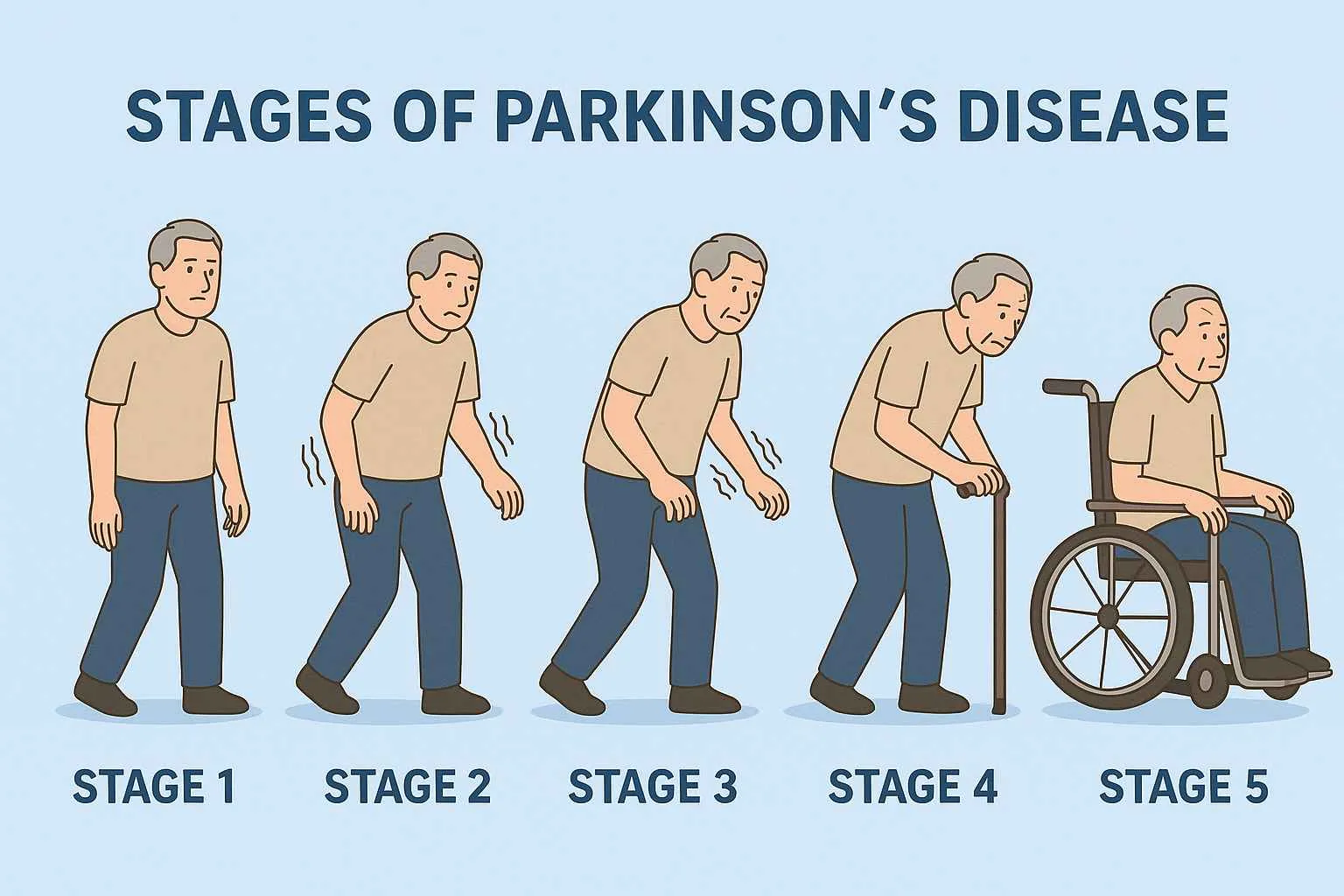
In Parkinson’s disease, the brain often exhibits abnormal beta-band oscillations that are “locked” or rigid, rather than fluid. According to the logic of the rotating wave discovery, the pathology in Parkinson’s might not just be a lack of dopamine, but a breakdown in the circularity of these waves. If the waves stop rotating and become static, the brain loses its ability to coordinate smooth movement, leading to tremors and rigidity.
Stroke Recovery and Neuroplasticity
After a stroke, patients often struggle with “sensory neglect” or a loss of motor control. Current rehabilitation focuses on strengthening linear pathways. However, if the brain relies on rotating circuits, therapy could be redesigned to encourage the formation of these circular loops. This might involve multi-sensory stimulation—combining touch, sight, and movement—to “jumpstart” the rotation of these waves in damaged areas of the cortex.
Prosthetic Integration and Brain-Computer Interfaces (BCIs)
Current BCIs often struggle to provide a natural “feel” to prosthetic limbs because they transmit signals linearly. By mimicking the rotating wave patterns discovered by scientists, engineers could potentially create BCIs that integrate sensory feedback into the motor command loop more naturally. This would allow a user to not just move a prosthetic arm, but to “feel” the movement in real-time as a synchronized event.
Potential applications for this research include:
- Targeted Neuromodulation: Using Deep Brain Stimulation (DBS) to restore circular wave patterns.
- Enhanced Biofeedback: Training patients to recognize and amplify these rotating patterns through specialized exercises.
- Precision Robotics: Designing AI-driven controllers that use cyclical sensory-motor loops rather than linear feedback.
Common misconceptions about brain waves
The discovery of rotating brain waves challenges several common beliefs about how the brain operates. One frequent oversimplification is that brain waves are merely “background noise” or general indicators of arousal (e.g., “delta waves mean sleep”). In reality, as this research shows, specific wave geometries—like rotations—carry critical functional information.
Another misconception is that the brain processes information like a computer processor, with a clear input, a central processing unit, and an output. While the computer analogy is useful for basic concepts, the human brain is far more recursive. The existence of circular sensory circuits proves that the “output” (movement) is often an integral part of the “input” (sensation), with both occurring within a single, rotating wave system.
Finally, some believe that different parts of the brain act as isolated “modules” (e.g., the “vision center” or the “motor center”). The rotating wave discovery suggests that these regions are linked by dynamic, moving patterns of activity that bridge the gap between modules, creating a unified experience of action and perception.
Comparing the Rotating Wave Discovery to Previous Neural Theories
To understand the significance of this discovery, it is helpful to compare it to the dominant theories of the last few decades. For a long time, the “Binding Problem”—how the brain combines different sensory inputs into one cohesive experience—was thought to be solved by “gamma synchrony,” where neurons fire at the same frequency. While frequency is important, the rotating wave discovery adds a spatial dimension: it isn’t just *when* they fire, but *where* the wave is moving.
This discovery aligns with more recent theories of “dynamic core” processing, where the brain is seen as a series of shifting states rather than fixed circuits. However, it provides a concrete geometric mechanism (the rotation) for how this happens. While previous theories suggested that the brain “broadcasts” information to all regions, the rotating wave model suggests a more targeted, cyclical coordination between specific sensory and motor hubs.
Related explainer on neural oscillations and cognitive function may provide further context on how different frequencies affect brain state.
Frequently Asked Questions
What are rotating brain waves?
Rotating brain waves are circular patterns of electrical activity in the brain. Unlike linear signals that move from one point to another, these waves travel in a loop, allowing the brain to synchronize sensory information with physical movement more efficiently.
How do these waves help us move?
They act as a coordinator between the sensory cortex (which feels) and the motor cortex (which moves). By rotating through these areas, the waves ensure that the brain’s perception of a movement matches the actual physical action in real-time.
Can rotating brain waves be used to treat diseases?
While still in the research phase, scientists believe that understanding these circuits could lead to new treatments for Parkinson’s disease, stroke recovery, and other motor disorders by restoring the circular flow of neural information.
Is this different from normal brain waves like Alpha or Beta?
Yes. While Alpha and Beta waves refer to the frequency of the electrical oscillations, rotating waves refer to the spatial movement of the wave. It is the difference between hearing a note (frequency) and seeing a wheel spin (rotation).
Will this lead to better prosthetic limbs?
Potentially. If engineers can program brain-computer interfaces to mimic these rotating circuits, prosthetics could provide a more natural sense of touch and movement, reducing the lag between the user’s intent and the limb’s response.
The identification of circular sensory circuits represents a shift in neuroscience, moving away from the image of the brain as a series of switches and toward a view of the brain as a system of dynamic, rotating rhythms. As research continues, the ability to map and perhaps even manipulate these rotations could redefine the approach to neurological rehabilitation and the development of intuitive human-machine interfaces.
