
Rare Footage Reveals How Wolves Hunt Beavers: A Deep Dive into Predator vs Prey Dynamics
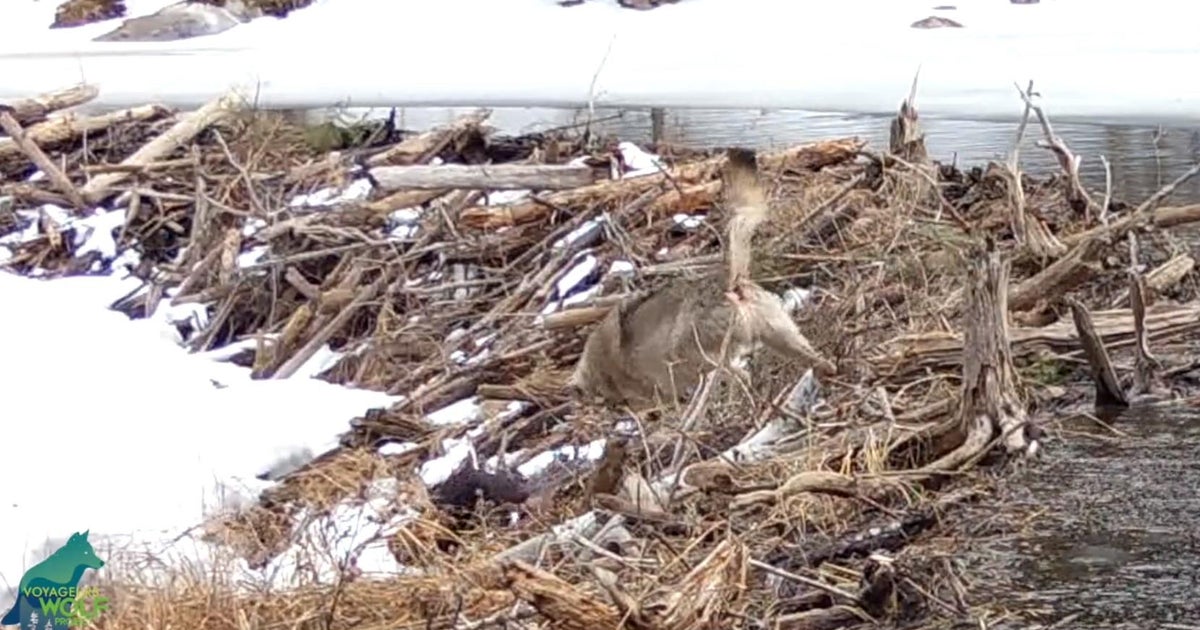
Rare footage reveals how wolves hunt beavers, documenting the specific predatory strategies these apex predators use to capture semi-aquatic prey. According to analysis of the recordings, wolves employ a combination of ambush and persistence hunting, forcing beavers out of the safety of their lodges and into vulnerable positions on land where the wolves’ speed and teamwork provide a decisive advantage.
How Do Wolves Hunt Beavers?
Wolves typically hunt beavers by exploiting the animal’s reliance on water for safety. While beavers are highly agile in the water, they are slow and cumbersome on land. Analysis of the recent footage shows that wolf packs do not usually attempt to swim after beavers into deep water or enter the reinforced structures of a beaver lodge. Instead, they utilize a strategy of containment and harassment.
The process generally follows a specific sequence of tactical movements:
- Scent Tracking: Wolves locate beaver trails or “runs” leading from the lodge to feeding grounds.
- The Ambush: Pack members position themselves along the shoreline, cutting off the beaver’s quickest route back to the water.
- Flushing: Wolves use aggressive barking and physical lunges to panic the beaver, forcing it to move away from the lodge.
- The Land Pursuit: Once the beaver is separated from the water’s edge by even a few yards, the wolves use their superior speed to close the gap.
Wildlife biologists note that this behavior is a form of opportunistic predation. While ungulates like deer and elk are primary targets, beavers provide a high-calorie alternative, especially during winter months when other prey may migrate or become scarce. The footage indicates that the pack’s coordination is essential; while one or two wolves distract the beaver, others move to flank the animal, ensuring it cannot slip back into the pond.
The Strategic Advantage: Why Beavers Are Challenging Prey
Beavers have evolved several highly effective defenses that make them a difficult target for wolves. The primary defense is the beaver lodge, a dome-shaped structure made of sticks, stones, and mud. The entrance to the lodge is submerged, meaning a wolf cannot enter the structure without diving deep underwater—an action that is energy-intensive and dangerous for a canine.
Beyond the lodge, beavers use “water-slapping” as a warning system. By hitting the surface of the water with their broad, flat tails, beavers alert other colony members to the presence of a predator. This signal often triggers an immediate retreat into the water, where the beaver’s streamlined body and webbed feet give it a massive advantage over the wolf.
“The interaction between wolves and beavers is a battle of environments. The beaver owns the water, but the wolf owns the land. The hunt is decided by which animal can force the other into its unfavorable territory,” according to field observations of predator-prey dynamics.
The difficulty of the hunt means that wolves must be patient. The footage reveals that packs may spend significant time monitoring a lodge, waiting for a juvenile or an injured beaver to venture too far from the shoreline. This patience reduces the risk of injury to the wolves, as a panicked beaver can deliver a powerful bite with its strong incisors.
Ecological Consequences: The Ripple Effect of Predator-Prey Interactions
The relationship between wolves and beavers is a prime example of a trophic cascade, where the actions of an apex predator affect the entire ecosystem. When wolves hunt beavers, they aren’t just removing a single animal; they are potentially altering the physical landscape.
Beavers are known as “ecosystem engineers” because their dams create wetlands. These wetlands filter water, prevent erosion, and provide habitats for fish, amphibians, and birds. If wolf predation becomes too intense in a specific area, the beaver population may decline, leading to the collapse of existing dams. When dams fail, the resulting stream flow changes, which can lead to the loss of wetland biodiversity.
However, the presence of wolves can also benefit beavers indirectly. By controlling the population of other herbivores—such as deer or elk—wolves reduce the overgrazing of willow and aspen trees. Since these trees are the primary food source and building material for beavers, wolf predation on ungulates can actually lead to a healthier, more robust beaver population.
| Factor | Impact of Wolf Predation | Ecological Result |
|---|---|---|
| Direct Predation | Reduction in beaver numbers | Potential loss of dams and wetlands |
| Indirect Effect | Reduction in deer/elk populations | Increased growth of aspen and willow |
| Habitat Shift | Forced beaver migration | Creation of new wetlands in different areas |
Comparing Wolf Hunting Strategies Across Different Prey Species
The tactics used in the “Rare footage reveals how wolves hunt beavers | Predator vs Prey – earthtouchnews.com” scenario differ significantly from how wolves hunt their more common prey. The primary difference lies in the prey’s defense mechanism: beavers rely on a fortress (the lodge), while ungulates rely on flight and endurance.
Hunting Ungulates (Deer, Elk, Moose)
When hunting deer or elk, wolves typically engage in “coursing,” a long-distance chase designed to exhaust the prey. They look for weakness—age, illness, or injury—and pursue the animal until its muscles fail. This is a test of stamina. In contrast, the beaver hunt is a test of positioning and timing.
Hunting Small Mammals (Rabbits, Rodents)
For smaller prey, wolves rely more on stealth and singular strikes. There is less pack coordination involved in catching a rabbit than there is in flushing a beaver from a pond. The beaver hunt requires a tactical “block and flush” method that is more similar to how they might isolate a calf from a herd of bison.
The following list summarizes the core differences in strategy:
- Beavers: Focus on environmental manipulation and cutting off escape routes to water.
- Ungulates: Focus on endurance, long-distance pursuit, and identifying physical weakness.
- Small Mammals: Focus on agility, stealth, and individual opportunistic strikes.
The Role of Opportunistic Predation in Wolf Pack Survival
The ability of wolves to pivot their diet to include beavers is a critical survival trait. In many northern climates, the availability of prey fluctuates wildly with the seasons. During deep winter, when snow makes it difficult for elk to move or when deer migrate to lower elevations, beavers remain a steady, sedentary food source.
This dietary flexibility ensures that the pack can maintain its caloric intake regardless of the primary prey’s movements. However, beavers are not always the first choice. They are more difficult to kill than a weakened deer and carry a higher risk of injury due to their defensive bites. Therefore, wolves usually target beavers when the “cost-to-benefit” ratio is favorable—such as when a beaver is caught far from its lodge during a foraging trip.
Researchers suggest that the frequency of beaver predation can indicate the health of the wider ecosystem. If wolves are hunting beavers more frequently than usual, it may suggest a decline in the local ungulate population, forcing the pack to rely on secondary prey sources. This makes the rare footage not just a curiosity of nature, but a data point for environmental monitoring.
Common Misconceptions About Wolf and Beaver Interactions
There are several common myths regarding how these two species interact in the wild. One common misconception is that wolves can simply swim into a beaver lodge to kill the occupants. In reality, the architecture of a lodge is specifically designed to prevent this. The mud-sealed walls and underwater entrance make it nearly impossible for a wolf to enter without the beaver’s cooperation.
Another misconception is that beavers are passive victims. As the footage shows, beavers are highly aware of their surroundings and use a sophisticated alarm system to avoid land-based predators. A healthy adult beaver in a well-maintained lodge is one of the safest animals in the forest.
Finally, some believe that wolves hunt beavers primarily to destroy their dams. There is no evidence to suggest that wolves have a “goal” other than caloric intake. Any destruction of the dam is a byproduct of the hunt, not the objective. The wolves are interested in the meat, not the engineering.
Analysis of Predator-Prey Balance
The balance between wolves and beavers is a delicate one. In areas where wolves have been eradicated, beaver populations can explode, leading to an over-saturation of wetlands that may eventually choke out certain types of forest growth. Conversely, in areas where wolves are reintroduced, the pressure on beavers can lead to a more dynamic landscape where dams are built, abandoned, and rebuilt in new locations.
This cycle of construction and decay creates a “mosaic” of habitats. Some areas remain as open ponds, while others transition back into meadows. This diversity of terrain supports a wider array of species than a static environment would. The “Predator vs Prey” dynamic is therefore not a zero-sum game, but a mechanism for maintaining biological diversity.
For those interested in how these animals impact the broader environment, a related explainer on trophic cascades provides further context on how apex predators reshape entire continents.
Frequently Asked Questions
Do wolves hunt beavers often?
Wolves are opportunistic predators. While they prefer larger ungulates like deer or elk, they will hunt beavers if other prey is scarce or if a beaver is easily accessible away from the water. It is a secondary but important part of their diet in many regions.

Can a wolf get inside a beaver lodge?
Generally, no. Beaver lodges are constructed with underwater entrances and thick walls of mud and wood, which are inaccessible to wolves. Wolves must force the beaver out of the lodge and onto land to successfully hunt it.
How do beavers protect themselves from wolves?
Beavers use three primary defenses: the physical barrier of the lodge, the speed of the water, and “tail-slapping” to warn other beavers of approaching danger.
Does wolf predation help or hurt the environment?
It is a complex relationship. While wolves can reduce beaver populations, they also control the herbivores that eat the trees beavers need for food and shelter. This often results in a healthier overall ecosystem with more diverse habitats.
What is the most dangerous part of the hunt for the wolf?
The most dangerous moment is the initial strike. A beaver’s powerful incisors can cause significant injury to a wolf’s paws or muzzle if the beaver is not quickly subdued.
