Physicists Just Built the First-Ever Nuclear Clock: A New Era of Precision Timekeeping
Physicists have successfully operated the first nuclear clock, utilizing the nucleus of thorium-229 to measure time. According to reports from Science News and New Scientist, this development marks a shift from using electron transitions—the basis of standard atomic clocks—to nuclear transitions, a move that promises significantly higher stability and precision in timekeeping.
How the First Nuclear Clock Works
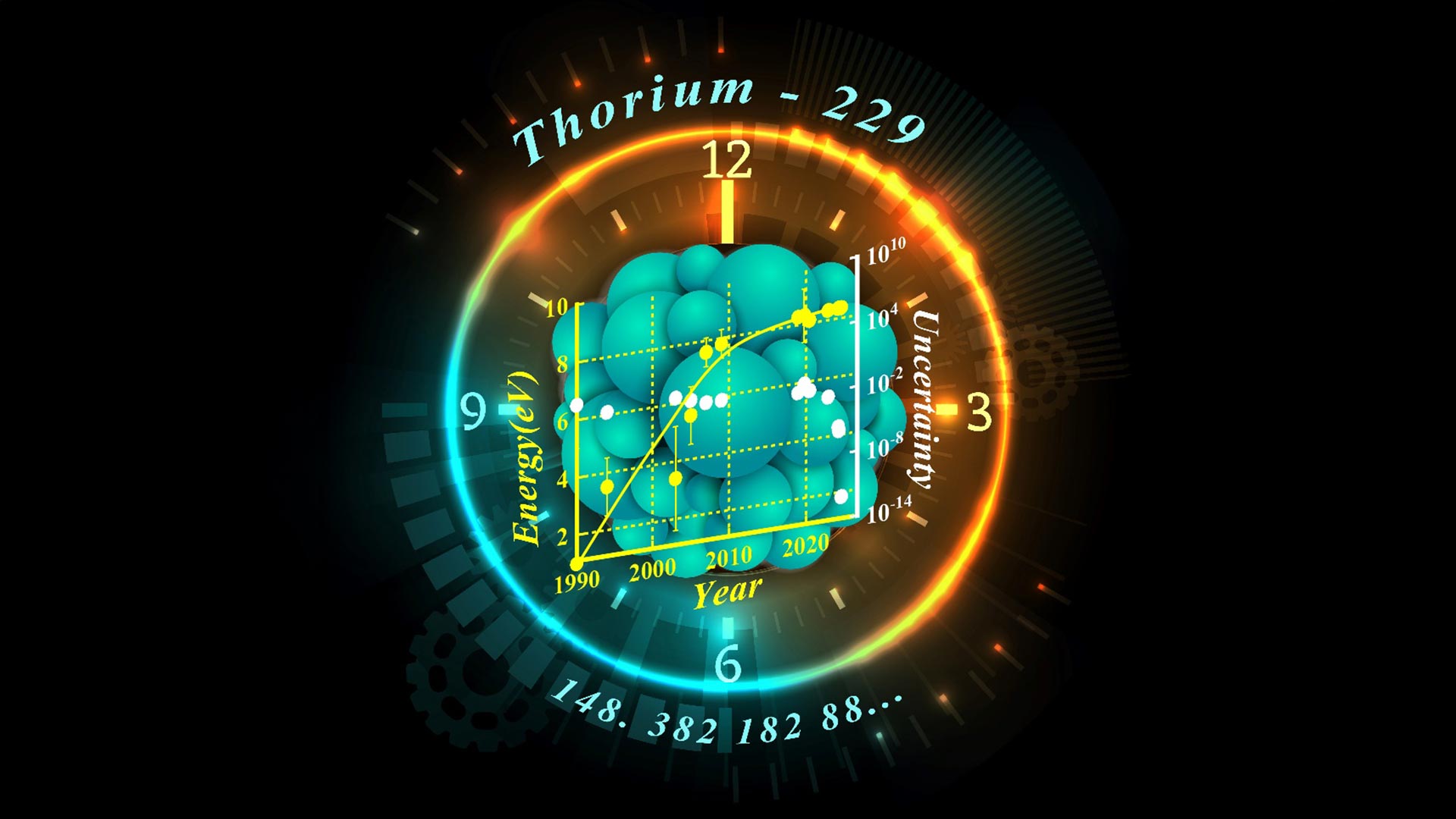
The recently developed nuclear clock operates by stimulating the nucleus of a thorium-229 atom. While traditional atomic clocks rely on the movement of electrons between energy levels in the outer shell of an atom, this new device targets the nucleus itself. According to Phys.org, the nucleus of thorium-229 possesses a unique, low-energy state that can be excited by a laser, creating a “tick” that is far more stable than those produced by electron-based systems.
To achieve this, researchers had to identify the exact frequency of light required to trigger the transition in the thorium nucleus. This process is akin to finding a specific radio station on a dial with billions of possible frequencies. Once the correct frequency was identified, physicists could use a laser to drive the nucleus between its ground state and an excited isomeric state. This oscillation serves as the pendulum for the clock.
The Role of Thorium-229
Thorium-229 is the only known isotope with a nuclear transition energy low enough to be accessed by current laser technology. Most nuclear transitions involve gamma rays with extremely high energies, which are difficult to control and measure with precision. However, thorium-229 has an “isomer” state that requires ultraviolet light, making it accessible to precision spectroscopy. Yahoo reports that this specific property is what makes the thorium-based nuclear clock physically possible.
Nucleus vs. Electron Shells
The fundamental difference between a nuclear clock and an atomic clock lies in the location of the energy transition. In a standard atomic clock, such as a cesium fountain clock, the “tick” comes from electrons jumping between energy levels. Because electrons reside on the periphery of the atom, they are susceptible to external influences, including magnetic fields and temperature fluctuations. This environmental sensitivity introduces “noise” that limits the clock’s ultimate precision.
In contrast, the nucleus is located at the center of the atom, shielded by the surrounding electron cloud. New Scientist notes that this shielding protects the nuclear transition from external electromagnetic interference. This inherent isolation allows the nuclear clock to maintain its frequency with far greater consistency than any existing atomic clock.
Why Physicists Just Built the First-Ever Nuclear Clock – Gizmodo and Other Outlets Are Reporting This Now
The announcement that physicists just built the first-ever nuclear clock—a topic widely covered by Gizmodo and other technology outlets—comes after decades of theoretical predictions and experimental failures. The primary driver for this timing is the recent advancement in vacuum-ultraviolet (VUV) laser technology. Until recently, lasers capable of hitting the precise energy level of the thorium-229 nucleus did not exist or were not stable enough for timekeeping.
.png "Why Physicists Just Built the First-Ever Nuclear Clock - Gizmodo and Other Outlets Are Reporting This Now")
The pursuit of this technology is not merely about making a more accurate watch. It is about creating a tool capable of detecting phenomena that are currently invisible to science. According to Science News, the extreme precision of a nuclear clock allows researchers to observe minute changes in the laws of physics that would be drowned out by the noise of a standard atomic clock.
- Frequency Stability: Nuclear clocks are expected to be orders of magnitude more stable than current optical lattice clocks.
- Environmental Resilience: The nucleus is less affected by the “stray” fields that plague electron-based systems.
- Compact Potential: Future iterations could lead to highly stable clocks that do not require the massive cooling systems used in today’s most precise atomic clocks.
Potential Applications of Nuclear Timekeeping
The transition to nuclear timekeeping has implications across several scientific and industrial sectors. Because time and space are linked via relativity, a more precise clock is effectively a more precise sensor for gravity and motion.
Deep Space Navigation and GPS
Current Global Positioning Systems (GPS) rely on atomic clocks orbiting the Earth. These clocks must be constantly corrected for relativistic effects—the fact that time moves differently depending on gravity and velocity. A nuclear clock, with its superior stability, could reduce the need for these corrections and increase the accuracy of positioning data from meters to centimeters or even millimeters.
For deep space exploration, the requirements are even more stringent. According to Phys.org, spacecraft traveling to distant planets currently rely on signals sent from Earth to maintain timing. An onboard nuclear clock would allow a probe to maintain autonomous, ultra-precise timing, enabling more accurate navigation through the solar system without the lag of Earth-based communication.
Detecting Dark Matter and Gravitational Shifts
One of the most ambitious goals for the nuclear clock is the search for dark matter. Some theories suggest that dark matter interacts with the fundamental constants of nature, causing them to fluctuate slightly over time. A nuclear clock is sensitive enough to detect these microscopic shifts. If the “tick” of a nuclear clock varies in a way that cannot be explained by known physics, it could provide the first direct evidence of dark matter’s influence on atomic structures.
Furthermore, these clocks can be used for relativistic geodesy. Because gravity slows down time (gravitational time dilation), a nuclear clock can detect height changes in the Earth’s crust of just a few centimeters by measuring the difference in the passage of time. This would allow scientists to map the Earth’s interior and monitor volcanic activity or sea-level rises with unprecedented resolution.
Comparison: Atomic Clocks vs. Nuclear Clocks
To understand the leap in technology, it is helpful to compare the mechanics and performance of current atomic standards against the new nuclear standard.
| Feature | Atomic Clock (Cesium/Strontium) | Nuclear Clock (Thorium-229) |
|---|---|---|
| Transition Source | Electron energy levels | Nuclear energy levels |
| Excitation Method | Microwaves or Visible Lasers | Vacuum-Ultraviolet (VUV) Lasers |
| Environmental Sensitivity | High (affected by EM fields) | Low (shielded by electron cloud) |
| Primary Use Case | GPS, Internet Sync, Network Timing | Fundamental Physics, Deep Space, Geodesy |
| Stability Level | Very High | Ultra-High (Theoretical) |
The Technical Road to the First “Tick”
The path to the first working nuclear clock was marked by a long search for the “isomer transition” of thorium-229. For years, physicists knew the transition existed, but they did not know the exact energy required to trigger it. This created a “needle in a haystack” problem.
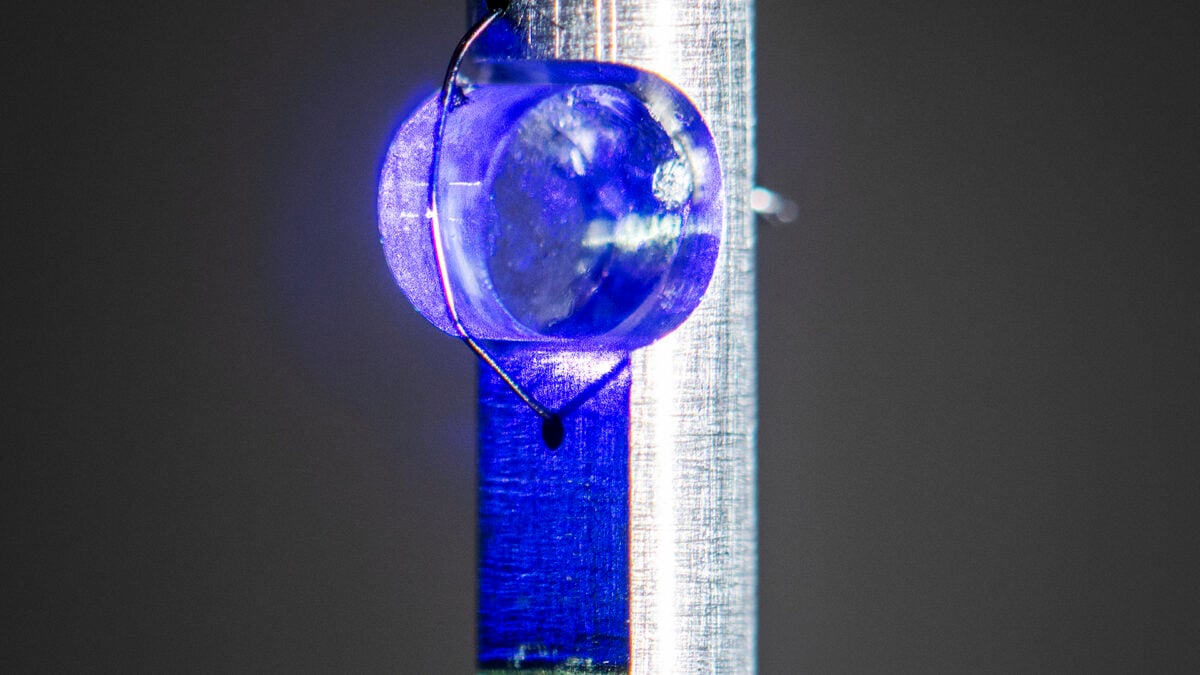
According to New Scientist, researchers used a combination of gamma-ray spectroscopy and crystal-lattice trapping to narrow down the frequency. By embedding thorium ions into a crystal of calcium fluoride, they were able to hold the atoms in place and bombard them with VUV radiation. This method allowed them to observe the nucleus absorbing a photon and jumping to the excited state, effectively confirming the “tick.”
The challenge now shifts from proof-of-concept to engineering. While the first clock has “ticked,” it is currently a laboratory experiment. To make it a practical tool, physicists must develop lasers that can maintain the required frequency for long periods without drifting. This requires a feedback loop where the laser is locked to the nuclear transition, ensuring that the clock remains accurate over months and years.
Common Misconceptions about Nuclear Clocks
A frequent misunderstanding is the association of the word “nuclear” with nuclear power or radioactive explosions. A nuclear clock does not use nuclear fission or fusion. It does not produce significant radiation or heat. Instead, it uses the quantum properties of the nucleus. The thorium-229 used is a radioactive isotope, but the process of timekeeping involves the absorption and emission of a single photon of light, not a chain reaction.
Another misconception is that this clock will replace the quartz watch on a person’s wrist. Nuclear clocks are designed for scientific infrastructure and high-level navigation. The complexity of the VUV lasers and the requirement for vacuum environments mean these devices will remain in laboratories and satellites for the foreseeable future.
Implications for the Laws of Physics
The most profound impact of the nuclear clock may be its ability to test the “constancy” of the universe. In standard physics, the fine-structure constant—which dictates the strength of electromagnetic interactions—is assumed to be the same everywhere and at all times. However, some theoretical models suggest it may vary slightly over billions of years or in different parts of the galaxy.
Because the nuclear transition in thorium-229 is exceptionally sensitive to the fine-structure constant, any change in that constant would manifest as a change in the clock’s frequency. According to Science News, comparing a nuclear clock to an atomic clock over a long period could reveal whether the laws of physics are truly constant or if they evolve as the universe expands.
This capability places the nuclear clock in the same category as the Large Hadron Collider or the James Webb Space Telescope. It is not just a measurement tool; it is a discovery instrument. By pushing the boundaries of how we measure time, physicists are effectively probing the fabric of spacetime itself.
For those interested in the broader context of quantum measurements, a related explainer on quantum entanglement may provide further insight into how these subatomic interactions are harnessed for technology.
Frequently Asked Questions
What is the difference between an atomic clock and a nuclear clock?
According to Phys.org and New Scientist, an atomic clock measures the energy transitions of electrons in the outer shell of an atom. A nuclear clock measures the energy transitions within the nucleus of the atom. Because the nucleus is smaller and better shielded from the environment, nuclear clocks are potentially much more stable and precise.

Why was thorium-229 chosen for the first nuclear clock?
Thorium-229 is unique because it has a nuclear transition energy that is low enough to be triggered by ultraviolet lasers. Most other nuclei require high-energy gamma rays, which are too difficult to control for precision timekeeping. This makes thorium-229 the only viable candidate for a laser-driven nuclear clock.
Will nuclear clocks make GPS more accurate?
Yes. Reports from Yahoo and Science News suggest that because nuclear clocks are less sensitive to environmental interference and more stable over time, they could significantly improve the precision of satellite-based navigation, potentially reducing errors from meters to centimeters.
Is a nuclear clock dangerous or radioactive?
While it uses a radioactive isotope (thorium-229), the clock does not involve nuclear fission or fusion. It operates via the absorption of light photons. It does not produce the type of radiation associated with nuclear power plants or weapons.
How much more accurate is a nuclear clock than a current atomic clock?
While the first nuclear clock is still in the experimental phase, physicists believe it will eventually be orders of magnitude more stable. This means it would take significantly longer—perhaps billions of years—for a nuclear clock to lose a single second compared to the most precise current atomic clocks.
