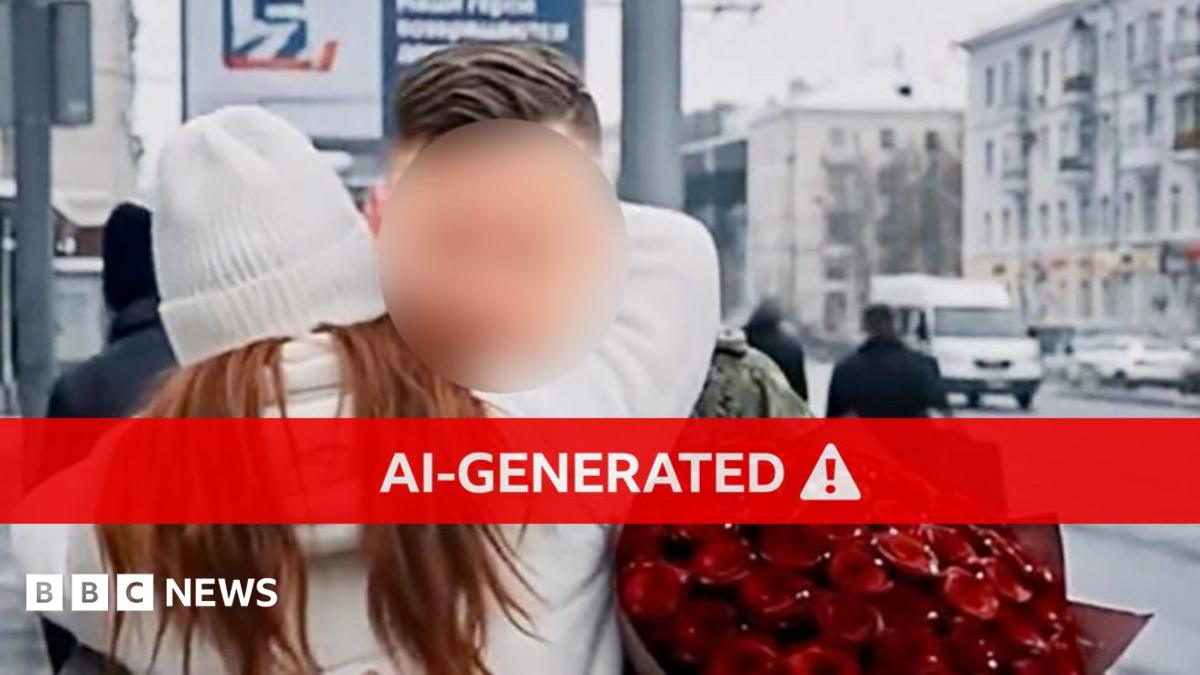
Russian Families Use AI to ‘Resurrect’ Loved Ones Killed in Ukraine: The Rise of Digital Grief Bots
Russian families are employing artificial intelligence to create digital replicas of soldiers killed in Ukraine, using voice cloning and chatbots to simulate conversations with the deceased. These “digital resurrections,” as reported by the BBC, utilize archived voice messages, text logs, and photographs to provide a simulated presence for grieving relatives.
How AI is being used to simulate deceased soldiers
The process of creating a digital version of a deceased loved one typically begins with a data harvest. According to reports from the BBC, families collect a soldier’s existing digital footprint—specifically voice notes from apps like Telegram or WhatsApp, old emails, and social media posts. This data is then fed into AI models designed for voice synthesis and natural language processing.
Voice cloning technology allows the software to analyze the pitch, tone, and cadence of the deceased. Once the model is trained, it can generate new speech that sounds nearly identical to the soldier. When paired with a Large Language Model (LLM), the AI can generate responses that mimic the personality, slang, and speech patterns of the deceased person. The result is a chatbot or a voice interface that can “talk” back to the family in real-time.
These tools are not always high-end corporate products. In many cases, families use a combination of available AI tools and third-party services to stitch together a persona. The goal is often not a perfect replica but a “functional” one that allows a mother, wife, or child to feel they are receiving a response from the person they lost.
- Data Inputs: Voice recordings, text messages, personal letters, and photos.
- Technology Used: Text-to-Speech (TTS) cloning and Large Language Models (LLMs).
- Primary Interface: Messaging apps or specialized “grief-tech” software.
The psychological drivers behind “digital resurrection”
The drive to use AI for mourning often stems from a lack of closure. In the context of the conflict in Ukraine, many Russian families have dealt with “missing in action” statuses or sudden notifications of death that leave little room for traditional mourning rituals. BBC reporting indicates that for some, the AI serves as a bridge, allowing them to say things they never got to say before the soldier was killed.
Psychologically, this creates a state of “continuing bonds.” While traditional grief theory once emphasized “letting go,” modern psychology recognizes that maintaining a connection with the deceased can be healthy. However, the use of AI introduces a variable that traditional memories do not: interactivity. When a person interacts with a static photo, they know it is a memory. When they interact with an AI that answers questions, the line between memory and presence blurs.
“The danger is not in the memory, but in the simulation. When the AI provides a response that the deceased never would have said, it creates a fictionalized version of the loved one that can overwrite actual memories.”
Some families report that the AI provides a sense of peace, while others find that it traps them in a cycle of denial. The ability to “text” a dead son or husband can prevent the brain from accepting the finality of death, potentially prolonging the acute phase of grief.
The role of the Ukraine conflict in the surge of AI mourning
The scale of casualties in the Ukraine war has created a societal vacuum in Russia. With official casualty numbers often obscured or underreported by the state, the private experience of loss is widespread but often isolated. This environment makes the anonymity and accessibility of AI tools particularly appealing.
The conflict has also accelerated the digitization of death. Because soldiers frequently communicated via encrypted apps, their entire final months are documented in digital archives. This provides a rich dataset for AI training that previous generations of mourners did not have. A soldier’s final voice notes, filled with the stress and emotion of the front lines, become the raw material for a digital ghost.
| Factor | Impact on AI Adoption | Result |
|---|---|---|
| Casualty Volume | High numbers of sudden deaths | Mass demand for coping mechanisms |
| Digital Footprint | Heavy use of Telegram/WhatsApp | Readily available training data for AI |
| State Narrative | Controlled official mourning | Shift toward private, tech-driven grief |
Ethical risks and the “digital ghost” phenomenon
The emergence of “deathbots” or “ghostbots” raises significant ethical questions regarding consent. In the cases of Russian families using AI to resurrect soldiers, the deceased did not consent to have their likeness or voice cloned after death. This creates a paradox where the survivors’ need for comfort overrides the autonomy of the deceased.
There is also the risk of psychological manipulation. AI models are designed to be agreeable and helpful. A digital replica of a soldier may provide comfort, but it cannot provide the truth. If a family is struggling with the circumstances of a soldier’s death, the AI might generate “hallucinations”—false information—that reinforces a specific narrative or denies the reality of the war.
Furthermore, the commercialization of grief is a growing concern. Many of the tools used for these resurrections are owned by private companies. This means that the most intimate parts of a family’s grief—their conversations with a digital replica of a dead child—are stored on corporate servers and may be subject to data mining or subscription fees. If a company goes bankrupt or changes its terms of service, a family could effectively “lose” their loved one a second time.
Comparison of AI Grief Tools vs. Traditional Mourning
To understand the shift, it is helpful to compare how AI-driven mourning differs from historical methods of remembering the dead.
- Traditional: Use of photographs, diaries, and letters. These are static records of a life lived. The mourner projects their feelings onto the object.
- AI-Driven: Use of interactive bots. These are dynamic simulations. The bot projects a simulated personality back at the mourner.
- Traditional: Grief is processed through the acceptance of absence.
- AI-Driven: Grief is managed through the simulation of presence.
Global precedents for digital resurrection
While the current trend among Russian families is tied to the Ukraine war, the concept of “digital resurrection” is a global phenomenon. Similar technologies have been deployed in the United States, China, and South Korea. In some instances, companies have offered “legacy” services where users can record their thoughts and voice while alive to create a bot for their descendants.

However, the Russian context is distinct because it is driven by mass trauma and state-level conflict rather than individual estate planning. In other countries, these tools are often marketed as “digital immortality.” In the context of the war in Ukraine, they are used as emergency psychological prosthetics for those who have lost family members in violent, sudden circumstances.
Researchers studying these trends note a pattern: the more traumatic the death, the more likely survivors are to seek “unnatural” means of connection. The “resurrection” of soldiers is not an isolated tech trend but a symptom of a society attempting to process an overwhelming volume of loss.
Common Misconceptions about AI Resurrection
It is important to clarify what this technology actually is and is not to avoid sensationalism.
Misconception: The AI “is” the person.
The AI is a statistical prediction engine. It does not possess the consciousness, soul, or memories of the deceased. It simply predicts the next most likely word or sound based on the data it was given. It is a mirror, not a person.
Misconception: This is a new form of consciousness.
There is no evidence that these bots “think.” They are sophisticated autocomplete systems. The feeling of “connection” is a result of human psychology (pareidolia)—the tendency to see meaningful patterns where none exist.
Misconception: These tools always help with grief.
While some find comfort, many mental health professionals argue that these tools create a “digital purgatory,” preventing the mourner from reaching the acceptance stage of grief.
The long-term implications for society and law
As the use of AI to simulate the dead becomes more common, legal systems will likely be forced to address “post-mortem privacy rights.” Currently, in most jurisdictions, including Russia, there are few laws preventing the cloning of a deceased person’s voice or image if the family holds the data.
The long-term social impact may be a shift in how humans perceive death. If the digital presence of a person persists indefinitely, the concept of “passing away” changes from a total disappearance to a transition into a digital state. This could lead to a society where the living are constantly surrounded by the simulated voices of the dead, potentially altering the way new generations experience loss and memory.
Moreover, there is the risk of political weaponization. If AI can perfectly mimic a deceased soldier, it could be used to create fake “final messages” to influence public opinion about the war, encourage more enlistment, or pacify grieving families with simulated promises of honor and glory.
For those seeking more information on the intersection of technology and conflict, a related explainer on AI in modern warfare may provide further context on how these tools are used beyond the domestic sphere.
Frequently Asked Questions
What is the “resurrection” of loved ones via AI?
It is the use of artificial intelligence, specifically voice cloning and Large Language Models, to create a chatbot or voice interface that mimics a deceased person. This is done by training the AI on the person’s past messages, recordings, and photos.
Is this technology legal in Russia?
There are currently few specific laws governing the AI simulation of deceased individuals. Most of these activities occur in private settings using commercially available AI tools, making them a legal gray area regarding privacy and consent.
Do psychologists recommend using AI to cope with grief?
Opinion is divided. Some suggest it can provide temporary comfort and a way to say final goodbyes. However, many experts warn that it can lead to “complicated grief,” where the survivor becomes dependent on the simulation and cannot accept the reality of the loss.
How accurate are these AI replicas?
The accuracy depends on the amount of data provided. With thousands of voice notes and texts, an AI can be very convincing in its tone and style. However, it cannot replicate the actual consciousness or evolving thoughts of the person.
Can AI be used to create fake messages from deceased soldiers?
Yes. Because the technology relies on patterns, it can be used to generate messages that the deceased never actually wrote or said, creating a risk of misinformation or emotional manipulation.
The emergence of these digital ghosts highlights a profound tension between the capabilities of modern technology and the ancient, immutable nature of human loss. As the conflict in Ukraine continues to produce casualties, the reliance on these simulated connections is likely to grow, turning the digital archive into a new kind of cemetery.
