
Cebu Diocese Helps Quake Victims – Philstar.com Reports on Mindanao Relief Efforts
The Cebu diocese is coordinating relief operations to support victims of a magnitude 5.3 earthquake that struck off the coast of Glan, Sarangani, according to reports from Philstar.com and SunStar Publishing Inc. This regional aid effort coincides with the deployment of the first batch of Quick Response Teams (QRT) from the Department of Social Welfare and Development (DSWD-9) to General Santos City, as confirmed by the Philippine News Agency.
Magnitude 5.3 Earthquake Strikes Glan, Sarangani
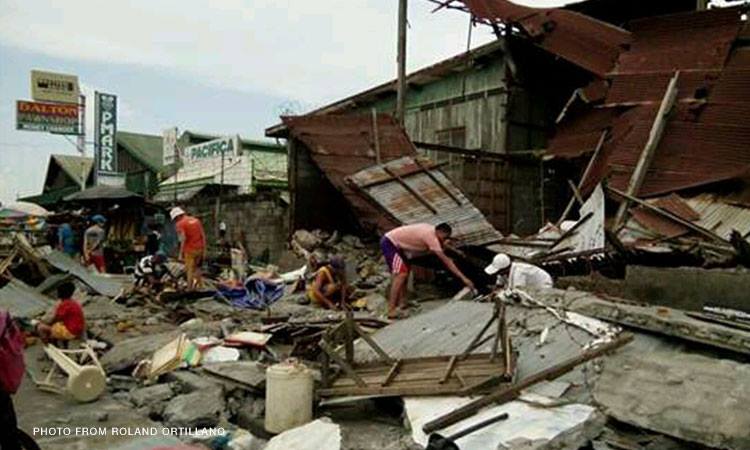
A magnitude 5.3 earthquake occurred off the coast of Glan, Sarangani, causing significant tremors across the region. According to Inquirer.net, the seismic event centered in the waters off Glan, leading to immediate concerns regarding infrastructure damage and resident safety in the Sarangani and South Cotabato areas.
The earthquake’s impact was felt strongly in General Santos City and surrounding municipalities. While the magnitude of 5.3 is moderate, the shallow nature of such quakes in the Philippine archipelago often leads to higher perceived intensity on the ground, prompting rapid mobilization of local emergency services.
- Epicenter: Off the coast of Glan, Sarangani.
- Magnitude: 5.3.
- Primary Impact Zones: Sarangani Province and General Santos City.
How the Cebu Diocese is Coordinating Aid for Mindanao
Religious organizations in the Visayas are mobilizing to support the recovery in Mindanao. As reported by Philstar.com, the Cebu diocese has stepped forward to help quake victims, signaling a cross-regional humanitarian response. This involvement underscores the role of the Catholic Church in the Philippines as a primary secondary-responder during natural disasters.
SunStar Publishing Inc. reports that Cebu is specifically “readying” aid for the Mindanao quake victims. This preparation typically involves the collection of essential goods, financial donations, and the coordination of logistics to transport supplies from the Visayas to the southern Philippines. The diocese’s efforts focus on filling gaps in immediate needs that government agencies may not reach instantly.
The mobilization of the Cebu diocese demonstrates a regional solidarity, as resources from the Visayas are diverted to the affected areas of Sarangani and South Cotabato to expedite the recovery process.
The process of “readying aid” mentioned by SunStar involves several logistical steps:
- Needs Assessment: Communicating with local parishes in Mindanao to identify the most urgent requirements.
- Resource Collection: Gathering food packs, hygiene kits, and clothing from Cebuano parishioners.
- Logistics Planning: Arranging sea or air transport to move supplies from Cebu to the Mindanao mainland.
DSWD-9 Deploys Quick Response Teams to General Santos City
The national government’s response has focused on rapid assessment and the delivery of emergency supplies. The Philippine News Agency reports that DSWD-9 has already dispatched its first batch of Quick Response Teams (QRT) to General Santos City.
The QRTs are tasked with conducting rapid damage assessment and needs analysis (RDANA). This data allows the DSWD to determine the exact number of family food packs (FFPs) and non-food items required for the displaced populations. By centering the first batch of teams in General Santos City, the DSWD is using the urban hub as a staging area to reach more remote parts of Glan and other affected Sarangani municipalities.
According to the Philippine News Agency, these teams are the vanguard of the government’s social welfare response, ensuring that the “Family Food Packs” reach the most vulnerable households within the first 48 to 72 hours of the disaster.
National Context: The Strongest Seismic Activity in Decades
While the Glan earthquake is a localized event, it occurs within a broader trend of heightened seismic activity in the Philippines. The Guardian reports that the Philippines is currently “picking up the pieces” after experiencing some of the strongest earthquakes the country has seen in decades.
This broader context explains the urgency of the responses from both the Cebu diocese and the DSWD. The cumulative effect of multiple strong quakes across different regions has strained national disaster reserves, making regional aid—such as that from Cebu—critical for maintaining a comprehensive safety net.
The Guardian’s reporting highlights a national struggle with recovery, suggesting that the infrastructure in many provinces remains fragile. This fragility increases the risk that even a magnitude 5.3 quake, which might be manageable in a reinforced urban environment, can cause significant disruption in rural Sarangani.
Comparing Regional and National Disaster Response Efforts
The response to the Sarangani earthquake shows a two-pronged approach: the institutional, top-down response of the DSWD and the community-driven, horizontal response of the Cebu diocese. While the DSWD focuses on standardized relief and government accounting, the diocese focuses on rapid, faith-based mobilization.
| Feature | DSWD-9 Response (PNA) | Cebu Diocese Response (Philstar/SunStar) |
|---|---|---|
| Primary Mechanism | Quick Response Teams (QRT) | Community-funded aid and donations |
| Core Objective | Damage assessment and official relief | Humanitarian support and regional solidarity |
| Logistical Base | General Santos City (Hub) | Cebu (Regional Source) |
| Resource Type | Standardized Family Food Packs | Mixed essential goods and financial aid |
The contrast in these approaches is evident in the timing. DSWD teams move based on official protocols and budget releases, whereas the Cebu diocese can mobilize based on parish calls for help, often bypassing some of the bureaucratic layers associated with government funding.
Implications for Disaster Preparedness in Mindanao
The recurrence of earthquakes in the Sarangani region, coupled with the “strongest in decades” trend noted by The Guardian, suggests a need for revised building codes and more robust local disaster risk reduction and management (DRRM) plans. The fact that aid must be sourced from as far as Cebu indicates a potential gap in local stockpiles within the Sarangani province.
Stakeholders in the region, including local government units (LGUs) and the DSWD, must address the vulnerability of rural coastal towns like Glan. The magnitude 5.3 event serves as a reminder that moderate quakes can still trigger significant panic and resource requirements if the local population is not sufficiently prepared.
Furthermore, the coordination between the Cebu diocese and the affected areas in Mindanao highlights a critical social infrastructure. In the Philippines, the intersection of government services and religious charity often forms the actual frontline of disaster recovery.
Common Misconceptions About Moderate Earthquakes
There is often a misconception that a magnitude 5.3 earthquake is “too small” to cause significant damage. However, as seen in the Glan event, the impact is not determined by magnitude alone but by:
- Depth: Shallow quakes cause more surface shaking.
- Soil Composition: Soft soils can amplify seismic waves.
- Infrastructure Quality: Non-reinforced masonry is highly susceptible to moderate tremors.
The deployment of DSWD QRTs to General Santos City acknowledges that the “felt” intensity of the quake likely exceeded what the magnitude number suggests on paper.
Frequently Asked Questions
How is the Cebu diocese helping quake victims in Mindanao?
According to Philstar.com and SunStar Publishing Inc., the Cebu diocese is preparing and coordinating relief aid to be sent to those affected by the earthquake in Sarangani. This includes mobilizing resources and donations from the Visayas region to support recovery efforts in Mindanao.
What was the magnitude of the earthquake in Sarangani?
Inquirer.net reports that the earthquake that struck off the coast of Glan, Sarangani, had a magnitude of 5.3.
What is the role of the DSWD-9 in the current relief efforts?
The Philippine News Agency reports that DSWD-9 has dispatched the first batch of its Quick Response Teams (QRT) to General Santos City to conduct damage assessments and distribute emergency food and non-food items.
Why is the Philippines experiencing so many earthquakes recently?
While specific geological causes vary, The Guardian notes that the Philippines has been dealing with some of its strongest earthquakes in decades, reflecting the country’s position on the Pacific Ring of Fire, where tectonic plate movements are frequent.
Where is the aid from Cebu being sent?
The aid is being directed toward the quake-hit areas of Mindanao, specifically targeting those affected in the Sarangani and South Cotabato provinces, with General Santos City serving as a primary logistical hub for response teams.
For those seeking further information on disaster preparedness, a related explainer on Philippine seismic zones may provide additional context on why regions like Sarangani are prone to these events.
