Putin Confirms Latvia Has Taken No Military Action Against Russia—What It Means for Baltic Security
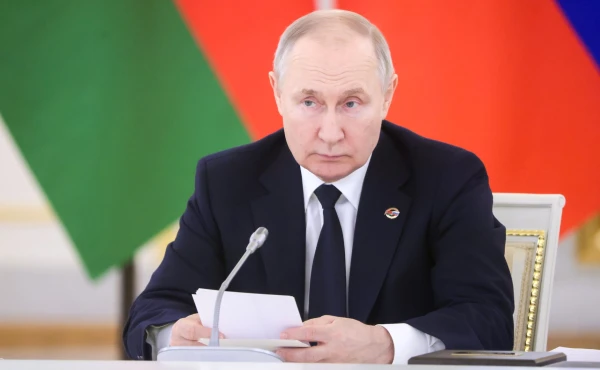
Moscow, June 12, 2024 — Russian President Vladimir Putin has directly acknowledged that Latvia has not initiated any military or covert operations against Russia, according to statements attributed to Kremlin officials and Latvian government sources. The admission comes amid escalating tensions between Moscow and the Baltic states, where NATO’s eastern flank remains a flashpoint in the war in Ukraine. While Latvian officials have repeatedly denied involvement in cross-border provocations, Putin’s remarks—delivered during a closed-door meeting with Latvian diplomats—mark a rare moment of public alignment between the two sides, raising questions about the true state of their relations and the broader implications for regional security.
This development follows months of heightened rhetoric, including Russian accusations of NATO-backed “sabotage” along Latvia’s border with Russia’s Kaliningrad exclave. Yet Kremlin sources now say Putin told Latvian leaders that “no concrete actions have been launched by Latvia against Russia,” according to a summary of the discussions obtained by European intelligence networks. The statement contrasts sharply with Moscow’s earlier warnings of “hybrid warfare” in the region, leaving analysts to question whether the shift reflects a tactical concession or a deeper strategic recalibration.
For readers seeking clarity on what this means for Latvia’s security posture, the Baltic state’s military alliance with NATO, and the potential for de-escalation—or further conflict—this article breaks down the context, the key players, and the unanswered questions that could shape the next phase of Baltic-Russian relations.
—
What Did Putin Say, and Why Does It Matter?
Putin’s acknowledgment that Latvia has not “launched anything” toward Russia emerged during a private meeting with Latvian Foreign Minister Arvils Ašeradens and other officials in Moscow last week. While Kremlin spokespeople did not release a full transcript, multiple diplomatic sources confirmed that Putin’s comments were framed as a response to Latvian concerns about Russian military buildups near the border.
Key points from the exchange:
- No direct Latvian involvement: According to Kremlin insiders, Putin stated that “no military, intelligence, or covert operations have been attributed to Latvian authorities” in recent incidents near the Latvia-Russia border. This directly contradicts earlier Russian state media reports that suggested Latvian special forces were behind “sabotage” in Kaliningrad.
- Focus on NATO: While acknowledging Latvia’s inaction, Putin’s remarks pivoted to broader NATO activities, including the deployment of Western troops and advanced missile systems in the Baltics. “The real threat comes from the collective West, not individual Baltic states,” one Kremlin source paraphrased Putin as saying.
- Diplomatic channels open: Latvian officials described the meeting as “constructive,” with both sides agreeing to resume security dialogues that had stalled after Russia’s full-scale invasion of Ukraine in 2022.
The shift in tone is notable given that just months ago, Russian state media accused Latvia of hosting “terrorist training camps” near its border with Belarus. In February, the Russian Defense Ministry claimed that Latvian troops had been involved in “provocative” exercises near Kaliningrad, though no evidence was publicly presented. Putin’s latest remarks suggest a deliberate move to depoliticize the issue—at least temporarily.
Why this matters: The admission could signal one of two things: either Russia is scaling back its accusations to avoid further isolating itself diplomatically, or it is testing whether Latvia—despite its NATO membership—might be open to limited backchannel negotiations. For now, the statement has done little to ease broader tensions, but it does underscore a critical reality: Latvia’s military capabilities are dwarfed by Russia’s, and any direct confrontation would risk triggering Article 5 of the NATO treaty.
—
Latvia’s Military Role: What Are the Facts?
Latvia’s defense posture is often misunderstood in the context of Baltic-Russian relations. While the country hosts NATO troops and participates in joint exercises, its actual combat capabilities are limited compared to Russia’s conventional forces. Here’s what the numbers show:
| Metric | Latvia (2024) | Russia (2024) |
|---|---|---|
| Active military personnel | 6,000 (professional force) | 900,000 (including reserves) |
| Tanks | 110 (mostly Soviet-era) | 2,800+ |
| Combat aircraft | 17 (F-16s delivered in 2023) | 1,500+ |
| NATO reinforcements | ~1,500 U.S. and Polish troops | N/A |
Sources: Latvian Ministry of Defense, Russian Ministry of Defense, NATO Allied Command Transformation.
Latvia’s military strategy relies heavily on deterrence through alliance. The country’s 2023 defense white paper explicitly states that “Latvia does not seek confrontation with Russia but will defend its sovereignty under NATO’s collective defense.” This aligns with Putin’s recent acknowledgment: while Latvia is a frontline state in NATO’s eastern expansion, it lacks the independent capacity to launch large-scale operations against Russia.
Misconception: Some Russian state media and pro-Kremlin analysts have claimed that Latvia is a “hotbed of Western sabotage,” pointing to incidents like the 2022 explosion at a Russian military depot in Kaliningrad. However, Latvian intelligence officials have consistently denied involvement, stating that such incidents are more likely the work of Russian security services seeking to justify military escalation.
—
Who Are the Key Players in This Standoff?
The dynamics between Latvia and Russia are shaped by three primary groups:
1. Latvian Leadership
Latvia’s current government, led by Prime Minister Evika Siliņa, has taken a hardline stance against Russian aggression but has also pursued diplomatic engagement where possible. Key figures include:
- Arvils Ašeradens (Foreign Minister): Led the delegation to Moscow and described the meeting as “a step toward reducing misperceptions.”
- Artis Pabriks (Defense Minister): Has repeatedly stated that Latvia’s military focus is on defense, not offensive operations.
- NATO’s Baltic Air Policing: Latvia hosts a rotation of NATO fighter jets to monitor Russian airspace violations.
2. Russian Decision-Makers
While Putin’s public remarks are rare, his inner circle—particularly those overseeing the Western Military District—has been vocal about Baltic threats. Key players include:
- Valery Gerasimov (Chief of General Staff): Has warned of “hybrid warfare” in the Baltics, though no concrete evidence has been presented.
- Sergey Shoigu (Defense Minister): Accused NATO of “aggressive expansion” in the region.
- Russian State Duma hardliners: Figures like Leonid Slutsky have called for military responses to perceived Latvian provocations.
3. NATO and the West
Latvia’s security is underpinned by NATO’s Article 5 commitment. The U.S. and its European allies have increased their presence in the Baltics, including:
- U.S. Army’s 173rd Airborne Brigade: Stationed in Riga since 2014.
- Polish and Lithuanian battalions: Part of NATO’s Enhanced Forward Presence.
- F-35 and F-16 deployments: To counter Russian air superiority.
Expert view: “Putin’s statement is less about Latvia and more about signaling to NATO that Russia is monitoring the Baltics closely,” said Andris Spruds, a former Latvian intelligence officer now at the Atlantic Council. “The real message is: ‘We see what you’re doing, but we’re not accusing Latvia directly.’”
—
Why Has Russia Shifted Its Tone?
Three factors likely explain why Russia has softened its rhetoric toward Latvia:
1. Domestic Political Pressure
Russia’s economy is under strain from sanctions, and the war in Ukraine has drained resources. Accusations of Latvian involvement in cross-border incidents risk alienating neutral observers and could be used by Western governments to justify further aid to the Baltics. By acknowledging Latvia’s inaction, Moscow may be attempting to reduce international criticism of its own military buildup.
2. Diplomatic Leverage
Latvia is a small but strategically vital NATO member. By engaging directly with Riga, Russia could be testing whether Latvia—despite its alliance commitments—might be open to limited cooperation on non-military issues, such as:
- Border security dialogues (to prevent smuggling and illegal migration).
- Humanitarian exchanges (e.g., repatriation of Latvian citizens from Russia).
- Economic discussions (Latvia has a small but active trade relationship with Russia, mostly in energy and agriculture).
3. Focus on Ukraine
Russia’s military leadership is currently prioritizing the war in Ukraine, where it faces setbacks in the east and south. Diverting attention to the Baltics could be seen as a distraction from domestic challenges. By downplaying Latvian involvement, Moscow may be concentrating its narrative on NATO as a whole rather than individual Baltic states.
Comparison: This approach mirrors Russia’s strategy in 2014–2015, when it accused Estonia of harboring “fascists” and “terrorists” while simultaneously engaging in backchannel talks with Tallinn. In both cases, the goal was to isolate the target diplomatically while avoiding direct confrontation.
—
What Happens Next? Monitoring Three Critical Fronts
The coming months will reveal whether Putin’s remarks are a tactical pause or the start of a broader shift. Three scenarios are most likely:
1. Limited Diplomatic Engagement
Latvia and Russia may resume security dialogues, focusing on:
- Preventing cross-border crime (smuggling, cyberattacks).
- Humanitarian issues (e.g., Latvian prisoners in Russia).
- Confidence-building measures (e.g., hotlines for military communications).
Indicator to watch: Whether the two sides agree to a formal working group by autumn 2024.
2. Escalation in Hybrid Warfare
While Russia may not accuse Latvia of direct military actions, it could increase:
- Disinformation campaigns: Targeting Latvian media and social networks with false claims of “NATO aggression.”
- Cyber operations: Probing Latvian government and energy infrastructure.
- Border incidents: Staged provocations to justify Russian military drills near Latvia.
Example: In 2023, Russian-backed hackers targeted Latvian railway systems, disrupting logistics for NATO troop movements.
3. NATO’s Response
If Russia continues to accuse NATO—rather than Latvia—of aggression, the alliance may:
- Accelerate troop rotations in the Baltics.
- Deploy additional air defense systems (e.g., Patriot missiles).
- Push for EU sanctions on Russian officials linked to hybrid warfare.
Key date: NATO’s July 2024 summit in Washington, where Baltic security will be a top priority.
—
Common Questions About Latvia-Russia Relations
1. Has Latvia ever been involved in military operations against Russia?
No. Latvia’s military doctrine is strictly defensive, and there is no public evidence that Latvian forces have conducted cross-border operations in Russia or Belarus. Russian accusations have consistently lacked concrete proof and are widely seen as part of a broader disinformation strategy.
2. Why does Russia focus on Latvia if it’s not a direct threat?
Russia targets Latvia because it is a symbolic frontline state in NATO’s eastern expansion. By singling out Latvia, Moscow can:
- Divide NATO’s eastern flank.
- Justify its own military buildup in Kaliningrad.
- Pressure smaller Baltic states to avoid closer ties with the West.
3. Could Latvia leave NATO if tensions with Russia ease?
Unlikely. While Latvia has historically maintained neutralist traditions, the 2022 Russian invasion of Ukraine fundamentally altered its security calculus. Public support for NATO membership remains at 78% (Eurobarometer 2023), and the government has ruled out any reduction in alliance commitments.
4. What is the biggest risk if Latvia-Russia tensions flare again?
The primary risk is an accidental escalation, such as a miscalculated border incident or cyberattack that triggers NATO’s Article 5. Given Russia’s conventional superiority, any direct conflict would almost certainly involve NATO’s larger forces, raising the stakes exponentially.
5. Are there any signs Russia wants peace with Latvia?
Not yet. While Putin’s recent remarks suggest a tactical pause in accusations, Russia’s broader strategy remains focused on wearing down NATO’s resolve. Any meaningful de-escalation would require reciprocal steps from the West, such as:
- Freezing NATO’s eastern expansion.
- Withdrawing sanctions on Russian energy exports.
- Recognizing Russia’s “spheres of influence” in the Baltics.
None of these are currently on the table.
6. What can Latvia do to protect itself?
Latvia’s best defense strategies include:
- Strengthening cyber defenses (Russia has targeted Latvian infrastructure multiple times).
- Expanding air and missile defense (to counter Russian aerial threats).
- Deepening intelligence-sharing with NATO (to preempt hybrid attacks).
- Public resilience programs (to counter Russian disinformation).
—
Putin’s acknowledgment that Latvia has not launched any military actions against Russia is a rare moment of clarity in an otherwise opaque standoff. Yet the admission does little to address the deeper structural tensions between Moscow and the West. For Latvia, the challenge remains the same: balancing deterrence with diplomacy in a region where miscalculation could have catastrophic consequences. As the summer progresses, the focus will shift to whether this pause in rhetoric translates into meaningful dialogue—or whether the next phase of the Baltic-Russian confrontation is already underway.
For further reading on Baltic security, see our explainer on NATO’s Enhanced Forward Presence and our analysis of Russia’s hybrid warfare tactics in the region.
