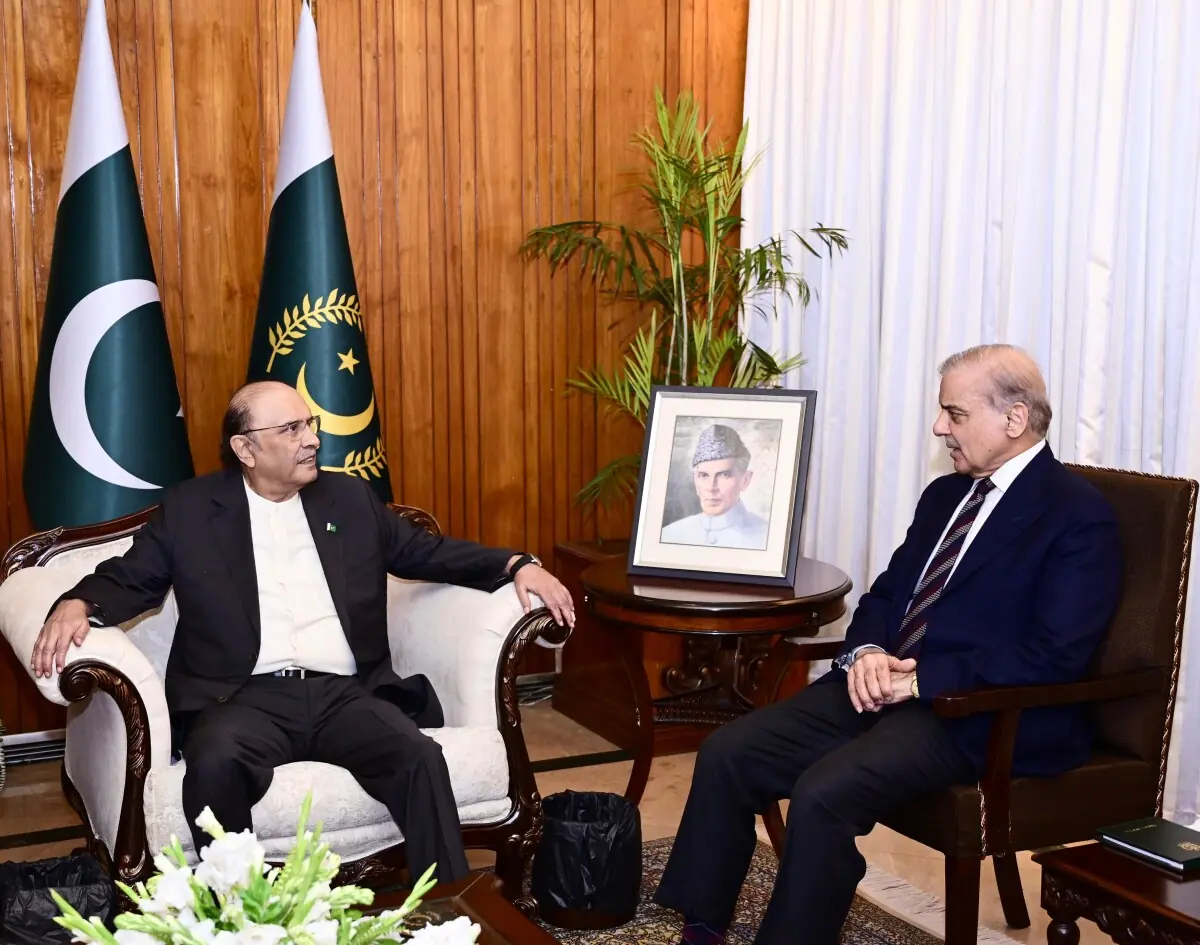
President Zardari, PM Shehbaz Discuss Budget, Security, Regional Situation – Business Recorder
President Asif Ali Zardari and Prime Minister Muhammad Shehbaz Sharif met at Aiwan-e-Sadr to coordinate on the federal budget, national security, and the regional situation. According to reports from Business Recorder, the discussions focused on aligning the government’s financial roadmap with security priorities and regional stability to ensure a cohesive national strategy.
What happened during the meeting at Aiwan-e-Sadr?
President Asif Ali Zardari hosted Prime Minister Muhammad Shehbaz Sharif for a high-level consultation aimed at resolving key policy friction points before the federal budget is finalized. The meeting served as a critical coordination point between the presidency and the executive branch, focusing on three primary pillars: fiscal planning, internal and external security, and the geopolitical landscape surrounding Pakistan.
According to the Associated Press of Pakistan, the dialogue took place at Aiwan-e-Sadr, where the two leaders reviewed the current trajectory of the country’s economic recovery and the immediate security threats facing the state. The discussions weren’t just about numbers; they were about the political viability of the upcoming budget within a coalition framework.
The primary outcomes of the meeting include:
- Budgetary Alignment: A movement toward a shared financial vision between the leading coalition partners.
- Security Review: An assessment of the regional situation and its implications for domestic stability.
- Policy Emphasis: A reinforced commitment to economic stability and the protection of provincial interests.
How the PPP and PML-N reached a budget agreement
One of the most significant developments emerging from these discussions is the political consensus on the federal budget. In a coalition government, the budget is often the most contentious document, as it balances the competing interests of different political parties and provinces.
Geo News reports that the Pakistan Peoples Party (PPP) has “greenlit” its support for the budget presented by the Pakistan Muslim League-Nawaz (PML-N). This support came after a series of huddles between top leadership in Islamabad, indicating that the PPP’s concerns have been sufficiently addressed to ensure the budget’s passage in parliament.
Further corroborating this, The Nation reports that the government and the PPP have reached a “broad agreement” on the federal budget proposals. This suggests that while minor adjustments may still occur, the overarching framework—including revenue targets and expenditure priorities—is now acceptable to both major partners.
This agreement is vital because any public rift between the PM and the President over fiscal policy could signal instability to international lenders and investors. By securing a “greenlight” from the PPP, the PML-N-led government reduces the risk of legislative deadlock.
Why President Zardari emphasized provincial rights and economic stability
While the broad agreement is a win for government stability, President Zardari’s specific contributions to the dialogue highlight the PPP’s core priorities. According to Dawn, the President stressed the importance of “provincial rights” and “economic stability” in the upcoming budget.
The emphasis on provincial rights is a recurring theme for the PPP, which historically champions provincial autonomy. In the context of a federal budget, this typically translates to demands for a fair distribution of resources, ensuring that provinces receive adequate funding for development and social services without undue federal interference.
“President Zardari stresses ‘provincial rights, economic stability’ in upcoming budget.” — Dawn
The push for economic stability is equally critical. Pakistan has faced volatile inflation and currency fluctuations, making the budget a tool for survival rather than just growth. By insisting on stability, Zardari is likely pushing for measures that curb inflation and protect the purchasing power of the average citizen, while maintaining the fiscal discipline required by international financial institutions.
Comparing the reporting across major outlets
Different news organizations highlighted different angles of the meeting, reflecting the various priorities of the stakeholders involved. The following table summarizes the focus of the primary reports:
| Source | Primary Focus of Report | Key Takeaway |
|---|---|---|
| Business Recorder | Budget, Security, and Regional Situation | Broad strategic alignment on national and regional issues. |
| Dawn | Provincial Rights and Economic Stability | Presidential insistence on autonomy and fiscal health. |
| Geo News | PPP’s “Greenlight” for PML-N | Political consensus reached after leadership huddles. |
| The Nation | Broad Agreement on Proposals | Agreement reached on the framework of federal budget proposals. |
The intersection of national security and the regional situation
Beyond the balance sheets, the meeting addressed the “regional situation,” a phrase that encompasses Pakistan’s complex relationships with its neighbors and the internal security challenges it faces. The Business Recorder’s highlighting of this topic suggests that the budget isn’t just an economic document, but a security document.
Security expenditures often take up a significant portion of the federal budget. When President Zardari and PM Shehbaz discuss the regional situation, they’re essentially discussing how to allocate resources to counter terrorism, manage border tensions, and maintain internal law and order without bankrupting the state.
The regional context is particularly volatile. Any shift in the security landscape requires a flexible budget that can accommodate emergency spending or shifts in defense priorities. The coordination between the President and the PM ensures that the civilian leadership is on the same page regarding the strategic direction of the country’s security apparatus.
Key security-economic trade-offs
- Defense vs. Development: The challenge of funding security needs while meeting the President’s demand for “provincial rights” and development.
- Stability vs. Austerity: Balancing the need for “economic stability” with the austerity measures often demanded by external creditors.
- Regional Diplomacy vs. Defense Spending: Determining if regional stability can be achieved through diplomatic channels to reduce the long-term burden on the federal budget.
Political implications of the PPP-PML-N alignment
The fact that the PPP has formally supported the PML-N’s budget proposals is a signal of coalition cohesion. In the past, budget season has been a time of tension, where partners use the threat of withholding support to extract concessions.
This “broad agreement” suggests a pragmatic approach to governance. Both parties recognize that the cost of a government collapse or a failed budget would be catastrophic for the economy. By aligning their interests—PML-N focusing on the executive delivery of the budget and PPP focusing on provincial rights and stability—they’ve created a functional, if cautious, partnership.
For the average citizen, this alignment means a more predictable legislative process. However, the real test will be whether the final budget reflects the “provincial rights” Zardari emphasized or if it leans too heavily toward the federal priorities of the PML-N.
Related analysis on Pakistan’s coalition dynamics may provide further insight into how these two parties have historically managed budget disputes.
Common misconceptions about the President’s role in the budget
A common misunderstanding is that the President of Pakistan has the primary authority to write the budget. In reality, the budget is developed by the Ministry of Finance and presented by the Prime Minister’s government.
However, as the head of state and a leader of a major coalition partner (the PPP), President Zardari’s influence is substantial. His role is more about strategic guidance and political negotiation. When he “stresses” provincial rights, he’s not just offering a suggestion; he’s signaling the conditions under which his party will support the government’s legislation. The meeting at Aiwan-e-Sadr is therefore a negotiation of political will rather than a technical drafting session.
Clarifying the Budget Process
- Drafting: Handled by the Ministry of Finance and the PM’s office.
- Negotiation: Occurs between coalition leaders, such as the President and PM.
- Approval: Must be passed by the National Assembly and the Senate.
- Assent: The President formally signs the budget into law.
Frequently Asked Questions
What was the primary purpose of the meeting between President Zardari and PM Shehbaz?
The meeting was held to discuss and align on the upcoming federal budget, national security concerns, and the current regional situation to ensure stability within the coalition government.
Did the PPP agree to support the PML-N budget?
Yes. According to reports from Geo News and The Nation, the PPP has “greenlit” its support and reached a broad agreement with the government on the federal budget proposals.
What specific priorities did President Zardari bring to the discussion?
According to Dawn, President Zardari specifically emphasized the need for the budget to protect provincial rights and ensure overall economic stability.
Where did the discussions take place?
The meeting took place at Aiwan-e-Sadr, the official residence of the President of Pakistan.
Why is the “regional situation” relevant to a budget discussion?
The regional situation directly impacts national security spending and economic stability. Aligning the budget with security needs is essential for managing border tensions and internal stability.
