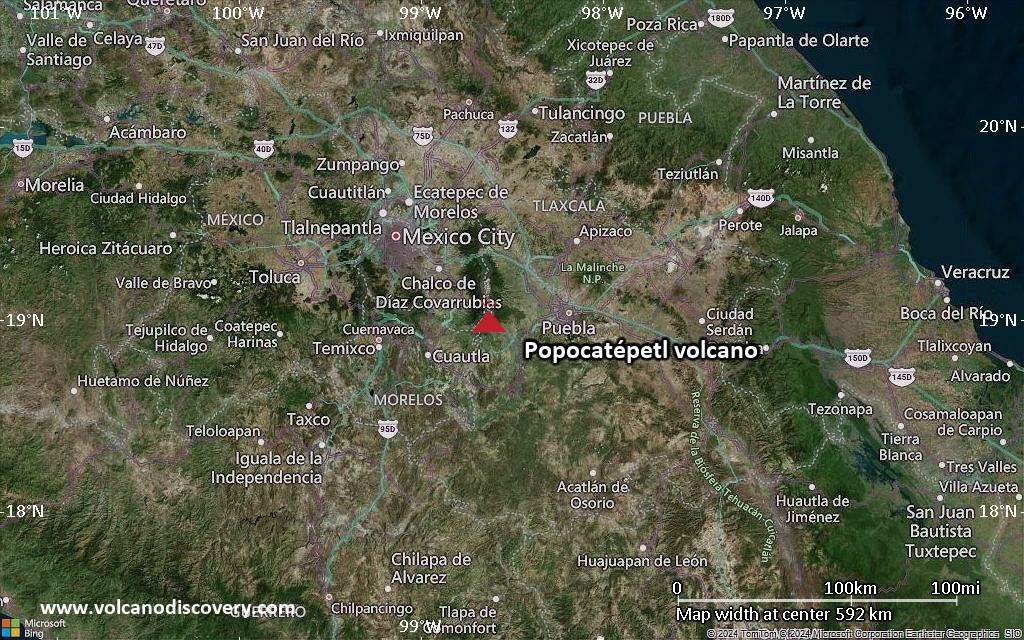
Popocatépetl Volcano Volcanic Ash Advisory: NEW LGT VA EMS to 19000 ft (5800 m) – Volcano Discovery
Popocatépetl volcano has issued a new volcanic ash advisory reporting light ash emissions reaching 19,000 feet (5,800 meters), according to data from Volcano Discovery. This activity follows a series of fluctuations, including reported ash plumes reaching as high as 23,000 feet, posing potential risks to regional aviation and local air quality.
What is the current status of the Popocatépetl volcanic ash advisory?
The latest update from Volcano Discovery indicates a “NEW LGT VA EMS to 19000 ft (5800 m).” In aviation and volcanology terminology, this translates to a new report of light volcanic ash (VA) being emitted (EMS) to an altitude of 19,000 feet. This specific advisory serves as a critical warning for aircraft operating in the airspace surrounding the volcano, as volcanic ash can cause severe engine failure and damage to aircraft windshields.
This current report is part of a period of inconsistent activity. Recent data shows the volcano has shifted between different levels of intensity. Prior advisories tracked occasional (OCNL) ash emissions reaching 21,000 feet (6,400 meters) and observed (OBSD) ash reaching 20,000 feet (6,100 meters). At its most active recent peak, reports indicated possible (POSS) ash emissions reaching 23,000 feet (7,000 meters).
The fluctuation in plume height suggests a volcano in a state of ongoing unrest, characterized by intermittent bursts of energy rather than a single, sustained eruption event. According to the data, the volcano has maintained an “ONGOING VA EMS” status, meaning the emission of ash is a continuous or recurring threat rather than a one-time incident.
How do the different ash emission levels compare?
The variations in reported altitudes and intensities provide a map of the volcano’s recent volatility. A change from 23,000 feet to 19,000 feet represents a decrease in the vertical reach of the ash column, but the “light” (LGT) classification indicates that while the volume may be lower, the material remains hazardous.
| Advisory Type | Max Altitude (Feet) | Max Altitude (Meters) | Intensity/Status |
|---|---|---|---|
| NEW LGT VA EMS | 19,000 | 5,800 | Light / New |
| VA EMS OBSD | 20,000 | 6,100 | Observed |
| OCNL VA EMS | 21,000 | 6,400 | Occasional |
| POSS VA EMS | 23,000 | 7,000 | Possible |
These distinctions are not merely academic; they dictate the “no-fly zones” and altitude restrictions implemented by aviation authorities. For instance, a plume reaching 23,000 feet penetrates deeper into the flight levels used by regional commercial aircraft than a plume peaking at 19,000 feet. When an advisory is marked as “OBSD” (Observed), it means the ash has been visually confirmed by ground observers or satellite imagery. A “POSS” (Possible) advisory indicates a high probability of ash based on seismic data or smaller observed vents, even if a full column isn’t clearly visible.
Why does volcanic ash at 19,000 feet matter for aviation?
Volcanic ash consists of tiny fragments of jagged glass, minerals, and rock. Unlike the soft ash from a wood fire, volcanic ash is abrasive and melts at high temperatures. When a jet engine ingests this material, the ash can melt in the combustion chamber and solidify on the turbine blades, potentially choking the engine and causing a total loss of power.

The altitude of 19,000 feet is particularly significant because it sits just below the cruising altitudes of many short-to-medium haul flights. However, aircraft ascending to or descending from higher altitudes must pass through these layers. According to standard aviation safety protocols, any reported volcanic ash emission triggers a re-evaluation of flight paths to ensure aircraft avoid the plume entirely.
- Engine Abrasion: Ash particles act like sandpaper on engine components.
- Visibility Loss: High concentrations of ash can reduce cockpit visibility to near zero.
- Pitot Tube Failure: Ash can clog the sensors that tell pilots how fast they are flying, leading to dangerous instrument failures.
Because Popocatépetl is located near some of the busiest air corridors in Mexico, including those serving Mexico City, these advisories are monitored in real-time. Even “light” emissions can lead to flight delays or rerouting if the wind carries the ash across major arrival or departure paths.
What is the geographical impact of Popocatépetl’s activity?
Popocatépetl is one of Mexico’s most active volcanoes, situated in a densely populated region. The emission of ash to 19,000 feet doesn’t just affect the sky; it affects the ground. Once the ash reaches its peak altitude, atmospheric winds carry the particles away from the vent, often depositing them over nearby cities and agricultural lands.
The “ONGOING VA EMS” status reported by Volcano Discovery suggests that local populations may experience intermittent “ash rain.” This fine powder can contaminate water supplies, damage crops, and cause respiratory distress for people with asthma or other lung conditions. In urban areas, ash accumulation on roads can make surfaces slippery, increasing the risk of traffic accidents.
The region surrounding the volcano is characterized by a complex interplay of high-altitude peaks and deep valleys. This geography can sometimes trap ash in certain pockets, leading to higher concentrations of particulate matter in specific towns while others remain clear. This makes the precision of the altitude reports—such as the shift from 21,000 to 19,000 feet—vital for predicting where the ash will eventually settle.
How are these Volcanic Ash Advisories (VAA) generated?
The data provided by Volcano Discovery is typically derived from Volcanic Ash Advisories (VAA) issued by Volcanic Ash Advisory Centers (VAACs). These centers use a combination of tools to track emissions:

Satellite Imagery: Infrared and multispectral satellites can detect the heat signature of an eruption and the movement of the ash cloud, even through cloud cover. This is often how “POSS” (Possible) emissions are identified.
Ground Observation: Volcanologists and local observers provide real-time reports on the color, thickness, and height of the plume. This leads to “OBSD” (Observed) classifications.
Atmospheric Modeling: Once the height of the emission (e.g., 19,000 ft) is established, meteorologists use wind speed and direction data to create a “forecast” of where the ash will travel over the next six to 18 hours.
When a report changes from “OCNL” (Occasional) to “LGT” (Light), it indicates a change in the volume of material being ejected. Occasional emissions suggest sporadic, high-energy bursts, while light emissions suggest a more steady but less intense release of material.
What are the long-term implications of ongoing unrest?
The pattern of activity—shifting between 19,000 and 23,000 feet—indicates that Popocatépetl is in a phase of prolonged instability. Volcanologists monitor these fluctuations to determine if the volcano is entering a period of increased activity or if it is simply “venting” pressure.
A consistent pattern of ash emissions can lead to several long-term challenges for the region:
- Infrastructure Wear: Constant ash fall requires more frequent cleaning of drainage systems and electrical grids to prevent short circuits.
- Agricultural Stress: While volcanic soil is fertile in the long run, immediate ash fall can smother crops and kill livestock by contaminating grazing lands.
- Economic Disruption: Frequent aviation advisories can lead to increased operational costs for airlines and instability in tourism for the surrounding highlands.
The fact that the volcano has remained active with “ONGOING VA EMS” suggests that the internal magmatic system is still highly pressurized. The shift to a lower altitude of 19,000 feet may be a temporary lull, but it does not necessarily signal the end of the eruptive cycle.
Common misconceptions about volcanic ash advisories
One common misconception is that “light” (LGT) emissions are harmless. In the context of a Volcanic Ash Advisory, “light” refers to the concentration of the ash in the air, not the toxicity or the danger to aircraft. Even a light concentration of volcanic glass can be catastrophic for a jet engine.
Another misunderstanding is the belief that ash only travels in the direction of the wind. While wind is the primary driver, the initial vertical thrust—such as the 19,000-foot column—determines which atmospheric currents the ash will enter. Ash at 19,000 feet may move in a completely different direction than ash at 5,000 feet due to different wind layers in the atmosphere.
Finally, some believe that a decrease in plume height (from 23,000 to 19,000 feet) means the volcano is “calming down.” While it is a decrease in intensity, it can also be a sign of a change in the eruption style, such as a shift from explosive bursts to a more sustained, lower-energy degassing phase.
Frequently Asked Questions
What does “LGT VA EMS to 19000 ft” mean exactly?
It means “Light Volcanic Ash Emitted to 19,000 feet.” This is a technical alert indicating that the volcano is releasing a low-density cloud of ash that has reached an altitude of 19,000 feet (approximately 5,800 meters) above sea level.
Is it safe to fly near Popocatépetl during a VA advisory?
Aviation authorities generally advise against flying directly through volcanic ash plumes. Pilots and airlines use these advisories to reroute flights. While flying in the general region may be safe, the specific area affected by the ash cloud is avoided to prevent engine damage.
How does this activity affect Mexico City?
Depending on the wind direction, ash from Popocatépetl can reach Mexico City and surrounding municipalities. This can lead to reduced air quality, the need for face masks to avoid inhaling particulates, and the requirement to cover water cisterns to prevent contamination.
What is the difference between “Observed” and “Possible” ash?
“Observed” (OBSD) ash has been confirmed via visual sighting or satellite data. “Possible” (POSS) ash is inferred based on other data, such as seismic tremors or smaller eruptions, suggesting that ash is likely present even if it cannot be clearly seen.
Why does the plume height keep changing?
Volcanic eruptions are rarely constant. Changes in gas pressure, the viscosity of the magma, and the amount of water entering the volcanic vent can cause the plume to fluctuate. A shift from 23,000 feet to 19,000 feet reflects these changing internal dynamics.
For those tracking the situation, the most reliable course of action is to follow official aviation notices and local civil protection alerts, as the “ONGOING VA EMS” status indicates that conditions can change rapidly.
