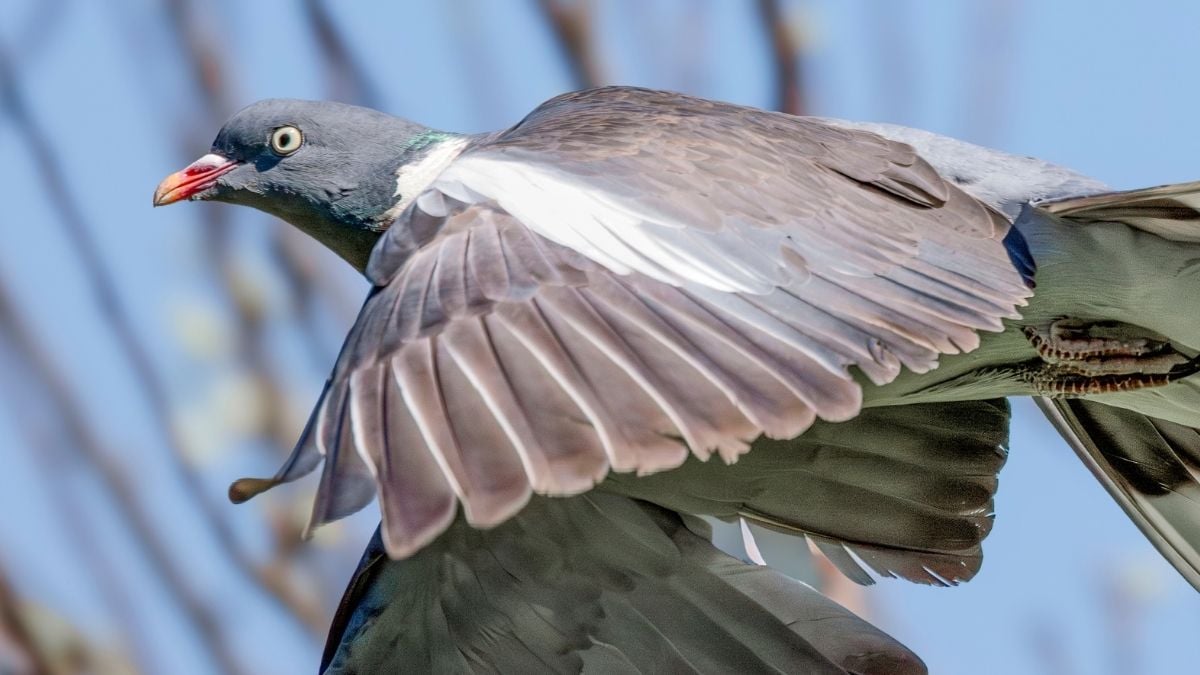
A Mysterious Quantum Compass May Be Hiding Inside Pigeons’ Livers – ScienceAlert
For centuries, the homing pigeon has been one of nature’s most enduring enigmas. These birds possess an uncanny ability to find their way back to a specific location from hundreds of miles away, even when released in completely unfamiliar territory. While scientists have long suspected that birds utilize the Earth’s magnetic field to navigate—a phenomenon known as magnetoreception—the exact biological mechanism has remained elusive. However, a provocative new discovery suggests that the secret to this navigational prowess might not be in the brain or the eyes, but in a far more unexpected place: the liver.
The idea that a mysterious quantum compass may be hiding inside pigeons’ livers – ScienceAlert and other recent scientific inquiries have sparked a heated debate within the biological community. This theory posits that the liver may house a complex quantum-mechanical system capable of sensing subtle shifts in geomagnetic fields, effectively acting as a biological GPS. If proven, this would not only rewrite our understanding of avian anatomy but also push the boundaries of quantum biology, suggesting that quantum effects are far more prevalent in living organisms than previously imagined.
Decoding the Mystery of Avian Magnetoreception
To understand why the liver discovery is so shocking, one must first understand the existing theories of how birds navigate. Magnetoreception is the ability of an organism to detect a magnetic field to perceive direction, altitude, or location. In birds, this has traditionally been attributed to two primary mechanisms:
- Magnetite-based receptors: For years, researchers believed that tiny crystals of magnetite (a naturally magnetic mineral) located in the beaks of birds acted like microscopic compass needles, physically moving in response to the Earth’s magnetic field and sending signals to the brain.
- Cryptochrome-based receptors: A more recent and widely accepted theory suggests that proteins called cryptochromes, located in the retina of the eye, allow birds to “see” the magnetic field. This process involves quantum entanglement, where light hits the eye and creates a chemical reaction sensitive to the angle of the magnetic field.
While these theories provide a strong foundation, they don’t explain everything. Some birds continue to navigate even when their eyes are covered or when magnetite-rich areas are neutralized. This is where the liver enters the conversation. The suggestion that the liver plays a role in navigation challenges the “head-centric” view of sensory perception, suggesting that the body’s internal organs may be far more sensory-active than we ever suspected.
“The possibility that a visceral organ like the liver could function as a sensory array for quantum-level magnetic detection fundamentally changes how we view the integration of biological systems and physics.”
The Quantum Mechanics of a Biological Compass
The term “quantum compass” sounds like science fiction, but it is rooted in the very real field of quantum biology. To understand how a liver could possibly sense a magnetic field, we have to look at the behavior of electrons at a subatomic level.
The Radical Pair Mechanism
The leading hypothesis for quantum navigation is the radical pair mechanism. This occurs when a chemical reaction is triggered—often by light, but potentially by other metabolic triggers—creating a pair of molecules with unpaired electrons. These electrons are “entangled,” meaning their quantum states are linked regardless of the distance between them.
The spin of these electrons can be either parallel or antiparallel. Because these spins are incredibly sensitive to external magnetic fields, the Earth’s geomagnetic field can influence the ratio between these two states. This change in the quantum state then triggers a chemical signal that the bird’s nervous system can interpret as a directional cue.
Why the Liver?
The liver is the metabolic powerhouse of the body. It is rich in proteins, enzymes, and chemical precursors that could theoretically support the radical pair mechanism. Researchers investigating the liver’s role suggest that the organ may not be “seeing” the field in the way an eye does, but rather “feeling” it through metabolic shifts. If the liver contains specific proteins similar to cryptochromes, it could potentially serve as a secondary or primary compass that provides a stable baseline for navigation, unaffected by the visual noise of the environment.
For those interested in how quantum biology is expanding, a related explainer on quantum entanglement in nature provides deeper insight into how other species utilize these strange physics.
Analyzing the Evidence: Fact vs. Speculation
While the hypothesis that a mysterious quantum compass may be hiding inside pigeons’ livers is compelling, it is not without significant controversy. The scientific method requires rigorous replication, and currently, the community is divided.
The Supporting Arguments
Proponents of the liver-compass theory point to anomalies in previous studies where birds navigated successfully despite the disruption of known magnetic sensors in the head. They argue that a distributed sensory system—one that utilizes multiple organs—would be more evolutionarily stable. If a bird suffers an eye injury or a beak deformity, a “backup” compass in the liver would ensure survival.
The Skeptical View
Other experts remain unconvinced. The primary criticism is the lack of a direct neural pathway. For the liver to act as a compass, there must be a way for the “magnetic data” to reach the brain quickly and accurately. Unlike the optic nerve, which provides a direct high-speed link from the eyes to the brain, the liver’s communication is largely chemical and hormonal, which is generally too slow for real-time navigation during flight.
some scientists argue that the observed magnetic sensitivity in liver cells might be a side effect of metabolic processes rather than a dedicated evolutionary adaptation for navigation. In other words, the liver might be reacting to the magnetic field, but the bird might not be using that reaction to fly home.
Comparative Analysis of Navigation Theories
To better understand the landscape of this debate, the following table compares the three primary theories of avian magnetoreception.
| Theory | Primary Location | Mechanism | Key Advantage | Main Weakness |
|---|---|---|---|---|
| Magnetite Theory | Beak/Upper Mandible | Physical mineral alignment | Simple, mechanical process | Doesn’t explain all species |
| Cryptochrome Theory | Retina (Eyes) | Quantum radical pairs | High precision, visual integration | Requires light to function |
| Liver Theory | Liver Tissue | Metabolic quantum sensing | Constant, non-visual backup | Lack of clear neural pathway |
The Broader Implications for Science and Technology
Whether the liver truly acts as a compass or not, the investigation into a mysterious quantum compass may be hiding inside pigeons’ livers – ScienceAlert has far-reaching implications beyond ornithology. We are entering an era where the line between biology and quantum physics is blurring.
Bio-Mimicry and Engineering
If One can decode how a biological organ senses magnetic fields with such precision, we could revolutionize human technology. Current GPS systems rely on a network of satellites and are prone to jamming or signal loss. A “bio-inspired” quantum sensor could lead to the development of navigation systems that are:
- Passive: Requiring no external satellite signal.
- Ultra-sensitive: Capable of detecting minute changes in the Earth’s crust.
- Energy-efficient: Operating on chemical energies rather than heavy batteries.
Redefining the “Sensory Organ”
This research challenges the traditional definition of a sensory organ. We typically think of eyes, ears, and noses as the gateways to the world. However, if the liver is indeed a sensory organ, it suggests that the entire body may be an interconnected antenna, sensing environmental variables—from magnetic fields to gravitational shifts—through organs we previously thought were only for digestion or filtration.
Common Misconceptions About Bird Navigation
As this story gains traction in the media, several oversimplifications have emerged. It is important to clarify these points to maintain scientific accuracy.
Misconception 1: Pigeons have a “magic” organ.
There is nothing magical about the liver’s potential role; it is based on the laws of quantum chemistry. The “mystery” lies in the implementation, not the physics.
Misconception 2: The liver replaces the eyes.
It is highly unlikely that the liver is the only way pigeons navigate. Most scientists believe in a “multi-modal” system where birds use the sun, stars, landmarks, smell, and multiple types of magnetic sensing in tandem.
Misconception 3: This is already a proven fact.
The liver-compass theory is a compelling hypothesis based on new data, but it is not yet a scientific law. It requires further peer-reviewed evidence and experimental validation.
The Path Forward in Quantum Biology
The search for the “quantum compass” is far from over. To move from hypothesis to fact, researchers will likely need to employ more advanced imaging techniques and genetic modifications. One potential avenue is the use of “knockout” studies, where specific proteins in the liver are disabled to see if the pigeon loses its ability to navigate while its eyes and beak remain intact.
the integration of AI and machine learning could help analyze the massive amounts of biochemical data coming from liver cells, identifying patterns that correlate with magnetic orientation that are too subtle for human researchers to spot.
As we continue to probe the depths of avian biology, we may find that the pigeon is not just a bird, but a sophisticated biological machine that masters the laws of quantum mechanics every time it takes flight. The liver, once seen as a simple filter, may just be the key to unlocking one of nature’s most guarded secrets.
Frequently Asked Questions
How can a liver possibly act as a compass?
The theory suggests that the liver contains proteins capable of creating “radical pairs”—electrons that are quantum-entangled and sensitive to the Earth’s magnetic field. This sensitivity triggers chemical changes that the bird’s body can detect.
Do all birds use their livers for navigation?
This is currently unknown. The research has focused primarily on homing pigeons, but if the mechanism is found to be true, it may be present in other migratory species, though the specific organ involved could vary.
Is this the same as the “magnetic beak” theory?
No. The beak theory relies on magnetite (physical minerals), whereas the liver theory relies on quantum chemistry (electron spin). They are two different biological mechanisms for the same goal: magnetoreception.
Why is this called “quantum” navigation?
It is called quantum because it involves the behavior of subatomic particles (electrons) and phenomena like spin and entanglement, which cannot be explained by classical physics.
Does this mean pigeons don’t use landmarks?
Not at all. Pigeons are known to use a combination of tools, including visual landmarks, the position of the sun, and olfactory cues, alongside their magnetic sense.
The ongoing exploration into whether a mysterious quantum compass may be hiding inside pigeons’ livers – ScienceAlert serves as a reminder that the natural world still holds secrets that challenge our most basic assumptions about life. By bridging the gap between the visceral reality of anatomy and the abstract world of quantum physics, science is bringing us closer to understanding the invisible forces that guide life across the globe.
