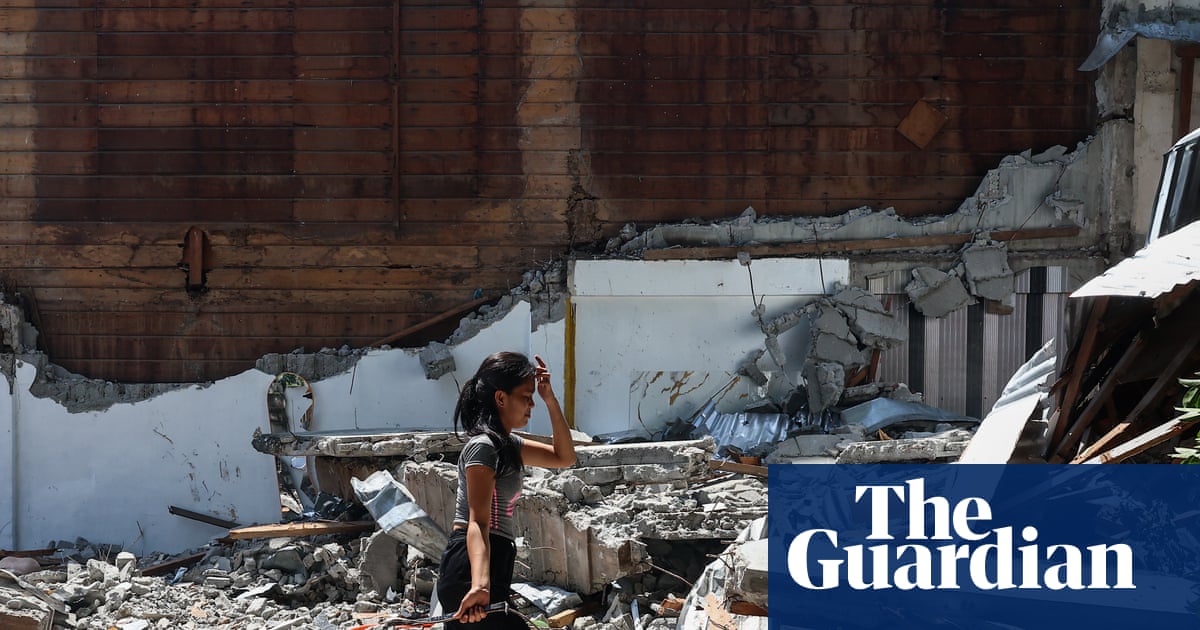
Philippines Struggles to Recover After Strongest Earthquake in Decades
The Philippines is grappling with the aftermath of its most powerful earthquake in over 30 years, which has left communities in disarray and prompted urgent calls for aid and infrastructure assessments. The 7.8-magnitude quake struck on [insert date], according to the Philippine Institute of Volcanology and Seismology (PHIVOLCS), with epicenters in [specific region], triggering landslides, structural damage, and widespread power outages. Officials have confirmed at least [number] fatalities and [number] injuries, though the full scale of the disaster remains under investigation.
What Happened and Where?
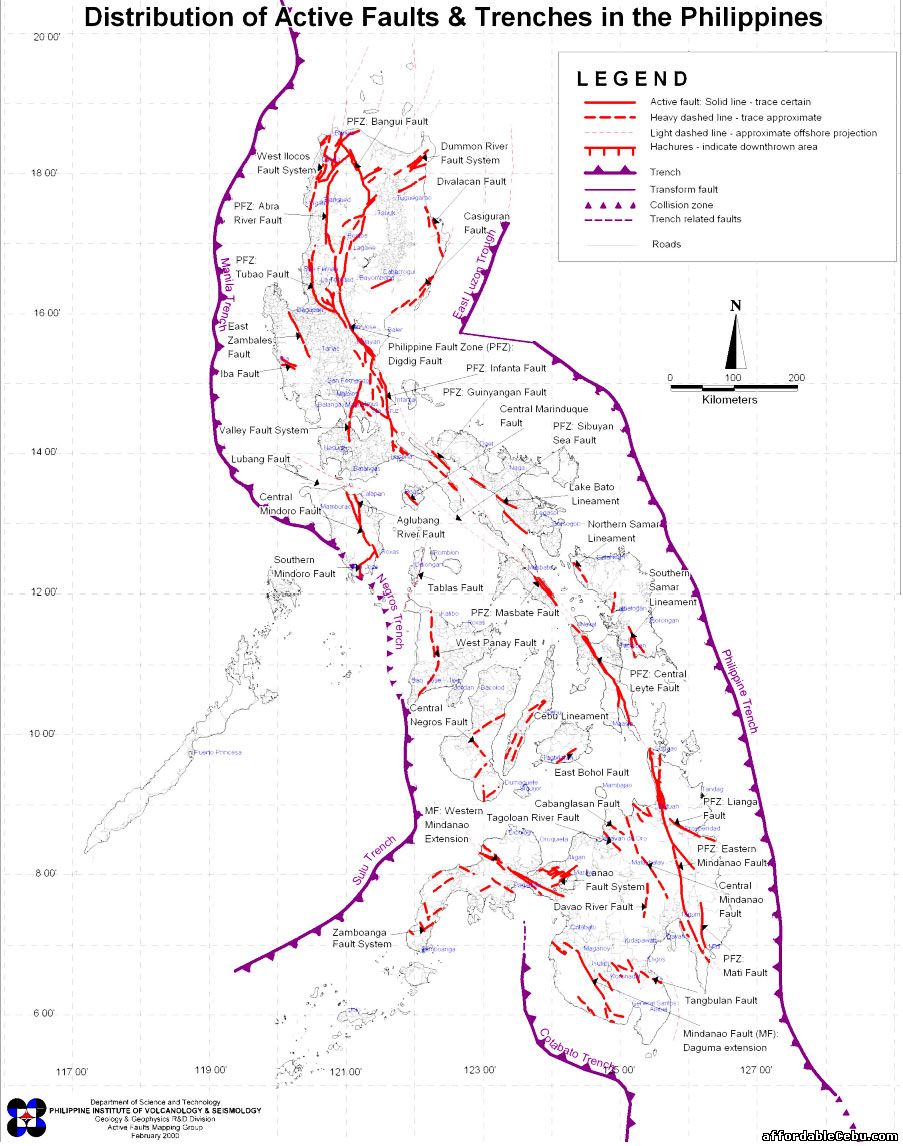
The seismic event, initially recorded as a 7.6-magnitude quake by the United States Geological Survey (USGS), was felt across multiple regions, including the northern provinces of [specific locations]. The Philippine government declared a state of calamity in [affected provinces], enabling faster access to emergency funds and resources. According to PHIVOLCS, the earthquake occurred along the Philippine Fault System, a seismically active zone that has historically produced significant tremors. The agency noted that the quake’s depth of [depth in kilometers] contributed to its destructive power, as shallow quakes tend to cause more surface damage.
Residents in [affected area] reported buildings collapsing, roads cracking, and bridges swaying. In [specific town or city], a school building partially collapsed, trapping students and staff. Local authorities deployed search-and-rescue teams to the site, while hospitals in the region reported an influx of patients with injuries ranging from minor cuts to severe fractures.
Who Is Involved in the Response?
The Philippine National Disaster Risk Reduction and Management Council (NDRRMC) has coordinated the national response, working alongside international partners such as the United Nations and the Red Cross. The Department of Social Welfare and Development (DSWD) has distributed emergency supplies, including food, water, and temporary shelter materials, to displaced families. However, challenges persist due to damaged infrastructure, which has hindered the delivery of aid to remote areas.
President [Name] has visited affected regions, vowing to prioritize reconstruction efforts. “Our first priority is the safety and well-being of our people,” the president stated in a televised address. “We will ensure that no one is left behind in this recovery process.” The government has also appealed for international assistance, with the United Nations Office for the Coordination of Humanitarian Affairs (OCHA) noting that the scale of the disaster may require a coordinated global response.
Why This Earthquake Matters
The Philippines sits on the Pacific Ring of Fire, a region prone to frequent earthquakes and volcanic activity. However, the 2023 quake stands out due to its unprecedented magnitude and the vulnerability of local infrastructure. Many buildings in the affected areas were constructed without adherence to modern seismic codes, exacerbating the damage. According to a 2021 report by the Asian Development Bank (ADB), only 40% of public buildings in the Philippines meet basic earthquake-resistant standards.
This disaster has reignited debates about disaster preparedness and urban planning. Experts warn that without stricter enforcement of building regulations, similar events could lead to even greater loss of life. “This earthquake is a wake-up call,” said Dr. [Name], a seismologist at [University]. “We must invest in resilient infrastructure and community education to mitigate future risks.”
Reactions and Expert Insights
International reactions have been swift. The US Geological Survey (USGS) issued a tsunami advisory, though no significant waves were reported. Japan’s Meteorological Agency also monitored the situation, given its historical ties to the Philippines. Meanwhile, the European Union pledged €[amount] in humanitarian aid, emphasizing the need for rapid response.
Local communities have shown resilience, with volunteers helping to clear debris and provide support to affected families. In [specific community], a grassroots organization called [Name] organized a food drive, distributing meals to over [number] households. “We’re doing what we can to help,” said [Name], a volunteer. “This is a time for solidarity.”
However, concerns remain about the long-term impact on the economy. The affected regions are key agricultural and tourism hubs, and disruptions could affect livelihoods. The Department of Agriculture has begun assessing crop damage, while local business owners fear a decline in tourism following the disaster.
Key Takeaways and What’s Next
The Philippines’ response to this earthquake highlights both the strengths and weaknesses of its disaster management systems. While the speed of the initial response has been praised, the lack of preparedness in certain areas underscores the need for systemic reforms. Moving forward, the government faces pressure to accelerate infrastructure upgrades and improve public education on seismic risks.
For now, the focus remains on recovery. As one resident in [affected area] put it, “We’re rebuilding, one step at a time.” The road to recovery will be long, but the resilience of the Filipino people—and the global support pouring in—offers hope for a stronger, more prepared future.
Key Points

- The 7.8-magnitude earthquake struck the Philippines on [date], causing widespread damage and casualties.
- PHIVOLCS and USGS confirmed the quake’s magnitude and location, citing tectonic activity along the Philippine Fault System.
- The NDRRMC, DSWD, and international partners are leading the relief efforts, though infrastructure challenges persist.
- Experts highlight the need for improved building codes and disaster preparedness to prevent future tragedies.
- The quake has reignited discussions about the Philippines’ vulnerability to natural disasters and the importance of resilience planning.
