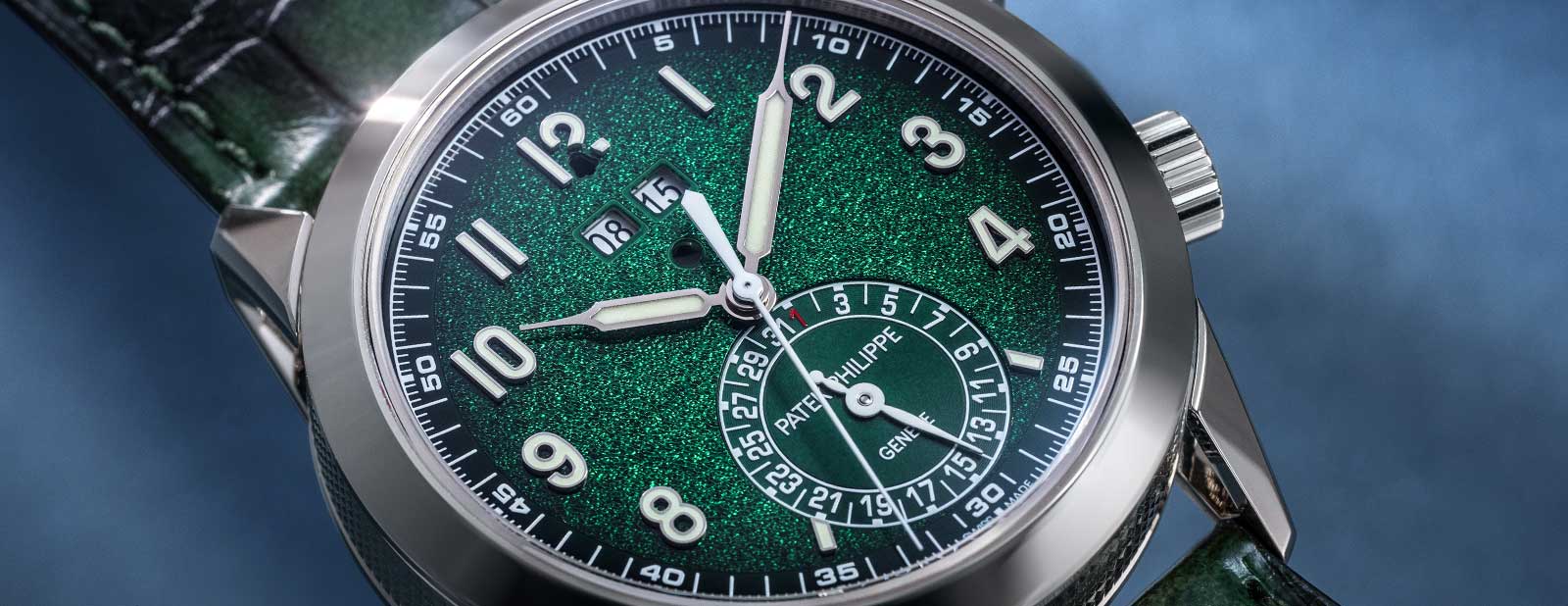
A Closer Look: Patek Philippe Calatrava Chiming Alarm 5322G – Technical Mastery and Design
The Patek Philippe Calatrava Chiming Alarm 5322G is a white gold dress watch featuring a rare mechanical alarm that strikes a gong to notify the wearer of a set time. According to technical specifications, the timepiece integrates a complex manual-wind movement within the minimalist aesthetic of the Calatrava line, offering a sonic complication rarely found in slim-profile dress watches.
What Defines the Patek Philippe Calatrava Chiming Alarm 5322G?
The Ref. 5322G represents a specific intersection of horological utility and understated luxury. While the Calatrava line is traditionally known for time-only or date-only configurations, the 5322G introduces a chiming alarm. Unlike standard alarm watches that may use a simple buzzer or a visual indicator, this model employs a hammer and gong system to produce an audible alert.
According to manufacturer data, the watch is housed in a 18k white gold case. The dial maintains the “Bauhaus” influence central to the Calatrava identity, emphasizing legibility and symmetry. The alarm function is integrated into the movement without compromising the watch’s ability to fit under a shirt cuff, a feat of engineering that requires precise spatial management of the gear train and the striking mechanism.
Key characteristics of the 5322G include:
- Material: 18k white gold case and bezel.
- Complication: Mechanical chiming alarm.
- Movement: Manual-wind caliber.
- Aesthetic: Minimalist dial with gold applied markers.
How Does the Chiming Alarm Mechanism Work?
The mechanical alarm in the 5322G operates through a dedicated power source—a separate spring—that drives the striking mechanism. According to horological standards for chiming watches, the process involves a series of wheels and a lever that triggers a small hammer. When the pre-set alarm time is reached, the hammer strikes a high-frequency gong, creating a clear, ringing tone.
The Setting Process
Setting the alarm on the 5322G requires a specific interaction with the crown and the dial’s alarm hand. The user aligns the alarm hand to the desired hour. This mechanical memory is stored within the movement’s gearing, which continuously tracks the delta between the current time and the alarm time. Once the two align, the release trigger is tripped, and the chime sounds.
The Sonic Engineering
The quality of the chime depends on the metallurgy of the gong and the precision of the hammer’s strike. Patek Philippe utilizes a specific alloy for the gong to ensure the tone is pleasant rather than jarring. Because the case is made of white gold, the metal acts as a resonance chamber, amplifying the sound of the gong through the chassis of the watch.

Why the 5322G Matters in the Context of the Calatrava Line
The Calatrava line, introduced in 1932 with the Ref. 96, established the blueprint for the modern dress watch. Its primary goal has always been purity of form. The introduction of the 5322G challenges this purity by adding a complex complication, yet it succeeds by hiding that complexity beneath a clean dial.
According to industry analysts, the 5322G is significant because it brings a “pocket watch” complication into a wrist-worn dress format. Historically, chiming alarms were common in large pocket watches where space was not a constraint. Shrinking this mechanism to fit a standard Calatrava case requires a reduction in component size without sacrificing the torque necessary to drive a hammer against a gong.
This model serves as a bridge between two different worlds of watchmaking: the “Time-Only” purity of the Calatrava and the “Grand Complication” heritage of Patek Philippe. It allows a collector to own a piece with high mechanical interest that does not look like a technical instrument.
| Feature | Standard Calatrava | Calatrava Chiming Alarm 5322G |
|---|---|---|
| Primary Goal | Minimalist Timekeeping | Functional Complexity |
| Movement Type | Automatic or Manual | Manual-Wind (Alarm Specific) |
| Audible Alerts | None | Mechanical Gong Strike |
| Case Profile | Ultra-Slim | Slim (Adjusted for Complication) |
Technical Specifications and Build Quality
The build quality of the 5322G is consistent with Patek Philippe’s Poinçon de Genève (Geneva Seal) standards, ensuring that every component is finished to the highest degree of precision. The white gold case is polished to a mirror finish, providing a neutral backdrop for the dial.
The Dial and Hands
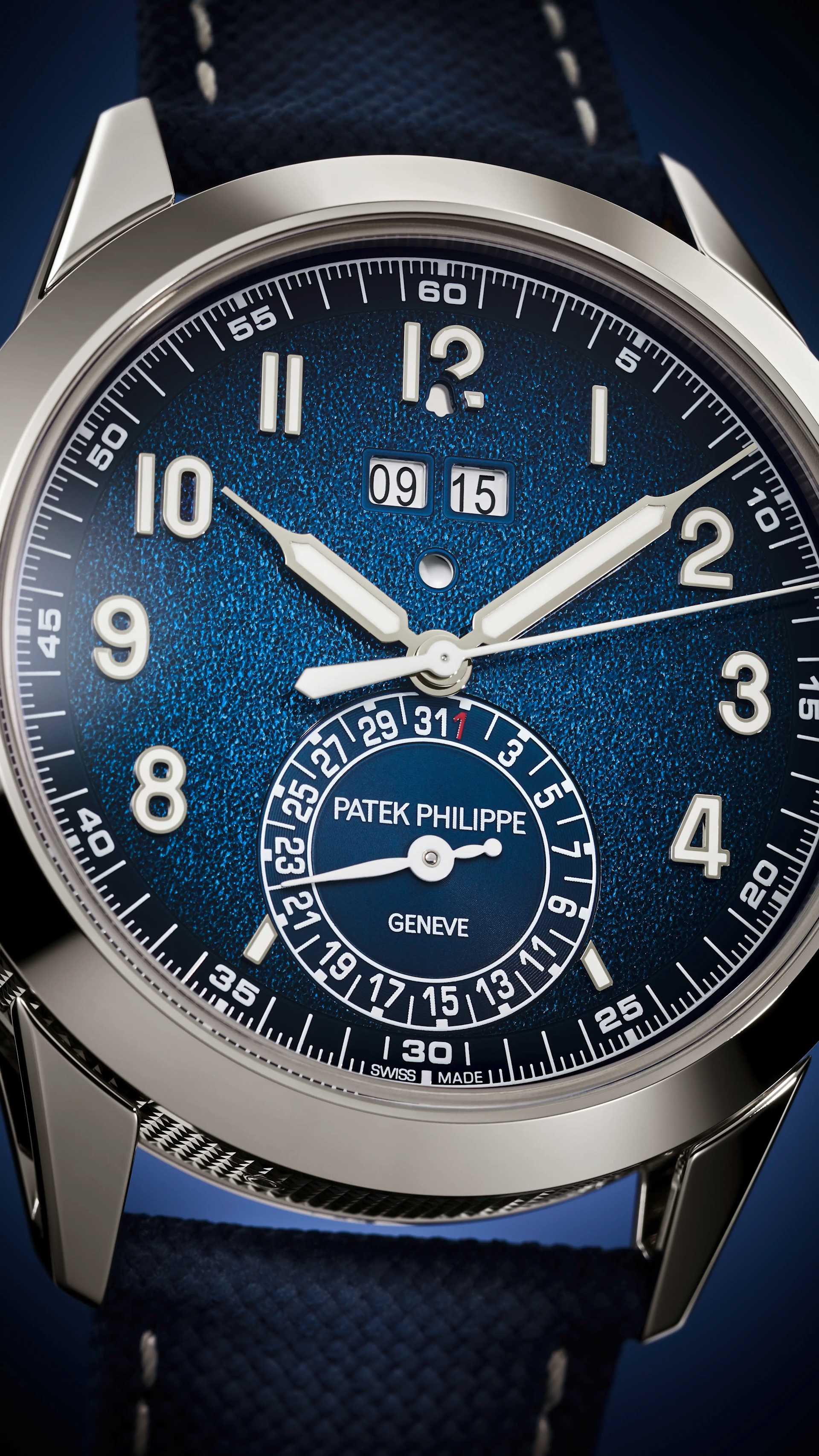
The dial typically features a sunburst or matte finish, depending on the specific iteration. The indices are applied gold markers that provide depth and catch the light. The hands are dauphine-style, which are tapered to ensure they do not obstruct the view of the alarm hand or the main time indicators.
Movement Architecture
The movement is a manual-wind caliber. Manual winding is preferred for chiming alarms because it allows the wearer to feel the tension of the alarm spring, ensuring the chime has sufficient power to sound. The bridges are chamfered and polished, and the wheels are finished with circular graining, according to standard Patek Philippe movement aesthetics.

Inside the movement, the following components are critical:
- The Alarm Barrel: Stores energy specifically for the chime.
- The Strike Train: A series of gears that regulate the speed of the hammer.
- The Gong: A tempered steel wire that vibrates to produce sound.
- The Trigger: A precision lever that releases the strike train at the exact moment of alignment.
Comparing the Chiming Alarm to a Minute Repeater
A common misconception among new collectors is the confusion between a chiming alarm and a minute repeater. While both produce sound, their functions and mechanical operations are entirely different.
A minute repeater is a “demand” complication. According to technical manuals, a repeater tells the wearer the current time on demand by striking the hours, quarters, and minutes when a slide or button is activated. It is a tool for knowing the time in the dark.
The chiming alarm in the 5322G is a “scheduled” complication. It does not tell the current time; rather, it alerts the wearer at a specific, pre-determined time. Mechanically, the repeater is far more complex, requiring multiple gongs and a more intricate sequence of strikes. The 5322G’s alarm is a singular, focused function designed for utility.
For those interested in other high-complication Patek Philippe models, a related explainer on Grand Complications may provide further context on how these systems differ in scale and cost.
Market Position and Collector Appeal
The Patek Philippe Calatrava Chiming Alarm 5322G occupies a niche market. It is not as widely recognized as the Nautilus or the Aquanaut, nor as prestigious as the Perpetual Calendar Chronograph. However, its appeal lies in its rarity and the “secret” nature of its complication.
Collectors often value the 5322G for its “stealth” factor. To an untrained eye, it looks like a standard, elegant white gold Calatrava. Only the wearer knows that the watch possesses a mechanical alarm. This aligns with the concept of “quiet luxury,” where the value is derived from internal complexity and craftsmanship rather than external branding or flashiness.
From an investment perspective, chiming alarms are produced in much smaller quantities than time-only models. This scarcity, combined with the high cost of manual assembly for the alarm mechanism, typically supports strong value retention in the secondary market.
Common Misconceptions About the 5322G
Several myths persist regarding the operation and maintenance of the 5322G. Addressing these provides a clearer picture of the watch’s reality.
“The alarm is loud enough to wake someone up”
While the 5322G produces a clear chime, it is a wrist-worn mechanical device, not an electronic alarm clock. The sound is designed to be audible to the wearer and those in immediate proximity, but it does not possess the decibel level of a bedside alarm. It is intended as a sophisticated reminder rather than a wake-up call.
“It requires daily winding of two separate springs”
According to the operating instructions, the watch does require the winding of both the timekeeping barrel and the alarm barrel. However, the alarm spring does not need to be wound as frequently as the timekeeping spring, as it only releases energy for a few seconds at the set time.
“The alarm hand interferes with legibility”
Critics sometimes suggest that an extra hand clutters the dial. However, Patek Philippe utilizes a thin, discreet alarm hand that sits closer to the dial surface than the hour and minute hands, maintaining the visual hierarchy and ensuring the primary time remains the focal point.
Maintenance and Long-Term Care
Due to the complexity of the chiming mechanism, the 5322G requires more rigorous maintenance than a standard Calatrava. The striking components—specifically the hammer and the gong—are subject to wear and can be affected by magnetism or shock.
According to service guidelines for high-complication watches, the 5322G should be serviced by authorized Patek Philippe technicians. During a full service, the gong is inspected for cracks or fatigue, and the strike train is lubricated with specialized oils to ensure the chime remains crisp. Over-winding the alarm spring is a risk that can lead to component failure, so technicians recommend following the winding resistance cues carefully.
Environmental factors also play a role. Because the case is white gold, it is relatively durable, but the mechanical nature of the alarm means that extreme vibrations or heavy impacts could potentially knock the hammer out of alignment, requiring a professional recalibration.
Frequently Asked Questions
What is the primary difference between the 5322G and a standard Calatrava?
The primary difference is the inclusion of a mechanical chiming alarm. While standard Calatravas focus on timekeeping and date functions, the 5322G features a hammer-and-gong system that alerts the wearer at a pre-set time.
Does the 5322G use a battery for the alarm?
No. The 5322G is entirely mechanical. The alarm is powered by a manual-wind spring that stores energy to drive the hammer against a metal gong.
Is the Patek Philippe 5322G water-resistant?
Like most high-complication dress watches, the 5322G has limited water resistance. It is designed for formal wear and should not be exposed to swimming, showering, or significant moisture, as the case seals are optimized for slimness rather than waterproofing.
How often should the alarm be wound?
The alarm spring should be wound whenever the alarm function is intended to be used. While it lasts longer than the main timekeeping spring, it must have sufficient tension to strike the gong effectively.
Can the alarm be turned off without changing the set time?
Yes, most chiming alarm models include a mechanism to disable the strike without resetting the alarm hand, allowing the wearer to keep the alarm “set” but silent for specific periods.
The Patek Philippe Calatrava Chiming Alarm 5322G remains a testament to the brand’s ability to miniaturize complex auditory complications. By housing a chiming mechanism within the iconic Calatrava silhouette, the manufacturer provides a tool that is as much a piece of mechanical art as it is a functional timepiece. For the collector, it represents a rare balance of austerity and ingenuity, ensuring that the tradition of the mechanical alarm survives in a modern, refined format.
