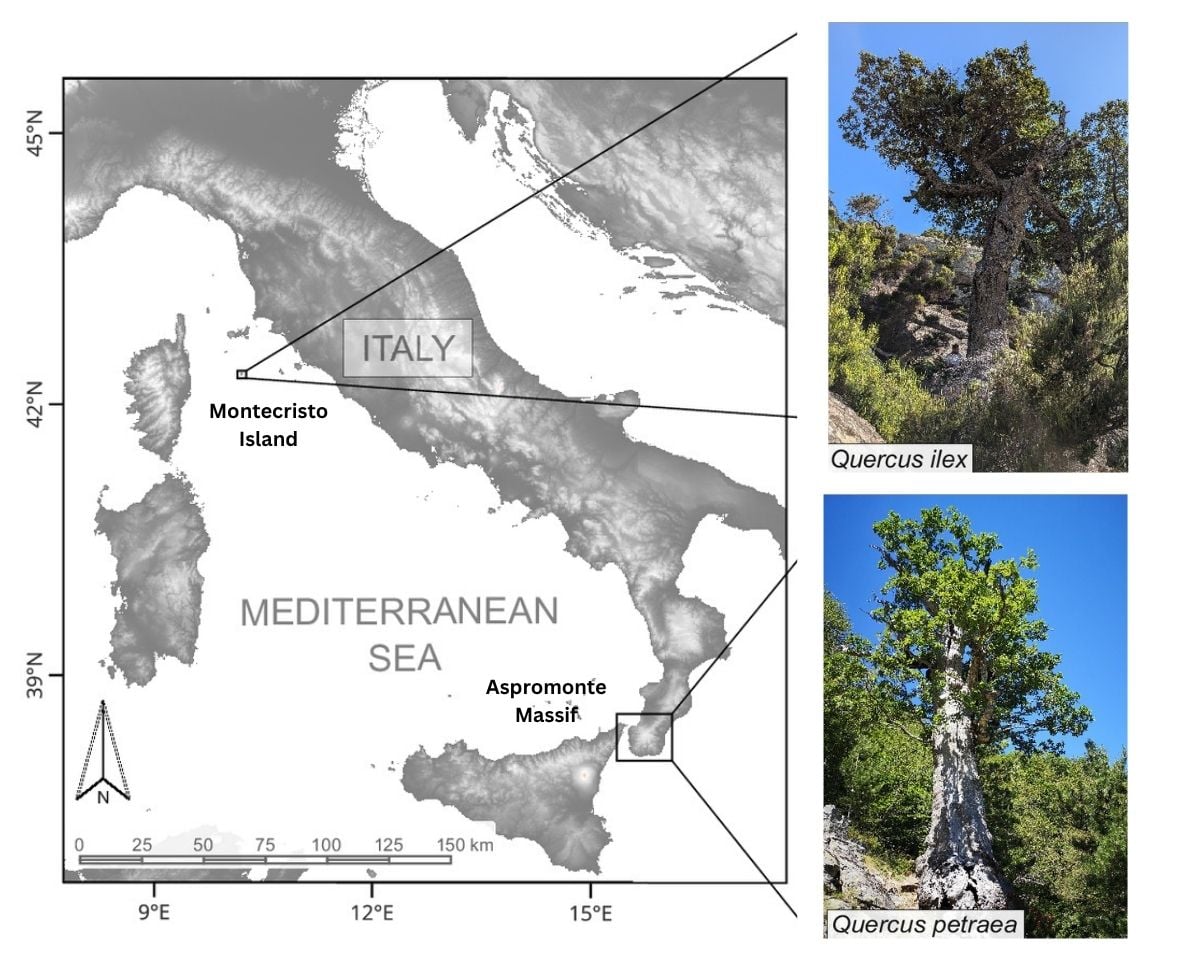
Tracing Medieval Rewilding Through Italy’s Ancient Oaks – Geography Realm: How Ancient Forests Map Human History
Italy’s ancient oak forests provide a biological record of “medieval rewilding,” a process where nature reclaimed agricultural lands following significant population declines during the Middle Ages. According to geographical and botanical research, these trees act as chronological markers, revealing shifts in land use, demographic collapses, and climate fluctuations from the medieval era to the present.
How Medieval Population Collapse Triggered Rewilding in Italy
The phenomenon of medieval rewilding is closely tied to the demographic shocks of the 14th century, most notably the Black Death. According to historical and environmental data, the massive loss of human life led to the immediate abandonment of marginal farmlands, particularly in the rugged terrains of the Apennines. When farmers left these plots, the natural succession of vegetation began, with opportunistic shrubs first giving way to the expansion of oak forests.
This transition was not uniform across the Italian peninsula. In the “Geography Realm,” the process varied based on altitude and soil quality. Lowland areas often remained under cultivation due to their higher productivity, while hillside terraces and mountain pastures were the first to be reclaimed by the wild. This created a patchwork of “secondary forests”—woods that grew back on previously cleared land—which now contain the ancient oaks used by researchers to trace these movements.
- Demographic Driver: The plague reduced the labor force, making labor-intensive hillside farming unsustainable.
- Ecological Response: Rapid colonization by Quercus species (oaks) which are well-adapted to the Mediterranean climate.
- Spatial Pattern: A clear gradient of rewilding from high-altitude peaks down to the valley floors.
The Science of Tracing: Dendrochronology and Palynology
Researchers identify these patterns of rewilding using two primary scientific methods: dendrochronology and palynology. Dendrochronology, the study of tree rings, allows scientists to date the exact year a tree began its growth. By analyzing the rings of ancient oaks, geographers can pinpoint when a specific area shifted from an open field to a forested zone.
Palynology, or the study of ancient pollen trapped in lake sediments and peat bogs, provides a broader regional view. According to palynological records, the shift is visible as a decline in cereal pollen (indicating farming) and a simultaneous spike in oak and beech pollen. This “pollen signature” confirms that the rewilding was a widespread geographic event rather than a series of isolated incidents.
“The rings of an ancient oak are not just biological markers; they are a ledger of human absence,” according to environmental historians studying the Italian landscape.
These methods allow for a precise reconstruction of the landscape. When a cluster of oaks of the same age is found on a slope that shows evidence of ancient terracing, it provides a physical timestamp of when that specific community collapsed or migrated.
Geographic Distribution of Ancient Oaks Across Italy
The distribution of these forests is not random. The “Geography Realm” of Italy’s rewilding is most evident in the central and southern Apennines. In these regions, the topography created natural refuges where ancient oaks could survive undisturbed for centuries.
The Apennine Corridor
The Apennine Mountains served as the primary site for medieval rewilding. Because the terrain was difficult to manage, these areas were the first to be abandoned during the 14th and 15th centuries. Today, these forests are characterized by high biodiversity and a complex structure of old-growth oaks that have never been commercially logged.
The Northern Plains and Alpine Foothills
In contrast, the Po Valley and the northern foothills saw less spontaneous rewilding. These areas remained economically vital for trade and agriculture, meaning the forests that exist there today are more likely to be the result of planned forestry or managed estates rather than the “wild” reclamation seen in the south.
| Region | Rewilding Driver | Primary Tree Species | Current Status |
|---|---|---|---|
| Central Apennines | Plague/Demographic Collapse | Quercus cerris / Quercus pubescens | Old-growth, high biodiversity |
| Southern Italy | Socio-economic Migration | Quercus ilex (Holm Oak) | Fragmented ancient groves |
| Northern Italy | Managed Land Use | Quercus robur | Commercial/Managed forests |
Why Medieval Rewilding Matters for Modern Ecology
Understanding the history of Italy’s oaks is not merely an exercise in nostalgia; it has direct implications for current climate strategies. These ancient forests act as massive carbon sinks. According to forestry experts, old-growth oaks sequester carbon more effectively over the long term than young, planted forests because of their extensive root systems and the rich organic matter in the surrounding soil.
Furthermore, these forests provide a blueprint for “passive rewilding”—the practice of simply stepping back and letting nature recover. By studying how the land healed itself after the medieval collapse, modern conservationists can better predict how current abandoned agricultural lands in Europe will evolve.
There is also a genetic component. Ancient oaks in the “Geography Realm” often possess genetic diversity that has been lost in commercial plantations. These trees have survived centuries of pests, droughts, and temperature swings, making them a critical genetic reservoir for breeding climate-resilient forests in the future.
For more on how these patterns repeat, see a related explainer on European forest ecology.
Common Misconceptions About Italian Rewilding
A frequent misunderstanding is the belief that these forests have always been “wild.” In reality, most of the ancient oak forests in Italy are “secondary forests.” This means they grew on land that was once heavily modified by humans. The “wildness” we see today is actually a result of human departure, not a lack of human presence.
Another misconception is that the Black Death was the only driver of rewilding. While the plague was a catalyst, geographical research indicates that economic shifts—such as the transition from subsistence farming to commercial livestock grazing—also played a role. In some regions, forests returned not because the people died, but because it became more profitable to raise sheep than to grow wheat on a steep slope.
Comparison of Rewilding Drivers
- Catastrophic Drivers: Sudden population drops (Plague, war) leading to immediate abandonment.
- Economic Drivers: Shift in land-use priority (Pastoralism over agriculture) leading to gradual forest encroachment.
- Climatic Drivers: The “Little Ice Age” making certain high-altitude farms untenable, forcing a retreat to the valleys.
The Role of Biodiversity in Ancient Oak Ecosystems
The ancient oaks of Italy do not exist in isolation; they support an entire ecosystem that has co-evolved over centuries. These forests are home to rare fungi, insects, and bird species that cannot survive in managed timber forests. The presence of deadwood—fallen logs and standing snags—is a hallmark of these rewilded areas.
According to biological surveys, the “Geography Realm” of these forests creates vital wildlife corridors. These corridors allow species to migrate across the peninsula, maintaining genetic flow between isolated populations. When these forests are fragmented by modern roads or urban sprawl, the biological “memory” of the medieval rewilding is broken, leading to a decline in local species diversity.
The interaction between the oaks and the soil is also critical. Ancient forests develop complex mycorrhizal networks—underground fungal systems that allow trees to communicate and share nutrients. These networks take centuries to establish and are destroyed by modern tilling or heavy machinery, making the preservation of these specific sites a priority for ecologists.
Challenges to Preserving Italy’s Biological Archives
Despite their value, Italy’s ancient oaks face several modern threats. Climate change is the most immediate, as increasing temperatures and prolonged droughts stress species that evolved for a cooler, wetter medieval climate. Fire risk has also increased, with “mega-fires” threatening old-growth stands that have no natural resistance to high-intensity blazes.
Additionally, there is a conflict between conservation and traditional land use. In some areas, the “rewilding” is seen as a loss of cultural heritage—the disappearance of the ancestral terraces and stone walls built by medieval farmers. Balancing the ecological need for forest expansion with the desire to preserve the “cultural landscape” remains a point of contention for local governments.
To address this, some regions are implementing “active management” strategies, where small sections of the forest are cleared to maintain traditional pathways, while the core of the ancient oak stands remains untouched. This approach attempts to merge the historical human geography with the biological reality of the rewilded forest.
Frequently Asked Questions
What is medieval rewilding?
Medieval rewilding refers to the process where natural ecosystems, particularly forests, reclaimed land that had been cleared for agriculture during the Middle Ages. This was largely triggered by population declines and shifts in economic land use.
How do scientists know when a forest started growing?
Scientists use dendrochronology (counting and analyzing tree rings) to find the birth date of individual trees and palynology (analyzing ancient pollen in sediment) to see when forest species replaced agricultural crops in the landscape.
Which trees are most indicative of this process in Italy?
Oaks (genus Quercus) are the primary indicators. Because they are hardy and common across the Mediterranean, their expansion into former farmlands provides a clear record of rewilding.
Where can these ancient forests be found today?
They are most prevalent in the Apennine Mountains of central and southern Italy, where the rugged terrain made agriculture difficult and abandonment more likely during the medieval period.
Does rewilding help with climate change?
Yes. Ancient forests are superior carbon sinks compared to young plantations. They store more carbon in their biomass and soil, and their genetic diversity makes them more resilient to environmental stress.
The study of Italy’s ancient oaks reveals that the landscape is a living document. By mapping the “Geography Realm” of these forests, researchers can see the echoes of the 14th century in the canopy of the 21st. As these forests continue to face pressure from climate change and development, they remain essential not only for biodiversity but as the only remaining physical evidence of one of history’s most dramatic environmental shifts.
