
Review: Esa-Pekka Salonen Returns to Ojai Music Festival for Extraordinary 80th Anniversary – Los Angeles Times
Esa-Pekka Salonen led the Ojai Music Festival’s 80th anniversary celebration in 2026, marking a triumphant return to the historic California event. According to reports from the Wall Street Journal and the Los Angeles Times, the anniversary featured high-profile programming, including works by John Adams, and expanded accessibility through digital livestreams.
What defined Esa-Pekka Salonen’s leadership at the 80th Ojai Music Festival?
Esa-Pekka Salonen’s return as the artistic lead for the 80th anniversary of the Ojai Music Festival was characterized by a commitment to both avant-garde exploration and celebratory retrospection. The Santa Barbara Independent reported that Salonen “scored big” with his programming, blending complex contemporary works with pieces that honored the festival’s long-standing tradition of artistic risk-taking.
According to the Los Angeles Times, the anniversary was “extraordinary,” serving as a homecoming for Salonen, whose previous tenures at Ojai established him as a key figure in the festival’s modern era. His approach to the 80th milestone focused on the intersection of technical precision and emotional depth, a hallmark of his conducting style that critics noted remained intact during this return.
The Wall Street Journal described the 2026 event as a “triumphant” anniversary, noting that Salonen’s influence extended beyond the podium to the very curation of the season. The programming sought to bridge the gap between the festival’s origins in the 1940s and the current state of global classical music.
- Artistic Vision: A focus on “eye-opening” compositions that challenged traditional orchestral boundaries.
- Curatorial Scope: A balance of newly commissioned works and seminal 20th-century pieces.
- Technical Execution: High-precision conducting that synchronized diverse ensembles.
How did the festival celebrate the work of John Adams?
A central pillar of the 80th anniversary was the celebration of composer John Adams. The San Francisco Classical Voice reported that the festival honored Adams in a manner “only the Ojai Festival can,” emphasizing the intimate yet expansive nature of his compositions. This focus highlighted the long-standing relationship between Adams and the Ojai community.
The programming dedicated to Adams served as a focal point for the anniversary’s thematic exploration of American minimalism and its evolution. According to the San Francisco Classical Voice, the performances captured the scale and ambition of Adams’ work while maintaining the boutique, curated feel that defines the Ojai experience.
Critics noted that the inclusion of Adams was not merely a tribute but a functional part of Salonen’s broader narrative for the season. By pairing Adams’ works with other contemporary pieces, Salonen illustrated the trajectory of modern orchestral music over the last several decades.
“Celebrating John Adams as only the Ojai Festival can” — San Francisco Classical Voice
Why was the livestream experience significant for the 80th anniversary?
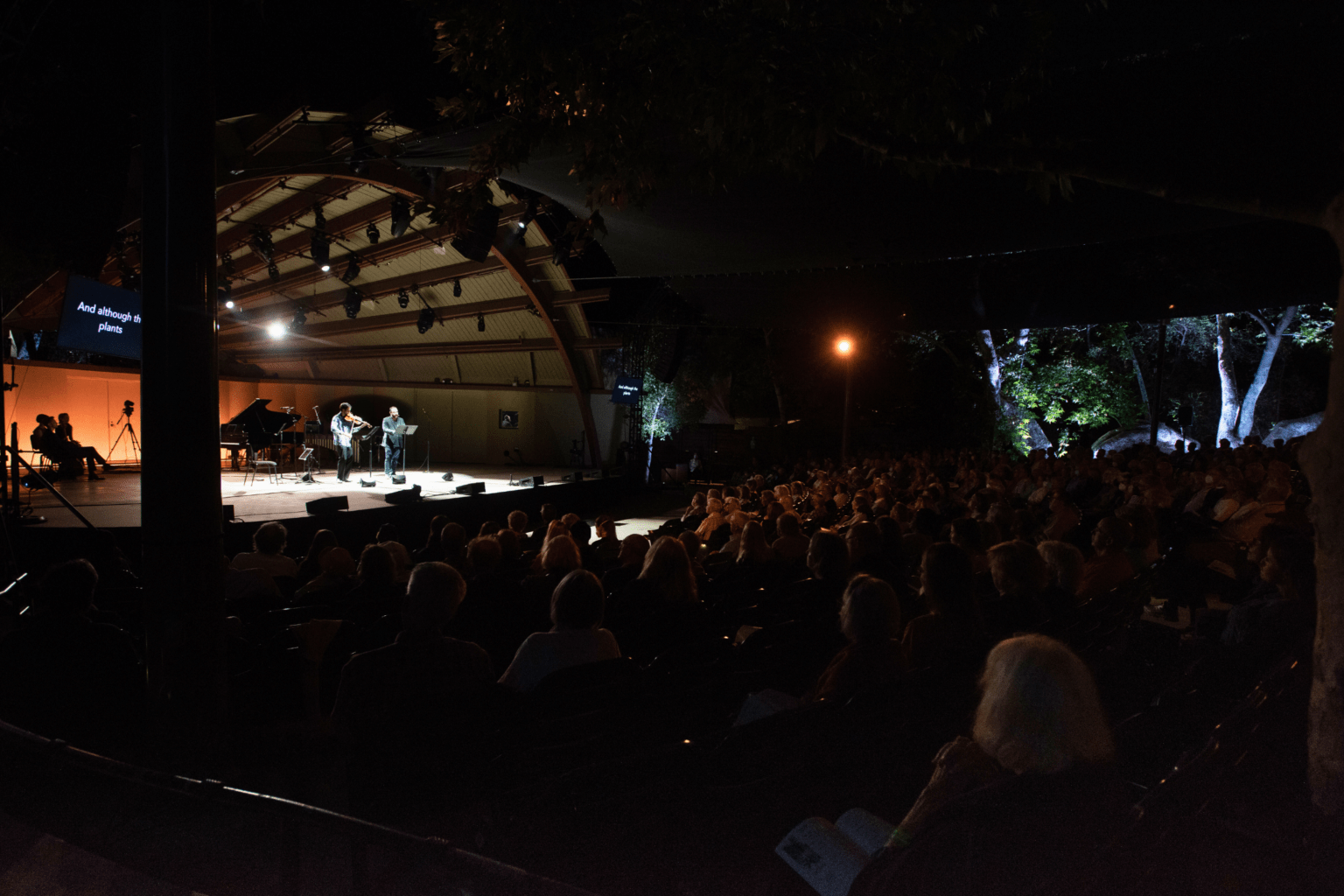
The 80th anniversary marked a significant shift in how the Ojai Music Festival reached its audience, with a heavy emphasis on digital accessibility. The Strad described the experience of attending via livestream as “open-eared and eye-opening,” suggesting that the digital format provided a unique perspective on the performances that differed from the physical experience in Ojai.
According to The Strad, the livestreaming effort allowed a global audience to participate in the 80th-anniversary milestones, effectively removing the geographic and financial barriers associated with attending a boutique festival in the Ojai Valley. This digital expansion indicated a strategic move by the festival to modernize its delivery while preserving the prestige of its live events.
The digital presentation was not merely a recording but a curated experience. The Strad highlighted how the audio-visual quality allowed listeners to appreciate the nuances of Salonen’s conducting and the intricacies of the orchestral arrangements in a way that might be lost in a large, open-air venue.
| Experience Aspect | In-Person (Ojai Valley) | Digital Livestream |
|---|---|---|
| Atmosphere | Intimate, site-specific, community-driven | Accessible, focused, globally connected |
| Audio Perspective | Natural acoustics of the venue | Engineered, “open-eared” precision |
| Accessibility | Limited by ticket capacity/location | High accessibility for remote audiences |
How did different critics view Salonen’s 80th anniversary programming?
While the overall reception of the 80th anniversary was positive, different publications emphasized different aspects of Esa-Pekka Salonen’s success. The Los Angeles Times focused on the “extraordinary” nature of the return, framing it as a high-water mark for the festival’s legacy.
In contrast, the Santa Barbara Independent took a more pragmatic view, stating that Salonen “scored big,” which suggests a successful execution of a challenging program. The Wall Street Journal’s use of the term “triumphant” positioned the event as a victory for the festival’s continued relevance in a changing cultural landscape.
The divergence in framing reflects the different roles the festival plays for its audiences: a local cultural cornerstone for the Santa Barbara region, a prestigious destination for the Wall Street Journal’s readership, and a critical artistic laboratory for the Los Angeles Times.
Key points of critical consensus included:
- Salonen’s Mastery: All sources agreed on the conductor’s technical skill and artistic authority.
- Programming Risk: The festival maintained its reputation for avoiding “safe” or predictable repertoires.
- Historical Weight: The 80th anniversary was treated not just as a party, but as a validation of the festival’s longevity.
What is the historical context of the Ojai Music Festival’s 80-year milestone?
The Ojai Music Festival has operated for eight decades as one of the most prestigious and idiosyncratic music events in the United States. Unlike many festivals that adhere to a rigid set of classics, Ojai is known for its “Music Director” model, where a different artist is invited each year to curate the entire program.
This model allows for the kind of “eye-opening” experiences mentioned by The Strad and the San Francisco Classical Voice. By giving full control to a single visionary like Esa-Pekka Salonen, the festival ensures that each year has a distinct intellectual and emotional arc. The 80th anniversary served as a retrospective of this model, proving that the festival could remain cutting-edge while celebrating its own history.
The return of Salonen was particularly meaningful because he represents the bridge between the festival’s mid-century roots and its 21st-century ambitions. His ability to navigate both the traditional orchestral world and the avant-garde mirrors the festival’s own evolution since its inception.
For more on how this compares to other contemporary music events, see a related explainer on boutique music festivals.
What were the primary challenges and successes of the 2026 event?
The primary challenge for the 80th anniversary was the pressure of the milestone itself. According to the Wall Street Journal, the expectation for a “triumphant” celebration created a high bar for the programming. Salonen met this challenge by avoiding the cliché of a “greatest hits” concert and instead opting for a program that pushed the audience forward.
Another challenge was the integration of the livestream. As noted by The Strad, transitioning a site-specific, atmospheric event into a digital format can often result in a loss of “magic.” However, the report suggests that the Ojai festival succeeded by treating the livestream as a distinct artistic product rather than a mere secondary broadcast.
The success of the John Adams tributes, as reported by the San Francisco Classical Voice, demonstrated the festival’s ability to handle “celebrity” composers without sacrificing its intellectual rigor. The event managed to be both a popular success and a critical triumph.
Summary of Outcomes:
- Programming: Successfully balanced the “extraordinary” (LA Times) with the “big score” (SB Independent).
- Reach: Expanded the festival’s footprint via high-quality digital access.
- Legacy: Reinforced Ojai’s position as a leader in contemporary classical music.
Common misconceptions about the Ojai Music Festival
A common misconception is that the Ojai Music Festival is a traditional “classical” event focused on the standard canon of Beethoven and Brahms. However, as the 80th anniversary reviews indicate, Ojai is fundamentally an experimental space. The San Francisco Classical Voice’s report on John Adams and the Los Angeles Times’ review of Salonen both emphasize the “eye-opening” and “extraordinary” nature of the works performed, which are often far removed from the standard repertoire.
Another misconception is that the festival is an exclusive enclave for the wealthy elite of the Ojai Valley. While the physical location is exclusive, the 2026 anniversary proved this is no longer the case. The Strad’s analysis of the livestreaming experience confirms that the festival is actively working to democratize access to its high-art programming.
Finally, some may believe that the “Music Director” model leads to inconsistency. On the contrary, the reviews from the Wall Street Journal and other outlets suggest that this model is exactly what allows the festival to maintain its vitality over 80 years, as it prevents the artistic vision from becoming stagnant.
Frequently Asked Questions
Who was the music director for the Ojai Music Festival’s 80th anniversary?
Esa-Pekka Salonen served as the artistic lead and conductor for the 80th anniversary, marking a return to the festival according to the Los Angeles Times and the Wall Street Journal.
Which composer was specifically celebrated during the 80th anniversary?
John Adams was a primary focus of the celebration, with the San Francisco Classical Voice reporting that the festival honored his work in a uniquely “Ojai” fashion.
Can the Ojai Music Festival be experienced remotely?
Yes. According to The Strad, the 80th anniversary featured a livestream experience that was described as “open-eared and eye-opening,” making the performances accessible to a global audience.
What is unique about the Ojai Music Festival’s programming model?
The festival utilizes a “Music Director” model where a different artist is invited each year to curate the entire season’s programming, ensuring a diverse and evolving artistic vision over its 80-year history.
How did critics describe Esa-Pekka Salonen’s impact on the 2026 festival?
Critics described his impact as “triumphant” (Wall Street Journal), “extraordinary” (Los Angeles Times), and a “big score” (Santa Barbara Independent), praising both his conducting and his curation.
