
Northern Lights Could Light Up Canadian Skies as Major Solar Storm Approaches
The Canadian night sky may soon witness an extraordinary celestial display as a powerful solar storm approaches Earth. Scientists predict that the geomagnetic activity triggered by this event could create vivid auroral displays, visible even in regions farther south than usual. While the phenomenon is a natural occurrence, the intensity of the current solar activity has raised interest among astronomers, space agencies, and stargazers alike.
What’s Driving the Solar Activity?
The upcoming spectacle is tied to a series of solar flares and coronal mass ejections (CMEs) emanating from the Sun’s surface. These events occur when magnetic energy built up in the Sun’s atmosphere is suddenly released, sending charged particles hurtling into space. When these particles interact with Earth’s magnetosphere, they can cause geomagnetic storms that energize atmospheric gases, creating the shimmering lights known as the aurora borealis.
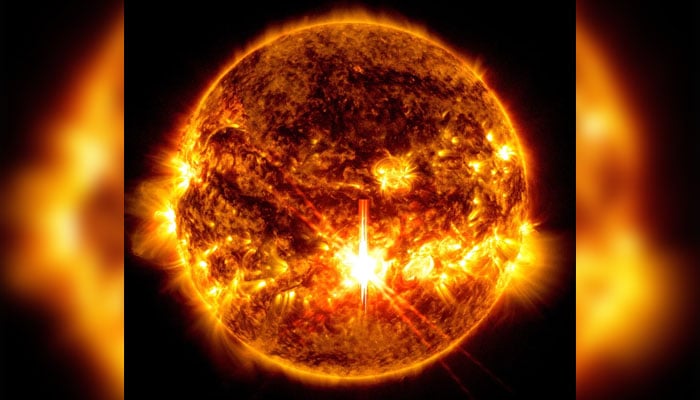
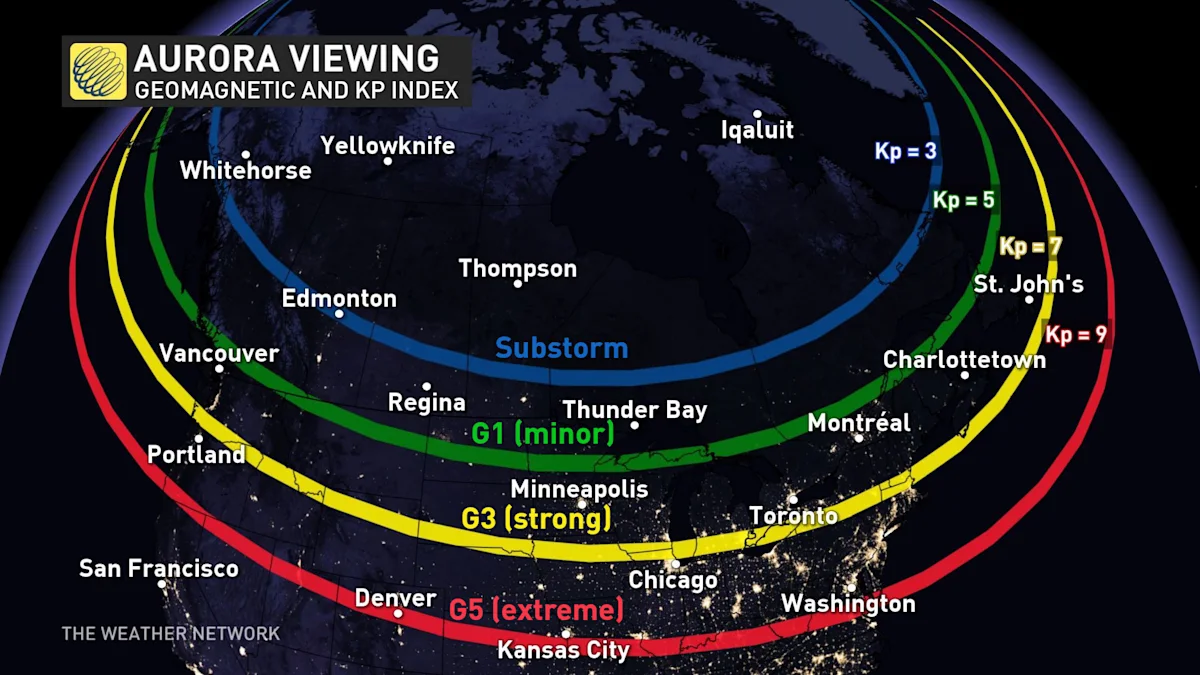
According to data from the National Oceanic and Atmospheric Administration (NOAA), the current solar storm is classified as a G3-level event, indicating moderate to strong geomagnetic activity. Such storms can disrupt satellite communications, affect power grids, and pose risks to astronauts in space. However, the primary focus for the public is the potential for a rare and spectacular aurora display.
The Science Behind the Auroral Show
The northern lights occur when charged particles from the Sun collide with gas molecules in Earth’s atmosphere. Oxygen and nitrogen molecules release photons of light when they return to their normal energy state, producing the green, pink, and violet hues characteristic of the aurora. The colors depend on the type of gas and the altitude at which the collisions occur.
During periods of heightened solar activity, the auroral oval—the region where the northern lights are typically visible—expands. This means that regions in southern Canada, such as Ontario and Quebec, may have a chance to see the lights under clear skies. The exact visibility will depend on factors like cloud cover, light pollution, and the strength of the solar storm.
Who Is Involved and What Are the Implications?
Space agencies, meteorological organizations, and amateur astronomers are closely monitoring the situation. The Canadian Space Agency (CSA) and the U.S. Space Weather Prediction Center (SWPC) are providing real-time updates on solar activity. These agencies work in collaboration with international partners to track space weather and issue alerts when necessary.
The potential impact of the storm extends beyond visual phenomena. Power grid operators in Canada and the U.S. Are preparing for possible fluctuations in electrical currents caused by geomagnetic disturbances. While major disruptions are rare, historical events like the 1989 geomagnetic storm, which caused a blackout in Quebec, serve as reminders of the Sun’s influence on modern infrastructure.
Historical Context and Similar Events
Major solar storms are not uncommon, but their frequency and intensity vary with the Sun’s 11-year solar cycle. The current cycle, Solar Cycle 25, is expected to peak around 2025. Since 2020, there has been a steady increase in solar activity, with several notable CMEs observed in recent months. For example, the March 2023 solar storm caused auroras to be visible as far south as Texas and California, drawing widespread public attention.
Comparing the current event to past storms, experts note that while this one is significant, it is not expected to reach the extreme levels of the 1859 Carrington Event, the most powerful solar storm on record. That event caused telegraph systems worldwide to fail and produced auroras visible as far south as the Caribbean.
Why This Matters for Canadians and Beyond
The potential for a vibrant aurora display is a boon for tourism and outdoor enthusiasts. Regions like Jasper National Park, Yukon, and the Northwest Territories—already popular destinations for stargazers—are likely to see a surge in visitors. Local businesses, from lodges to tour operators, are preparing for increased demand, highlighting the economic implications of space weather.
From a scientific perspective, the event offers a unique opportunity to study the Sun-Earth connection. Researchers are using this period to test predictive models and improve space weather forecasting. Understanding these phenomena is critical for safeguarding technology, from satellites to GPS systems, which are increasingly vital to daily life.
Common Misconceptions and Clarifications
Despite the excitement surrounding the aurora, some misconceptions persist. One common myth is that the northern lights are visible every night in northern latitudes. In reality, the aurora is a dynamic phenomenon that depends on solar activity, atmospheric conditions, and darkness. Another misconception is that solar storms directly harm humans on the ground. While the Earth’s atmosphere and magnetic field provide protection, astronauts and high-altitude flyers may face increased radiation exposure during intense events.

some people worry that the current storm could cause widespread power outages. While minor fluctuations are possible, experts emphasize that modern power grids are designed to handle such events, and major failures are unlikely. Nonetheless, preparedness remains key, particularly for regions with older infrastructure.
What to Expect and How to Prepare
<
