New Cloud-Detecting Method Will Help Astronomers Characterize Exoplanets – Universe Today: Unveiling the Mystery of Rocky Mineral Clouds
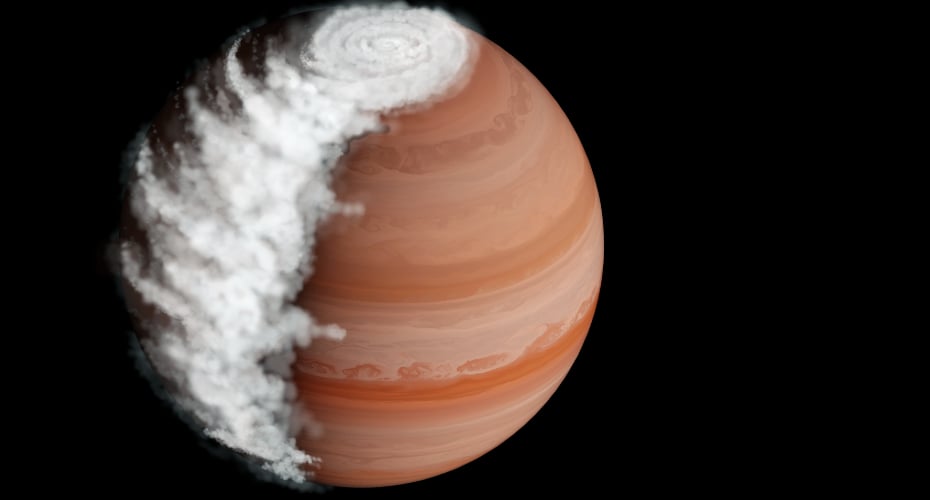
The quest to understand the diverse chemistry of worlds beyond our solar system has reached a pivotal milestone. In a groundbreaking development, astronomers have utilized a new cloud-detecting method that will help astronomers characterize exoplanets with unprecedented precision. By leveraging the advanced capabilities of the James Webb Space Telescope (JWST), researchers have identified a distant gas giant where the weather is far more alien than anything experienced on Earth: a world where clouds are composed of rocky minerals that materialize during the morning hours and vanish as night falls.
This discovery does more than just add a curious entry to the catalog of known exoplanets. It demonstrates a sophisticated leap in our ability to track atmospheric dynamics in real-time. By observing the “dawn” of a distant world, scientists can now map the transition of materials from gas to solid and back again, providing a window into the thermal structures and chemical compositions of planets that were previously shrouded in mystery. This shift from static observation to dynamic tracking marks a new era in planetary science, where the “weather” of a world light-years away can be monitored to reveal its deepest secrets.
The Phenomenon of “Stone Clouds” on Gas Giants
On Earth, clouds are primarily composed of water droplets or ice crystals. However, on the extreme exoplanets being studied by the JWST, the chemistry of the atmosphere is dictated by temperatures that would vaporize most terrestrial materials. The discovery of clouds made of rocky minerals—essentially clouds of stone—is a direct result of these extreme environments.
These planets, often categorized as “Ultra-hot Jupiters,” orbit their parent stars so closely that their atmospheric temperatures reach thousands of degrees. In such heat, minerals like silicates (the primary components of rock and sand) do not remain solid; they exist as vapors. As these gases migrate from the scorching day side toward the cooler night side, or as they encounter the temperature shifts at the planetary terminator (the line between day and night), they condense.
The process is akin to steam condensing into water on a cold windowpane, but on a planetary scale and with materials that we associate with the crust of the Earth rather than the air of the sky.
The most striking aspect of this specific discovery is the cyclical nature of these clouds. Observations indicate that these rocky minerals form dense cloud layers during the planet’s morning—as the atmosphere warms and shifts—and then vanish or dissipate as the planet rotates into the night. This “disappearing act” provides critical data on the planet’s wind speeds, heat distribution, and the precise temperature thresholds at which different minerals condense.
Key Characteristics of Mineral-Based Atmospheres
- Composition: Unlike water-based clouds, these formations consist of vaporized rock, and metals.
- Thermal Cycle: Clouds form and dissolve based on the extreme temperature gradient between the day and night sides.
- Visual Profile: These clouds likely create a shimmering, metallic or stony haze that affects how the planet reflects light.
- Dynamic Movement: The transition of these clouds suggests powerful atmospheric currents transporting heat across the globe.
How the New Cloud-Detecting Method Works
The ability to identify these disappearing clouds relies on a technique known as transit spectroscopy, enhanced by the sensitivity of the JWST. When an exoplanet passes in front of its host star, a small portion of the starlight filters through the planet’s atmosphere. Different chemicals and particles in that atmosphere absorb specific wavelengths of light, leaving behind a “spectral fingerprint.”
The new cloud-detecting method takes this a step further by focusing on the timing and the specific region of the atmosphere being sampled. By analyzing the light specifically during the transition periods—the “dawn” and “dusk” of the planet—astronomers can see the spectral signature of mineral clouds appearing and disappearing.
If a planet had a uniform cloud cover, the spectral fingerprint would remain constant. However, by observing the change in the spectrum as the planet rotates, researchers can pinpoint exactly when the rocky minerals condense into clouds and when they evaporate back into gas. This temporal analysis allows scientists to “characterize” the planet not just as a static object, but as a living, breathing weather system.
| Observation Phase | Atmospheric State | Spectral Result |
|---|---|---|
| Day Side (Peak Heat) | Minerals in vapor state | Clearer signatures of gaseous elements |
| Dawn/Terminator | Minerals condense into clouds | Increased “opacity” or blocking of specific light wavelengths |
| Night Side (Cooling) | Cloud persistence or redistribution | Shift in thermal emission patterns |
The Role of the James Webb Space Telescope (JWST)
Previous telescopes, while capable of finding exoplanets, often struggled to “see” through the thick hazes and clouds that plague many gas giants. The JWST changes this dynamic because it operates primarily in the infrared spectrum. Infrared light has a longer wavelength than visible light, allowing it to penetrate deeper into atmospheric hazes and detect the heat signatures of molecules that were previously invisible.
The JWST’s precision allows it to distinguish between different types of clouds. For instance, it can tell the difference between a cloud of water vapor and a cloud of silicates. This capability is essential for the new cloud-detecting method, as it enables the identification of the specific “rocky” nature of the minerals involved. Without this infrared resolution, the disappearing clouds might have been mistaken for simple temperature fluctuations or generic atmospheric noise.
This technological leap allows astronomers to move beyond the simple question of “Is there an atmosphere?” to the much more complex question of “What is the weather like on this world?” By mapping the presence of mineral clouds, the JWST is effectively creating the first “weather maps” for planets orbiting other stars.
Why This Matters for the Future of Astronomy
The discovery of rocky mineral clouds may seem like a niche curiosity, but it has profound implications for how we understand the universe. The ability to characterize exoplanets through their cloud dynamics opens several new doors in astrophysics.
Refining Planetary Formation Models
The composition of a planet’s atmosphere is a direct clue to its origin. Knowing that a planet has a high concentration of vaporized rock suggests it formed in a region of its solar system rich in those materials, or that it has undergone significant migration from the outer reaches of its system to its current, scorching orbit. By analyzing these mineral clouds, scientists can backtrack the history of the planet’s birth and evolution.
Understanding Heat Redistribution
One of the biggest mysteries of “Hot Jupiters” is how they handle heat. With one side permanently facing their star (tidal locking), the day side should be unimaginably hot, while the night side should be frozen. However, observations often show that heat is distributed more evenly than expected. The movement of mineral clouds—forming at dawn and vanishing at night—acts as a heat transport mechanism, helping scientists understand the “global conveyor belt” of winds that move energy across the planet.
A Stepping Stone to Finding Life
While a gas giant with stone clouds is not a candidate for life as we know it, the method used to find these clouds is the same method that will eventually be used to search for biosignatures on smaller, rocky planets. If we can detect the subtle appearance and disappearance of mineral clouds on a giant planet, we can eventually detect the presence of water vapor, methane, or oxygen on an Earth-like world. Mastering the art of atmospheric characterization on “easy” targets (large gas giants) is the necessary training ground for finding a second Earth.
For more on how these discoveries fit into the broader search, you may find a related explainer on transit spectroscopy useful for understanding the physics of light absorption.
Common Misconceptions About Exoplanet Clouds
As news of “stone clouds” spreads, it is easy for the public to imagine a sky filled with falling boulders. However, the reality is more nuanced. It is important to clarify a few points to avoid oversimplification:
- Not “Rocks” in the Traditional Sense: When astronomers speak of “rocky minerals,” they aren’t referring to pebbles or stones falling from the sky. They are referring to microscopic particles of silicates—similar to the dust or sand found on Earth—that condense into a cloud-like haze.
- Not “Rain” as We Know It: While these minerals may “rain” down into the deeper layers of the atmosphere, this happens in a high-pressure, high-temperature environment where the “rain” may evaporate long before it ever hits a “surface” (since gas giants have no solid surface).
- The “Disappearance” is a Phase Change: The clouds don’t simply vanish into nothingness; they undergo a phase change. They transition from a solid/liquid aerosol back into a gaseous state as the temperature rises.
Comparing the “Stone Giant” to Our Own Solar System
To put this discovery in perspective, it helps to compare this exoplanet to the giants in our own backyard, Jupiter and Saturn. While our gas giants are also massive and have complex cloud layers, the chemistry is entirely different.
Jupiter’s clouds are primarily ammonia and hydrosulfide, driven by internal heat and a relatively cool environment. The “Stone Giant” discovered by the JWST exists in a regime of “Ultra-hot” chemistry. Where Jupiter has storms of ammonia, this exoplanet has storms of vaporized rock. This contrast highlights the incredible diversity of planetary environments in the Milky Way, suggesting that our solar system is just one of many possible configurations of matter and energy.
The historical context of this search is also worth noting. Since the first confirmation of an exoplanet orbiting a Sun-like star in 1995, we have moved from simply detecting the “wobble” of a star to analyzing the chemical composition of a planet’s dawn. This trajectory shows an exponential increase in our technical capability to probe the cosmos.
Frequently Asked Questions
What exactly are “rocky mineral clouds”?
Rocky mineral clouds are atmospheric formations made of substances like silicates, which are the primary components of rocks on Earth. In the extreme heat of certain exoplanets, these minerals vaporize and then condense into clouds as the temperature drops, similar to how water vapor forms clouds on Earth.

How does the JWST detect clouds on a planet trillions of miles away?
The telescope uses transit spectroscopy. It analyzes the starlight that passes through the planet’s atmosphere as it crosses in front of its star. By looking at which wavelengths of infrared light are absorbed, scientists can identify the chemical makeup of the clouds.
Why do the clouds vanish every night?
The clouds disappear due to the extreme temperature fluctuations on the planet. As the planet rotates and different regions move from the scorching day side to the night side (or vice versa), the minerals transition between a gaseous state and a condensed cloud state.
Does this mean the planet could be habitable?
No. These particular planets are gas giants with temperatures high enough to vaporize rock. They lack a solid surface and have atmospheric conditions that are far too hostile for life as we understand it. However, the method used to study them will help us find habitable planets in the future.
Is this the first time we’ve seen mineral clouds?
While scientists have theorized the existence of mineral clouds for years, the new cloud-detecting method and the power of the JWST have allowed for the first high-precision confirmation and tracking of these clouds’ behavior over time.
As astronomers continue to refine this technique, the focus will likely shift toward smaller, cooler planets. The ability to track atmospheric changes in real-time—watching a world’s weather evolve as it orbits its star—is a transformative capability. We are no longer just taking snapshots of the universe; we are watching the cosmic weather report unfold, one distant world at a time.
