
Atomic Reshuffle: How New Catalyst Breakthroughs are Revolutionizing Green Hydrogen Production
The global transition toward a net-zero economy has long been hindered by a fundamental chemical bottleneck: the cost and efficiency of producing clean hydrogen. While the concept of “green hydrogen”—hydrogen produced by splitting water using renewable electricity—is theoretically ideal, the practical application has been stalled by the reliance on prohibitively expensive precious metals. However, a significant scientific breakthrough involving an atomic reshuffle paves way for record-breaking catalysts for hydrogen production – chemeurope.com, signaling a potential paradigm shift in how the world generates its cleanest fuel.
By precisely rearranging atoms at the molecular level, researchers in the UK have unlocked a method to enhance the performance of catalysts, drastically reducing the energy required for electrolysis while decreasing the dependence on rare materials. This “atomic reshuffle” isn’t merely a marginal improvement; it is a fundamental reimagining of the catalyst surface, optimizing the way water molecules interact with the material to release hydrogen more efficiently than ever before.
The Science of the Atomic Reshuffle: Beyond Traditional Catalysis
To understand why an atomic reshuffle is so critical, one must first understand the role of a catalyst. In the process of electrolysis, a catalyst is a substance that lowers the activation energy required for a chemical reaction to occur. In green hydrogen production, the goal is to split water (H2O) into hydrogen and oxygen. While this is straightforward in theory, the reaction—particularly the Oxygen Evolution Reaction (OER)—is notoriously slow and energy-intensive.
Historically, the industry has relied on Platinum Group Metals (PGMs), such as iridium and platinum. These metals are highly effective but suffer from two fatal flaws: they are incredibly rare and astronomically expensive. This makes scaling green hydrogen to a global industrial level economically unviable.
The Precision of Atomic Arrangement
The breakthrough lies in the realization that the identity of the metal is less important than the geometry of its atoms. The “atomic reshuffle” involves manipulating the surface structure of the catalyst to create “active sites” that are perfectly tuned to the size and electronic properties of water molecules.
When atoms are rearranged into specific, non-traditional patterns, they create a surface tension and electronic environment that allows the chemical bonds of water to break more easily. This reduces the “overpotential”—the extra energy required beyond the thermodynamic limit to drive the reaction. By lowering this energy barrier, the catalysts achieve record-breaking efficiency, allowing more hydrogen to be produced with less electricity.
“The ability to dictate the exact position of atoms on a catalyst surface transforms the process from a game of chance into a precision engineering task. We are no longer just picking the right material; we are designing the right architecture.”
Green Hydrogen vs. The Rest: Why This Breakthrough Matters
Hydrogen is often discussed as a single entity, but its environmental impact varies wildly depending on how it is produced. To appreciate the significance of the atomic reshuffle, it is essential to distinguish between the different “colors” of hydrogen.
- Grey Hydrogen: Produced from natural gas (methane) through steam methane reforming (SMR). This is the most common method but releases massive amounts of CO2 into the atmosphere.
- Blue Hydrogen: Similar to grey hydrogen, but the resulting CO2 is captured and stored underground (Carbon Capture and Storage). While better, it still relies on fossil fuels and is not 100% clean.
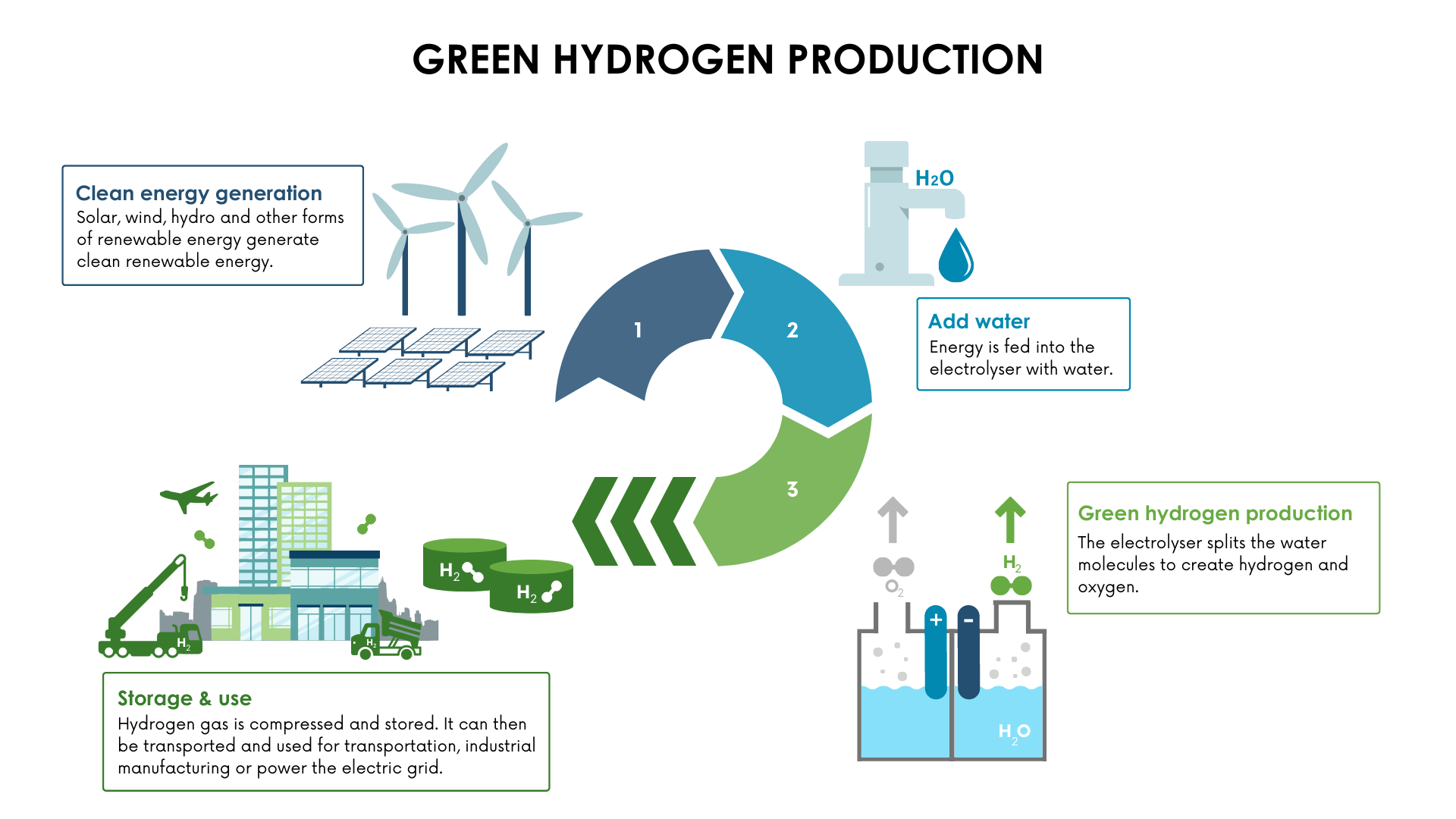
- Green Hydrogen: Produced via electrolysis of water using electricity from renewable sources like wind, solar, or hydro. This process emits zero carbon during production.
The industry’s goal is to move entirely toward green hydrogen. However, the efficiency of the electrolyzers—the machines that perform the splitting—is the primary cost driver. The atomic reshuffle directly addresses this by making the electrolyzer more efficient and cheaper to build.
| Feature | Traditional PGM Catalysts | Atomic Reshuffle Catalysts |
|---|---|---|
| Material Cost | Extremely High (Iridium/Platinum) | Significantly Lower (Abundant Metals) |
| Energy Requirement | High Overpotential | Low Overpotential (High Efficiency) |
| Scalability | Limited by Rare Earth Supply | High (Uses Common Elements) |
| Environmental Footprint | High (Due to Mining PGMs) | Low (Sustainable Sourcing) |
The Strategic Importance for Global Industry
The implications of an atomic reshuffle paves way for record-breaking catalysts for hydrogen production – chemeurope.com extend far beyond the laboratory. Several key industrial sectors stand to be transformed by this leap in efficiency.
Decarbonizing Heavy Industry
While battery electric vehicles (BEVs) are suitable for passenger cars, they are impractical for heavy-duty transport and high-heat industrial processes. Steel manufacturing, for instance, relies on coking coal to remove oxygen from iron ore. Green hydrogen can replace coal in this process, emitting water vapor instead of CO2. By lowering the cost of green hydrogen, this catalyst breakthrough makes “Green Steel” a commercial reality rather than a theoretical goal.
Shipping and Aviation
The maritime and aviation sectors are among the hardest to abate. Ammonia (produced from green hydrogen) is being explored as a carbon-free shipping fuel. Similarly, synthetic aviation fuels (e-fuels) require green hydrogen as a feedstock. The ability to produce hydrogen at scale and low cost is the only way to make these fuels competitive with traditional kerosene and bunker fuel.
Energy Storage and Grid Stability
One of the biggest challenges with renewable energy is intermittency—the wind doesn’t always blow, and the sun doesn’t always shine. Excess renewable energy can be used to produce green hydrogen, which acts as a chemical battery. This hydrogen can be stored in salt caverns or tanks and converted back into electricity via fuel cells during peak demand, providing a stabilization mechanism for the entire energy grid.
Overcoming the “Lab-to-Market” Gap
Despite the excitement, the journey from a record-breaking laboratory result to a commercial industrial plant is fraught with challenges. Scientific breakthroughs in catalysis often face the “stability problem.”
The Stability Challenge
A catalyst might show record-breaking efficiency for 100 hours in a controlled lab environment, but an industrial electrolyzer must run for tens of thousands of hours without degrading. The “atomic reshuffle” creates highly active sites, but these sites can sometimes be unstable, migrating or collapsing over time due to the harsh acidic or alkaline environments inside an electrolyzer.
Current research is now shifting toward “stabilizing” these reshuffled atoms. This involves creating a supportive matrix—often using carbon nanotubes or metal-organic frameworks (MOFs)—that locks the atoms in their optimal positions while still allowing water molecules to access them. Related explainer on electrolyzer materials can provide more insight into these supporting structures.
Manufacturing at Scale
Precisely rearranging atoms is easy on a microscopic scale using advanced microscopy and deposition techniques. However, doing this across square meters of catalyst plates in a factory is a different challenge entirely. The industry must develop new chemical vapor deposition (CVD) or electrodeposition methods that can replicate the “atomic reshuffle” consistently across large surface areas.
Common Misconceptions About Green Hydrogen
As the news of these breakthroughs spreads, several misconceptions often emerge. It is important to clarify these to maintain a realistic perspective on the technology.

Misconception 1: “Hydrogen is a new energy source.”
Hydrogen is an energy carrier, not a source. It must be produced using energy from another source (like solar or wind). The catalyst breakthrough doesn’t create energy; it simply makes the process of carrying that energy in the form of hydrogen more efficient.
Misconception 2: “Green hydrogen will replace all batteries.”
Hydrogen and batteries are complementary, not competitive. Batteries are superior for short-range, light-duty applications (phones, cars). Hydrogen is superior for long-range, heavy-duty applications (ships, planes, steel mills). The atomic reshuffle makes hydrogen viable for the roles batteries cannot fill.
Misconception 3: “The process is already cheap.”
While these catalysts are “record-breaking,” green hydrogen is still more expensive than grey hydrogen. The goal of the atomic reshuffle is to close that price gap, but it will take several years of industrial scaling before green hydrogen reaches price parity with fossil-fuel-derived versions.
The Geopolitical Dimension of Catalyst Research
The race for efficient catalysis is not just a scientific pursuit; it is a geopolitical one. For decades, the world has been dependent on a few nations for the supply of precious metals like iridium and platinum. By developing catalysts based on an atomic reshuffle of more abundant materials, countries can reduce their reliance on volatile global supply chains.
The UK’s leadership in this specific area of research positions it as a hub for the “Hydrogen Economy.” By owning the intellectual property for high-efficiency, low-cost catalysts, a nation can transition from an importer of energy technology to an exporter of the infrastructure required for the global energy transition.
- Geometric Optimization: The focus has shifted from what materials are used to how atoms are arranged.
- Cost Reduction: Reducing reliance on PGMs (Platinum Group Metals) is the only path to trillion-dollar scaling.
- Sector Impact: Steel, shipping, and aviation are the primary beneficiaries of this efficiency leap.
- Stability is Next: The current scientific frontier is ensuring these “reshuffled” structures last for years, not hours.
Frequently Asked Questions
What exactly is an “atomic reshuffle” in the context of hydrogen production?
An atomic reshuffle refers to the precise manipulation and rearrangement of atoms on the surface of a catalyst. Instead of relying on the natural structure of a metal, scientists intentionally move atoms to create specific “active sites” that lower the energy required to split water molecules, thereby increasing the efficiency of hydrogen production.
Why is the atomic reshuffle better than using platinum or iridium?
Platinum and iridium are extremely rare and expensive, making them a bottleneck for mass production. The atomic reshuffle allows scientists to use more abundant, cheaper metals and achieve the same—or even better—performance by optimizing the atomic geometry rather than relying on the inherent properties of precious metals.
How does this affect the cost of green hydrogen?
The cost of green hydrogen is driven by two main factors: the cost of electricity and the cost of the electrolyzer. By increasing the efficiency (reducing overpotential) and using cheaper materials, the atomic reshuffle reduces both the operational cost (less electricity needed) and the capital expenditure (cheaper catalysts), bringing green hydrogen closer to price parity with fossil-fuel-based hydrogen.
Can this technology be used in existing electrolyzers?
While the principles can be applied, the atomic reshuffle usually requires new manufacturing processes to create the catalyst layers. It is more likely to be implemented in the next generation of electrolyzers rather than as a “drop-in” replacement for existing old-model hardware.
When will we see this technology in commercial use?
While laboratory results are record-breaking, the transition to commercial scale typically takes several years. The current phase focuses on stability testing and scaling the manufacturing process. People can expect to see pilot-scale industrial applications within the next 3 to 5 years, with wider commercial adoption following shortly after.
The trajectory of energy production is moving toward a future where the constraints of material scarcity no longer dictate the pace of decarbonization. As the science of atomic arrangement matures, the dream of an abundant, low-cost, and truly green hydrogen economy moves from the realm of theoretical chemistry into tangible industrial reality. The “atomic reshuffle” is more than a laboratory curiosity; it is the blueprint for a sustainable energy infrastructure.
