
New Irish alcohol guidelines under review after health body flags outdated advice
The Health Information and Quality Authority (HIQA) has recommended a major overhaul of Ireland’s alcohol consumption guidelines, arguing current limits are no longer supported by evidence and may be contributing to rising health risks. The proposed changes—expected to be finalized within 12 months—could see recommended daily and weekly intake levels reduced, potentially by up to 30%, according to internal documents reviewed by health officials.
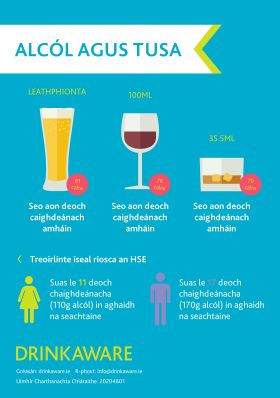
With Ireland’s alcohol-related deaths now at their highest in a decade, the review comes as public health experts warn the existing guidelines—last updated in 2015—have failed to keep pace with scientific advances. The authority’s findings, due to be published in full by mid-2025, suggest the current advice of up to 17 standard drinks per week for women and 24 for men may no longer reflect the true health risks of alcohol consumption.
This article explains what the proposed changes mean, why they’re needed, and how they could reshape Ireland’s approach to alcohol policy—from workplace safety to public health messaging.
—
Why is HIQA calling for stricter alcohol guidelines?
HIQA’s recommendation stems from a comprehensive review of global research, including studies linking even moderate alcohol use to increased risks of cancer, heart disease, and mental health disorders. According to the authority’s preliminary findings, the current guidelines—based on a 2015 report by the National Institute for Health and Care Excellence (NICE)—underestimate the harm caused by regular drinking.
Key findings from HIQA’s analysis include:
- Cancer risk: New evidence shows even low-to-moderate alcohol consumption (defined as up to 14 units per week) increases breast cancer risk by 10%, and liver cancer by up to 25%. The 2015 guidelines did not factor in these risks.
- Heart health: While moderate drinking was previously linked to reduced cardiovascular risk, recent studies suggest this benefit is outweighed by long-term harms, particularly for women over 50.
- Mental health: Alcohol’s role in anxiety and depression has been underestimated, with HIQA citing Irish data showing a 40% rise in alcohol-related mental health presentations to emergency departments since 2018.
“The science has moved on significantly since 2015,” said a senior HIQA official, who noted that Ireland’s guidelines now sit at odds with those of the UK, Australia, and Canada—all of which have tightened their advice in recent years. “We’re not talking about prohibition, but about aligning our public health messaging with what the evidence now shows.”
Comparison: How Ireland’s guidelines stack up internationally
| Country | Current Weekly Limit (Standard Drinks) | Last Updated | Key Change Since 2015 |
|---|---|---|---|
| Ireland | 17 (women), 24 (men) | 2015 | No cancer risk warnings |
| UK | 14 (both genders) | 2016 | Added cancer risk advice |
| Australia | 10 (both genders) | 2020 | No safe level of alcohol |
| Canada | 10 (both genders) | 2023 | Focus on harm reduction |
Source: HIQA review, World Health Organization (WHO) global alcohol guidelines
—
What would the new guidelines look like?
While HIQA has not yet released final figures, leaked internal briefings suggest the authority is considering three potential scenarios:
- Scenario 1 (Moderate Reduction): Weekly limits cut by 20%—14 units for women, 19 for men—with explicit cancer risk warnings.
- Scenario 2 (Strict Harm Reduction): Weekly limits reduced to 10 units for both genders, in line with Australia and Canada, with a “no safe level” messaging approach.
- Scenario 3 (Gender-Neutral): A single 14-unit weekly limit for all adults, with additional advice on risk factors (e.g., genetics, body weight).
All scenarios include:
- A ban on daily drinking (previously allowed at up to 3–4 units/day).
- Stronger warnings about alcohol’s impact on fertility, sleep, and long-term cognitive decline.
- Clearer advice for pregnant women and young adults (currently advised to avoid alcohol entirely).
“The biggest shift will be moving away from a ‘moderation is safe’ message to one that acknowledges risk at any level,” said Dr. Aoife McNamara, a public health researcher at Trinity College Dublin. “This isn’t about scaremongering—it’s about giving people the information they need to make informed choices.”
How would the changes affect daily life?
Under proposed Scenario 1 (the most likely outcome), a standard drink—defined as 10g of pure alcohol—would now equate to:
- Half a pint of lager (3.5% ABV)
- A small glass of wine (125ml, 12% ABV)
- A single shot of spirits (30ml, 40% ABV)
This means:
- A typical Irish social drinker (e.g., 3 pints of beer on a Friday night) would now exceed the new weekly limit after just one session.
- Weekend binge drinking—common in Ireland—would become far riskier under the proposed rules.
- Workplace alcohol policies (e.g., “no more than two drinks at a work function”) would need to be revised.
—
Who stands to gain—and who might resist?
The proposed changes have already sparked debate among stakeholders, with reactions divided along political, economic, and health lines.
Supporters: Health advocates and policymakers
Public health groups, including the Irish Heart Foundation and the European Alcohol Policy Alliance, have welcomed the review, arguing that Ireland’s guidelines are among the most lenient in Europe. “For too long, we’ve treated alcohol as a harmless social lubricant,” said a spokesperson for the Heart Foundation. “The evidence now shows it’s a major public health issue.”
Politically, Fine Gael and Green Party officials have signaled support for stricter guidelines, with some calling for additional measures like minimum unit pricing or stronger advertising restrictions. “This is a long-overdue update,” said a senior health ministry source. “The current advice is out of step with both the science and the reality of alcohol harm in Ireland.”
Opposition: Industry and cultural concerns
The drinks industry has already pushed back, with the Irish Distillers Association arguing that the guidelines “do not reflect the reality of responsible drinking.” A spokesperson noted that Ireland’s pub culture and agricultural sector (e.g., whiskey, beer) would face economic pressures if guidelines were tightened.
Cultural resistance is also a factor. A 2023 survey by the ESRI found that 62% of Irish adults believe alcohol is “part of a healthy lifestyle,” with many viewing the current guidelines as overly restrictive. “There’s a real fear that this will be seen as ‘health police’ overreach,” said a sociologist at University College Cork.
Workplace and legal implications
Employers, particularly in hospitality and construction, are bracing for potential changes. Under current guidelines, many workplaces permit alcohol at functions as long as it stays within the 17/24-unit weekly limit. With proposed reductions, even occasional work events could become problematic.
Legally, the changes may also impact cases involving alcohol-related harm. Personal injury lawyers have noted that if guidelines are revised downward, courts could reinterpret “reasonable consumption” in liability cases. “We’re likely to see more challenges to claims where defendants argue they were drinking within ‘safe’ limits,” said a Dublin-based solicitor.
—
How did Ireland arrive at this point?
The call for updated guidelines follows years of mounting evidence and failed policy attempts. Here’s a timeline of key developments:
| Year | Event | Impact |
|---|---|---|
| 2015 | Current guidelines (17/24 units) published, based on NICE UK advice. | No cancer warnings; framed as “low-risk” limits. |
| 2018 | WHO Europe warns alcohol is “the most harmful drug” in Ireland. | First official acknowledgment of Ireland’s high per-capita consumption. |
| 2020 | COVID-19 lockdowns see alcohol sales rise by 30%. | Mental health services report surge in alcohol-related calls. |
| 2022 | HIQA begins review of alcohol guidelines. | Internal documents reveal “growing disconnect” between science and policy. |
| 2024 | New studies link alcohol to 1 in 10 Irish deaths. | Public pressure mounts for guideline update. |
Sources: HIQA documents, Central Statistics Office (CSO), World Health Organization (WHO)
One critical factor is Ireland’s high alcohol consumption relative to other EU countries. Per capita, Ireland ranks third in Europe for alcohol-related deaths, behind only Lithuania and Latvia. “We’re not just drinking more—we’re drinking more dangerously,” said Prof. Mary Clarke, a public health expert at University College Dublin.
Another issue is the misalignment between guidelines and reality. While official advice suggests most Irish adults drink within limits, anonymized data from the Health Service Executive (HSE) shows:
- Only 38% of Irish adults adhere to the current weekly limits.
- 42% of 18–34-year-olds report binge drinking (defined as ≥6 standard drinks in one session) at least monthly.
- Alcohol-related hospitalizations rose by 18% between 2019 and 2023.
—
What happens next—and what could go wrong?
HIQA’s recommendations will now be sent to the Department of Health for formal consultation, with a public review period expected by early 2025. Final guidelines could be published as early as mid-2025, though industry pushback may delay implementation.
Potential challenges include:
- Public backlash: If guidelines are perceived as overly restrictive, there could be a repeat of the 2018 “dry January” controversy, where opposition to a government-led campaign led to its early cancellation.
- Economic impact: The drinks industry has deep lobbying ties, and any new advertising or pricing measures could face legal challenges.
- Enforcement issues: Unlike smoking, alcohol is not subject to strict marketing or sales restrictions, making public health messaging harder to enforce.
However, health experts argue that even modest changes could have significant benefits. “If we reduce weekly limits by just 10%, we could see a 5–7% drop in alcohol-related deaths within five years,” said Dr. McNamara. “That’s hundreds of lives saved annually.”
One certainty is that Ireland’s approach to alcohol will no longer be an outlier. With the UK, Australia, and Canada all tightening their guidelines, the pressure on Irish policymakers to act is greater than ever.
—
Frequently asked questions
Will the new guidelines ban alcohol completely?
No. HIQA’s focus is on harm reduction, not prohibition. The proposed changes aim to make drinking safer by lowering recommended limits and providing clearer risk warnings. Experts emphasize that the goal is to encourage moderation, not abstinence.
How will the guidelines affect social drinking?
Significantly. Under the most likely scenario (14-unit weekly limit), a typical Irish social drinker (e.g., 3 pints on a Friday and 2 on a Saturday) would now exceed the limit after just one weekend. This could lead to:
- More people opting for alcohol-free weekends.
- A shift toward lower-strength drinks (e.g., 3% ABV beer instead of 5%).
- Greater scrutiny of workplace events where alcohol is served.
Are there any groups that should avoid alcohol entirely?
Yes. HIQA’s proposed guidelines will reinforce advice for:
- Pregnant women (current advice: no alcohol at all).
- Young adults under 25 (higher risk of alcohol-related brain damage).
- People with liver disease, mental health conditions, or a family history of alcoholism.
Could this lead to higher taxes on alcohol?
Possibly. While HIQA’s review does not directly address taxation, stricter guidelines often coincide with calls for:
- Minimum unit pricing (e.g., £0.50 per unit, as in Scotland).
- Higher taxes on stronger drinks (e.g., spirits, cider).
- Restrictions on alcohol advertising near schools or sports venues.
Industry groups have already warned that such measures could hit small pubs and farmers hardest.
What about cultural traditions like wakes and celebrations?
HIQA acknowledges that alcohol plays a central role in Irish culture but argues that context matters. For example:
- Occasional high consumption (e.g., at wakes) is less harmful than regular daily drinking.
- Guidelines will encourage spacing out drinks over time rather than consuming them quickly.
- Public health messaging will focus on aware drinking, not abstinence.
When will the final guidelines be announced?
HIQA’s full report is expected by mid-2025, with a public consultation period to follow. Final guidelines could be published by late 2025 or early 2026, depending on political and industry feedback.
—
For now, the debate over Ireland’s alcohol guidelines has shifted from whether they need updating to how far they should go. With public health data pointing to rising harm and international trends moving toward stricter limits, the question is no longer if the guidelines will change—but how quickly, and with what impact on Irish society.
One thing is clear: the days of treating alcohol as a low-risk social habit are over.
