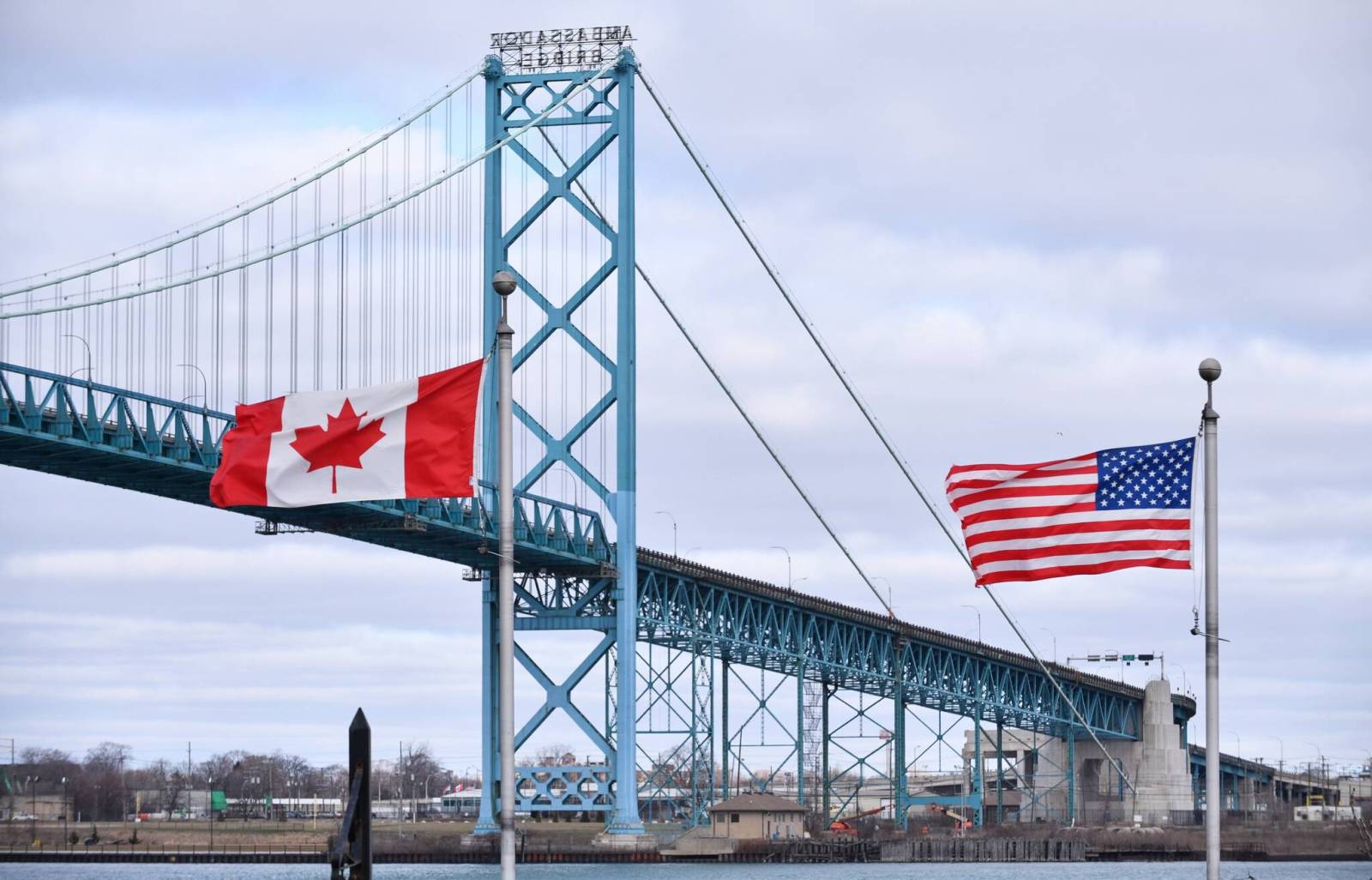
Opinion: The art of appeasing Trump – Winnipeg Free Press Analysis of Canada-US Relations
Canada faces significant economic risks if it fails to manage a transactional relationship with Donald Trump, particularly regarding trade tariffs and the USMCA. Diplomatic strategies now focus on a form of strategic appeasement to prevent Canada from becoming a primary target of U.S. protectionist policies, according to current geopolitical analyses of North American trade dynamics.
The central challenge for Canadian policymakers is the asymmetry of power between Ottawa and Washington. While Canada relies on the United States for the vast majority of its exports, the U.S. economy is far less dependent on Canadian trade. This imbalance creates a vulnerability that a “transactional” leader can exploit to extract concessions. The discourse surrounding the Opinion: The art of appeasing Trump – Winnipeg Free Press perspective suggests that traditional diplomacy—based on shared values and long-term alliances—is less effective than a strategy based on immediate, tangible wins for the U.S. president.
Why Canada is a Primary Target for U.S. Protectionism
Canada’s economic architecture is built on integrated supply chains, particularly in the automotive and energy sectors. When the U.S. administration pivots toward “America First” policies, these integrations become liabilities. The U.S. often views trade deficits not as a result of market demand, but as a failure of trade agreements. Because Canada maintains a significant trade surplus with the U.S. in several sectors, it naturally enters the crosshairs of any administration seeking to “balance” trade through tariffs.
The risk is not merely theoretical. Previous iterations of U.S. trade policy have utilized Section 232 of the Trade Expansion Act to impose tariffs on steel and aluminum, citing national security concerns. These moves demonstrated that established trade treaties can be bypassed if the U.S. executive determines that domestic industry is under threat. For Canada, the threat is twofold: direct tariffs on goods and the potential for the U.S. to trigger a review of the Canada-United States-Mexico Agreement (CUSMA/USMCA).
- Trade Dependence: Roughly 75% of Canadian exports go to the U.S.
- Sectoral Vulnerability: The automotive industry relies on “just-in-time” delivery across the border; any friction slows production for both nations.
- Asymmetric Leverage: The U.S. can impose tariffs that devastate specific Canadian provinces without causing equivalent systemic shocks to the U.S. GDP.
The Mechanics of Transactional Diplomacy
Transactional diplomacy differs from traditional diplomacy in its timeframe and goals. Traditional diplomacy seeks stability, predictability, and adherence to international law. Transactional diplomacy seeks the “deal.” In this framework, loyalty is not a permanent state but a commodity bought with concessions.
To navigate this, Canadian officials must shift from arguing based on “fairness” or “treaty obligations” to presenting “wins” that the U.S. president can tout to his domestic base. This is the core of the “art of appeasement.” It involves identifying specific areas where Canada can provide a benefit—such as increased energy exports or tighter border security—in exchange for the removal of tariffs or the maintenance of trade quotas.
“The objective is to move Canada from the category of ‘adversary’ or ‘easy target’ to the category of ‘useful partner.’ This requires a shift in rhetoric from legalistic arguments to transactional benefits.”
This approach requires a high degree of flexibility. It means accepting that the rules of engagement may change overnight based on a social media post or a sudden shift in political priority. The goal is not to change the U.S. president’s worldview but to manage the consequences of that worldview.
Comparing Trade Pressures: Then vs. Now
The threat landscape has evolved since the first major renegotiations of North American trade. While the initial focus was on specific industry protections, the current trend suggests a broader move toward universal baseline tariffs. If the U.S. implements a general tariff on all imports, the “special relationship” between Canada and the U.S. provides little legal protection.
| Feature | Previous Trade Friction (2017-2020) | Projected Trade Friction (Current/Future) |
|---|---|---|
| Primary Tool | Targeted Section 232 Tariffs (Steel/Alum) | Potential Universal Baseline Tariffs |
| Negotiation Goal | Updating NAFTA to USMCA | USMCA Review and Revision (2026) |
| Canadian Strategy | Legal challenges and WTO appeals | Direct transactional “wins” and bilateral deals |
| Key Flashpoint | Dairy quotas and Softwood lumber | Border security and Digital services taxes |
The Role of Sub-National Relations
One of the most effective tools in the Canadian diplomatic arsenal is the cultivation of relationships with U.S. governors and state legislatures. Many U.S. states are economically tied to Canada. For example, Michigan and Ohio rely heavily on the integrated auto parts trade. If the federal government in Washington imposes tariffs, these states suffer immediate economic losses.
By lobbying state-level politicians, Canada creates internal pressure within the U.S. government. When a governor tells the president that tariffs are killing jobs in a swing state, it carries more weight than a formal protest from the Canadian Prime Minister. This “bottom-up” diplomacy serves as a hedge against the volatility of the executive branch in Washington.
Related strategies include strengthening ties with members of Congress who represent border states. These individuals often prioritize the flow of commerce over the ideological goals of the White House. By framing trade as a local jobs issue, Canada can build a coalition of U.S. interests that oppose disruptive trade policies.
Potential Flashpoints and Risks
While appeasement may work for trade, other areas of the relationship are more fraught. Defense spending is a primary example. The U.S. has long criticized Canada for failing to meet the NATO target of spending 2% of GDP on defense. In a transactional environment, this failure is not seen as a budgetary issue but as a lack of commitment to the alliance.
Similarly, environmental policies can become leverage. If the U.S. rolls back climate commitments, Canada faces a dilemma: align with the U.S. to maintain trade harmony or stick to international climate goals and risk being labeled an “obstructionist.” The risk is that the U.S. could link trade concessions to Canada’s stance on energy production or carbon pricing.
The Digital Services Tax (DST) Conflict
A current point of contention is the Digital Services Tax. Canada’s attempt to tax large U.S. tech companies is viewed by Washington as a discriminatory attack on American industry. This is a classic example of a policy that may be logically sound from a tax perspective but is diplomatically dangerous. In a transactional relationship, the DST could be used as a justification for tariffs on unrelated Canadian goods, such as agricultural products.
Border Security and Migration
The U.S. frequently pressures Canada to increase spending on border security to prevent irregular migration. This is an area where “appeasement” is relatively straightforward: increasing funding for border patrols and surveillance is a tangible “win” for a U.S. administration focused on security. However, it also increases Canada’s operational costs and shifts its internal priorities.
The Cost of Appeasement
The strategy of managing a transactional leader is not without cost. There is a risk of “hollowing out” Canadian foreign policy. If every decision is made based on the immediate mood of the U.S. president, Canada loses its ability to lead on the international stage or maintain a consistent set of values.
Furthermore, there is the danger of the “Sunk Cost Fallacy.” If Canada gives up a trade concession to avoid a tariff, it may find that the tariff is threatened again six months later to extract a further concession. This creates a cycle of diminishing returns where Canada gives up more and more while the U.S. maintains the threat of disruption.
To avoid this, analysts suggest that appeasement must be paired with diversification. Canada cannot remain so dependent on a single market that it is forced into a state of permanent diplomatic submission. Expanding trade with the EU through CETA and pursuing deeper ties in the Indo-Pacific are essential long-term hedges.
Common Misconceptions About Canada-US Trade
Many observers believe that the USMCA provides a permanent shield against tariffs. This is incorrect. The agreement provides a framework, but the U.S. has shown a willingness to use “national security” loopholes to bypass treaty obligations. The USMCA is a tool for negotiation, not an impenetrable wall.
Another misconception is that the U.S. views Canada as a “friend” in the traditional sense. While there is deep cultural and familial overlap, the official relationship is increasingly viewed through the lens of “competition” and “leverage.” The assumption that “they wouldn’t do that to us” is a dangerous diplomatic fallacy.
Finally, some argue that Canada should take a hard line to show strength. However, in an asymmetric relationship, “strength” is often interpreted as “defiance,” which can trigger the very aggressive responses the country seeks to avoid. The art of the relationship lies in being indispensable rather than being defiant.
Frequently Asked Questions
What is the “art of appeasing Trump” in a diplomatic context?
It refers to a strategy of transactional diplomacy where Canada focuses on providing immediate, tangible “wins” for the U.S. president—such as increased energy exports or border security cooperation—to avoid punitive measures like tariffs.
How does the USMCA/CUSMA protect Canada from tariffs?
The agreement sets the rules for trade, but it does not prevent the U.S. from imposing tariffs under “national security” claims (Section 232). The agreement’s main value is providing a structured forum for dispute resolution, though these processes can be slow.

Why is Canada’s trade surplus a problem?
A trade surplus means Canada exports more to the U.S. than it imports. For a U.S. administration focused on reducing trade deficits, this surplus is viewed as a loss for the U.S. economy, making Canada a target for tariffs intended to “level the playing field.”
What role do Canadian provinces play in U.S. relations?
Provinces often engage in sub-national diplomacy, working directly with U.S. governors. This creates economic pressure within the U.S. to maintain trade flow, as state-level leaders prioritize their own local jobs over federal trade wars.
What are the biggest risks to the Canada-US relationship in the next few years?
The primary risks include the 2026 USMCA review, potential universal baseline tariffs on imports, disputes over the Digital Services Tax, and pressure to increase NATO defense spending.
The path forward for Canada requires a delicate balance of short-term tactical concessions and long-term strategic diversification. By treating the relationship as a series of transactions rather than a static alliance, Canada can mitigate the most severe risks of U.S. protectionism while slowly reducing its systemic vulnerability.
