Nintendo DS Port Of Super Mario 64 Released With Multiplayer Support – Hackaday
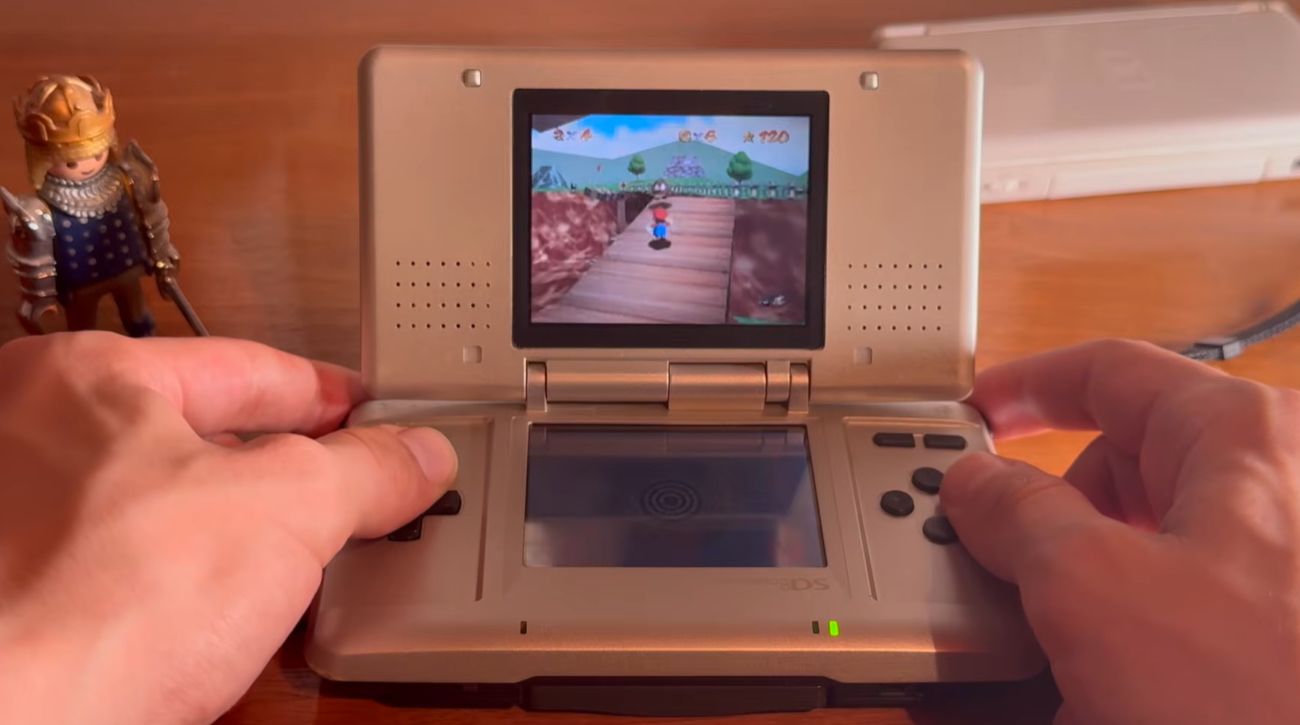
A community-led development project has released a native port of Super Mario 64 for the Nintendo DS, introducing a local multiplayer mode not present in the original 1996 release. The project adapts the reverse-engineered source code of the Nintendo 64 title to run on the DS hardware, enabling multiple players to navigate the game’s 3D environments simultaneously via local wireless connectivity.
What is the Nintendo DS Port of Super Mario 64?
The Nintendo DS port of Super Mario 64 is a non-commercial, homebrew project that translates the original Nintendo 64 game into a format compatible with the Nintendo DS handheld system. Unlike an emulator, which mimics the N64 hardware to run the original ROM, this is a native port. This means the game’s logic and assets have been rewritten or adapted to run directly on the DS’s ARM-based processors.
The most significant addition to this version is the implementation of multiplayer support. According to project documentation, players can connect via the DS’s built-in local wireless capabilities to play together in the same levels. This feature transforms the traditionally single-player experience into a shared environment, allowing users to race or explore the Peach’s Castle grounds and various worlds together.
Key technical achievements of the port include:
- Native Execution: The game runs directly on the DS hardware, reducing the overhead associated with emulation.
- Multiplayer Integration: Local wireless synchronization allows for real-time interaction between multiple DS consoles.
- Control Mapping: The N64’s analog stick movements are mapped to the DS’s D-pad and button layout, with some versions utilizing the touch screen for auxiliary functions.
- Asset Optimization: 3D models and textures are compressed and optimized to fit within the DS’s limited VRAM and system memory.
How Was the Port Created? The Role of Decompilation
The existence of this port is the result of a massive, multi-year effort by the gaming community to “decompile” Super Mario 64. Decompilation is the process of taking the machine code (the binary 1s and 0s that the console reads) and translating it back into human-readable C code.
In 2019, a team of programmers achieved a milestone by producing a near-perfect decompilation of the game. This provided a blueprint of exactly how the game functions, from Mario’s movement physics to the way the 3D worlds are rendered. Once the code was available in a readable format, developers could modify it to work on different hardware architectures.

The transition from the Nintendo 64 to the Nintendo DS required overcoming several architectural hurdles. The N64 utilized a MIPS-based CPU and a unique graphics chip, while the DS uses an ARM9 and ARM7 dual-processor setup. Developers had to rewrite the rendering pipeline to ensure the DS could handle the 3D geometry without crashing or suffering from unplayable frame rates.
The shift from MIPS to ARM architecture requires more than a simple translation; it requires a fundamental restructuring of how the game accesses memory and processes graphics in real-time.
Details on the Multiplayer Functionality
The multiplayer mode is the centerpiece of this specific release. Because the original Super Mario 64 was designed as a solo journey, the developers had to implement a networking layer that did not exist in the original code. This involves “state synchronization,” where the position, animation, and action of Mario on one screen are transmitted to the other connected consoles.
According to technical reports on the project, the multiplayer support focuses on “cooperative exploration.” Players can see each other in the game world, though the game’s primary objectives—such as collecting Power Stars—remain the central goal. The local wireless connection of the DS provides the necessary low-latency communication required to keep the players synchronized without significant “rubber-banding” or lag.
Comparison of Original N64 vs. DS Port
| Feature | Original N64 Version | DS Homebrew Port |
|---|---|---|
| Player Count | Single Player | Multiplayer (Local Wireless) |
| Architecture | MIPS CPU / Silicon Graphics | ARM9 & ARM7 CPUs |
| Control Input | Analog Stick / Triggers | D-Pad / Face Buttons / Touch |
| Display | CRT/TV (Fixed Resolution) | Dual Screens (Handheld) |
| Loading | Cartridge-based | Flashcart / Homebrew Hardware |
Why This Release Matters for Gaming History
This project represents more than just a novelty; it is a demonstration of “software preservation” and “hardware agility.” By porting a landmark title to a different system, the community is exploring the theoretical limits of legacy hardware. It answers a historical “what if”—what if Nintendo had released a portable version of Super Mario 64 during the DS era?
Furthermore, the project highlights the power of open-source collaboration. The decompilation project involved hundreds of contributors worldwide who spent thousands of hours analyzing code. This collective effort has paved the way for other ports, including versions of the game for the PC and other handheld consoles.
From an industry perspective, these projects often push the boundaries of what is possible with “homebrew” software. The ability to add multiplayer to a 25-year-old single-player game demonstrates that the original game’s logic is robust enough to be expanded upon, provided the developers have the source code.
Technical Challenges and Limitations
Despite the success of the port, the Nintendo DS is significantly less powerful than the Nintendo 64 in several key areas. This has led to certain compromises in the port’s performance and visuals.
Graphics and Rendering
The DS’s resolution is much lower than that of a standard-definition television. To maintain a playable frame rate, the developers had to adjust the draw distance. In the original N64 version, “fog” was used to hide the edge of the rendered world; the DS port employs similar techniques but with more aggressive clipping to prevent the CPU from overloading.
Control Limitations
One of the biggest challenges is the lack of a true analog stick on the Nintendo DS. Super Mario 64 relies heavily on 360-degree movement and varying speeds based on how far the stick is pushed. The DS port approximates this using the D-pad, which limits Mario’s movement to eight directions. While functional, it lacks the precision of the original hardware.
Memory Management
The DS has very limited RAM (4MB of main RAM and a small amount of VRAM). The developers had to ensure that the game’s textures and audio files were compressed enough to fit into these constraints without causing the system to freeze during level transitions.
Common Misconceptions About the Port
There are several common misunderstandings regarding the nature of this release that users should be aware of:
- It is NOT an official Nintendo release: This is a fan-made project. Nintendo has not authorized or developed this version of the game.
- It is NOT an emulator: As mentioned, this is a native port. It does not run a .z64 or .n64 ROM file; it runs code specifically compiled for the DS.
- It does NOT work on “stock” DS consoles: To run this port, a Nintendo DS must be capable of running homebrew software, typically via a flashcart (like an R4 card) or custom firmware.
- It is NOT a “remake”: The game’s levels, stars, and physics are identical to the original. The only major additions are the multiplayer capabilities and the hardware adaptation.
Installation and Hardware Requirements
To run the Super Mario 64 port, users generally require a Nintendo DS, DS Lite, or DSi. Because the software is not signed by Nintendo, it cannot be installed via the official eShop or standard cartridge slots without third-party hardware.
The standard requirements include:
- A Flashcart: A device that allows the DS to read files from an SD card.
- The Compiled Binary: The .nds file created by the porting team.
- A Compatible Kernel: The flashcart must run a kernel (like Wood or Yuzu) that supports the execution of the port’s code.
For multiplayer, each participating player must have their own DS console and a copy of the port installed. The consoles then connect via the “Wireless Connection” settings found in the DS hardware.
For those interested in how this fits into the broader ecosystem of modified consoles, a related explainer on homebrew hardware can provide more context on how flashcarts bypass official system checks.
The Future of Decompilation and Porting
The success of the Super Mario 64 DS port is likely to inspire similar projects. The process of decompiling a game provides a “gold standard” for how that game works, making it much easier to port the title to other platforms. We have already seen similar efforts with other Nintendo titles, as the community seeks to preserve these games in ways that are more accessible than original hardware.
The addition of multiplayer is particularly influential. It proves that “modding” a game’s core logic can introduce entirely new gameplay loops. Future projects may look to add online play, new levels, or enhanced graphics to other classic titles using the same decompilation methodology.
As the community continues to refine the code, it is expected that the DS port will receive updates to improve the frame rate and refine the D-pad controls. Some developers are even exploring ways to utilize the DS’s second screen for a persistent map or inventory system, further differentiating the port from the original N64 experience.
Frequently Asked Questions
Is the Super Mario 64 DS port legal to download?
The port itself is a piece of community-developed code. However, it often requires the original game assets (textures, sounds, and models) to function. Since these assets are copyrighted by Nintendo, the distribution of the full game package exists in a legal gray area typical of the homebrew and emulation scenes.
:max_bytes(150000):strip_icc():focal(563x553:565x555)/super-mario-bros-062123-0b9af85336734532ac18747717017dd8.jpg "Is the Super Mario 64 DS port legal to download?")
Does the multiplayer mode support online play?
No. The multiplayer support is limited to local wireless connectivity. The Nintendo DS’s native Wi-Fi capabilities were not used for this port, as the synchronization required for a 3D environment would be too laggy over the old Nintendo Wi-Fi Connection infrastructure.
Can I play this on a Nintendo 3DS?
Yes. Because the Nintendo 3DS is backward compatible with DS games, it can run the .nds file of the port, provided the 3DS has been modified to run homebrew software via a tool like Luma3DS.
How does the frame rate compare to the original N64?
The frame rate is generally stable but may dip in complex areas with many moving objects. While the N64 targeted 30 frames per second, the DS port varies depending on the complexity of the scene, though it remains playable for most users.
Do I need a special version of the DS to play this?
Any standard Nintendo DS, DS Lite, or DSi will work. The primary requirement is not the console model, but the presence of a flashcart or custom firmware that allows the execution of unsigned homebrew code.
