
Munich Airport Suspends Flights Due to Smell of Smoke in Control Tower – Sky News
Munich Airport suspended all flight operations after a smell of smoke triggered a fire alarm and the subsequent evacuation of the air traffic control tower. According to reports from Sky News, DW, and other outlets, the emergency led to immediate flight diversions before the airport eventually restarted operations.
What happened at Munich Airport?
The disruption began when a smell of smoke was detected within the air traffic control (ATC) tower at Munich Airport. This triggered a fire alarm, prompting an immediate evacuation of the facility to ensure the safety of the personnel managing the airspace. Because the control tower serves as the central nervous system for all take-offs, landings, and ground movements, its sudden evacuation left the airport without the necessary oversight to maintain safe flight operations.
As a result, airport authorities were forced to suspend flights. This decision was a precautionary measure to prevent any accidents in the absence of active tower control. According to reporting from the Daily Express, the situation escalated to the point where incoming flights had to be diverted to other airports to avoid congestion and safety risks in the air.
The sequence of events can be summarized as follows:
- Detection: A smell of smoke is reported in the control tower.
- Alarm: The fire alarm system is activated.
- Evacuation: ATC personnel exit the tower immediately.
- Suspension: Flight operations are halted due to the lack of tower control.
- Diversion: Aircraft already in the air are rerouted to alternative destinations.
- Resolution: Operations restart once the tower is cleared for re-entry.
Why does a smell of smoke cause a total flight suspension?
To the average traveler, a “smell of smoke” might seem like a minor issue, but in the context of air traffic control, it is a critical safety event. The control tower is responsible for the separation of aircraft and the management of runways. Without controllers in the tower, the risk of runway incursions or mid-air conflicts increases exponentially.
According to the operational logic outlined in reports from Mansfield 103.2 and Sky News, the evacuation of the tower creates a “blind spot” for the airport. While some radar functions may be handled by regional centers, the visual confirmation and ground-level coordination provided by the tower are indispensable for safe landings and departures.
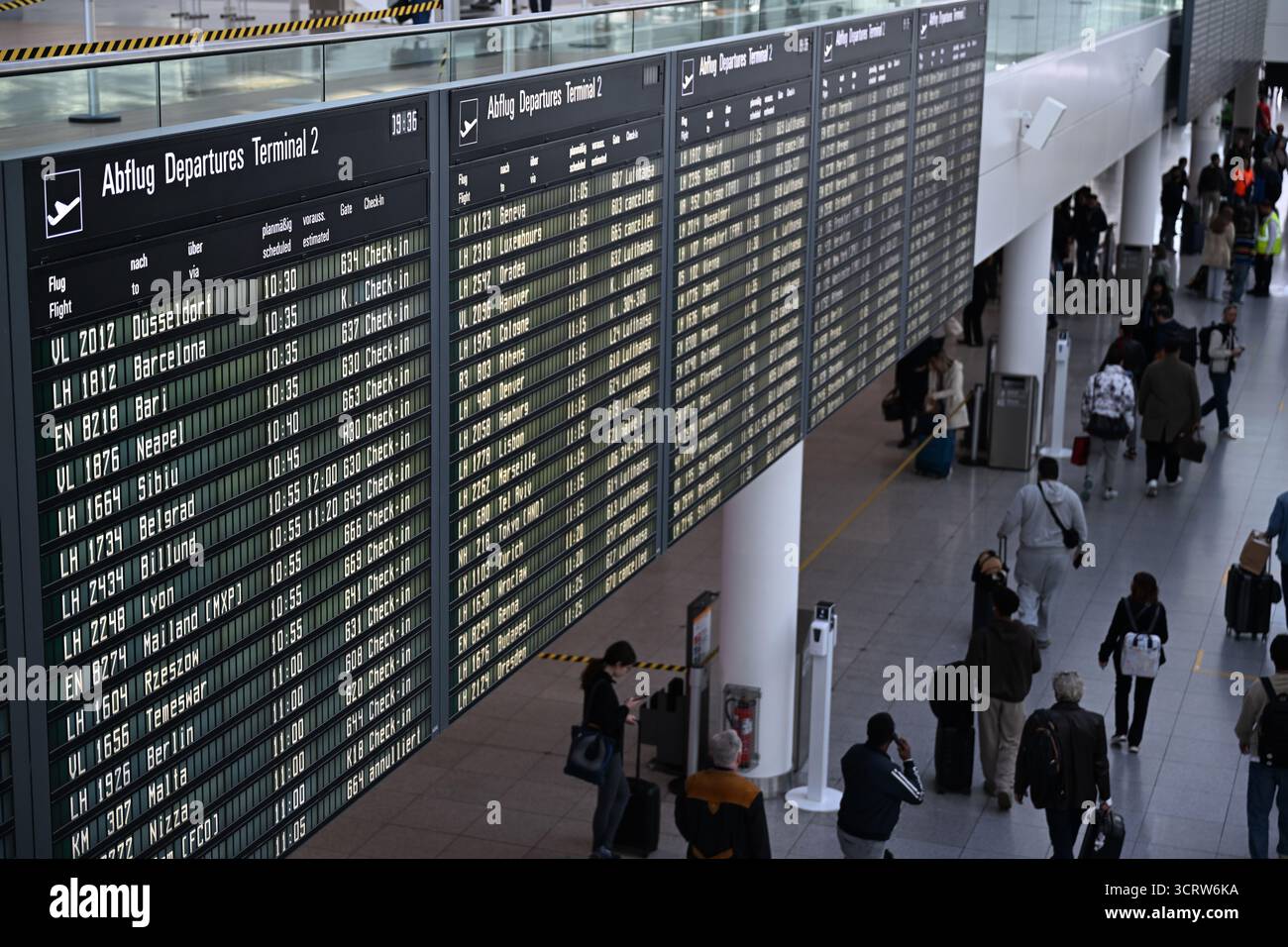
The suspension of flights during a tower evacuation is not merely a reaction to a potential fire, but a mandatory safety protocol to ensure that no aircraft moves without professional guidance.
In aviation, the “smell of smoke” is treated with extreme caution because it often precedes electrical fires in critical infrastructure. Given the amount of high-voltage equipment and communication arrays housed in a control tower, any sign of combustion can lead to a total system failure, making an immediate evacuation the only viable safety response.
The impact on passengers and flight diversions
When a major hub like Munich Airport suspends operations, the ripple effect is felt across the entire European aviation network. Because Munich is a primary gateway, the sudden closure forces air traffic controllers in neighboring sectors to manage a sudden surge of diverted aircraft.
The Daily Express noted that flights were diverted as the fire alarm sounded. Diversions typically occur in two ways:
- In-flight Diversions: Aircraft already approaching Munich are rerouted to nearby hubs such as Frankfurt, Vienna, or Zurich.
- Ground Delays: Aircraft scheduled to depart from Munich are held at the gate, and incoming flights are held at their origin airports.
These diversions create a logistical nightmare for airlines, who must find hotel accommodations for stranded passengers and reschedule hundreds of connecting flights. The suspension of flights, as reported by DW and Sky News, highlights the fragility of the “just-in-time” nature of modern aviation logistics.
| Impact Area | Immediate Effect | Secondary Consequence |
|---|---|---|
| Airspace | Immediate flight suspension | Increased traffic at diversion airports |
| Passengers | Flight diversions and delays | Missed connections and lodging needs |
| Airport Staff | Tower evacuation | Operational backlog upon restart |
How flight operations were restarted
The restoration of service at Munich Airport followed a strict safety verification process. Once the fire department and safety inspectors cleared the control tower, confirming that there was no active fire and that the smoke smell had been addressed or identified as non-threatening, personnel were allowed to return to their stations.
According to the Global Banking & Finance Review, flight operations were restarted after the evacuation. However, “restarting” is not as simple as flipping a switch. The process involves:
- Airspace Clearing: Ensuring no aircraft are in unauthorized holding patterns.
- Queue Management: Prioritizing diverted flights that are returning to Munich.
- Ground Coordination: Clearing the runways of any support vehicles used during the emergency.
This recovery phase often takes several hours longer than the actual suspension period, as the airport must work through the backlog of delayed aircraft while maintaining strict safety intervals.
Comparing the reporting: How different outlets framed the event
The reporting of this incident across various media outlets reveals a focus on different aspects of the crisis. While all sources agree on the core facts—smoke smell, evacuation, and suspension—their framing differs slightly:

- Sky News and DW: These outlets focused on the immediate disruption and the “breaking” nature of the flight suspensions, emphasizing the cause (smell of smoke) and the immediate result.
- Daily Express: This coverage highlighted the “LIVE” nature of the event, focusing heavily on the diversions and the real-time chaos experienced by travelers.
- Global Banking & Finance Review: This source focused on the resolution, reporting on the restart of operations and the return to normalcy.
This contrast shows a typical news cycle: the initial “breaking” phase (Sky News/DW), the “crisis” phase (Daily Express), and the “recovery” phase (Global Banking & Finance Review).
Broader implications for aviation infrastructure
The Munich incident serves as a reminder of the “single point of failure” risk inherent in airport design. Despite the existence of backup systems, the physical presence of controllers in the tower remains a critical requirement for most major airports. If the tower becomes uninhabitable—even due to a smell of smoke—the entire operation grinds to a halt.
This event prompts a wider discussion on the implementation of remote towers. Some airports in Europe have begun experimenting with “digital towers,” where controllers manage traffic via high-definition cameras and sensors from a remote location. Had Munich been operating a remote tower system, a smell of smoke in the physical tower structure might not have necessitated a total suspension of flights, as the controllers would have been safely located elsewhere.
For those interested in how aviation safety is evolving, a related explainer on remote tower technology could provide more insight into how airports are mitigating these specific risks.
Common misconceptions about airport evacuations
There is often a misconception that airports have “backup towers” that can take over instantly. In reality, while there are secondary communication centers, they often lack the visual line-of-sight required for ground movements and final approach clearances. This is why the evacuation reported by Sky News led to a full suspension rather than a seamless transition to a backup site.
Another common misunderstanding is the nature of the “smoke smell” trigger. Many passengers assume that if there is no visible fire, the suspension is an overreaction. However, in aviation, “smoke” is often the first sign of an electrical short in critical wiring. Waiting for visible flames before evacuating could result in a total loss of communication with aircraft, which would be a catastrophic safety failure.
Frequently Asked Questions
Why were flights diverted if there was only a “smell” of smoke?
A smell of smoke in a control tower indicates a potential electrical fire. Because the tower is essential for safe take-offs and landings, any threat to the tower’s integrity requires an immediate evacuation. Without controllers to guide them, aircraft cannot land safely, necessitating diversions to other airports.
How long did the flight suspension last?
While specific durations vary by flight, reports from the Global Banking & Finance Review indicate that operations were restarted after the evacuation and safety checks were completed. The total time of disruption includes both the suspension and the subsequent recovery of the flight schedule.
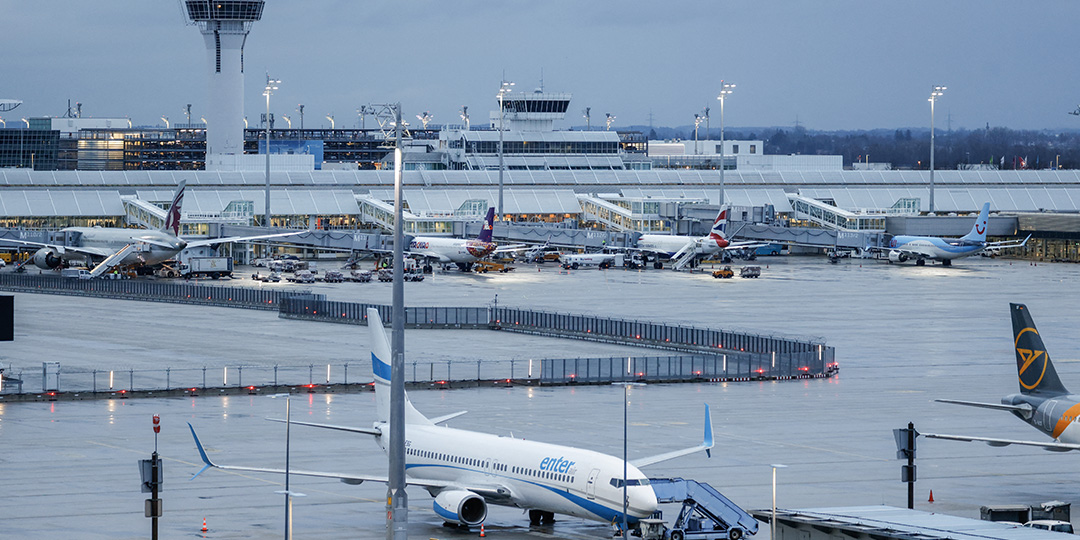
Who is responsible for managing the airspace during a tower evacuation?
During a tower evacuation, regional air traffic control centers can manage aircraft at higher altitudes, but they cannot manage the runways or the immediate vicinity of the airport. This is why flights are diverted rather than simply “holding” in the air indefinitely.
Was anyone injured during the Munich Airport incident?
The primary sources, including Sky News and DW, focused on the operational suspension and evacuation; there were no reports of injuries associated with the event.
What should passengers do when a tower evacuation occurs?
Passengers should monitor their airline’s official communication channels and the airport’s flight information display systems. In cases of tower evacuations, flights are often diverted or delayed, and airlines are responsible for providing updates on rescheduling and accommodations.
