
Moises Caicedo hoping to inspire Ecuador’s next generation at World Cup 2026 | News | Official Site – Chelsea official site
Moises Caicedo intends to use the 2026 World Cup as a platform to inspire the next generation of Ecuadorian footballers, according to the Chelsea official site. The midfielder, who Seneweb describes as once being a “barefoot boy,” has transitioned from humble beginnings to become the most expensive player in his country’s history, creating a visible pathway for youth talent in South America.
How does Moises Caicedo plan to influence future Ecuadorian players?
Caicedo views his position at both Chelsea and the Ecuadorian national team as a tool for mentorship and motivation. According to the Chelsea official site, his primary goal for the 2026 World Cup is to demonstrate to young athletes in Ecuador that reaching the highest levels of European football is a tangible possibility. By performing on the world’s largest stage, Caicedo aims to shift the aspirations of youth players from local success to global competitiveness.
This ambition is rooted in his own trajectory. Seneweb reports that Caicedo’s journey began in extreme poverty, playing without shoes. This narrative serves as a psychological blueprint for current youth prospects who face similar socio-economic barriers. The midfielder’s success is not just viewed as a personal achievement but as a proof of concept for the viability of Ecuadorian talent in the Premier League.
- Visibility: Using the 2026 World Cup to highlight Ecuadorian skill to global scouts.
- Mentorship: Providing a real-world example of the discipline required to move from local clubs to Europe.
- Aspiration: Encouraging youth players to pursue professional pathways despite financial hardship.
What is the role of the “obscure club” in Ecuador’s football rise?
The surge of Ecuadorian talent in Europe is not accidental. The London Evening Standard reports that an obscure club in Ecuador has begun feeding players to Europe’s elite, including Arsenal and Chelsea. This institutional approach to player development has moved away from relying on raw talent alone, focusing instead on a structured pipeline that prepares players for the tactical demands of European leagues.
According to the London Evening Standard, this club’s ability to export players to top-tier English sides suggests a sophisticated scouting and training regime that aligns with the needs of the modern game. Rather than players leaving for smaller European leagues first, the quality of preparation at this source club allows athletes to transition more directly into high-pressure environments like the Premier League.
“An obscure club from Ecuador began feeding Arsenal, Chelsea and Europe’s elite,” the London Evening Standard notes, highlighting a systemic shift in how the region produces professional athletes.
Comparing Traditional vs. Modern Ecuadorian Talent Pipelines
| Feature | Traditional Pathway | Modern Pipeline (Current) |
|---|---|---|
| Initial Training | Informal/Street football | Structured academy systems |
| European Entry | Lower-tier leagues (Belgium/Portugal) | Direct moves to “Elite” clubs |
| Financial Status | Low-cost transfers | Record-breaking valuations |
| Tactical Prep | General skill development | Premier League-specific readiness |
Why is Moises Caicedo’s financial valuation significant for Ecuador?
Caicedo is recognized as Ecuador’s most expensive player, a fact emphasized by Seneweb. This valuation is more than a reflection of his individual skill; it acts as a market signal to global clubs that Ecuadorian players possess high resale and performance value. When a player commands a record fee, it forces scouts from other elite clubs to increase their presence in the region.
The financial impact extends beyond the player’s salary. The record-breaking nature of his transfer to Chelsea validates the training methods used in his home country. According to the reports, this “most expensive” tag creates a precedent, making it easier for subsequent Ecuadorian players to negotiate better terms and secure moves to top-five European leagues.
This economic shift creates a positive feedback loop:
- High-value transfers increase investment in local academies.
- Better academies produce higher-quality players.
- Higher-quality players attract more interest from clubs like Chelsea and Arsenal.
- Increased visibility leads to more opportunities for the “next generation” Caicedo hopes to inspire.
What challenges does the Ecuadorian national team face heading into 2026?
While Caicedo’s individual success is a catalyst, the Ecuadorian national team must translate individual Premier League experience into collective World Cup success. The gap between playing for a top club and winning matches as a national team is significant. The challenge lies in integrating the “elite” experience of players like Caicedo with the rest of the squad, some of whom may still be playing in domestic leagues.
The London Evening Standard’s mention of a specific pipeline to Europe suggests that Ecuador is building a core of players who are comfortable with high-intensity, tactical football. However, the 2026 World Cup will require a depth of talent that goes beyond a few star players. The success of Caicedo’s mission to “inspire” will be measured by whether more young players enter this pipeline and reach professional maturity before the tournament begins.
Related explainer on South American World Cup Qualifying trends may provide further context on the competitive landscape Ecuador must navigate.
How did Caicedo’s early life shape his professional approach?
The contrast between Caicedo’s current status and his origins is a central theme in his public narrative. Seneweb highlights his history as a “barefoot boy,” a detail that underscores the resilience required to reach the Premier League. This background often translates into a high work rate and mental toughness on the pitch, traits that are highly valued by Chelsea’s coaching staff.

By openly acknowledging these roots, Caicedo removes the mystique of success and replaces it with a roadmap. For a child in a rural Ecuadorian province, the knowledge that a player who started without shoes is now a cornerstone of a multi-billion dollar club provides a psychological incentive that tactical coaching cannot offer. This is the “inspiration” referenced by the Chelsea official site—a bridge between extreme poverty and global sporting elite status.
Key Milestones in Caicedo’s Ascent
- Early Years: Playing barefoot in Ecuador, overcoming severe financial constraints (Seneweb).
- Academy Phase: Entry into the structured system of an Ecuadorian club that feeds European teams (London Evening Standard).
- European Breakthrough: Transitioning to professional football in Europe.
- Premier League Peak: Becoming the most expensive Ecuadorian player upon joining Chelsea.
- National Leadership: Aiming to lead and inspire the squad for the 2026 World Cup (Chelsea official site).
What are the broader implications for South American football scouting?
The “Caicedo effect” is contributing to a broader shift in how European clubs scout South America. For decades, Brazil and Argentina were the primary targets. However, the success of Ecuadorian players at Chelsea and Arsenal indicates that the “value” is now found in emerging markets. The London Evening Standard’s reporting on the “obscure club” suggests that elite teams are now looking for specific institutional partnerships rather than just individual talents.
This means that clubs are no longer just scouting players; they are scouting the academies that produce them. If a club in Ecuador can consistently produce players who fit the Premier League’s physical and tactical profile, that club becomes a strategic partner for European giants. This systemic change ensures a more steady stream of talent and reduces the risk for buying clubs.
This trend is likely to accelerate as the 2026 World Cup approaches. With the tournament being hosted in North America, the visibility of South American players will be at an all-time high, potentially leading to a surge in transfers from Ecuador to the US and Europe.
Frequently Asked Questions
Who is the most expensive Ecuadorian player in history?
According to Seneweb, Moises Caicedo holds the title of Ecuador’s most expensive player following his high-profile transfer to Chelsea.
Which European clubs have recruited from the Ecuadorian pipeline?
The London Evening Standard reports that elite clubs, specifically mentioning Arsenal and Chelsea, have recruited talent from a specialized club in Ecuador.
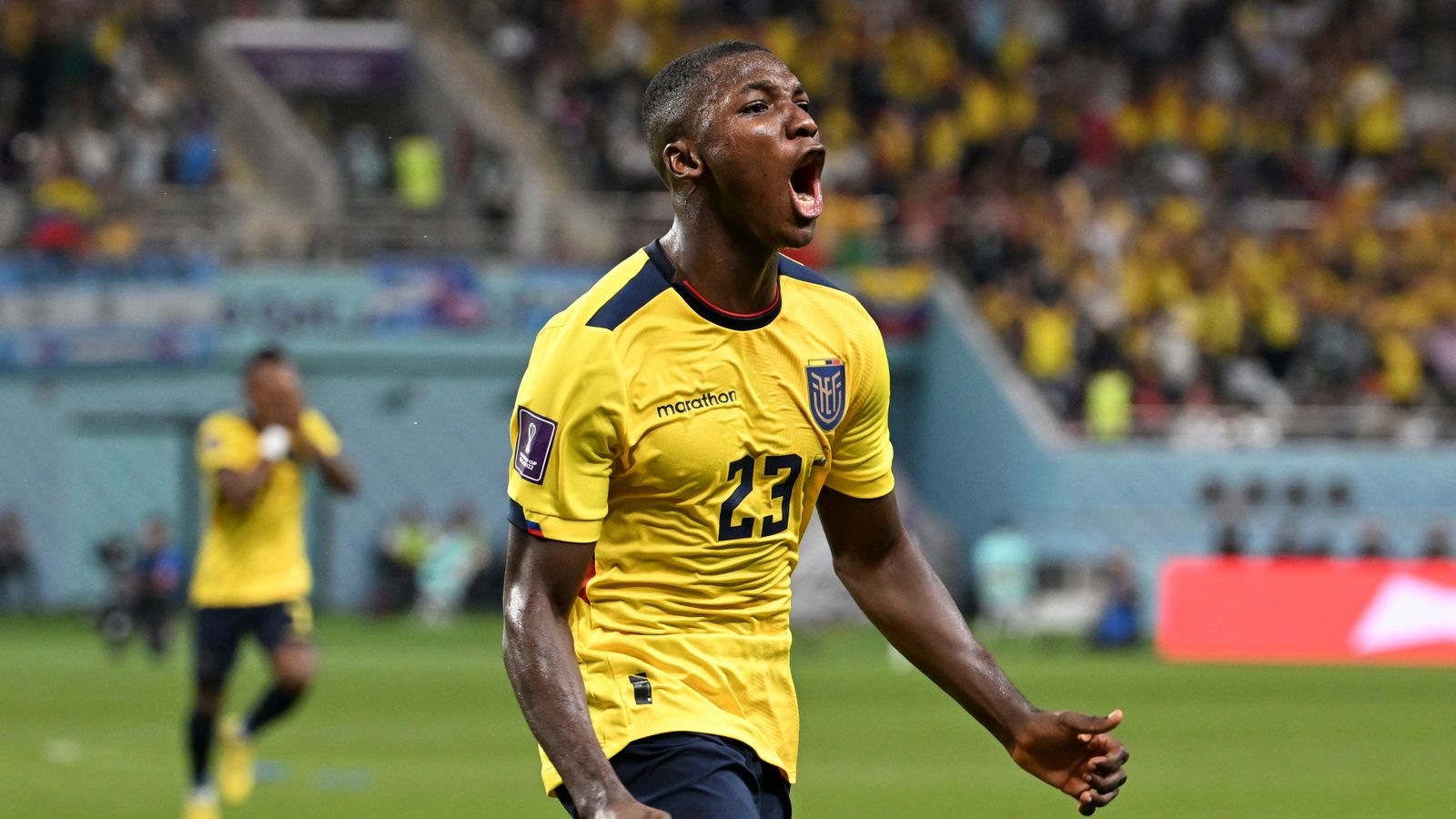
What is Moises Caicedo’s goal for the 2026 World Cup?
As stated on the Chelsea official site, Caicedo hopes to use the 2026 World Cup to inspire the next generation of footballers in Ecuador, showing them that success at the highest level is possible.
How did Moises Caicedo start his football career?
Seneweb describes Caicedo as having started as a “barefoot boy,” highlighting his humble beginnings and the socio-economic challenges he overcame to reach professional football.
Why is the “obscure club” in Ecuador mentioned by the London Evening Standard important?
It is important because it represents a shift toward structured, elite-level youth development in Ecuador, allowing players to move directly into top European leagues rather than through intermediate steps.
The trajectory of Moises Caicedo from a barefoot youth to a record-breaking Premier League midfielder provides a blueprint for the future of Ecuadorian football. As the 2026 World Cup approaches, the focus remains on whether this individual success can be scaled into a national movement, fueled by the institutional pipelines now connecting Ecuador to the sporting capitals of Europe.
