
Mitre 10 Franchisee Battles to Stop Bunnings Opening Next Door in Jimboomba – Australian Broadcasting Corporation
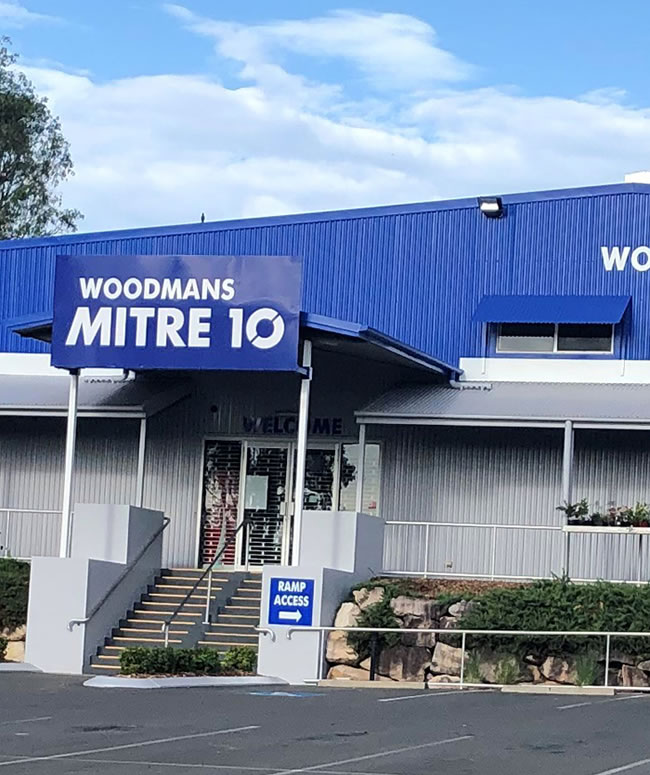
A Mitre 10 franchisee in Jimboomba is challenging a development application to prevent a Bunnings warehouse from opening adjacent to their business, citing concerns over market viability and the survival of local independent retail. The dispute centers on whether the local area can sustain two large-scale hardware competitors in immediate proximity.
Why is the Mitre 10 franchisee opposing the Bunnings development?
The owner of the Jimboomba Mitre 10 claims that the entry of a Bunnings warehouse directly next door would create an unsustainable competitive environment. According to reports on the dispute, the franchisee argues that the sheer scale and purchasing power of the Bunnings corporate model would unfairly disadvantage a locally owned franchise, potentially forcing the existing business to close.
The core of the objection rests on the concept of market saturation. The franchisee contends that Jimboomba’s current population and projected growth do not justify the presence of two massive hardware outlets side-by-side. This “clustering” of similar retail giants is often viewed by small business owners as a predatory move rather than a response to genuine consumer demand.
Key points of the franchisee’s objection include:
- Economic Viability: The risk that a corporate giant will undercut prices to a degree that a franchise cannot match.
- Zoning and Planning: Questions regarding whether the development aligns with the long-term strategic planning for the Jimboomba township.
- Community Impact: The potential loss of a locally managed business that provides personalized service and local employment.
How does the planning process work for new retail developments in Jimboomba?
The process begins with a development application (DA) submitted to the local council. In this instance, the proposal for a Bunnings warehouse triggered a public notification period, allowing affected parties—including the neighboring Mitre 10—to lodge formal objections. Under Queensland planning laws, councils must consider the impact of a new development on existing businesses, though “competition” alone is often not a legal ground to deny a permit.
Planning authorities typically look at technical criteria such as traffic flow, environmental impact, and adherence to zoning laws. However, the “social and economic impact” of a development can be a factor. The Mitre 10 franchisee is leveraging these planning mechanisms to argue that the development is not in the best interest of the community’s economic diversity.
The timeline for these disputes often follows a specific trajectory:
| Stage | Action | Outcome/Goal |
|---|---|---|
| DA Submission | Bunnings files plans with council | Request for land use approval |
| Public Notification | Plans made available to the public | Opportunity for community feedback |
| Objection Period | Mitre 10 franchisee lodges formal protest | Highlighting risks to existing business |
| Council Review | Planners assess DA and objections | Approval, Refusal, or Conditional Approval |
| Appeal Stage | Decision challenged in planning court | Final legal determination |
What is the “Bunnings Effect” on independent hardware stores?
The tension in Jimboomba reflects a broader national trend often referred to as the “Bunnings effect.” Bunnings, owned by Wesfarmers, operates a high-volume, low-margin model that allows it to dominate the home improvement sector. Independent stores and franchisees often struggle to compete with the logistics and pricing power of such a large entity.
According to industry analysis, the strategy of placing a large warehouse near existing competitors often leads to a “vacuum” effect, where the larger store absorbs the majority of the market share due to its perceived variety and price points. For a Mitre 10 franchisee, who operates under a different business model emphasizing local ownership and specialized service, this creates a direct existential threat.
The contrast between the two business models is stark:
- Corporate Warehouse Model (Bunnings): Focuses on massive footprints, centralized buying, and a “one-stop-shop” experience designed for high foot traffic.
- Franchisee-led Model (Mitre 10): Relies on local knowledge, personalized customer relationships, and a commitment to the specific needs of the surrounding community.
This clash is not unique to Jimboomba; similar battles have occurred across regional Australia as corporate retail expands into growing satellite towns. The outcome usually depends on whether the local council prioritizes “retail choice” and corporate investment over the protection of existing small-to-medium enterprises (SMEs).
Who are the key stakeholders in this dispute?
The conflict involves several parties with competing interests, making the resolution complex.
The Mitre 10 Franchisee
As a local business owner, the franchisee has invested significant capital into the Jimboomba site. Their primary goal is the preservation of their livelihood and the continued operation of a business that serves the local trade and residential market.
Bunnings (Wesfarmers)
From the corporate perspective, the move into Jimboomba is a strategic expansion. They view the growing population of the area as a market that requires more capacity and a wider range of products than currently available. Their goal is to capture the growing demographic of new homeowners moving into the region.
The Local Council
The council is caught between two pressures. On one hand, they want to encourage investment, job creation, and provide residents with more shopping options. On the other, they have a responsibility to ensure that development is sustainable and does not unnecessarily destroy existing local businesses.
The Jimboomba Community
Residents are divided. Some welcome the prospect of a Bunnings store for its convenience and pricing. Others express loyalty to the Mitre 10 store, valuing the local connection and fearing the “homogenization” of their town’s commercial landscape.
What are the potential economic consequences for Jimboomba?
The arrival of a major corporate retailer brings both benefits and risks to a regional economy. If the Bunnings development proceeds, the short-term impact would likely be an increase in construction jobs and a subsequent increase in permanent retail employment.
However, the long-term risk is the potential closure of the Mitre 10 store. If the existing business fails, the community loses a locally owned entity that typically reinvests profits back into the local economy. Corporate profits, by contrast, are largely funneled back to shareholders of a national parent company.
There is also the question of “retail cannibalization.” This occurs when a new store doesn’t actually grow the total market but simply steals customers from existing stores. If the Jimboomba market is already served adequately, the addition of another giant may not create new wealth but simply redistribute it toward a larger corporation.
The tension here is between the “consumer benefit” of lower prices and more choice, and the “community benefit” of maintaining a diverse, locally-owned business ecosystem.
Common misconceptions about retail competition and zoning
A frequent misunderstanding in these disputes is the belief that councils are legally required to protect existing businesses from competition. In reality, most Australian planning frameworks are designed to promote competition, as it is believed to benefit the consumer through lower prices and better service.
Another misconception is that a “Hardware” zone is only for one store. Generally, zoning laws define the type of activity allowed (e.g., “Light Industrial” or “Commercial Retail”) rather than the number of businesses allowed to perform that activity. Therefore, the Mitre 10 franchisee cannot simply argue that “there is already a hardware store here”; they must prove that the new development causes an unacceptable impact on the amenity, traffic, or overall strategic planning of the area.
To strengthen their case, objectors often focus on:
- Traffic Congestion: Arguing that the road infrastructure cannot handle the massive increase in heavy vehicle and customer traffic associated with a Bunnings warehouse.
- Environmental Impact: Pointing to the loss of green space or the impact on local drainage and runoff.
- Urban Sprawl: Arguing that the development encourages unplanned growth outside the designated town center.
What happens if the development is approved?
If the local council approves the development application, the Mitre 10 franchisee may have the option to appeal the decision in a planning or land and environment court. This process is costly and time-consuming but allows a judge to review whether the council followed the law and properly weighed the evidence.
Should the store open, the Mitre 10 franchisee would likely need to pivot their business strategy. This often involves:
- Specialization: Moving away from general hardware and focusing on high-end, specialized tools or niche building materials that a warehouse store does not stock.
- Service-Based Competition: Increasing the focus on expert advice, delivery services, and tailored trade accounts that build deeper loyalty than a corporate entity can offer.
- Community Integration: Doubling down on local sponsorships and community events to reinforce the “local” identity.
Historically, some independent stores have survived alongside Bunnings by carving out a specific market segment, while others have been forced to liquidate. The outcome usually depends on the agility of the independent owner and the loyalty of the local customer base.
Frequently Asked Questions
Why is the Mitre 10 owner fighting the Bunnings store in Jimboomba?
The owner believes that a Bunnings warehouse opening next door would create unfair competition due to the corporate giant’s scale and pricing power, potentially making the Mitre 10 business unviable.
Will a new Bunnings store in Jimboomba lead to lower prices for residents?
Increased competition typically leads to lower prices for consumers. However, critics argue that these short-term savings come at the cost of losing locally owned businesses and reducing the diversity of the local economy.
Can a local council block a business just because another similar business already exists?
Generally, no. Planning laws usually focus on land use, traffic, and environmental impact rather than protecting a business from market competition. Objectors must usually provide evidence of “unacceptable impact” on the area’s infrastructure or strategic plan.
What is the difference between a Mitre 10 and a Bunnings store?
Bunnings is a corporate-owned warehouse model focused on massive scale and volume. Mitre 10 operates largely through a franchise model, where stores are owned and operated by local business people, often allowing for more personalized service and local decision-making.
How can Jimboomba residents voice their opinion on the development?
Residents can participate during the public notification period of the development application (DA) by submitting formal letters of support or objection to the local council.
The resolution of the Mitre 10 franchisee battles to stop Bunnings opening next door in Jimboomba – Australian Broadcasting Corporation case will likely serve as a benchmark for how local councils in growing Queensland corridors balance corporate expansion against the survival of independent retail. As the planning process unfolds, the focus remains on whether the infrastructure of Jimboomba can support such an intensive concentration of retail hardware.
