Updated XBOX Console Prices – XBOX Wire: Microsoft Increases Series X and S Costs
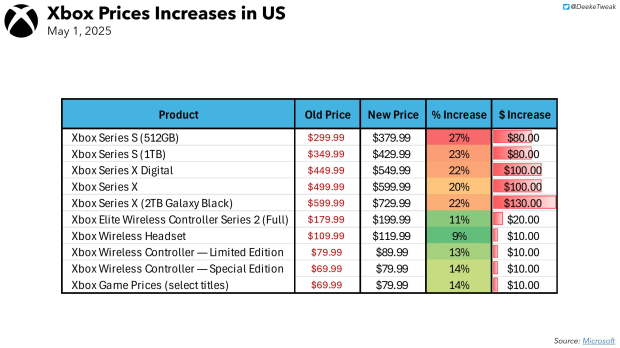
Microsoft is increasing the retail prices of Xbox Series X and S consoles by between $100 and $150, according to reports from Video Games Chronicle and IGN Pakistan. The pricing shift coincides with the discontinuation of the 2TB model, altering the available hardware tiers for consumers.
How much are Xbox console prices increasing?
Retail prices for the Xbox Series X and Series S are rising by an estimated $100 to $150. This price adjustment affects the current generation of hardware, moving the entry point for the ecosystem higher than previous launch windows. According to Video Games Chronicle, the increase applies across the console lineup, though specific regional variations may exist depending on the local market.
This move suggests a shift in how Microsoft manages its hardware margins. For years, console manufacturers have traditionally sold hardware at a loss or near-cost, recouping investment through software sales and subscription services. A price hike of this magnitude indicates a change in that financial strategy or a response to external economic pressures.
| Reported Detail | Source | Impact |
|---|---|---|
| Price Increase | Video Games Chronicle | $100 to $150 rise |
| Model Status | IGN Pakistan | 2TB model discontinued |
| Affected Units | Both Sources | Series X and Series S |
Which Xbox models are affected by the price changes?
Both the premium Xbox Series X and the budget-friendly Xbox Series S are subject to these price increases. While the Series S was designed as an accessible entry point into the current generation, the reported $100 to $150 jump significantly narrows the price gap between the entry-level and high-end machines.
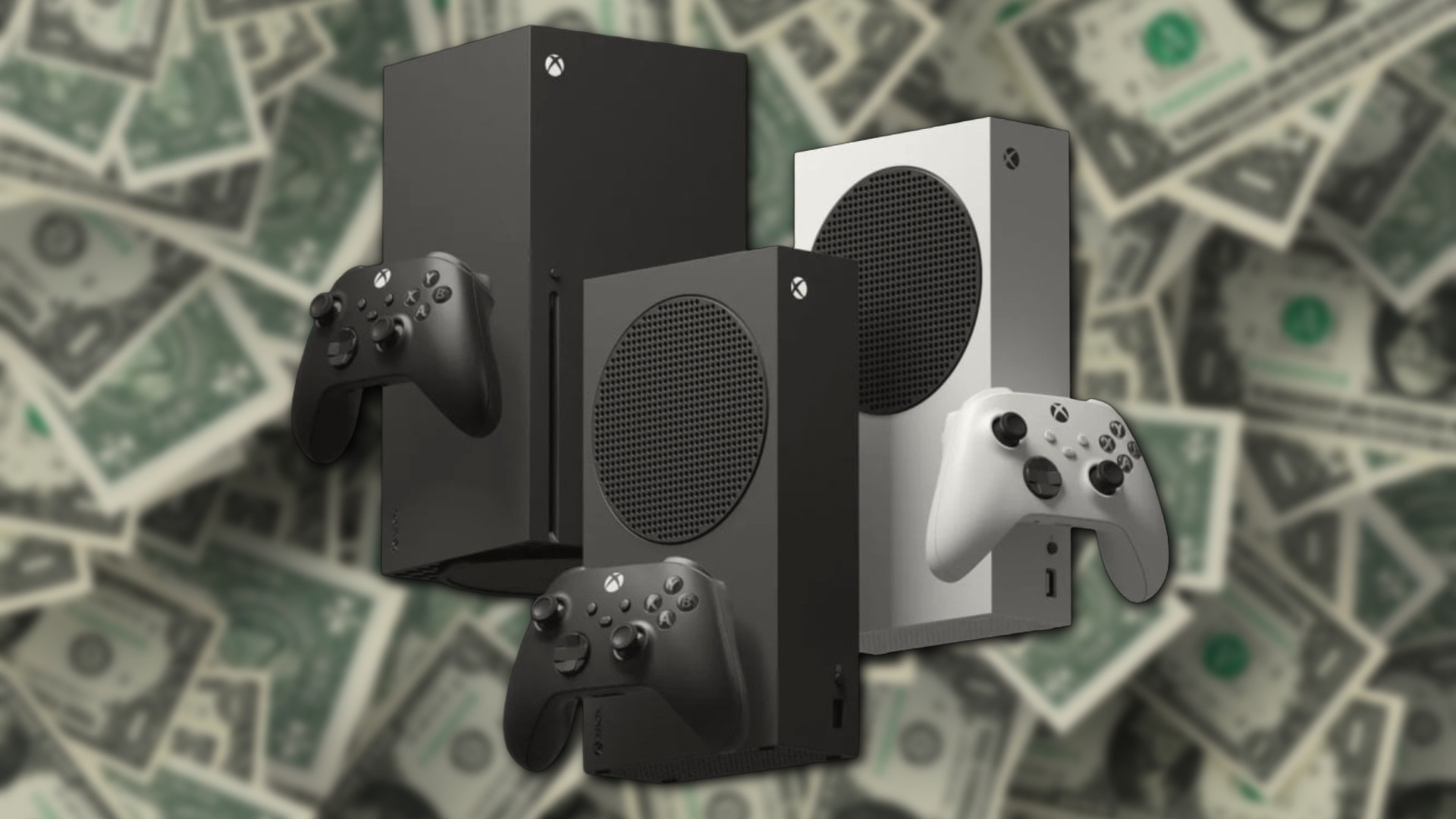
Beyond the price hikes, IGN Pakistan reports that Microsoft is discontinuing the 2TB model. This specific iteration provided the highest native storage capacity for the Series X, catering to power users who avoided the cost of external expansion cards. The removal of this model simplifies the product stack but removes the highest-capacity option from the official retail lineup.
- Xbox Series X: Subject to price increases; high-end 2TB variant removed.
- Xbox Series S: Subject to price increases; remains the lowest-cost option, though now more expensive.
Why is Microsoft raising prices on Xbox hardware?
Microsoft has not provided a detailed public breakdown for every single price adjustment, but industry precedents and the reports from Video Games Chronicle and IGN Pakistan point toward several systemic drivers. Component costs for semiconductors and NAND flash memory fluctuate based on global supply chain stability. When the cost of raw materials for the SoC (System on a Chip) or SSDs rises, manufacturers often pass these costs to the consumer.
Inflation remains a primary driver. The cost of logistics, shipping, and assembly has risen globally over the last three years. By raising prices by $100 to $150, Microsoft may be attempting to protect its margins against these overhead increases.
“Microsoft Announces Significant Price Rises for Xbox Series X and S, 2TB Model Discontinued,” reports IGN Pakistan, highlighting the scale of the change.
Additionally, the discontinuation of the 2TB model may be a strategic move to push users toward the Xbox Expansion Card ecosystem. Since internal storage is a fixed cost during manufacturing, offering a massive 2TB internal drive may have been less profitable than selling a standard drive and charging separately for storage upgrades.
How does this price hike compare across reports?
The reporting from different outlets emphasizes different aspects of the news. Video Games Chronicle focuses heavily on the financial impact, specifically citing the $100 to $150 range. This framing positions the story as a consumer cost issue, focusing on the “sticker shock” for potential buyers.
In contrast, IGN Pakistan links the price hikes directly to the discontinuation of the 2TB model. This framing suggests a broader product lifecycle shift. While VGC treats the story as a price update, IGN Pakistan presents it as a restructuring of the Xbox hardware offering.
Both sources agree on the core fact: the consoles are becoming more expensive. However, the discrepancy in focus shows that this isn’t just about a price tag, but about which versions of the hardware Microsoft deems viable for the current market.
What does the discontinuation of the 2TB model mean for users?
The removal of the 2TB model creates a storage bottleneck for users with large libraries. Modern AAA games frequently exceed 100GB in size. Without a 2TB native option, users must rely on the standard 1TB Series X or the even smaller Series S drives.
This forces a reliance on two alternatives:
- Seagate/Western Digital Expansion Cards: These are expensive proprietary SSDs that plug into the back of the console. They are the only way to play “Optimized for Series X|S” games from external storage.
- External HDD/SSD: While cheaper, these can only be used to store games or play older generation (Xbox One/360) titles.
For the average consumer, the loss of the 2TB model combined with a price increase means they are paying more for a machine that may require additional spending on storage shortly after purchase.
How does this fit into the broader console market?
This pricing shift occurs in a competitive landscape featuring the PlayStation 5 and Nintendo Switch. Sony has previously adjusted PS5 pricing in various international markets to combat inflation and currency devaluation. Microsoft’s move aligns with a broader industry trend where hardware is no longer viewed as a “loss leader” in the same way it was during the Xbox 360 or PS3 eras.
The focus has shifted toward “ecosystem lock-in.” With Xbox Game Pass, Microsoft earns recurring monthly revenue regardless of whether the console was sold at a profit or a loss. However, if the cost of producing the hardware exceeds the projected lifetime value of a Game Pass subscriber, a price hike becomes inevitable.
Related analysis on gaming industry economic trends suggests that as we move closer to the mid-generation refresh (often termed “Pro” consoles), companies often adjust the pricing of base models to create a clearer value hierarchy between the standard and high-performance versions.
Common misconceptions about Xbox pricing updates
One common misconception is that price hikes are always a sign of failing sales. In reality, price increases often happen when a product has reached a stable market position and the manufacturer is optimizing for profit rather than market share acquisition. When a company is in “growth mode,” they keep prices low to get as many units in homes as possible. When they move to “optimization mode,” they raise prices to maximize the return on each unit sold.
Another misconception is that the 2TB model was discontinued because it wasn’t popular. It is more likely that the 2TB model was discontinued because it cannibalized the sales of the more profitable expansion cards. By removing the high-capacity internal option, Microsoft directs the “power user” toward a separate, high-margin accessory purchase.
| Old Strategy | New Strategy (Reported) |
|---|---|
| Aggressive entry pricing for market share | Price adjustments to offset inflation/costs |
| High-capacity internal storage options (2TB) | Standardized storage with accessory expansion |
| Hardware as a loss leader | Balanced hardware margins + subscription revenue |
What to watch for in the coming months
Consumers should monitor retail inventory. Often, when a manufacturer announces a price increase, retailers still have “old stock” at the previous price. This typically leads to a short-term surge in demand as buyers rush to purchase consoles before the new pricing takes full effect across all storefronts.
Furthermore, the discontinuation of the 2TB model may be a precursor to a new hardware revision. Historically, when a specific storage tier is removed, it is replaced by a new SKU (Stock Keeping Unit) with different specifications or a redesigned chassis. Whether this leads to a “Series X Slim” or a “Series X Pro” remains to be seen, but the current pricing volatility often signals an upcoming hardware transition.
Frequently Asked Questions
How much will the Xbox Series X and S cost now?
According to Video Games Chronicle, prices are expected to rise by $100 to $150 over previous retail prices.
Is the Xbox Series X 2TB model still available?
No, IGN Pakistan reports that the 2TB model has been discontinued by Microsoft.
Why is Microsoft increasing the price of Xbox consoles?
While not officially detailed by Microsoft in a single statement, reports and industry analysis point to rising component costs, global inflation, and a shift in hardware margin strategies.
Can I still buy an Xbox at the old price?
Depending on the retailer, some may still have existing inventory at the previous price point until their current stock is depleted.
Does this price hike affect Xbox Game Pass?
The reported price increases apply specifically to the console hardware. There has been no mention in these specific reports regarding a change in Game Pass subscription pricing.
