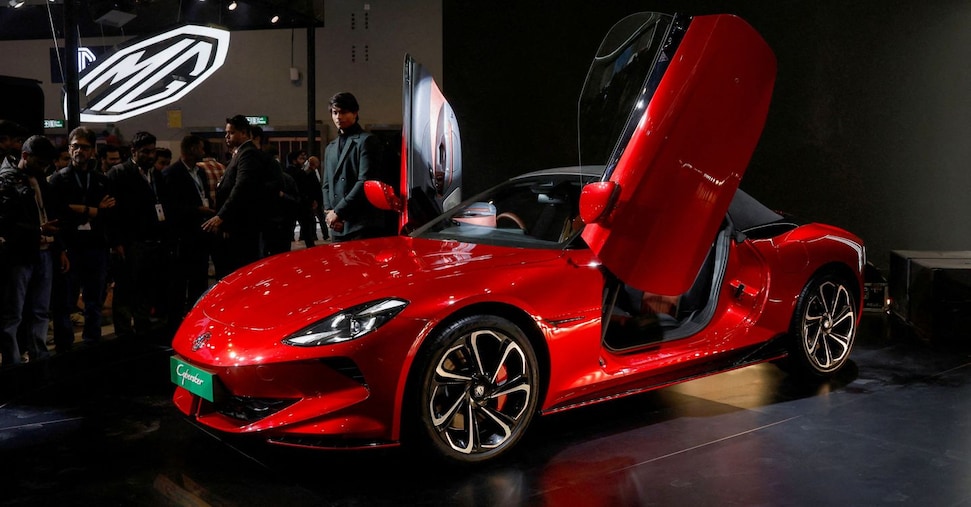
China’s MG Motor, the electric vehicle brand backed by SAIC Motor, is betting big on Europe’s manufacturing revival with its first continental factory—a €200 million ($216 million) plant in Spain’s Galicia region that will begin producing EVs as early as 2028. The move marks a strategic pivot for MG, which has long relied on the UK for European production, as it seeks to diversify supply chains amid geopolitical tensions and shifting automotive regulations.
The new facility, announced through multiple local media outlets, will serve as MG’s first dedicated EV manufacturing hub outside the UK, targeting both domestic Spanish demand and broader European markets. While specifics on model lineup and production capacity remain under wraps, the investment underscores a broader trend: Chinese automakers accelerating their push into European production to counter trade barriers and localize supply chains ahead of stricter EU emissions rules.
A Manufacturing Pivot with Geopolitical Weight
MG’s choice of Spain—home to Renault’s EV plants and Tesla’s upcoming Gigafactory—reflects a calculated risk. The region offers lower labor costs than Germany or France, access to EU subsidies for green manufacturing, and proximity to key markets like France and Portugal. The €200 million investment, however, is less than half the cost of MG’s 2021 UK plant in Longbridge, Birmingham, which produced around 50,000 units annually. This suggests MG may prioritize flexibility over scale in its European expansion, possibly focusing on niche or high-margin models.
For MG, the move also addresses a critical vulnerability: its heavy dependence on the UK for European sales. Brexit-related trade frictions and rising costs in Britain have eroded margins, while the UK’s slower adoption of EV incentives compared to continental Europe creates a competitive gap. By establishing a second production base, MG can mitigate disruptions—whether from supply chain snags, regulatory shifts, or currency fluctuations—while tapping into Spain’s growing EV market, which is projected to reach 400,000 annual sales by 2027.
Why Spain? Supply Chain Resilience Over Tradition
Spain’s appeal lies in its blend of infrastructure and incentives. The Galician region, selected for its industrial zones and port access, offers tax breaks for green manufacturing, aligning with MG’s electric-only strategy. Unlike Germany or France, where labor unions and environmental groups often oppose new auto plants, Spain’s relatively streamlined permitting process has attracted Tesla and Stellantis investments in recent years.

Yet the decision isn’t without challenges. Spain’s auto industry remains fragmented, with fewer supplier ecosystems than Germany or Italy. MG will need to either import components from China or partner with local manufacturers—a costly and time-consuming process. The 2028 production timeline also suggests a phased approach, with potential delays if battery supply chains (a persistent bottleneck for EVs) tighten further.
The Bigger Picture: China’s EV Gambit in Europe
MG’s Spain factory is part of a larger Chinese offensive in Europe. BYD, Geely, and NIO have all announced or expanded production in Hungary, Germany, and Sweden, respectively. The strategy mirrors China’s broader playbook: invest in local manufacturing to avoid EU tariffs (up to 27.5% on Chinese EVs) and position brands as “European-made” to bypass consumer skepticism about Chinese ownership.
For consumers, the shift could mean more affordable EVs—MG’s models typically undercut Tesla and VW in price—but also potential quality concerns. Chinese automakers have historically lagged in European safety and durability standards, though MG’s UK plant has improved its reputation through partnerships with Stellantis and local engineering firms.
Regulators will watch closely. The EU’s Critical Raw Materials Act and upcoming battery regulations will determine whether MG’s Spanish plant qualifies for subsidies. If not, the €200 million investment risks becoming a high-stakes gamble rather than a strategic win.
What’s Next: A Timeline of Production and Politics
According to company statements and local reports, construction on the Galicia plant will begin immediately, with production targeting late 2028. Key milestones include:

- 2024–2025: Site preparation and supplier negotiations, with potential partnerships announced for battery cells and software.
- 2026: Pilot production lines for select models, likely targeting Spain’s domestic market first.
- 2027–2028: Full-scale output, with exports to France, Portugal, and Italy. MG may also use the plant to test new models before scaling elsewhere in Europe.
The project’s success hinges on two factors: whether MG can secure local supply chains without inflating costs, and how quickly Spain’s EV infrastructure (charging networks, subsidies) matures. If executed well, the Spain plant could become a template for MG’s global expansion—proving that even in a fragmented market, localized production can outpace trade barriers.
