Petrol Bombs and Bricks Hurled at Mexican Police During Pre-Match unrest at Azteca
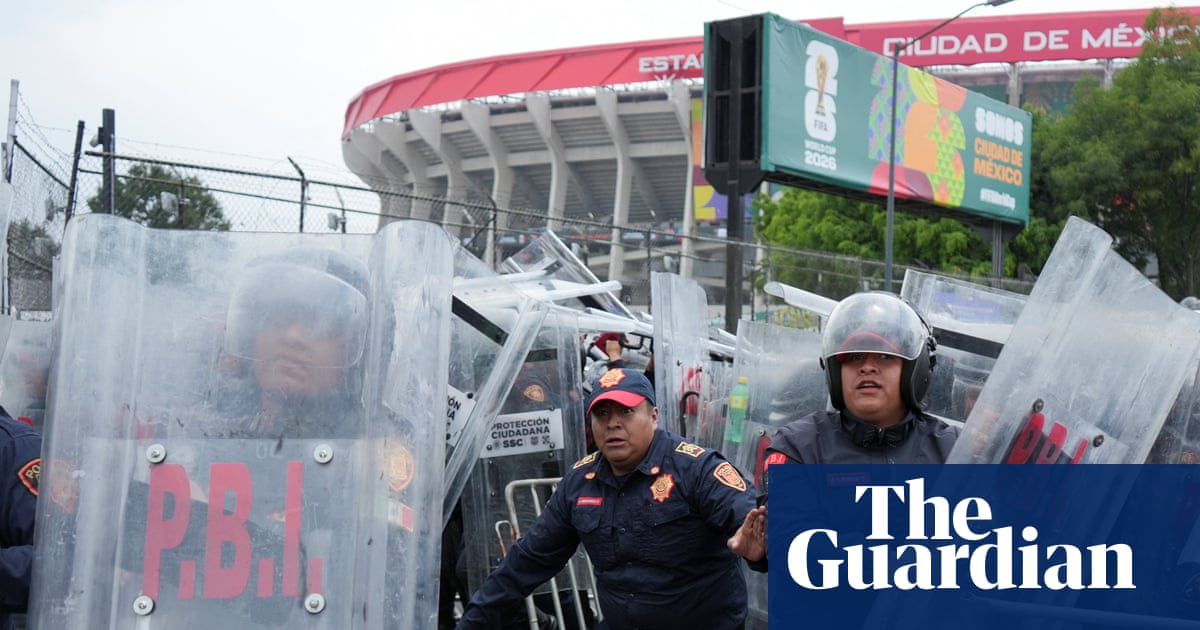
Mexican police officers were targeted with petrol bombs and bricks during violent pre-match unrest at the Azteca Stadium, according to reports from The Guardian. This escalation of violence occurs alongside broader social volatility in the country, including teacher protests that Tempo.co English indicates could disrupt preparations and the general atmosphere for the upcoming World Cup.
What happened during the unrest at Azteca Stadium?
Violence erupted outside the Estadio Azteca as crowds gathered before a scheduled match. According to The Guardian, the confrontation escalated when individuals began hurling bricks and petrol bombs at security forces stationed around the perimeter of the venue. The use of incendiary devices marks a significant escalation in the typical pre-match tensions seen at the stadium, shifting the event from a crowd-control situation to a violent clash between civilians and law enforcement.
The report indicates that police attempted to maintain a perimeter to manage the influx of spectators, but the situation deteriorated rapidly. The projectiles used—specifically the petrol bombs—suggest a level of premeditation and intent to cause harm or significant property damage, rather than spontaneous fan frustration. While the match was intended to be a sporting event, the environment outside the gates became a flashpoint for aggression.
Key details regarding the incident include:
- Weaponry: The use of bricks and improvised incendiary devices (petrol bombs).
- Targets: Primary targets were the Mexican police officers managing the stadium entrance.
- Location: The exterior precincts of the Azteca Stadium, one of the most iconic sporting venues in the world.
- Timing: The unrest occurred during the pre-match window, the period of highest congestion as fans arrive at the venue.
The Guardian’s reporting highlights the difficulty security forces faced in containing the unrest without escalating the violence further. The presence of petrol bombs suggests that the perpetrators were not merely disgruntled fans, but individuals equipped for urban conflict.
How do teacher protests in Mexico relate to the violence?
While the clashes at Azteca were immediate and sports-related, Tempo.co English connects the general state of unrest in Mexico to a larger pattern of social instability, specifically highlighting the ongoing teacher protests. These protests, driven by demands for better wages and working conditions, have frequently involved roadblocks, marches, and confrontations with authorities.
According to Tempo.co English, there is a growing concern that these political and social grievances could spill over into major international events. The report suggests that the “World Cup party” could be spoiled if the government fails to address the demands of the teachers and other marginalized groups. The intersection of sports and politics in Mexico is often volatile, and the Azteca incident serves as a symptom of a wider climate where public spaces are used for aggressive demonstrations.
The correlation between the two events—the stadium violence and the teacher protests—lies in the strained relationship between the Mexican public and the security apparatus. When police are deployed to handle protests or manage crowds at sporting events, they are often viewed not as protectors, but as agents of a government that protesters believe is ignoring their needs.
“Teacher protests in Mexico could spoil the World Cup party,” as reported by Tempo.co English, underscoring the risk that political instability may overshadow the sporting celebrations.
Why does this violence threaten World Cup preparations?
The World Cup brings an unprecedented influx of international tourists, diplomats, and athletes to a host city. The incident where petrol bombs and bricks were hurled at Mexican police during pre-match unrest at Azteca signals a security vulnerability that the Mexican government must address to ensure the safety of foreign visitors. According to Tempo.co English, the potential for widespread disruption by protesting teachers and other social groups creates a logistical and security nightmare for organizers.
Security for a World Cup match requires a seamless coordination between local police, national guards, and international security consultants. If local police are already facing petrol bombs at domestic matches, the scale of security needed for a global event increases exponentially. The concerns raised by Tempo.co English suggest that the government may be forced to choose between a heavy-handed security approach—which could further incite protesters—or a lenient approach that might leave fans and athletes vulnerable to unrest.
The implications for the World Cup include:
- Transport Disruptions: Teacher protests often involve blocking major arteries, which could prevent fans from reaching the Azteca.
- Public Perception: Reports of petrol bombs and bricks being used against police create a narrative of instability that may deter some international travelers.
- Resource Strain: Deploying massive numbers of police to manage both political protests and stadium crowds stretches the available security personnel to their limits.
The Azteca Stadium is not just a venue; it is a symbol of Mexican national pride. Violence at this specific site carries a heavier symbolic weight, suggesting that even the most cherished national institutions are not immune to the country’s current social frictions.
Comparison of unrest types: Fan violence vs. Political protest
To understand the current situation in Mexico, it is necessary to distinguish between the different types of unrest reported by The Guardian and Tempo.co English. While both involve clashes with police, the motivations and methods differ.
| Feature | Azteca Pre-Match Unrest | Teacher Protests |
|---|---|---|
| Primary Driver | Sports-related tension / Local aggression | Labor disputes / Wage demands |
| Reported Tactics | Petrol bombs, bricks, sudden clashes | Roadblocks, marches, organized strikes |
| Source of Report | The Guardian | Tempo.co English |
| Scale | Localized to stadium perimeter | Nationwide/Regional impact |
| Core Goal | Immediate disruption / Aggression | Policy change / Government concessions |
The danger arises when these two distinct forms of unrest merge. If political protesters see the chaos at a sporting event as an opportunity to amplify their message, or if sports fans adopt the more aggressive tactics used in political street battles, the resulting volatility becomes much harder for the Mexican police to manage.
Who are the primary stakeholders affected by this instability?
The violence at the Azteca and the ongoing teacher protests affect several key groups, each with different interests and risks.

Mexican Law Enforcement
Police officers are on the front lines of both conflicts. As reported by The Guardian, they are the direct targets of petrol bombs and bricks. This puts an immense physical and psychological strain on the force, potentially leading to more aggressive policing tactics in an attempt to regain control.
The Mexican Government
The administration faces a dual challenge: maintaining the image of a safe, welcoming host for the World Cup while managing deep-seated social unrest. According to Tempo.co English, the government’s inability to resolve teacher disputes could lead to a public relations disaster on the global stage.
International Football Fans and FIFA
For FIFA and the visiting fans, the primary concern is safety. The reports of petrol bombs at the Azteca suggest that the “secure zone” around stadiums may be permeable. Fans expect a festive atmosphere, but the reality of bricks and incendiary devices creates a climate of fear.
The Teaching Profession
Teachers are leveraging the visibility of the World Cup to bring attention to their grievances. By threatening to “spoil the party,” as noted by Tempo.co English, they are using the event as a bargaining chip to force the government into negotiations.
What are the long-term security implications for Mexico?
The incident where petrol bombs and bricks were hurled at Mexican police during pre-match unrest at Azteca indicates a shift in the nature of public disorder in Mexico. The transition from protests to the use of improvised weapons suggests a hardening of attitudes among certain segments of the population.
If these patterns continue, Mexico may be forced to implement more permanent, militarized security structures around its sporting venues. This could include the installation of permanent barriers, increased surveillance, and a heavier presence of the National Guard rather than local police. While this might increase immediate safety, it could also alienate the local population and turn sporting events into high-tension security operations.
Furthermore, the intersection of labor unrest and sports violence suggests that the government cannot treat stadium security as an isolated issue. Security at the Azteca is inextricably linked to the social stability of the surrounding neighborhoods and the broader national political climate. A failure to address the root causes of the teacher protests, as highlighted by Tempo.co English, may mean that security forces will continue to face unexpected violence at high-profile events.
Related analysis on urban security in Latin American stadiums suggests that when social inequality is high, sporting events often become proxies for class conflict, where the “elite” experience of the match is challenged by the “marginalized” reality of the streets outside.
Common misconceptions about the Azteca unrest
There are several common oversimplifications regarding the violence at the Azteca and the teacher protests that need correction based on the available reports.
Misconception 1: The violence was just “hooliganism.”
While sports fans can be volatile, the use of petrol bombs, as reported by The Guardian, suggests a level of organization and weaponry that goes beyond typical fan rivalry. This was an attack on state authority (the police) rather than a fight between opposing fan bases.
Misconception 2: The teacher protests are unrelated to the stadium violence.
While the triggers are different, the underlying cause—distrust of the government and friction with police—is the same. Tempo.co English makes it clear that the general atmosphere of unrest is what makes the World Cup preparations precarious.
Misconception 3: Increased police presence will solve the problem.
History suggests that in highly charged political environments, an increase in police presence can actually act as a catalyst for further violence. If the police are seen as an occupying force rather than a security service, the likelihood of projectiles like bricks and petrol bombs being thrown increases.
Frequently Asked Questions
What caused the violence at the Azteca Stadium?
According to The Guardian, the unrest occurred pre-match and involved individuals hurling bricks and petrol bombs at Mexican police officers who were attempting to manage the crowds entering the stadium.
How are teacher protests affecting the World Cup in Mexico?
Tempo.co English reports that teacher protests, driven by labor disputes and wage demands, have the potential to disrupt the event through roadblocks and general social unrest, potentially “spoiling” the celebratory atmosphere of the tournament.
Were there any injuries reported during the Azteca clashes?
The provided reports focus on the actions taken—the hurling of petrol bombs and bricks—and the targets (the police), though specific casualty counts were not the primary focus of the initial reports.
Is the Azteca Stadium safe for visitors?
While the stadium remains a premier venue, reports from The Guardian regarding pre-match violence and warnings from Tempo.co English about broader social unrest suggest that visitors should stay informed about local security conditions and potential protest activity.
Why are petrol bombs being used in these incidents?
The use of petrol bombs indicates a transition from spontaneous protest to more aggressive, premeditated tactics designed to cause damage and intimidate security forces, reflecting a deeper level of social friction in the region.
The current situation in Mexico remains fluid. The ability of the government to balance the security requirements of a global sporting event with the legitimate grievances of its citizens will determine whether the World Cup is remembered for the football or for the unrest in the streets. With the Azteca Stadium serving as a focal point for both national pride and public anger, the coming months will be a critical test for Mexican law enforcement and political leadership.
