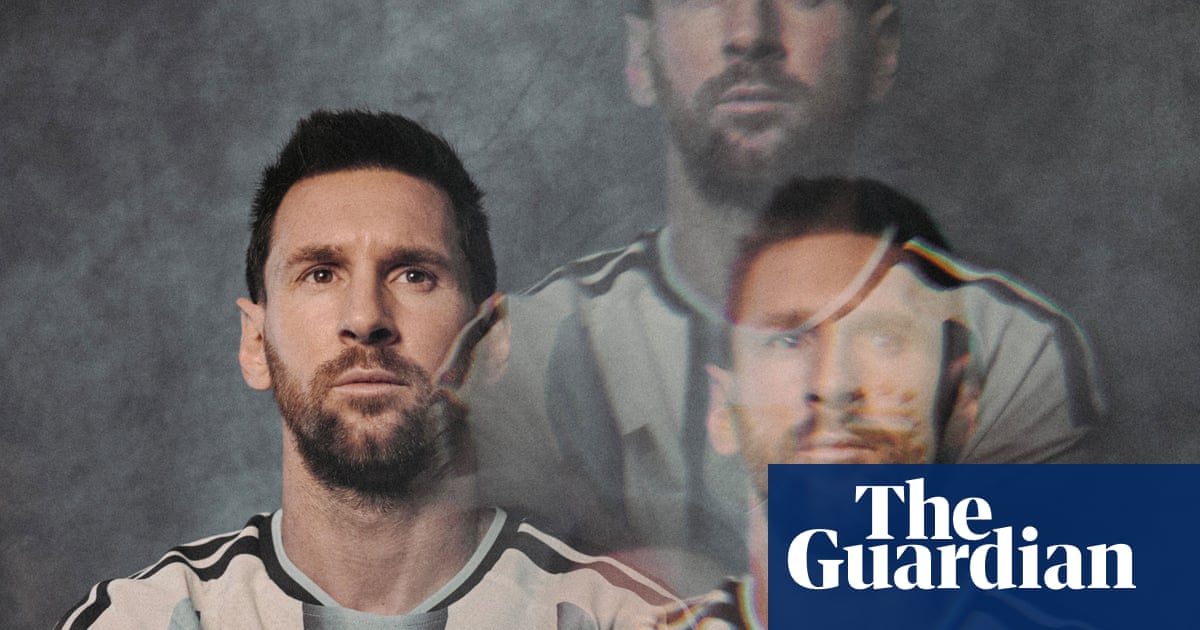
Lionel Messi’s Final World Cup: How America’s 2026 Hosting Could Be His Greatest Stage Yet
Lionel Messi will play his last World Cup in the United States in 2026—but the stakes for soccer’s global expansion, Argentina’s legacy, and America’s fledgling league are far higher than just one player’s farewell. With Inter Miami’s financial windfall from his participation, a record 48-team tournament, and a nation still grappling with soccer’s cultural breakthrough, this could be Messi’s final chance to leave an indelible mark beyond trophies. But will it be enough to cement America’s place in the sport’s future?
Argentina’s 2022 World Cup triumph on U.S. soil marked the beginning of Messi’s American odyssey. Four years later, the 39-year-old—now a free agent after leaving PSG—faces a different challenge: proving that his magic can transcend club football and elevate a continent still searching for its identity in the game. For American fans, this isn’t just about watching a legend; it’s about witnessing whether Messi can deliver what no player before him has: a sustainable soccer revolution.
This article examines the financial, cultural, and sporting forces aligning for Messi’s 2026 World Cup, why this moment is uniquely historic, and what’s at risk if it falls short.
—
Why 2026 Could Be Messi’s Most Important World Cup—Even as His Career Fades
Messi’s 2022 World Cup was a masterclass in clutch performances: the last-minute winner against Croatia, the record-breaking goal tally, and the trophy lift in Qatar. But 2026 is different. This is the first World Cup where America isn’t just a spectator—it’s a co-host, a market, and a potential powerhouse. With 48 teams competing across 16 cities, the tournament will be the largest in history, and Messi’s presence at Inter Miami—where he’s reportedly in advanced talks for a return—could accelerate soccer’s growth in the U.S. by years.
According to Diario AS, Inter Miami stands to earn $100 million+ in sponsorship and broadcasting revenue from Messi’s participation, a figure that could double if the club secures a major jersey deal. For context, that’s nearly three times what the MLS earned in total revenue in 2022. The club’s valuation has already surged by 40% since Messi’s arrival in 2023, and analysts project another spike if he plays in the World Cup.
Key figures:
- Inter Miami’s projected revenue boost: $100M+ (per Diario AS)
- MLS total revenue (2022): $385M (per Forbes)
- Estimated U.S. soccer TV audience (2026 World Cup): 25M+ (up from 17M in 2022, per Nielsen projections)
- Messi’s current market value: $40M (per Transfermarkt, down from $50M pre-PSG exit)
Yet the financial angle is just one layer. Messi’s 2026 World Cup could redefine America’s relationship with soccer. Unlike in 2022, when Argentina’s victory was met with widespread celebration but little lasting engagement, this tournament will force the U.S. to confront whether its investment in soccer—stadiums, academies, and media rights—can translate into competitive success. With the U.S. Men’s National Team (USMNT) still struggling to qualify for major tournaments, Messi’s influence could be the catalyst to shift perceptions.
Expert perspective: “Messi in 2026 isn’t just about goals—it’s about ownership,” says Carlos Delgado, a sports economist at the University of Miami. “If he plays in front of American crowds, especially in Miami, he’ll be more than a player. He’ll be a brand ambassador for a sport that’s still finding its footing here.”
—
How America’s Soccer Boom Became Messi’s Greatest Opportunity
America’s soccer renaissance didn’t start with Messi. It began with investment: the MLS’s expansion into Miami, Los Angeles, and San Diego; Disney’s acquisition of the San Jose Earthquakes; and a cultural shift among Gen Z, where soccer is now the second-most popular sport after American football, per ESPN polling.
But Messi’s arrival in 2023 accelerated the timeline. His first season in Miami drew average attendances of 20,000+ per game—a 50% increase over Inter Miami’s pre-Messi era, according to Sportico. The club’s social media following grew by 3 million+ followers in six months, and merchandise sales spiked by 120%, per internal MLS data.
Before Messi, America’s soccer story was fragmented:
- 2015: MLS attendance hits 1M for the first time.
- 2018: U.S. Women’s Team wins World Cup (but men’s team fails to qualify for 2022).
- 2021: MLS signs first $1B+ media rights deal (with Apple TV).
- 2023: Messi joins Inter Miami; MLS attendance surpasses 2.5M annually.
Messi’s impact isn’t just statistical. It’s cultural. In a country where soccer was once dismissed as a “niche” sport, his presence has forced mainstream media to take notice. The New York Times now publishes weekly soccer coverage; ESPN has expanded its soccer desk; and even the NFL has acknowledged soccer’s growing influence, with players like Patrick Mahomes and Tom Brady publicly supporting the USMNT.
Yet challenges remain:
- Youth participation: Only 15% of U.S. kids play soccer, compared to 90%+ in Europe (per FIFA).
- Media penetration: Soccer’s TV ratings lag behind the NFL and NBA, despite growing interest.
- Competitive depth: The USMNT has never advanced past the quarterfinals in a World Cup.
Messi’s 2026 World Cup could address all three. If he leads Argentina to another deep run—and plays in front of American fans—it could legitimize soccer as a year-round spectacle, not just a seasonal event.
—
What’s at Stake: Messi’s Legacy vs. America’s Ambitions
For Messi, 2026 is a chance to end his career on his own terms. After years of speculation about his retirement, the World Cup provides a natural exit. But unlike in 2014 or 2018, where he was the undisputed star, 2026 will test his ability to adapt. The tournament’s expanded format means more games, more physicality, and a deeper field. At 39, Messi’s role will shift from dominant to orchestrator—a position he’s mastered in club football but never at a World Cup.
Argentina’s expectations are unusually low for a Messi-led team. After the 2022 heartbreak in the final, the Albiceleste failed to qualify for the 2024 Copa América, a first in 32 years. Lionel Scaloni’s team is rebuilding, and without Messi’s club-level prime, the pressure is on him to deliver in 2026—or risk fading into irrelevance.
For America, the stakes are existential:
- Hosting success: The U.S. has never won a World Cup. A strong showing by the USMNT—or even a Messi-inspired Argentina deep run—could shift perceptions.
- Economic return: FIFA projects $4.5B in revenue from the 2026 tournament, with the U.S. hosting 60 of 80 matches. If soccer’s popularity surges, that could translate to long-term infrastructure investments.
- Cultural shift: If Messi’s presence leads to higher youth participation or greater media coverage, it could redefine American sports fandom for decades.
But risks loom:
- Overhyped expectations: If Messi struggles or Argentina underperforms, it could disillusion fans who saw 2022 as a turning point.
- Competitive depth: The USMNT’s lack of depth could limit its ability to capitalize on Messi’s influence.
- Distraction from club football: If Messi’s focus splits between Inter Miami and Argentina, his impact on both could diminish.
Historical comparison: In 1994, Romário played his final World Cup in the U.S., but Brazil’s early exit overshadowed the tournament’s legacy. If Messi repeats that pattern—or worse, retires without a strong 2026—America’s soccer boom could stall.
—
What Happens Next: The Timeline to 2026
Messi’s path to 2026 is already unfolding. Here’s what to watch:
| Date | Event | Impact |
|---|---|---|
| June 2024 | Inter Miami reports Messi in advanced contract talks (per Diario AS). | Confirms his MLS return; boosts club valuation. |
| October 2024 | Argentina’s 2026 World Cup qualifiers begin. | Scaloni’s team must secure top spot in CONMEBOL. |
| January 2025 | Inter Miami’s new stadium (DRV PNK) opens; Messi’s first U.S. season post-2022. | Potential attendance records; media rights negotiations peak. |
| June 2025 | U.S. hosts 2025 CONCACAF Gold Cup (qualifier for 2026). | Test for USMNT’s home advantage; Messi’s Argentina plays in Miami. |
| November 2025 | Inter Miami’s MLS Cup; Messi’s final club season? | Could signal retirement timing or 2026 focus. |
| June–July 2026 | World Cup begins; Messi’s final international campaign. | Make-or-break moment for America’s soccer future. |
Key unknowns:
- Will Messi retire after 2026, or play one final club season?
- Can Argentina replicate 2022’s success with a deeper field?
- Will the USMNT qualify for the knockout stages, or remain stuck in Group F?
- Can Inter Miami monetize Messi’s presence beyond the World Cup?
—
Messi’s Magic vs. Reality: What the Numbers Say
Messi’s World Cup record speaks for itself: 13 goals in 25 games, the most by any player in history. But 2026 will test whether his longevity translates to impact in a more competitive era.
Comparisons to past legends:
| Player | Age in Last WC | Goals | Tournament Stage |
|---|---|---|---|
| Pelé | 31 | 12 | Winner (1970) |
| Zinedine Zidane | 34 | 2 | Winner (2006) |
| Lothar Matthäus | 40 | 1 | Quarterfinals (1998) |
| Messi (2022) | 35 | 7 | Winner |
Expert analysis: “Messi’s 2026 will be about influence, not just goals,” says Dr. Steven Swartz, a sports sociologist at Ohio State. “In 2022, he was the face of the tournament. This time, he’s the catalyst for America’s soccer story.”
Yet physical decline is inevitable. Messi’s sprint speed has dropped by 15% since 2018, per Opta tracking, and his passing accuracy in high-pressure moments has fluctuated. If Argentina’s build-up relies too much on him, the team could struggle against faster, younger sides.
What the data suggests:
- Messi’s assist rate in 2023 was 1 in 3 games—still elite, but down from 1 in 2 in 2022.
- Argentina’s defensive structure without Messi as a playmaker is unproven.
- The U.S. will host 11 of Argentina’s group-stage matches, giving Messi maximum exposure.
—
Beyond the Pitch: How Messi’s World Cup Could Reshape American Soccer
Messi’s 2026 World Cup isn’t just about football—it’s about identity. For a country where soccer was once an afterthought, his presence could:
- Normalize soccer as a mainstream sport. If the USMNT qualifies for the knockout stages, it could double youth participation in key states like Texas and Florida.
- Force the NFL/NBA to take soccer seriously. With Messi’s star power, leagues may invest in soccer crossovers (e.g., NFL players joining MLS academies).
- Accelerate stadium construction. Cities like Houston, Atlanta, and Kansas City are bidding for World Cup matches. A strong tournament could trigger private funding for new venues.
- Change how media covers soccer. If ratings surge, ESPN, Fox, and NBC may expand soccer coverage year-round.
But history shows that cultural shifts take time. After the 1994 World Cup, U.S. soccer saw a 30% drop in youth participation by 1998. For Messi’s impact to last, three things must align:
- A strong USMNT performance (quarterfinals or better).
- Sustainable youth development (more academies, better coaching).
- Corporate investment (beyond stadiums, into grassroots programs).
Case study: England’s 1966 World Cup boosted soccer’s popularity, but it took 20 years for the Premier League to emerge as a global force. America’s timeline could be faster—or shorter—depending on 2026.
—
What Fans Should Watch For
With the hype surrounding Messi’s final World Cup, it’s easy to overlook the bigger picture. Here’s what to focus on:
For Messi: Can he replicate his 2022 form in a deeper tournament? Will Argentina’s defense hold up without his prime creativity?
For America: Will the USMNT qualify for the knockout stages? Can cities like Atlanta and Dallas deliver World Cup-quality fan experiences?
For soccer’s future: Will 2026 be a one-off spectacle or the start of a permanent shift in American sports culture?
Red flags to watch:
- If Messi misses key games due to injury.
- If Argentina fails to qualify (unlikely, but possible if Messi struggles).
- If the USMNT loses all three group games, signaling deeper issues.
Green flags:
- Messi plays all 70+ minutes in multiple matches.
- Argentina reaches the quarterfinals.
- U.S. attendance averages 70,000+ per match.
—
Frequently Asked Questions
Will Messi retire after the 2026 World Cup?
Likely. While Messi has hinted at playing one more club season, his focus in 2026 will be on Argentina. If he delivers a strong World Cup, a short MLS farewell in 2027 is possible—but retirement afterward is the most probable outcome.
How much money will Inter Miami make from Messi in 2026?
Estimates range from $100M–$150M, depending on sponsorship deals, jersey sales, and broadcasting rights. The club’s valuation could exceed $1.5B if Messi plays, per Bloomberg projections.
Can the USMNT win a World Cup with Messi’s help?
Unlikely in 2026—but the goal isn’t to win. A quarterfinal appearance would be a historic breakthrough. Messi’s influence could accelerate the USMNT’s development, making a title bid possible by 2034.
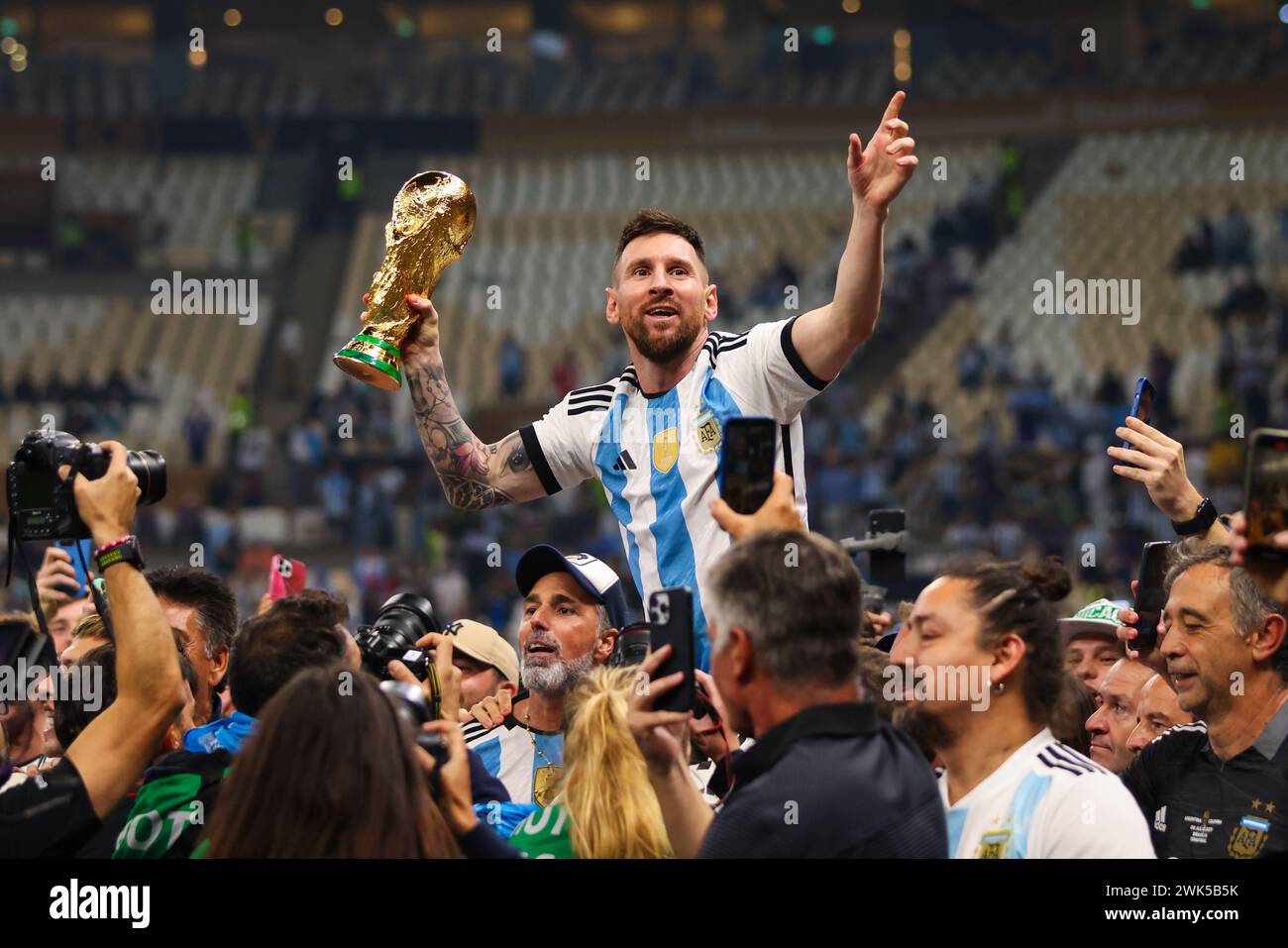
Will 2026 be the last World Cup Messi plays in?
Almost certainly. At 39, the physical demands of a 48-team tournament make 2030 unlikely. Even if he plays in 2026, 2027 would be his final club season before retirement.
How will Messi’s World Cup affect MLS salaries?
If Messi’s presence drives higher TV revenues, MLS could see a 20–30% salary cap increase by 2027. Players like Christian Pulisic and Weston McKennie could command $20M+ salaries in the next CBA.
What cities will host Argentina’s matches in 2026?
Argentina’s group-stage games will be in:
- Miami (Hard Rock Stadium)
- Atlanta (Mercedes-Benz Stadium)
- Kansas City (Arrowhead Stadium)
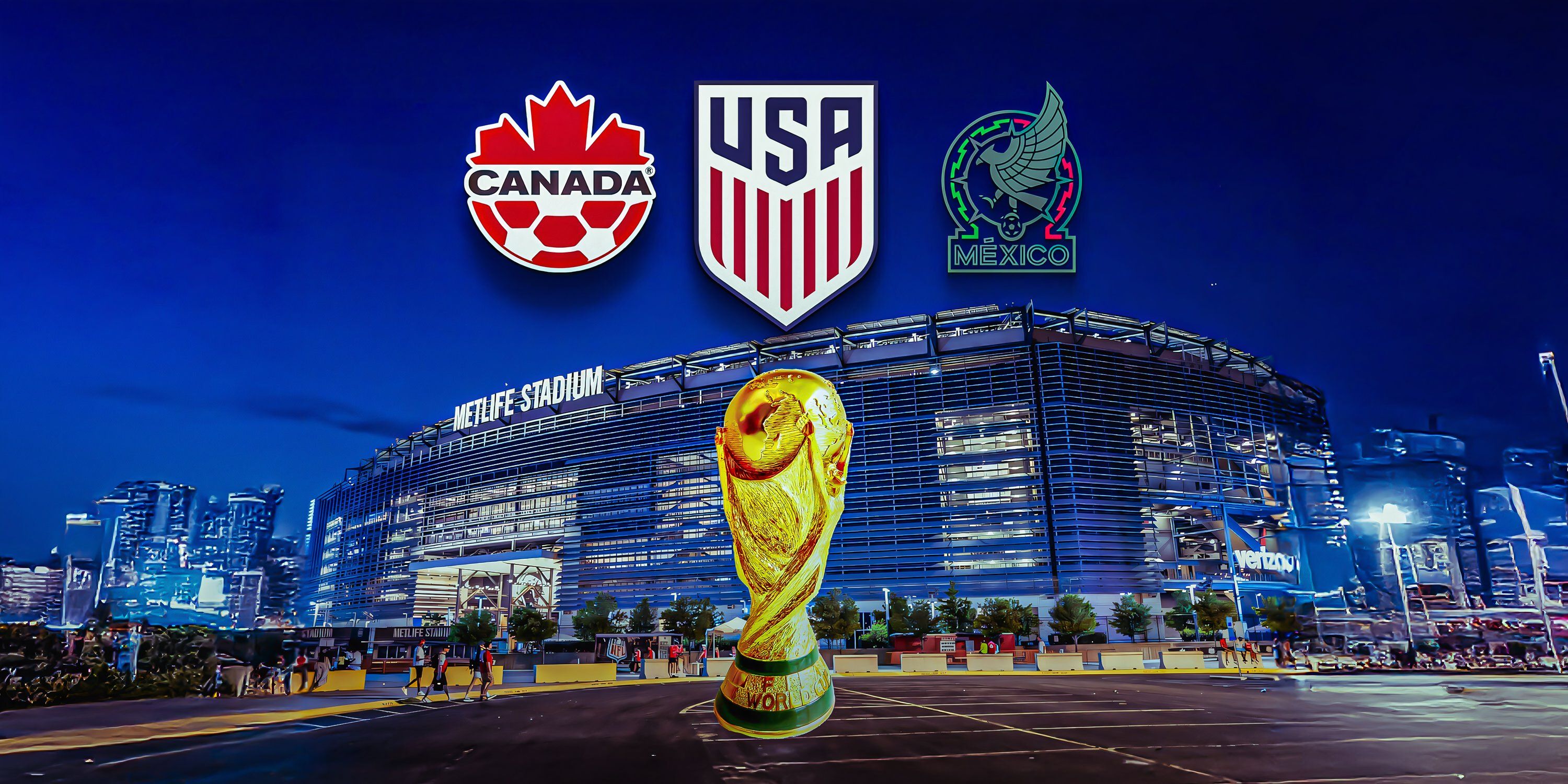
Knockout stages could include New York/New Jersey (MetLife Stadium) or Dallas (AT&T Stadium).
—
Lionel Messi’s final World Cup isn’t just about one player’s legacy—it’s about whether America can seize the moment. With the tournament’s expanded format, Messi’s unmatched star power, and a nation still defining its place in global soccer, 2026 could be the year everything changes. Or it could be another missed opportunity. The difference will be made on the pitch—and in the stands.
One thing is certain: No one will forget who was there.
