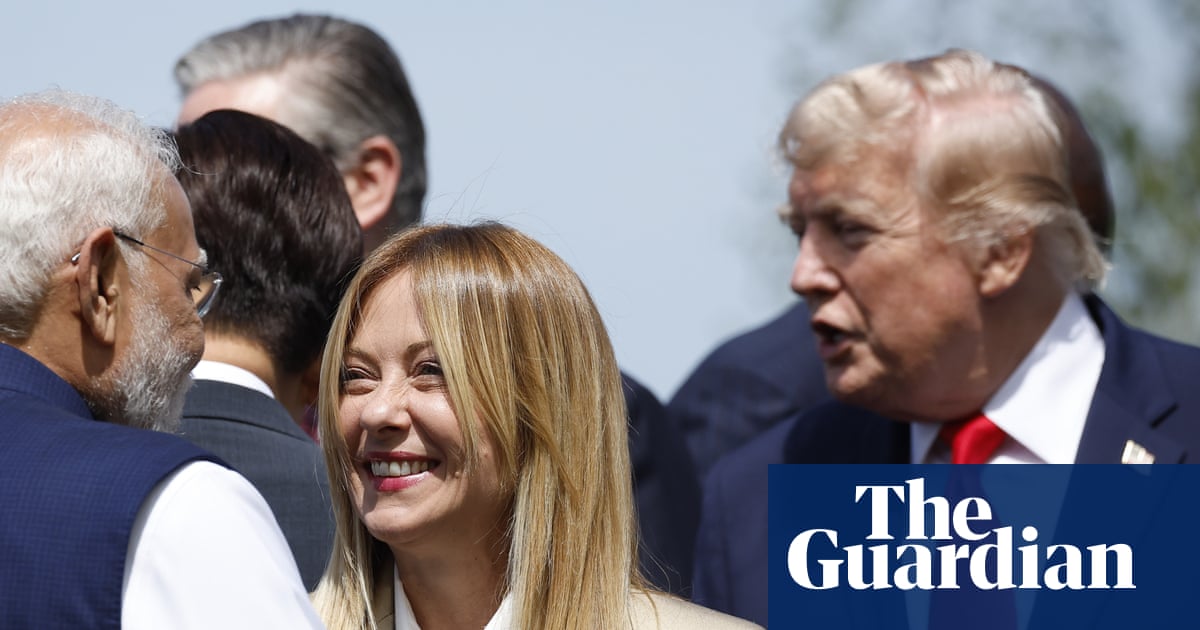
Italy PM Meloni ‘Stunned’ by Trump’s Claims She Begged Him for a Photo
Italy Prime Minister Giorgia Meloni expressed shock after Donald Trump claimed she “begged” for a photo opportunity. This dispute has triggered diplomatic friction, including the cancellation of a scheduled United States visit by Italy’s foreign minister, according to reports from CNN and The New York Times.
What triggered the dispute between Giorgia Meloni and Donald Trump?
The conflict began when Donald Trump alleged that Italian Prime Minister Giorgia Meloni had pleaded for a photograph with him. According to reports from The Guardian, Meloni was “stunned” by these assertions, which characterized her diplomatic interactions as desperate attempts for visibility. The claim suggests a power imbalance that the Italian leadership has since flatly denied.
The incident centers on the optics of international diplomacy. While photo opportunities are standard during bilateral meetings, the framing of the request as “begging” transformed a routine diplomatic gesture into a point of contention. The New York Times reported that Meloni responded directly to the claims, stating that “Italy doesn’t beg.”
This clash highlights a recurring tension in Donald Trump’s approach to foreign leaders, where personal rapport is often weighed against formal diplomatic protocol. For Meloni, the accusation strikes at her image as a strong, sovereign leader of a G7 nation.
How has the Italian government responded to the “begging” claims?
The response from Rome has been swift and characterized by a mixture of disbelief and official indignation. Dawn reported widespread outrage within Italy following the comments, suggesting that the claims were viewed not just as a personal slight to Meloni, but as an insult to the Italian state.
The Italian government’s reaction moved beyond verbal denials into tangible diplomatic actions. The most significant move was the decision by the Italian foreign minister to cancel a planned trip to the U.S., a move CNN attributed to the fallout from Trump’s comments. This cancellation serves as a formal signal that the rhetoric has crossed a line from personal banter to diplomatic liability.
“Italy doesn’t ‘beg,’” Giorgia Meloni told The New York Times, emphasizing a stance of national dignity over personal affiliation.
Internal reactions within the Italian administration suggest that the Prime Minister views the claims as a distortion of the facts. The narrative shifted from maintaining a cordial relationship with a fellow right-wing leader to defending the prestige of the Italian premiership.
Why did the Italian foreign minister cancel their trip to the United States?
The cancellation of the foreign minister’s U.S. visit is a calculated diplomatic maneuver. According to CNN, the trip was scrapped specifically in response to the comments made by Donald Trump regarding Prime Minister Meloni. In the world of international relations, the cancellation of a high-level visit is one of the most direct ways a government can express dissatisfaction without formally severing ties.
The decision reflects several strategic concerns for the Italian government:
- National Sovereignty: Allowing the visit to proceed immediately after the “begging” claims could be interpreted domestically as a sign of weakness or tacit acceptance of Trump’s narrative.
- Political Optics: Meloni faces pressure from her own coalition to maintain a position of strength. A visit to the U.S. while the “begging” narrative is active would provide a visual contrast that could be used by political opponents.
- Diplomatic Leverage: By withdrawing the visit, Italy signals that its cooperation and presence are contingent upon mutual respect.
This move indicates that the friction is not limited to a personal disagreement between two leaders but has permeated the institutional relationship between the two countries.
| Source | Reported Action/Reaction | Diplomatic Impact |
|---|---|---|
| The Guardian | Meloni “stunned” by claims | Personal shock and disbelief |
| The New York Times | “Italy doesn’t beg” statement | Formal denial of the narrative |
| CNN | Foreign Minister cancels US trip | Institutional diplomatic freeze |
| Dawn | Outrage reported in Italy | Domestic political pressure |
| Reuters | Shift from “whisperer” to “basher” | Strategic realignment of relationship |
How has Meloni’s relationship with Trump evolved?
The current tension represents a significant shift in the dynamic between the two leaders. Reuters has highlighted this transition, describing Meloni’s trajectory from being a “Trump whisperer” to a “Trump basher.”
The “Trump Whisperer” Phase
Earlier in her tenure, Meloni was seen by many as one of the few European leaders capable of navigating Donald Trump’s unpredictable style. Because of their shared right-wing populist leanings, there was an assumption that Meloni could act as a bridge between the U.S. and Europe, translating Trump’s “America First” agenda into a framework that European conservatives could accept.
The “Trump Basher” Phase
The transition to the “basher” phase, as Reuters puts it, suggests that Meloni has realized the limitations of ideological alignment. While they may share similar views on immigration or national identity, the clash over the “begging” claims demonstrates that national interest and personal dignity outweigh ideological kinship. Meloni is now positioning herself not as a subordinate ally, but as a peer who will not tolerate belittlement.
This evolution is a common pattern for leaders dealing with Trump. Initial attempts at alignment often give way to friction when the U.S. president’s rhetoric conflicts with the leader’s need to appear strong to their own domestic electorate.
What are the broader implications for Italy-US relations?
The dispute over a photo opportunity may seem trivial, but it carries deeper implications for the transatlantic alliance. Italy is a key NATO member and a strategic partner for the U.S. in the Mediterranean. When the relationship between the heads of state sours, it can affect everything from intelligence sharing to trade negotiations.

Several key areas may be impacted by this friction:
NATO and Security Cooperation
Italy’s role in NATO is critical. While a spat over a photo is unlikely to lead to a withdrawal from the alliance, it can create “friction points” in military coordination. If the leadership is preoccupied with personal grievances, the efficiency of bilateral security agreements can diminish.
Economic Ties and Trade
The U.S. is a major trading partner for Italy. Diplomatic chill often precedes economic tension. If the relationship between Meloni and Trump continues to deteriorate, it could lead to more aggressive tariff discussions or disagreements over trade imbalances.
The European Right-Wing Bloc
Meloni’s shift away from Trump sends a signal to other right-wing leaders in Europe. It suggests that the “populist international” is not a monolith and that national sovereignty remains the primary driver for these leaders, even when they share an ideological kinship with the U.S. Republican party.
For further context on how European leaders manage these dynamics, see a related explainer on EU-US diplomatic tensions.
Comparing the Framing: How different outlets reported the story
The coverage of this event varies across international media, reflecting different focuses on the story’s impact. The Guardian focused heavily on Meloni’s emotional state, using the word “stunned” to highlight the unexpected nature of the attack. This framing emphasizes the personal betrayal or surprise felt by the Italian PM.
In contrast, CNN prioritized the institutional fallout, focusing on the cancellation of the foreign minister’s trip. This framing shifts the story from a “he-said-she-said” personal dispute to a matter of state-level diplomatic consequence. The New York Times took a more direct approach, focusing on the assertion of national pride through the “Italy doesn’t beg” quote.
Reuters provided the most analytical lens, framing the incident not as an isolated event but as part of a broader political evolution. By using the “whisperer to basher” narrative, Reuters connected this specific photo-op dispute to the larger trajectory of Meloni’s foreign policy.
Key Differences in Reporting Focus
- Personal/Emotional: The Guardian (Focus on “stunned” reaction).
- Institutional/Diplomatic: CNN (Focus on trip cancellation).
- Nationalistic/Defiant: NYT (Focus on “Italy doesn’t beg”).
- Analytical/Strategic: Reuters (Focus on the relationship evolution).
Common misconceptions about the Meloni-Trump dispute
One common misconception is that this is a simple disagreement over a photograph. In reality, the photo is a proxy for power. In diplomacy, who asks for the photo, and how that request is perceived, signals who holds the leverage in the relationship. By claiming Meloni “begged,” Trump was attempting to establish a hierarchy where he is the benefactor and she is the supplicant.
Another misconception is that this dispute will lead to a permanent break in Italy-US relations. Historically, both Meloni and Trump have shown a capacity for rapid pivots. Diplomatic “freezes,” such as the cancellation of a trip, are often used as bargaining chips to secure a public apology or a more favorable tone in future interactions.
Finally, some observers assume that because both leaders are right-wing, they should be naturally aligned. However, the “Italy doesn’t beg” stance proves that national pride often overrides ideological solidarity. Meloni’s primary constituency is the Italian people, and appearing subservient to a foreign leader—regardless of their politics—is a political liability at home.
Frequently Asked Questions
Why is the “begging” claim so controversial in Italy?
According to reports from Dawn and The New York Times, the claim is seen as an insult to the dignity of the Italian state. In Italian political culture, the image of the Prime Minister as a strong, independent leader is paramount. The idea of a leader “begging” for attention is viewed as a sign of weakness that undermines Italy’s standing on the global stage.

Did the Italian foreign minister actually cancel their US trip?
Yes, according to CNN, the foreign minister cancelled a scheduled visit to the United States specifically because of the comments made by Donald Trump regarding Prime Minister Meloni. This is considered a significant diplomatic rebuke.
What does the term “Trump whisperer” mean in this context?
As reported by Reuters, a “Trump whisperer” is a political figure believed to have a unique ability to communicate with and influence Donald Trump, often by appealing to his personal style or shared ideological views. Meloni was previously seen in this role due to her right-wing alignment.
How did Giorgia Meloni respond to the claims?
Meloni expressed that she was “stunned” by the claims and explicitly stated to The New York Times that “Italy doesn’t beg,” rejecting the narrative that she sought a photo op out of desperation.
Will this affect Italy’s membership in NATO?
There is no evidence from the reported sources to suggest that this dispute will lead to Italy leaving NATO. However, analysts suggest it may create short-term friction in bilateral cooperation and diplomatic coordination between the two allies.
For more information on the current state of transatlantic alliances, you may find a related analysis on NATO’s current challenges useful.
