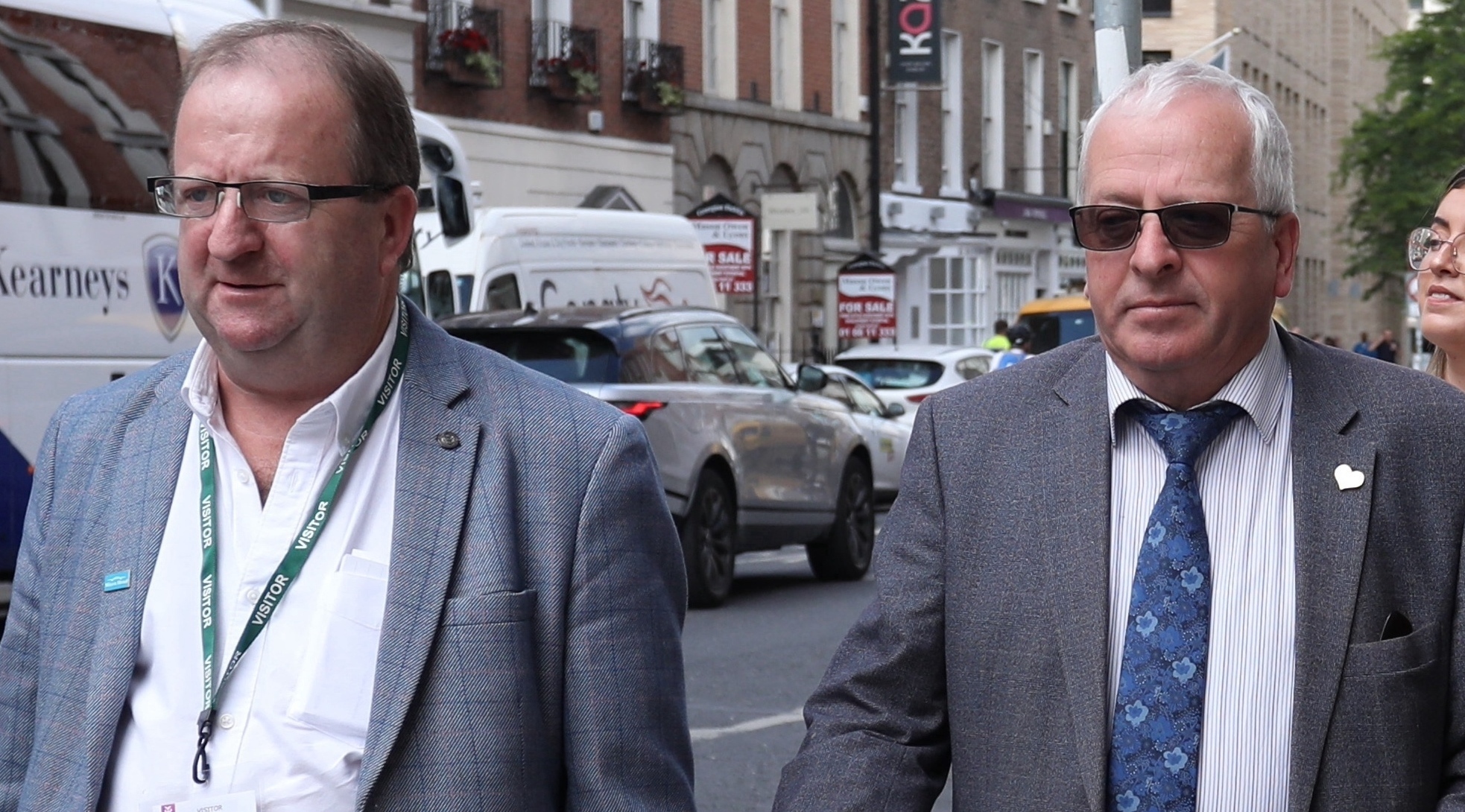
War of Independents as Mattie McGrath and Michael Collins Trade Blows on Facebook
Independent TDs Mattie McGrath and Michael Collins have engaged in a public political dispute on Facebook, signaling a deepening rift between two prominent non-party legislators. This “War of Independents” involves a series of public exchanges where both politicians have used social media to challenge each other’s records, motives, and public statements regarding national and local issues.
What sparked the dispute between Mattie McGrath and Michael Collins?
The conflict between Mattie McGrath and Michael Collins escalated through a series of posts and comments on Facebook, where the two legislators traded accusations in a public forum. According to reports of the exchange, the friction stems from differing interpretations of legislative priorities and the conduct of Independent representatives within the Dáil. While both sit outside the traditional party whip system, their clash highlights a lack of cohesion among the Independent bloc.
The “War of Independents as Mattie McGrath and Michael Collins trade blows on Facebook” is not merely a personal disagreement but a reflection of the competitive nature of non-party politics in Ireland. In these exchanges, the politicians have utilized the direct-to-constituent nature of Facebook to frame their opponent’s positions as contradictory or insufficient. The disputes often center on who is more effectively challenging the government of the day and whose brand of “independence” is more authentic.
- Platform: The primary battleground has been Facebook, allowing for real-time, public rebuttals.
- Nature of Attacks: The exchanges involve critiques of political consistency and the effectiveness of their respective mandates.
- Visibility: Because both TDs maintain significant social media followings, the dispute has reached a wide audience of voters in their respective constituencies.
Who are the key figures in this political clash?
To understand the weight of this friction, it is necessary to examine the political identities of the two men involved. Both are influential figures who operate without the support of a formal party machine, meaning their political survival depends entirely on their personal brand and direct relationship with voters.
Mattie McGrath TD
Mattie McGrath is a veteran Independent politician known for his staunchly skeptical approach to government policy and his strong focus on rural issues. Representing Offaly-Roscommon, McGrath has built a reputation as a disruptor in the Dáil, often taking contrarian positions on health, agriculture, and European Union directives. His political style is characterized by aggressive questioning and a refusal to align with the mainstream political consensus.
Michael Collins TD
Michael Collins is also an Independent TD who has carved out a niche through high-profile advocacy and a focus on transparency and accountability. Collins often positions himself as a champion for the “forgotten” citizen, focusing on specific grievances and systemic failures within state services. His approach typically blends grassroots activism with legislative challenges, aiming to present a professional yet rebellious alternative to the established parties.
The tension between the two arises from these overlapping roles. Both claim the mantle of the “true” independent who stands up to the establishment, creating a natural friction when their methods or specific policy goals diverge.
Why does a ‘War of Independents’ matter for Irish politics?
When party-affiliated TDs clash, it is often viewed as a strategic move within a party’s internal hierarchy or a result of a party line. However, when Independent TDs engage in a public feud, the implications are different. The “War of Independents as Mattie McGrath and Michael Collins trade blows on Facebook” underscores the fragmentation of the non-party vote.
Independents often hold the balance of power in tight Dáil majorities. If the Independent bloc is fractured by personal animosities or ideological splits, their collective bargaining power with the government diminishes. According to political analysts, a unified bloc of Independents can extract significant concessions for their constituencies; a divided one is easier for the government to manage through “divide and conquer” tactics.
“The volatility of Independent politics is that there is no party whip to enforce discipline. When disputes move from the Dáil chamber to social media, it transforms legislative disagreement into a public personality clash.”
Furthermore, this conflict highlights the shift in how Irish politicians communicate. The move from formal press releases to Facebook “blows” indicates a preference for unmediated, raw communication that appeals to a base of voters who are already disillusioned with “polished” political rhetoric.
How does social media change the nature of political disputes?
The use of Facebook as a primary tool for this dispute changes the stakes and the speed of the conflict. In a traditional setting, a dispute between TDs would happen during a debate or through a formal letter. On social media, the “War of Independents” happens in real-time, often with immediate reactions from supporters and detractors in the comments section.
This environment encourages a more combative tone. The need for “engagement” (likes, shares, and comments) can incentivize politicians to use sharper language than they would in the Dáil. For McGrath and Collins, Facebook serves as both a megaphone and a weapon, allowing them to bypass traditional media filters and speak directly to their core supporters.
| Feature | Traditional Dáil Dispute | Facebook Political Clash |
|---|---|---|
| Speed | Slow (Scheduled debates) | Instant (Real-time posts) |
| Tone | Formal / Parliamentary | Informal / Combative |
| Audience | Other TDs & Journalists | Direct Constituents & General Public |
| Accountability | Ceann Comhairle (Speaker) | Platform Community Standards |
Comparing the political styles of McGrath and Collins
While both are Independents, the friction between Mattie McGrath and Michael Collins is fueled by their differing approaches to political warfare. McGrath often employs a style of “persistent skepticism,” questioning the very foundations of government reports and official data. Collins, by contrast, often focuses on “targeted advocacy,” using specific cases of injustice to highlight broader systemic failures.
This difference in style can lead to clashes over who is “actually” getting results. In the context of their Facebook disputes, the argument often boils down to whether it is more effective to be a constant thorn in the side of the administration (the McGrath approach) or to drive specific, case-led changes (the Collins approach).
Related explainer on the role of Independent TDs in the Dáil may provide further context on how these individuals navigate the legislative process without party backing.
The impact on the non-party electoral base
The “War of Independents as Mattie McGrath and Michael Collins trade blows on Facebook” may have an unintended effect on the electorate. For voters who are tired of the “bickering” associated with the main political parties, seeing Independents engage in similar public feuds can be alienating.
However, for a specific segment of the electorate, this combativeness is seen as a sign of strength. These voters view the “trading of blows” as evidence that these politicians are not “bought” by the system and are willing to fight anyone—including their own peers—to defend their principles. This creates a paradox where the same behavior that alienates moderate voters may actually strengthen the bond with a hard-core base of supporters.
Key Risks of Public Feuding:
- Diluted Influence: Internal fighting makes the Independent group less effective at negotiating national budgets or legislation.
- Brand Erosion: The “independent” brand is meant to be an alternative to party politics; if it looks like party politics (infighting), the appeal drops.
- Distraction: Public spats on Facebook can overshadow actual legislative achievements or urgent constituency issues.
Common misconceptions about Independent political clashes
A common misconception is that all Independent TDs operate as a single, cohesive unit. In reality, the “Independent” label is a broad tent that includes everyone from former party members to lifelong activists. The clash between McGrath and Collins is a reminder that there is no single “Independent ideology.”
Another misconception is that these social media disputes are unplanned or accidental. In the modern political era, social media presence is a calculated part of a campaign strategy. By engaging in public disputes, politicians can signal their “fighter” status to their constituents, ensuring they remain visible in a crowded news cycle.
Finally, some assume that these disputes are purely personal. While personality clashes certainly play a role, they are almost always rooted in a competition for political space. In the battle for the “anti-establishment” vote, there is only so much room at the top; for one Independent to rise in prominence, they often feel the need to diminish the standing of another.
The long-term outlook for the Independent bloc
As Ireland moves toward future elections, the “War of Independents” serves as a case study in the sustainability of non-party politics. The tension between figures like Mattie McGrath and Michael Collins suggests that as Independents grow in number and influence, they will face the same internal pressures that parties do: the need for discipline versus the desire for individual expression.
If the Independent bloc cannot find a way to manage these disputes—or at least keep them out of the public eye—they risk being viewed as a collection of “lone wolves” rather than a viable political force. Conversely, if they can leverage this competitive energy to hold the government more accountable, the current friction may simply be growing pains for a changing political landscape.
The trajectory of this specific feud will likely depend on whether the two TDs find a common enemy or a shared legislative goal that outweighs their personal and stylistic differences. Until then, Facebook remains the primary arena for their political contest.
Frequently Asked Questions
What is the ‘War of Independents’ referring to?
The term refers to the public political conflict and verbal disputes between Independent TDs, specifically highlighting the recent exchanges between Mattie McGrath and Michael Collins on social media platforms like Facebook.

Why are Mattie McGrath and Michael Collins fighting on Facebook?
The dispute stems from disagreements over political records, the effectiveness of their roles as Independent representatives, and differing approaches to challenging the government. The use of Facebook allows them to communicate these grievances directly to their voters.
Does this dispute affect how laws are passed in the Dáil?
While a Facebook argument does not directly change a vote, it can weaken the collective bargaining power of Independent TDs. A divided Independent group is less likely to act as a unified bloc when negotiating with the government on legislation or funding.
Are Mattie McGrath and Michael Collins part of the same political group?
No. While both are Independent TDs, they do not belong to a formal political party. They operate independently, which means they have no party leader or whip to resolve their disputes internally.
Is this a common occurrence in Irish politics?
Public disputes between politicians are common, but the shift toward “trading blows” on social media is a more recent trend. It reflects a broader move toward personality-driven politics and the use of digital platforms for direct political combat.
