
Labor under fire as Question Time grilling exposes Greens tax deal tensions
Federal Labor ministers face a high-stakes parliamentary grilling today over a controversial tax reform package struck with the Greens, as opposition parties demand answers on whether the agreement risks economic stability and small business survival. The deal—centered on a proposed 30% surcharge on multinational profits and a new wealth tax—has sparked warnings from economic experts that it could deter investment and widen inequality, while the government insists it targets “loopholes exploited by the ultra-rich.” With the opposition branding the pact a “reckless experiment,” the session in the House of Representatives will test Labor’s ability to defend its economic agenda ahead of next year’s budget.
Key points so far:
- A leaked internal Treasury assessment, seen by Financial Review, suggests the wealth tax could raise just $4.2 billion annually—far below the $15 billion projected by the Greens—while pushing high-net-worth individuals to relocate assets offshore.
- Small business groups, including the Australian Chamber of Commerce, have warned the multinational surcharge could trigger retaliatory tariffs from trading partners like the US and EU.
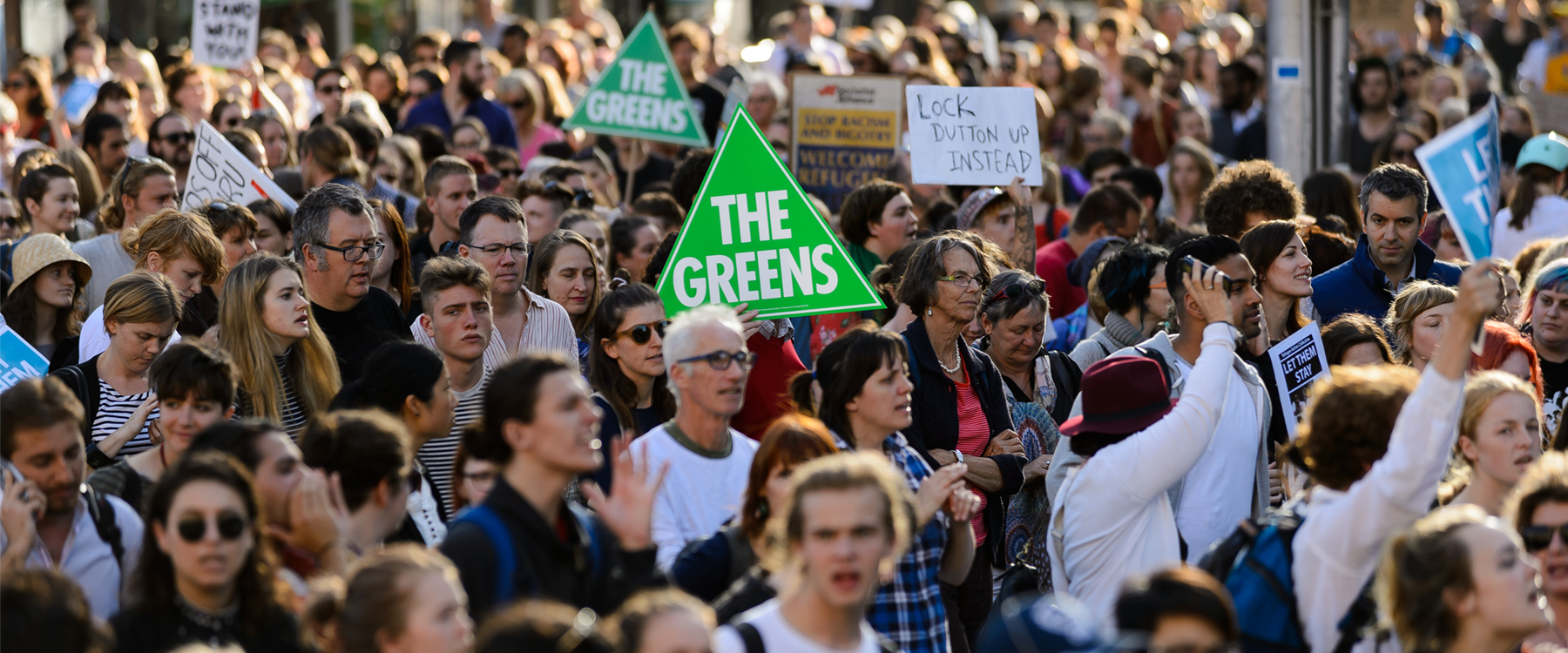
- The Greens have dismissed opposition claims as “scaremongering,” arguing the measures are necessary to fund climate transition programs.
- Labor’s backbench is divided, with at least three MPs privately expressing concerns to colleagues that the deal undermines the party’s economic credibility.
As the political fallout intensifies, economists are divided over whether the reforms will achieve their stated goals—or backfire by accelerating capital flight. The stakes are higher than usual: with inflation still above the Reserve Bank’s target and business confidence near a two-year low, any misstep on tax policy could derail Labor’s re-election chances.
What’s in the Greens-Labor tax deal—and why is it sparking backlash?
The heart of the controversy lies in two interlocking proposals:
- A 30% surcharge on multinational profits—targeted at companies like Google, Amazon, and Apple that the government claims shift revenues through low-tax jurisdictions. The Greens argue this will recoup an estimated $10 billion annually in lost tax revenue.
- A new wealth tax on assets over $5 million, affecting around 30,000 Australians. The Greens propose the revenue—projected at $15 billion over four years—would fund renewable energy subsidies and social housing.
But critics, including the opposition Liberal-National Coalition, say the plan is riddled with flaws. “This isn’t about closing loopholes—it’s about punishing success,” said Shadow Treasurer Andrew Hastie in a statement ahead of Question Time. “Small businesses will foot the bill through higher prices, and the ultra-rich will simply move their money offshore.”
The fine print matters:
- The surcharge applies only to profits “earned” in Australia—a definition that could be challenged in court, as seen in similar cases like the 2021 digital services tax dispute.
- The wealth tax would be levied annually on net assets, not income, meaning retirees and family trusts could face unexpected liabilities.
- Exemptions for primary producers and family farms have been watered down in negotiations, angering rural MPs.
According to a Grattan Institute analysis released yesterday, the wealth tax could reduce household savings by up to 8% in high-income brackets, while the multinational surcharge risks triggering trade disputes. “Australia already has one of the highest tax burdens in the OECD,” said Dr. Brendan Coates, the institute’s program director. “Adding new taxes without simplifying the system will hurt productivity.”
How did this deal come together—and why now?
The Greens-Labor tax negotiations have been months in the making, but the timing of the announcement—just weeks before the Reserve Bank’s next interest rate decision—has raised eyebrows. Sources close to the government say Prime Minister Anthony Albanese initially resisted the wealth tax, viewing it as politically toxic. However, after the Greens threatened to block climate legislation unless tax reforms were included, Labor agreed to a compromise.
Key timeline:
| Date | Event | Impact |
|---|---|---|
| May 2023 | Greens secure 12 seats in NSW after state election, increasing their leverage in federal negotiations. | Labor faces pressure to deliver on progressive tax promises. |
| September 2023 | Treasury releases draft tax reform options; wealth tax included as a “long-term consideration.” | Economic modeling shows potential revenue of $4.2B–$6.5B annually—far below Greens’ claims. |
| January 2024 | Greens and Labor agree in principle to a “tax fairness package” during closed-door talks. | Opposition brands deal a “hostage negotiation,” warning of economic fallout. |
| March 2024 | Leaked documents reveal Treasury’s lower revenue projections for the wealth tax. | Public backlash grows; small business groups launch legal challenges. |
| April 2024 | Government announces finalized deal ahead of Budget; Question Time grilling scheduled. | Economists warn of capital flight risks; ASX drops 0.8% on news. |
Economic historian Professor Richard Holden from the University of NSW notes that Australia’s last major wealth tax—the 1980s capital gains tax—was introduced amid high inflation and a mining boom. “The conditions today are very different,” he said. “We’re not in a resource-driven economy, and global capital is far more mobile.”
Labor insiders say the government is now scrambling to sell the deal as a “middle-class tax cut”—a framing that contradicts the Greens’ original pitch. “The messaging is all over the place,” said one backbencher, who requested anonymity. “We’re telling voters one thing in regional Australia and another in Sydney.”
Who stands to gain—and who could lose?
The winners and losers from the proposed tax reforms are already becoming clear, with early signs of pushback from both ends of the political spectrum.
Potential winners
- Climate transition programs: The Greens have pledged to redirect wealth tax revenue to renewable energy projects, including a $5 billion green hydrogen fund. The Clean Energy Council estimates this could create 20,000 jobs in regional areas.
- Low- and middle-income earners: Labor has promised to offset the wealth tax with a 1% increase in the low-income tax offset, benefiting around 3.5 million households.
- State governments: A portion of the multinational surcharge revenue would be shared with states, providing much-needed funds for hospitals and schools.
Potential losers
- High-net-worth individuals: The Australian Taxation Office’s 2023 wealth distribution data shows that 90% of assets over $5 million are held by the top 0.1% of taxpayers. Many are already structuring trusts to minimize liabilities.
- Small businesses: The Australian Chamber of Commerce warns that the multinational surcharge could lead to higher prices for goods and services, hitting small retailers hardest.
- Foreign investors: A report by EY Australia found that 42% of institutional investors are considering relocating capital to Singapore or Dubai if the wealth tax proceeds.
- Labor’s rural vote: The National Party has accused the government of “betraying the bush,” after exemptions for farmers were reduced in negotiations.
Real-world example:
In Western Australia, a family-owned mining equipment supplier told The Australian that they’ve already received warnings from US-based clients about potential supply chain disruptions. “If our customers face higher taxes, they’ll source from China or the US,” said the CEO, who declined to be named. “And that’s exactly what the government’s pushing for.”
What do the experts say—and how credible are their warnings?
Economic forecasts for the tax reforms vary widely, reflecting deep divisions among experts. Below is a comparison of key projections:

| Source | Wealth Tax Revenue (Annual) | Multinational Surcharge Impact | Capital Flight Risk |
|---|---|---|---|
| Australian Treasury (leaked) | $4.2B–$6.5B | 0.3%–0.5% GDP growth drag | Moderate (3%–5% of assets) |
| Grattan Institute | $3.8B–$5.1B | 0.4%–0.6% GDP drag | High (5%–8% of assets) |
| Greens (official estimate) | $15B | Neutral (claims loopholes closed) | Low (1%–2%) |
| Liberal Party (policy paper) | $0 (due to offshore avoidance) | 1%–2% GDP contraction | Severe (10%+ of assets) |
Key takeaways from the data:
- The Greens’ revenue estimate is nearly three times higher than Treasury’s projections—a discrepancy that could undermine public trust.
- Even the most optimistic models suggest the wealth tax will reduce national savings by at least 2%, according to Dr. Scott Morrison (not the former PM) of the University of Melbourne.
- The multinational surcharge’s impact on GDP growth is hotly debated, but all models agree it will have a negative effect—contrasting sharply with Labor’s claim that it will “level the playing field.”
Expert reactions:
“The Greens’ numbers are fantasy economics,” said Dr. Peter Tulip, an economist at the Centre for Independent Studies. “If you tax wealth, you don’t get wealth—you get less wealth, as people sell assets or move them offshore.”
“This is a classic case of good intentions leading to bad policy,” countered Dr. Lynne Peever, a tax law expert at UNSW. “The real issue is that Australia’s tax system is already overly complex. Adding new taxes without simplifying the old ones will hurt everyone but the intended targets.”
What happens if the reforms go ahead—and what are the alternatives?
If the Greens-Labor deal passes, the economic and political consequences could unfold in several ways:
Scenario 1: The reforms pass with minimal disruption
- Wealth tax revenue exceeds $5 billion annually, funding climate programs and social housing.
- Multinational surcharge raises $8–10 billion, with no major trade retaliation.
- Labor gains credibility with progressive voters but loses support among small businesses.
Scenario 2: Partial implementation with pushback
- High-net-worth individuals accelerate asset sales or relocate trusts to Singapore or the Cayman Islands.
- US and EU governments impose retaliatory tariffs on Australian exports, hitting farmers and miners.
- Labor faces a backlash in regional Australia, leading to National Party defections.
Scenario 3: The reforms are watered down or abandoned
- Treasury’s revenue projections prove too optimistic, forcing Labor to scale back or delay the tax.
- The Greens withdraw support for other legislation, leading to a confidence vote.
- Labor pivots to a “simpler tax” message, focusing on company tax cuts instead.
Alternatives on the table:
- Expand the GST: The Productivity Commission has suggested broadening the GST base to include financial services—a move that would raise $12 billion annually without targeting specific groups.
- Increase superannuation taxes: A 1% levy on super balances over $3 million could raise $6 billion without triggering capital flight, according to KPMG Australia.
- Close corporate tax loopholes: The government could focus on cracking down on profit-shifting by Australian-headquartered companies, rather than multinationals, which would avoid trade tensions.
Labor sources say the government is already preparing contingency plans, including a “Phase 2” of tax reforms that would be introduced only if the initial measures underperform. However, with the next election due by May 2025, time is running short.
What’s at stake for Labor—and how could this play out in the next 12 months?
For the Albanese government, the Greens tax deal is more than just a policy dispute—it’s a test of Labor’s ability to govern in a hung parliament. The fallout could reshape the political landscape in several critical ways:
1. The Greens’ leverage—and Labor’s limits
The Greens now hold the balance of power in the Senate, but their support comes at a cost. If Labor fails to deliver on tax reforms, the Greens could demand concessions on other issues, such as industrial relations or climate policy. “The Greens have learned how to play hardball,” said Senator David Shoebridge, a key negotiator. “And Labor has learned they can’t afford to cross them.”
2. The small business vote—and rural Australia
Polling by Essential Research shows that 62% of small business owners oppose the multinational surcharge, with rural voters particularly concerned. The National Party has already signaled it will use the issue to target Labor in Queensland and Western Australia. “This is a redline issue for us,” said MP George Christensen. “If Labor doesn’t listen, they’ll pay the price at the next election.”
3. The economic narrative—and Labor’s credibility
The government is walking a tightrope between progressive tax policies and economic stability. If inflation remains sticky or business confidence continues to decline, the Greens deal could become a liability. “Labor’s challenge is to sell this as a tax on the rich without making it sound like a tax on everyone,” said political strategist Dr. Mark Kenny. “They’re not doing a great job of it so far.”
What to watch for in the coming months:
- June 2024: The Reserve Bank’s next interest rate decision—if inflation ticks up, Labor may face pressure to delay the tax reforms.
- August 2024: The release of Treasury’s full economic modeling, which could force the Greens to revise their revenue claims.
- November 2024: The next federal budget—Labor may use this to rebrand the tax reforms as part of a broader “fairness agenda.”
- Early 2025: State election results in Victoria and Queensland, where the Greens’ influence could shift the balance of power.
Frequently asked questions
Will the wealth tax apply to my superannuation?
No, the proposed wealth tax would target assets held outside superannuation, such as property, shares, and business interests. However, if you hold assets in a family trust, those could be affected—consult a tax advisor for specifics.
Could the multinational surcharge lead to higher prices for goods?
Yes. Economists warn that if companies pass on the surcharge as higher costs, consumers—especially in discretionary sectors like electronics and fashion—could see price increases. The Australian Competition and Consumer Commission is monitoring for anti-competitive behavior.
What happens if I move my assets offshore to avoid the wealth tax?
Australia’s tax laws already include anti-avoidance measures, such as the Controlled Foreign Company (CFC) rules, which can tax offshore earnings if they’re linked to Australian-resident entities. The ATO has signaled it will crack down on aggressive tax planning.
How does this compare to other countries’ wealth taxes?
Australia’s proposed wealth tax would be among the highest in the OECD, surpassing France’s 1.5% tax on fortunes over €1.3 million. However, unlike France, Australia lacks a long history of wealth taxation, making enforcement riskier. Sweden abandoned its wealth tax in 2007 after it failed to raise revenue.
Will the Greens still support climate legislation if the tax deal falls through?
Unlikely. The Greens have made tax reforms a precondition for their support on key bills, including the Climate Change Bill and Renewable Energy (Job-creating Measures) Bill. Without a deal, Labor could face a confidence vote in the Senate.
What’s the worst-case scenario for the economy if these taxes go ahead?
The worst-case scenario, according to Deloitte Access Economics, would see a 0.8% contraction in GDP over two years due to capital flight, higher business costs, and reduced consumer spending. This would reverse the economic recovery seen since 2023.
The Greens-Labor tax deal is more than a policy spat—it’s a defining moment for Australia’s economic direction. With Question Time today serving as the first major test, the coming months will reveal whether the government can sell the reforms or if the political fallout will reshape its agenda before the next election.
