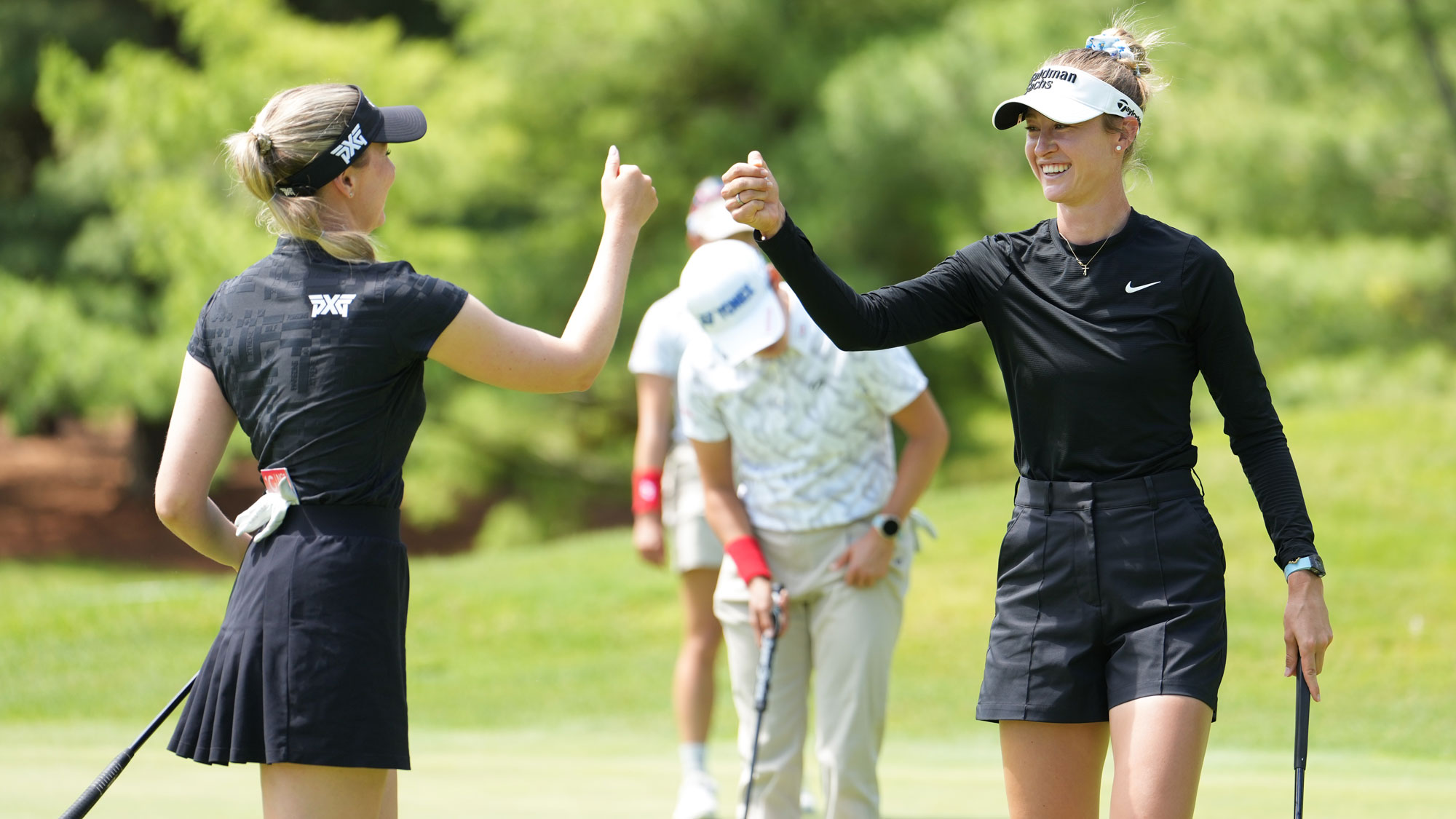
Pat Inkster Sets LPGA Age Record as Nelly Korda Returns to Team Competition
Pat Inkster has become the oldest player to advance to the weekend in an LPGA event at age 66, while world number one Nelly Korda has returned to team competition alongside her partner, according to LPGA reports. Inkster’s achievement marks a historic milestone for longevity in professional golf, securing her place in the weekend rounds against a field of significantly younger competitors.
How Pat Inkster Set the LPGA Age Record
Pat Inkster officially became the oldest golfer to make the cut and advance to the weekend of an LPGA sanctioned event at the age of 66. According to tournament records, Inkster’s performance allowed her to survive the mid-tournament cut, a threshold that typically removes the bottom half of the field based on cumulative scoring after the first two rounds.
The “cut” is a critical juncture in professional golf, separating those who will earn a paycheck and continue competing from those whose tournament ends on Friday. For a 66-year-old to maintain a scoring average competitive enough to beat out younger professionals is a rarity in a sport that increasingly demands high swing speeds and extreme physical flexibility.
Inkster, a Hall of Fame golfer, has long been recognized for her consistency and mental toughness. Her ability to advance to the weekend at this age suggests a disciplined approach to fitness and a refined short game that compensates for the natural decline in distance that typically accompanies aging. According to LPGA historical data, this feat surpasses previous age records for making the cut, positioning Inkster as a benchmark for athletic longevity in women’s professional golf.
“Inkster’s ability to compete at this level at 66 is a testament to the technical fundamentals of the game, where precision and course management can neutralize the raw power of younger players.”
The Physical Demands of Professional Golf at 66
Competing in a professional tournament requires more than just a steady hand. Players must walk several miles per day, often in varying weather conditions, while maintaining intense focus over four to five hours per round. According to sports science principles applicable to golf, the primary challenges for older athletes include:

- Swing Speed: Maintaining enough clubhead speed to reach par-4s and par-5s in regulation.
- Recovery: The ability of the body to recover between rounds 1 and 2, and rounds 3 and 4.
- Core Stability: Preventing injury during the rotational force of a full golf swing.
Inkster’s success indicates a high level of functional fitness. By advancing to the weekend, she has demonstrated that the “marginal gains” of experience—such as superior putting and strategic club selection—can still compete with the athletic advantages of the modern era’s power hitters.
Nelly Korda and the Return to LPGA Team Events
Parallel to Inkster’s historic run, Nelly Korda has returned to the LPGA team event format. Korda, currently the dominant force in women’s golf, is paired with Cowan in a team structure that deviates from the standard individual stroke-play format common on the tour.
Team events in the LPGA, such as the Four-ball or Foursomes formats, require a different psychological approach than individual play. In these events, players must manage not only their own performance but also the momentum and mental state of their partner. According to tour analysts, Korda’s return to this format is significant given her current status as the world’s top-ranked player, as it places a high level of expectation on her pairing to deliver a victory.
Understanding the Team Event Formats
To understand the significance of Korda and Cowan’s participation, it is necessary to distinguish between the two primary team formats used in professional golf:
| Format | How it Works | Strategic Focus |
|---|---|---|
| Four-ball (Best Ball) | Both players play their own ball; the lowest score of the two counts for the hole. | Aggressive play; one player can take risks while the other plays safe. |
| Foursomes (Alternate Shot) | Partners share one ball, alternating hits until the ball is holed. | Precision and synergy; a bad shot leaves the partner in a difficult position. |
Korda’s ability to adapt her game from the solitary pressure of individual majors to the collaborative environment of a team event is a key part of her versatility. According to performance data, Korda’s consistency makes her an ideal anchor for any team, as she rarely posts “blow-up” holes that would jeopardize a partner’s position.
Why Inkster’s Record Matters for the Sport
The achievement of Pat Inkster is not merely a statistical curiosity; it serves as a narrative bridge between the different eras of the LPGA. For decades, professional sports have been viewed through the lens of a narrow “peak performance window,” usually ending in a player’s 30s or early 40s. Inkster’s advancement to the weekend at 66 challenges this paradigm.
This record provides a tangible example of “age-defying” performance, which has broader implications for how the LPGA markets the game to older demographics. It proves that the technical proficiency of golf allows for a longer competitive lifespan than contact sports or high-cardio athletics. According to industry observers, this increases the appeal of the sport for lifelong participants, knowing that professional-level competition is theoretically possible well into one’s 60s.
Comparison: Longevity in Men’s vs. Women’s Professional Golf
When comparing Inkster’s feat to the men’s PGA Tour, a similar pattern of longevity emerges, though the specific records differ. While men’s golf has seen veterans like Phil Mickelson remain competitive into their 50s, the 66-year-old mark set by Inkster in an LPGA event is an outlier in terms of sheer age. Most professional golfers transition to “Senior” or “Legends” tours after age 50, where they compete against peers. Inkster’s record is particularly notable because she advanced in a field that included the tour’s youngest and strongest active players.

The contrast in framing is clear: while many athletes seek to prolong their careers by a few years, Inkster has extended her competitive relevance by decades. This suggests a mastery of the “short game”—chipping and putting—which is less dependent on raw strength and more dependent on touch and experience.
The Strategic Implications for Nelly Korda’s Season
For Nelly Korda, the return to team events serves as both a mental break and a strategic challenge. Following a season of immense pressure as the world number one, team events allow players to share the burden of performance. However, they also introduce the risk of “partner dependency,” where a teammate’s struggle can offset a star player’s brilliance.
According to tour strategy, Korda’s pairing with Cowan is designed to leverage complementary strengths. In a team setting, the goal is often to minimize mistakes rather than maximize power. By returning to this format, Korda is refining her ability to play “situational golf,” which is essential for success in team-based competitions like the Solheim Cup.
The integration of team events into the LPGA calendar is a deliberate move by the tour to increase viewership and fan engagement. Team dynamics create natural storylines and emotional stakes that differ from individual pursuit, making the Korda-Cowan pairing a focal point for fans of the sport.
Key Factors in Korda’s Current Dominance
- Ball Striking: Korda is currently ranked among the top percentages for greens in regulation.
- Mental Fortitude: Her ability to maintain composure under the scrutiny of being the world leader.
- Adaptability: Switching between individual stroke play and team formats without a dip in performance.
Common Misconceptions About Age and Professional Golf
A common misconception is that professional golf is purely a game of distance. Many fans believe that if a player cannot hit the ball 300 yards, they cannot compete. Pat Inkster’s record provides a direct correction to this narrative. In professional golf, “scoring” is the only metric that matters, and scoring is often the result of efficiency rather than power.
Another misconception is that the “cut” is a formality for established legends. In reality, the cut is a ruthless mechanism. For Inkster to advance, she had to outscore hundreds of younger, stronger players over 36 holes. This indicates that her game remained technically sound enough to handle the course conditions, green speeds, and wind factors that affect all players regardless of age.
What to Watch for in the Coming Rounds
As the tournament progresses into the weekend, two distinct storylines will dominate the coverage. First is the pursuit of a high finish by Pat Inkster. While winning the tournament may be a steep climb, every single hole she completes in the weekend rounds adds to her record and provides a blueprint for future veteran players.
Second is the synergy between Korda and Cowan. Observers will be looking to see if Korda can carry the team through difficult stretches and how the pairing handles the pressure of the final rounds. Their performance will be a litmus test for their chemistry as a duo and Korda’s ability to lead a team to victory.
The intersection of these two stories—the record-breaking veteran and the world-leading star—highlights the full spectrum of the LPGA. It showcases the sport’s ability to reward both the peak of youthful athleticism and the enduring power of experience.
Frequently Asked Questions
What is the significance of Pat Inkster’s record?
Pat Inkster became the oldest player in LPGA history to make the cut and advance to the weekend of a professional tournament at age 66. This demonstrates an extraordinary level of longevity and technical skill, proving that veteran players can still compete with the world’s best.
How does a team event differ from a standard LPGA tournament?
Standard tournaments are individual stroke-play events where each player competes for their own score. Team events, such as those featuring Korda and Cowan, use formats like Four-ball or Foursomes, where two players work together to produce the best possible score for their pair.

Why is making the “cut” difficult for older players?
Making the cut requires a player to be in the top half of the field after two rounds. Older players often struggle with the physical demands of the course and the loss of distance (swing speed), making it rare for them to maintain a scoring average low enough to advance against younger professionals.
Who is Nelly Korda’s partner in the team event?
Nelly Korda is paired with Cowan in the LPGA team event, marking a return to collaborative competition for the world number one.
Does Pat Inkster still play full-time on the LPGA?
No, Inkster is a Hall of Fame golfer who has transitioned away from the grueling full-time tour schedule, but she continues to compete in select events, as evidenced by her recent record-breaking performance.
For more information on player rankings and tournament schedules, readers may look for a related explainer on LPGA scoring formats or official tour standings.
