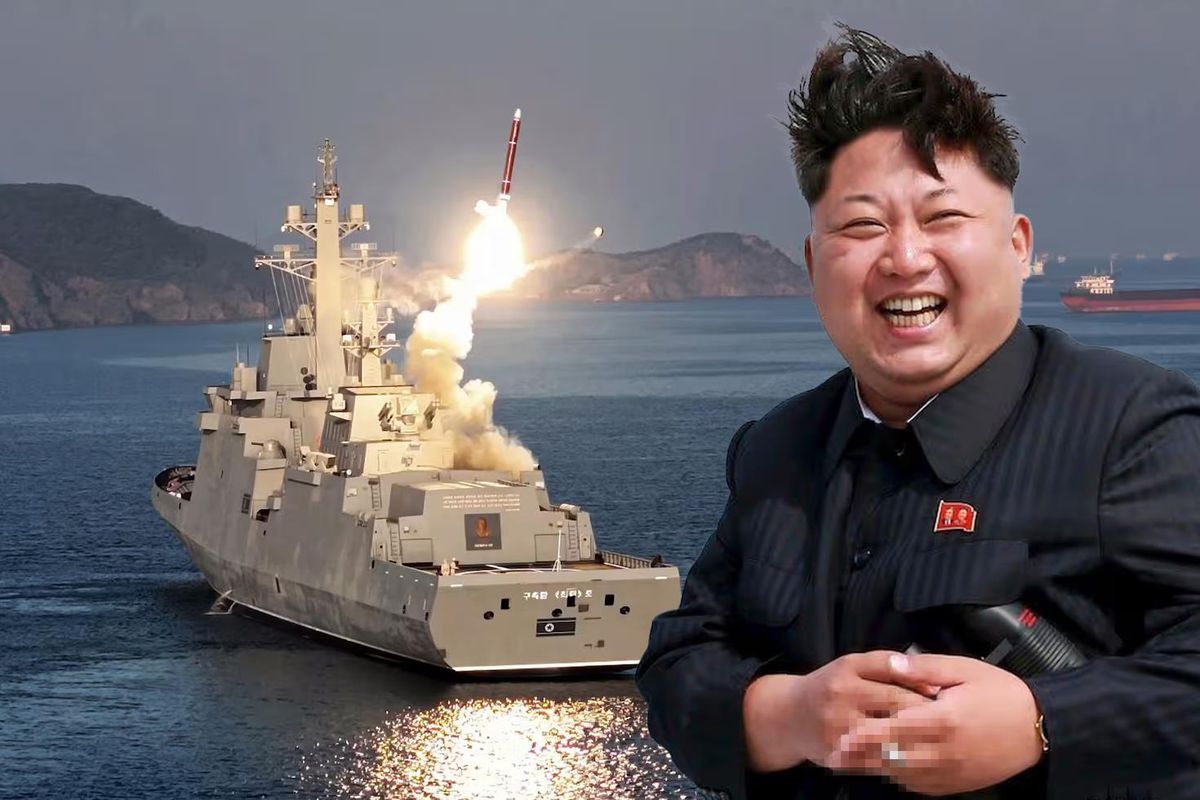
North Korea announced the development of 10,000-ton warships, signaling a significant expansion of its naval capabilities, according to state media reports. The disclosure comes amid heightened regional tensions and a renewed emphasis on nuclear deterrence by leader Kim Jong-un, who emphasized the need for “continuous military modernization” in a recent address.
Naval Expansion and Nuclear Posturing
The planned warships, described as “superior in firepower and mobility,” mark a shift in Pyongyang’s military strategy, according to a statement attributed to government officials. The vessels, which would surpass the size of most regional naval assets, are expected to be deployed in rapid succession, with Kim Jong-un stating, “We will launch them one after another to strengthen our defensive posture.”
This announcement follows a series of provocative statements from North Korea, including a direct criticism of Japan and a repeated assertion that nuclear capabilities must be advanced to counter an “increasingly complex international environment.” The regime has previously tested ballistic missiles and nuclear devices, but the focus on large-scale naval construction suggests a broader strategic recalibration.
Regional Implications and International Response
The move has drawn concern from neighboring countries, particularly South Korea and Japan, which have historically viewed North Korea’s military advancements as existential threats. Japanese officials have called for “urgent dialogue” to address the “escalating risk of miscalculation,” while South Korean defense analysts noted the potential for increased maritime patrols in the Yellow Sea and East China Sea.
International observers have highlighted the potential for destabilization, with the United Nations Security Council reportedly preparing to discuss the developments. The U.S. Department of State reiterated its commitment to regional allies but stopped short of commenting on the specific warship plans, citing the need for further analysis.
Historical Context and Strategic Motivations
North Korea’s military build-up aligns with its long-standing policy of “self-reliance” and nuclear deterrence. The country’s 2018 inter-Korean summit and subsequent diplomatic engagements with the U.S. failed to produce concrete agreements on denuclearization, leaving Pyongyang to pursue a dual strategy of military modernization and diplomatic leverage.

Analysts note that the emphasis on naval forces could reflect a desire to diversify its strategic options, particularly as U.S. and South Korean missile defense systems have grown more sophisticated. The 10,000-ton displacement class would place the vessels among the largest in the North Korean fleet, potentially enabling long-range operations and power projection in the region.
What’s Next?
North Korea has not provided a timeline for the warship program, but officials have indicated that construction will begin in the coming months. The development is likely to prompt renewed discussions among regional stakeholders about military preparedness and diplomatic engagement. The international community will be closely monitoring any further statements or actions from Pyongyang.
