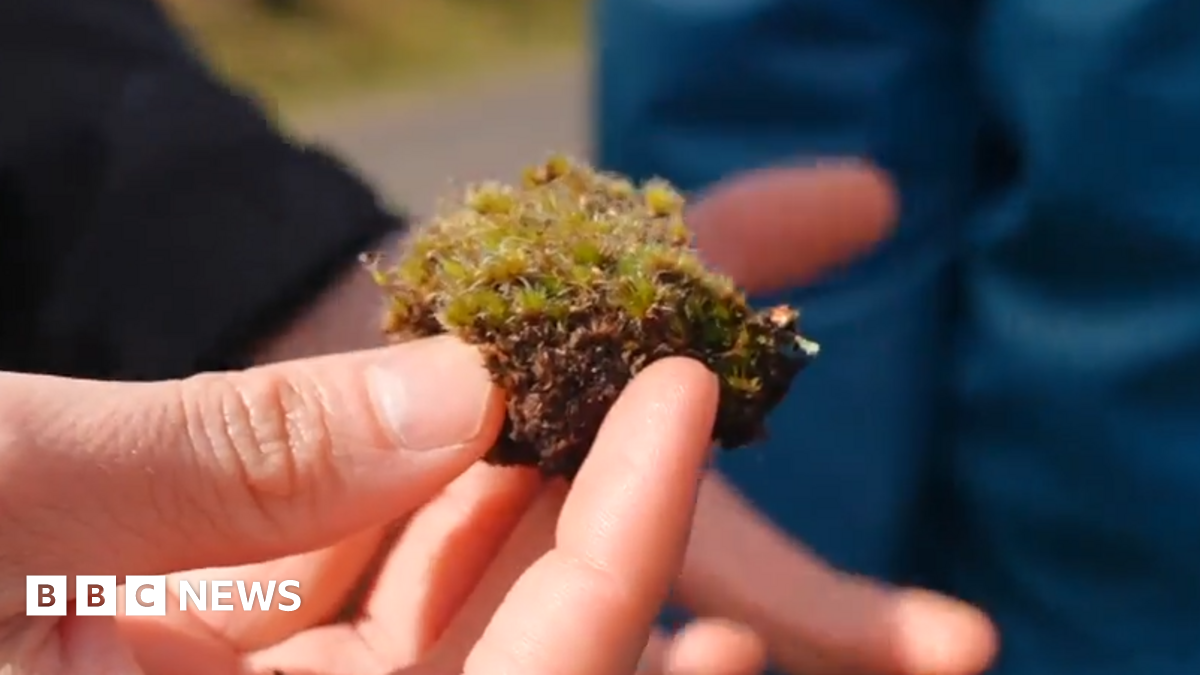
‘Killer Fungus’ Could Be Fine News for Habitats Decimated by Invasive Moss
In a surprising twist of ecological warfare, a newly identified fungal species is providing a glimmer of hope for the restoration of native British landscapes. While the term “killer fungus” typically evokes images of agricultural blight or environmental disaster, this particular pathogen is being hailed as a “goodie” by the scientific community. The fungus specifically targets and destroys an aggressively invasive plant species that has been systematically displacing native flora across the United Kingdom and parts of Europe.
The discovery of this “moss die-back” fungus represents a rare instance of a natural “fightback” by the environment. For years, native habitats have struggled against the encroachment of non-native species that outcompete local plants for space, and nutrients. The emergence of a potent, naturally occurring biological adversary for one of these invaders could signal a turning point in the effort to recover decimated ecosystems.
The Discovery of Moss Die-Back
The identification of this potent fungus was not an overnight achievement but the result of years of observation and meticulous sampling. The breakthrough began four years ago on the Isle of Wight, where Dr. George Greiff first noticed unusual patterns of decay on a cliffside. He encountered patches of invasive moss that appeared to be dying off rapidly, though the cause was not immediately apparent.
Intrigued by these localized extinctions of the moss, Dr. Greiff collected samples to determine what was killing the plant. However, the identity of the pathogen remained a mystery for some time. As he continued to observe similar cases of decaying moss in various locations, it became clear that this was not an isolated incident but a widespread phenomenon.
To solve the puzzle, a collaborative effort was launched involving scientists from both the UK and France. Through their joint research, they were able to isolate and identify a potent fungus previously unknown to science. Now referred to as “moss die-back,” this fungus is the primary agent responsible for the eradication of the problematic moss carpets.
“We often think of fungus as bad but consider this one to be a ‘goodie’.”
The “Fairy Rings of Death”
One of the most striking visual markers of this fungal invasion is the appearance of what are described as “fairy rings of death.” In regions such as south Wales, the fungus spreads in expanding circles, leaving behind brown, dead patches of moss where a lush, green carpet once existed. These rings serve as a visible map of the fungus’s progress as it consumes the invasive host.
Understanding the Adversary: Heath-Star Moss
To understand why the arrival of a “killer fungus” is being celebrated, one must first understand the damage caused by its victim: the heath-star moss. While it may appear aesthetically pleasing to the casual observer, the heath-star moss is an aggressively non-native species that has spread rapidly throughout Britain and Europe.
The primary issue with heath-star moss is its sheer versatility and dominance. It does not merely coexist with native species. it “turfs them out,” taking over environments and creating monocultures that stifle biodiversity. Its ability to colonize diverse terrains is a testament to its resilience.
Where Heath-Star Moss Proliferates
The invasive moss has been spotted in a wide array of environments, proving its ability to adapt to almost any surface. Common locations include:

- Natural Landscapes: It is frequently found on hillsides and within sand dunes, where it can disrupt fragile coastal ecosystems.
- Urban Environments: The moss is so aggressive that it has been observed growing directly out of tarmac.
- Domestic Settings: It commonly takes hold on simple garden fences and other man-made structures.
Because the moss is so pervasive, it has caused significant problems for conservationists attempting to maintain the integrity of native British flora. Its rapid spread creates a biological blanket that prevents native seeds from germinating and disrupts the existing soil chemistry.
| Feature | Heath-Star Moss (The Invader) | Moss Die-Back Fungus (The Solution) |
|---|---|---|
| Origin | Non-native / Invasive | Newly discovered native/naturalized species |
| Impact | Displaces native species; creates monocultures | Targets and kills invasive moss |
| Behavior | Aggressive colonization of diverse terrains | Spreads via “fairy rings of death” |
| Ecological Role | Habitat disruptor | Potential catalyst for habitat restoration |
The Broader Crisis of Invasive Species in Britain
The battle between the moss die-back fungus and the heath-star moss is a small-scale reflection of a much larger ecological struggle. Britain has a long history of importing non-native species, whether accidentally through trade and travel or deliberately for aesthetic or functional purposes.
It is estimated that around 2,000 non-native plants and animals have been introduced to the British Isles. While many of these species integrate without causing significant harm, a subset of them becomes “invasive,” meaning they cause ecological or economic damage.
The Pattern of Dominance
When a non-native species enters an environment where it has no natural predators or competitors, it often enters a phase of exponential growth. This leads to the domination of the environment and the potential extinction of native counterparts. A classic and well-known example of this dynamic is the interaction between the North American grey squirrel and the native red squirrel.
The grey squirrel, introduced from North America, has nearly wiped out native red squirrel populations across much of the UK. This parallel highlights why the discovery of the moss die-back fungus is so significant: it represents a natural biological control. In the case of the squirrels, the balance was shifted by human introduction; in the case of the heath-star moss, nature may be providing its own correction mechanism.
For those interested in how these biological shifts occur, a related explainer on invasive species management can provide further context on how conservationists attempt to manually control these populations.
Implications for Habitat Restoration
The potential for the moss die-back fungus to restore decimated habitats is the core reason for the scientific excitement surrounding this discovery. When the fungus clears a patch of heath-star moss, it creates an opening—literally and figuratively—for native species to return.
The Process of Ecological Recovery
The restoration process typically follows a specific sequence once the “killer fungus” has done its work:
- Die-back Phase: The fungus infects the heath-star moss, leading to the brown, dead patches seen in “fairy rings.”
- Space Creation: As the invasive moss decays, the physical space it occupied becomes available again.
- Native Recolonization: Native mosses, grasses, and wildflowers, which were previously suppressed, can now take root in the cleared areas.
- Biodiversity Increase: As native flora returns, the insects and animals that depend on those specific plants also return, rebuilding the local food web.
This natural process is often more effective and less risky than chemical interventions. Herbicides used to kill invasive plants often have “off-target” effects, meaning they might kill the native plants they are intended to protect. A host-specific fungus, however, targets only the invasive species, leaving the surrounding ecosystem untouched.
Scientific Collaboration and Future Tracking
The identification of the moss die-back fungus was a triumph of international cooperation. By sharing data and samples between researchers in the UK and France, the team was able to piece together the puzzle of why the moss was disappearing in certain areas. This cross-border approach is essential because invasive species and their natural predators do not respect national boundaries.
Moving forward, scientists will likely track the spread of the fungus to see if it can effectively manage the heath-star moss on a national scale. We find several key questions that researchers will need to answer:
- Host Specificity: Does the fungus exclusively target heath-star moss, or could it potentially jump to native moss species?
- Rate of Spread: How quickly can the fungus move across different terrains, such as from sand dunes to urban tarmac?
- Long-term Stability: Will the native species that return to these areas be able to hold their ground, or will the invasive moss evolve a resistance to the fungus?
The tracking of these “fairy rings of death” will provide critical data on the speed of the environmental fightback. If the fungus continues to spread effectively, it could reduce the need for costly and labor-intensive manual removal of invasive plants.
Common Misconceptions About Fungal Pathogens
The reaction to this news highlights a common misconception: that all fungi are detrimental to the environment. In reality, fungi are among the most essential organisms for maintaining planetary health. While some cause disease or rot, others are essential for the survival of almost all land-based life.
The Dual Nature of Fungi
To better understand the role of fungi, it is helpful to distinguish between their different ecological functions:
- Decomposers: Most fungi break down dead organic matter, recycling nutrients back into the soil. Without them, the world would be buried in dead plant matter.
- Mycorrhizal Partners: Many fungi form symbiotic relationships with plant roots, helping plants absorb water and phosphorus in exchange for sugars.
- Biological Controls: As seen with the moss die-back fungus, some fungi act as natural checks and balances, preventing any one species from dominating an ecosystem.
By framing the moss die-back fungus as a “killer,” scientists are using a provocative term to describe a necessary ecological process. “killing” is synonymous with “balancing.”
Frequently Asked Questions
What exactly is the ‘killer fungus’ mentioned in the news?
The “killer fungus” is a newly discovered species known as “moss die-back.” It is a potent fungal pathogen that specifically targets and kills heath-star moss, an invasive plant species that has been damaging native habitats in Britain and Europe.

Why is this fungus considered ‘good news’ for the environment?
It is considered beneficial because the heath-star moss it kills is an aggressive invader that displaces native plants. By eliminating the invasive moss, the fungus creates space for native species to return, thereby helping to restore biodiversity in decimated habitats.
Is the moss die-back fungus dangerous to humans or pets?
The provided research focuses on the fungus’s impact on heath-star moss. There is no mention of any risk to humans, animals, or other non-target plant species in the current findings.
Where can this fungus be seen?
The fungus has been observed in various parts of the UK, including the Isle of Wight and south Wales. It is often identified by “fairy rings of death,” which are circular patches of brown, dead moss.
How does this differ from other invasive species problems, like the grey squirrel?
While the grey squirrel is an invasive species that has successfully dominated native red squirrels without a natural check, the heath-star moss is now facing a natural biological adversary in the form of the moss die-back fungus. This represents a natural correction that is not currently present in the grey squirrel scenario.
The discovery of the moss die-back fungus serves as a reminder of the complexity of nature. While human activity often disrupts ecological balances by introducing invasive species, the environment possesses its own mechanisms for resilience. The ongoing monitoring of this fungal “fightback” will provide valuable insights into how nature recovers from biological invasions and how scientists can support these natural processes to protect global biodiversity. For more information on how to identify invasive plants in your own area, you may wish to consult a guide on native vs. Non-native British flora.
