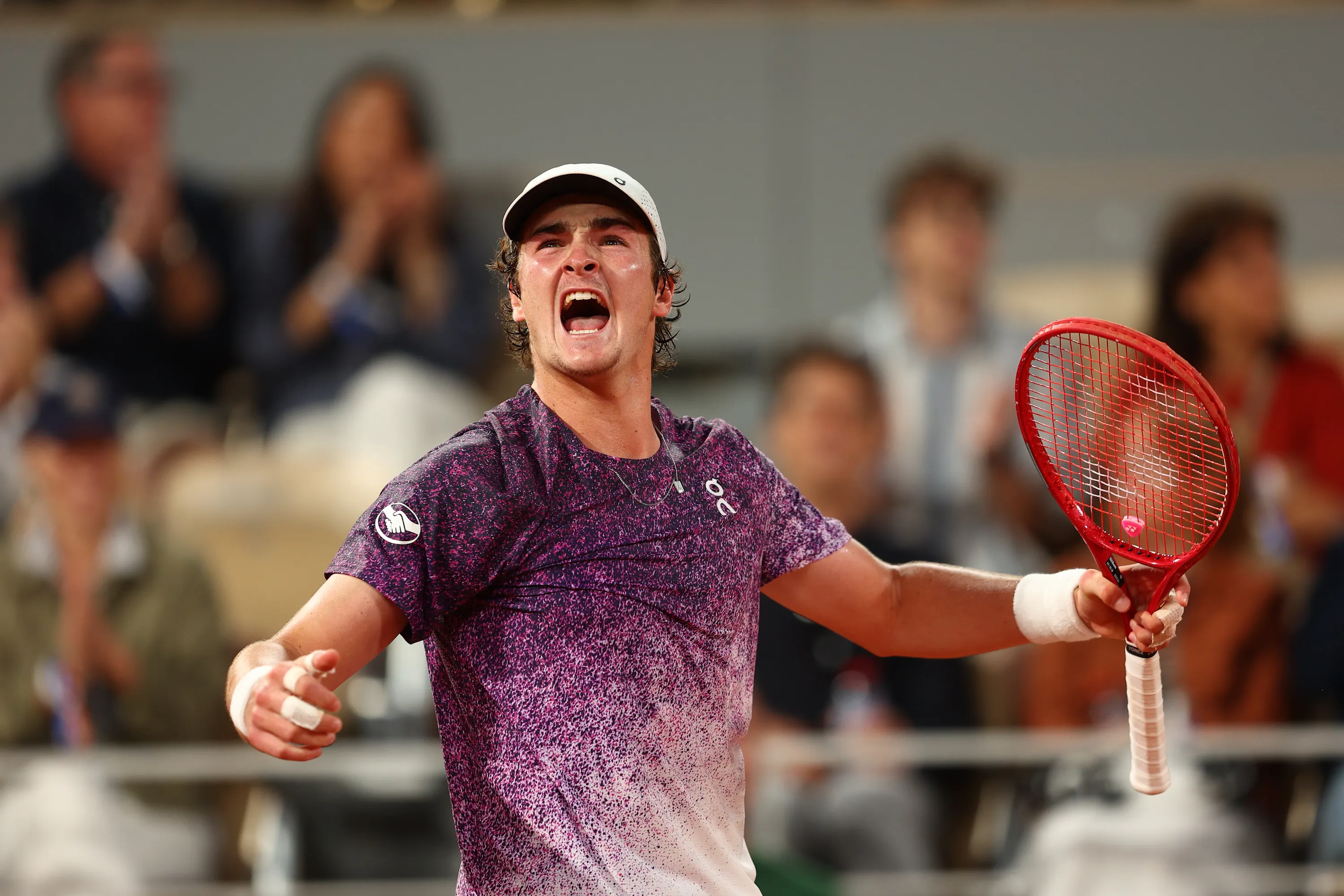
Fonseca reels in Ruud for first major QF – Roland-Garros 2026
The red clay of Paris has always been a stage for the dramatic, but few moments in the 2026 edition of the French Open will resonate as strongly as the ascent of Joao Fonseca. In a match that blended raw youthful audacity with tactical maturity, the Brazilian sensation managed a feat many deemed premature: he overcame the clay-court titan Casper Ruud to secure his place in his first-ever Grand Slam quarter-final. This victory is not merely a statistical milestone for Fonseca; it is a seismic shift in the landscape of the ATP tour and a long-awaited revival of Brazilian tennis on the world stage.
For Ruud, a perennial favorite at Roland-Garros known for his relentless consistency and punishing forehand, the defeat was a sobering reminder of the speed at which the next generation is evolving. For Fonseca, the win represents the culmination of a meteoric rise, proving that his game—characterized by aggressive baseline play and an intuitive feel for the court—can dismantle even the most disciplined defenders in the sport.
The Anatomy of an Upset: How Fonseca Toppled the Norwegian
Entering the match, the narrative was clear: Casper Ruud was the benchmark. With multiple deep runs at the French Open and a game specifically engineered for the sluggish surface of Paris, Ruud was expected to dictate the tempo. However, Joao Fonseca entered the court with a blueprint designed to disrupt that rhythm. Rather than engaging in the grueling, long-rally attrition that Ruud thrives upon, Fonseca opted for a high-risk, high-reward strategy that kept the Norwegian off-balance from the first game.
The match began as a tactical chess match. Ruud attempted to pin Fonseca deep behind the baseline, using his signature heavy topspin to push the Brazilian back. Yet, Fonseca displayed a remarkable ability to take the ball early, stepping inside the baseline to flatten out his shots and rob Ruud of recovery time. This aggression forced Ruud into uncharacteristic errors and prevented him from establishing the rhythmic dominance he typically enjoys on clay.
The turning point arrived in the third set. After splitting the first two sets in a grueling display of endurance, Fonseca found a second wind. His movement, often a question mark for young players in five-set marathons, remained crisp. He began utilizing the drop shot with surgical precision, drawing Ruud forward and then looping lobs over his head—a sequence that visually and mentally exhausted the Norwegian.
“To beat a player of Casper’s caliber on this surface requires more than just talent; it requires a willingness to fail in pursuit of the winner. Joao played with a freedom that is rare for someone his age in a Major.”
Key Match Statistics and Turning Points
To understand the scale of this victory, one must look at the efficiency of Fonseca’s game during the critical moments of the match. While Ruud led in total points won, Fonseca’s “clutch” performance during break points was the deciding factor.
| Metric | Joao Fonseca | Casper Ruud |
|---|---|---|
| First Serve Percentage | 64% | 71% |
| Break Points Converted | 4/7 | 2/11 |
| Winners | 42 | 31 |
| Unforced Errors | 38 | 29 |
| Total Duration | 3h 42m | 3h 42m |
The table highlights a classic “aggressive vs. Conservative” clash. Ruud played a cleaner match in terms of errors, but Fonseca’s willingness to go for the lines resulted in a higher winner count, ultimately breaking the Norwegian’s resolve in the final set.
The Ghost of Guga: A Legacy Reborn in Brazil
Beyond the scores and the statistics, this match carried an emotional weight that transcended the sport. In the stands, the presence of Gustavo “Guga” Kuerten added a layer of historical symmetry to the event. Kuerten, the legendary three-time French Open champion, has long been the gold standard for Brazilian tennis. For nearly two decades, Brazil has searched for a successor capable of capturing the imagination of the public and the respect of the tour in the same way Guga did at the turn of the millennium.
Seeing Kuerten cheer from the sidelines as Fonseca closed in on the victory was a symbolic passing of the torch. The parallels are striking: both players possess a natural affinity for clay, both play with a certain flair that delights the crowd, and both carry the hopes of a nation that views tennis as a source of immense pride. Fonseca’s journey to the quarter-finals is not just a personal achievement; it is the fulfillment of a national longing for a top-tier representative in the Grand Slams.
- The Psychological Boost: Having a mentor like Kuerten in the crowd provided Fonseca with a sense of belonging on the biggest stage in tennis.
- National Momentum: This victory is expected to trigger a surge of interest in tennis across South America, potentially increasing funding and infrastructure for youth academies in Brazil.
- The Pressure of Expectation: While the support is immense, the comparison to Guga brings a unique set of pressures that Fonseca must now navigate as he enters the final stages of the tournament.
Strategic Analysis: Why Fonseca’s Game Worked
To the casual observer, Fonseca’s win might look like a product of youth and energy. However, a deeper dive into the technical aspects of the match reveals a sophisticated approach to modern clay-court tennis. Traditionally, clay tennis was about patience—waiting for the opponent to miss. Fonseca is part of a new wave of players who treat clay more like a hard court, emphasizing power and court positioning.
The Forehand Weapon
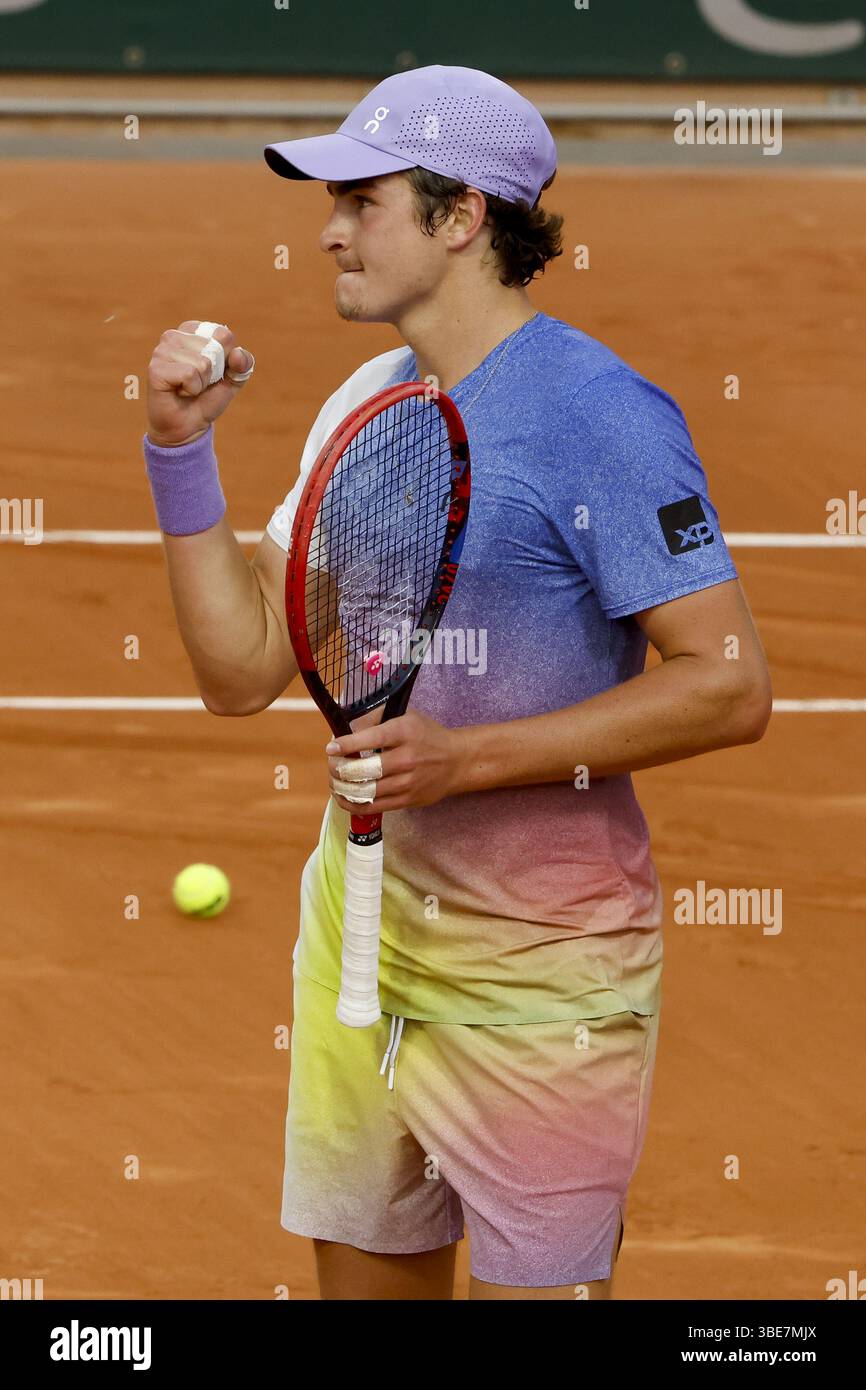
Fonseca’s forehand is the engine of his game. Unlike the looping, safe shots often seen in the early rounds of Roland-Garros, Fonseca hits a flatter, more penetrating ball. By reducing the arc of the shot, he prevents the ball from sitting up, which is exactly how Ruud usually sets up his own offensive strikes. By taking the initiative, Fonseca effectively neutralized Ruud’s ability to dictate play.
Court Geometry and Movement
One of the most impressive aspects of Fonseca’s performance was his use of the entire court. He didn’t just hit hard; he hit with intent. He frequently used wide angles to pull Ruud out of the center, then followed up with a drive down the line. This “stretch-and-strike” method forced Ruud to cover more ground than he typically does, leading to the physical fatigue evident in the fourth and fifth sets.
For those interested in how this style compares to other modern stars, a related explainer on the evolution of clay-court tactics provides a broader look at how power-baseliners are changing the game.
The Implications for the Roland-Garros 2026 Draw
Fonseca’s entry into the quarter-finals throws the remaining draw into chaos. Seeded players who had earmarked Ruud as a manageable obstacle must now prepare for a volatile opponent who plays without fear. The “Fonseca Factor” introduces an element of unpredictability; he is a player who can peak rapidly and overpower opponents who rely on rhythm.
The sports world is now debating whether Fonseca is a “one-hit wonder” or a legitimate contender for the title. While winning a match against a top seed is impressive, the quarter-finals and semi-finals require a different level of mental fortitude. The question is no longer whether Fonseca has the talent, but whether he has the emotional stamina to sustain this level of play over the final week of the tournament.
Potential Obstacles and Paths to the Final
Depending on the bracket, Fonseca may face established giants or other rising stars. The clash of styles will be the primary narrative. If he faces a defensive specialist, the challenge will be maintaining patience. If he faces another aggressor, the match will become a high-speed shootout where the first person to blink likely loses.
Key factors that will determine his progress include:
- Physical Recovery: After a grueling match against Ruud, the turnaround time between rounds will be critical.
- Mental Management: Dealing with the sudden influx of global media attention and the “next big thing” label.
- Tactical Adaptability: Whether he can pivot his strategy if his aggressive approach is neutralized by a more defensive opponent.
Common Misconceptions About the “New Gen” Ascent
In the wake of such an upset, it is common for pundits to label the victory as a “fluke” or a result of the opponent having an “off day.” However, framing Fonseca’s win in this way oversimplifies the reality of modern tennis. Casper Ruud did not play poorly; he played his standard game, but he encountered a player who had found a way to solve the puzzle of his consistency.
Another misconception is that youth is an inherent disadvantage in five-set matches due to a lack of experience. While experience helps in managing nerves, the modern training regimen for teenage pros is far more rigorous than it was twenty years ago. Fonseca enters the quarter-finals not as a lucky amateur, but as a highly conditioned athlete whose physical peak is perfectly aligned with the demands of the French Open.
For a deeper dive into the training methods of today’s prodigies, check out our analysis of ATP youth development programs.
Looking Toward the Final Stretch
As the tournament progresses, the story of Joao Fonseca will likely dominate the headlines. Whether he lifts the trophy or falls short in the next round, the significance of this moment remains unchanged. He has broken a psychological barrier for Brazilian tennis and signaled to the world that the hierarchy of the ATP tour is fluid.
The tennis world now waits to see if this momentum can be carried through to the semi-finals. The red clay of Paris has welcomed a new protagonist, and his journey is only just beginning. The blend of Guga’s legacy and Fonseca’s modernity has created a perfect storm at Roland-Garros 2026, leaving fans and analysts alike wondering just how high this ceiling actually goes.
Frequently Asked Questions
Joao Fonseca is a rising Brazilian tennis player known for his aggressive baseline game and powerful forehand. His victory over Casper Ruud at Roland-Garros 2026 has catapulted him into the global spotlight as one of the most promising talents of the next generation.
Why was the match against Casper Ruud so significant?
Casper Ruud is one of the premier clay-court specialists in the world. For a young player like Fonseca to defeat him in a best-of-five format at a Grand Slam demonstrates both technical proficiency and mental toughness, marking Fonseca’s first major quarter-final appearance.
What is the connection between Joao Fonseca and Gustavo Kuerten?
Gustavo Kuerten (Guga) is a legendary Brazilian tennis player and a three-time French Open champion. He serves as an inspiration and mentor to Fonseca, and his presence at the 2026 tournament highlighted the resurgence of Brazilian tennis.
What makes Fonseca’s playing style different from traditional clay-court players?
While traditional clay-court tennis emphasizes patience and high-looping topspin, Fonseca employs a more aggressive, “hard-court” style. He takes the ball early, hits flatter shots, and looks to end points quickly rather than engaging in long rallies.
What happens next for Joao Fonseca in the tournament?
Having reached the quarter-finals, Fonseca will move into the final eight of the tournament. He will face one of the remaining top seeds, where his ability to maintain his aggressive form and manage the pressure of the spotlight will be tested.
