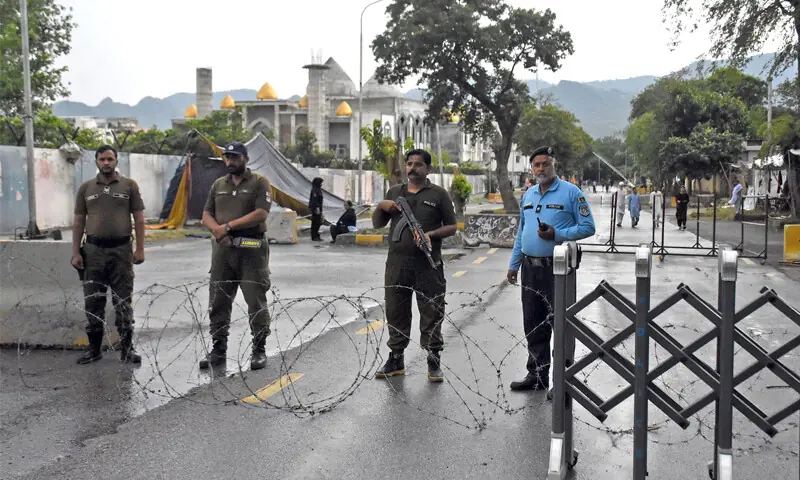
Over 14000 policemen to secure Muharram processions, majalis in Pindi – Dawn
Rawalpindi is deploying more than 14,000 police officers to secure Muharram processions and majalis, according to Dawn. This massive mobilization is part of a broader Punjab provincial strategy that includes the imposition of Section 144 across the province for Muharram 2026, as reported by The Express Tribune, and the installation of QR-based panic buttons at over 4,500 Imambargahs, according to Dunya News.
How is the security being managed in Rawalpindi?
The deployment of over 14,000 police personnel in Rawalpindi represents a significant concentration of law enforcement resources aimed at preventing sectarian violence and ensuring the smooth conduct of religious gatherings. According to Dawn, these officers are tasked with securing both the processions (street marches) and majalis (religious congregations) that characterize the Muharram observances.
The strategy focuses on high-risk zones and traditional procession routes. Police officials are coordinating with local organizers to map out the specific timing and trajectories of the marches to ensure that the 14,000-strong force is positioned effectively. This deployment is not merely about presence but involves active crowd management and the creation of secure corridors for participants.
Key components of the Rawalpindi security plan include:
- Route Sterilization: Clearing procession paths of potential hazards and establishing checkpoints.
- Static Guards: Positioning officers at fixed points near majalis venues to prevent unauthorized entry.
- Mobile Patrols: Utilizing rapid response units to address any emerging tensions in real-time.
- Intelligence Integration: Coordinating with plainclothes officers to monitor for suspicious activity within crowds.
Why did Punjab impose Section 144 for Muharram 2026?
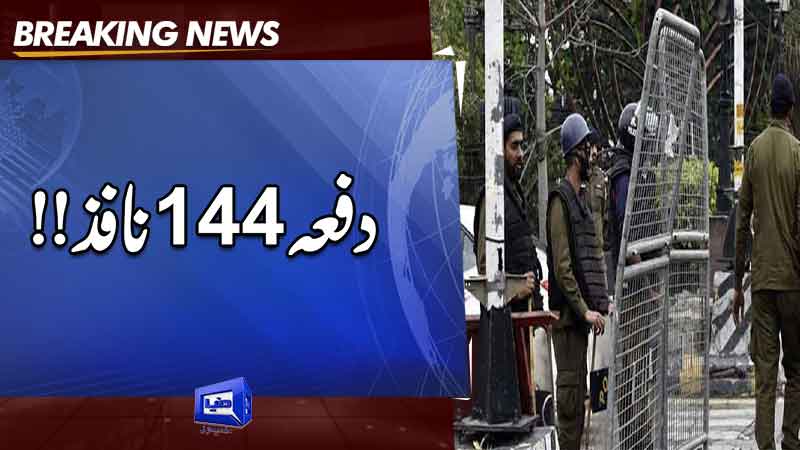
The government of Punjab has imposed Section 144 across the entire province to maintain public order during Muharram 2026, according to The Express Tribune. Section 144 is a legal tool under the Code of Criminal Procedure that allows district magistrates to prohibit the assembly of four or more people in a specific area if there is an apprehension of danger to human life, health, or a breach of peace.
The imposition of this section provides the police with broader legal authority to disperse crowds that are not part of the officially sanctioned religious processions. By restricting unauthorized gatherings, the provincial government aims to minimize the risk of spontaneous clashes or the formation of provocative counter-gatherings that could trigger sectarian unrest.
While the restriction is province-wide, it is typically applied flexibly. Authorized processions and majalis are permitted to proceed provided they adhere to the agreed-upon routes and timings. The primary objective, as framed by the administration in reports from The Express Tribune, is to prevent “unlawful assemblies” that could compromise the overall security environment.
What is the QR panic button system in Imambargahs?
In a shift toward tech-integrated policing, Punjab has introduced a QR panic button system at more than 4,500 Imambargahs, according to Dunya News. This system is designed to bridge the gap between the onset of an emergency and the arrival of law enforcement.

Under this system, QR codes are placed at strategic points within the Imambargahs. In the event of a security breach, fire, or medical emergency, authorized personnel can scan the code to send an instant, geolocated alert to the nearest police command center. This removes the delays associated with traditional phone calls and provides the police with the exact location of the incident within the facility.
According to Dunya News, the deployment of this technology across 4,500 sites suggests a massive scale of digital infrastructure implementation. The goal is to reduce response times and ensure that “foolproof” security—a term used by the Chief Minister of Punjab in directives reported by Radio Pakistan—is backed by real-time data.
“The introduction of QR panic buttons transforms the security posture from reactive to proactive, allowing for a digitized link between religious sites and police headquarters.”
Who is overseeing the provincial security directives?
The Chief Minister (CM) of Punjab has issued direct orders for “foolproof security arrangements” during the Muharram period, according to Radio Pakistan. This executive mandate places the responsibility on the provincial police leadership and district administrations to ensure there are no lapses in the security grid.
The CM’s directives emphasize a zero-tolerance approach to security breaches. This involves a top-down chain of command where district police officers (DPOs) are held personally accountable for any incidents occurring within their jurisdictions. The “foolproof” nature of the arrangements refers to a multi-layered security approach: combining physical manpower, legal restrictions (Section 144), and technological surveillance.
The administration’s focus extends beyond the major cities. For instance, Daily Parliament Times reports that Punjab authorities have already ensured security and facilitation during the first Muharram procession in Attock. This indicates that the CM’s directives are being implemented uniformly across both urban centers like Rawalpindi and smaller districts like Attock.
How do these measures compare across different districts?
While the overarching policy is provincial, the implementation varies based on the local threat perception. The scale of deployment in Rawalpindi is a primary example of a “high-alert” zone, whereas other areas may rely more heavily on the legal restrictions of Section 144 and the QR system.
| Security Measure | Rawalpindi (Pindi) | General Punjab Districts | Attock (Specific Example) |
|---|---|---|---|
| Personnel | 14,000+ Police Officers | Standard District Deployment | Facilitation-focused force |
| Legal Status | Section 144 Active | Section 144 Active | Section 144 Active |
| Technology | QR Panic Buttons | QR Panic Buttons (4,500+ sites) | Standard Monitoring |
| Focus | Mass Processions/Majalis | Provincial Stability | Early Procession Security |
The contrast between the 14,000-officer surge in Rawalpindi and the more generalized security in other districts highlights the city’s role as a critical node for religious gatherings. Rawalpindi’s proximity to the capital and its history of large-scale processions make it a focal point for the provincial security apparatus.
What are the implications of these security strategies?
The combination of massive manpower and strict legal bans suggests that the provincial government is prioritizing stability over unrestricted movement. The use of Section 144 is a powerful tool, but it also places a heavy burden on the police to distinguish between legitimate religious expression and “unlawful assembly.”
From a logistical standpoint, managing 14,000 officers in a single city requires immense coordination. This includes managing shift rotations, food and water for personnel, and ensuring that the police presence does not inadvertently create bottlenecks that could cause panic in large crowds. The integration of the QR panic button system, as reported by Dunya News, is an attempt to optimize this manpower by ensuring officers are sent exactly where they are needed most.
Furthermore, the focus on “facilitation” in Attock, as mentioned by Daily Parliament Times, suggests that the government is trying to balance security with a supportive environment for worshippers. This dual approach—strict enforcement via Section 144 and supportive facilitation for approved events—is designed to maintain communal harmony.
Common Misconceptions About Muharram Security
There is often a misconception that the imposition of Section 144 means a total ban on all religious activities. However, as evidenced by the reported facilitation of processions in Attock and the deployment of thousands of police to protect majalis in Rawalpindi, the restriction applies specifically to unauthorized gatherings. The goal is not to stop the observance of Muharram, but to regulate it within a secure framework.
Another misconception is that the QR panic button system replaces the need for physical guards. In reality, the system is a supplement. The 14,000 police in Rawalpindi provide the physical deterrent and response capability, while the QR system provides the communication speed necessary to make that manpower effective.
What happens if security protocols are breached?
Under the current directives from the CM of Punjab, any breach in security is viewed as a failure of the local administration. The use of Section 144 gives the police the legal authority to make immediate arrests of those violating the assembly ban, which serves as a deterrent against provocative behavior.
The “foolproof” mandate reported by Radio Pakistan implies that the government has planned for contingencies. This likely includes the deployment of reserve forces that can be moved into a district if the initial deployment is overwhelmed. The QR system further ensures that if a breach occurs at an Imambargah, the notification is instantaneous, reducing the window of opportunity for attackers or agitators.
For those attending processions or majalis, these measures mean increased scrutiny, more checkpoints, and a highly visible police presence. The administration’s focus is on creating a “sterile” environment where the religious rites can be performed without external interference.
Summary of Key Security Facts
- Rawalpindi Force: Over 14,000 police officers deployed (Source: Dawn).
- Provincial Law: Section 144 imposed across Punjab for Muharram 2026 (Source: The Express Tribune).
- Tech Deployment: QR panic buttons installed at 4,500+ Imambargahs (Source: Dunya News).
- Executive Order: CM Punjab mandated “foolproof” arrangements (Source: Radio Pakistan).
- Local Action: Security and facilitation confirmed in Attock (Source: Daily Parliament Times).
Frequently Asked Questions
How many police officers are deployed in Rawalpindi for Muharram?
According to reports from Dawn, over 14,000 police officers have been deployed to secure majalis and processions in Rawalpindi.
What is Section 144 and why is it in effect?
Section 144 is a legal order that prohibits the assembly of four or more people. As reported by The Express Tribune, it has been imposed across Punjab for Muharram 2026 to prevent unlawful gatherings and maintain public peace.

How does the QR panic button system work at Imambargahs?
As detailed by Dunya News, the system uses QR codes placed at over 4,500 Imambargahs. When scanned during an emergency, the system sends an instant, geolocated alert to the police command center for a rapid response.
Is the security restricted only to major cities?
No. While Rawalpindi has a massive deployment, the security measures are provincial. Daily Parliament Times reported that authorities also ensured security and facilitation for the first Muharram procession in Attock.
Who ordered the “foolproof” security arrangements in Punjab?
According to Radio Pakistan, the Chief Minister of Punjab issued the orders for foolproof security arrangements to ensure safety during the Muharram observances.
For more information on regional security updates, you may find a related explainer on Punjab’s public safety laws useful for understanding the legal framework of Section 144.
