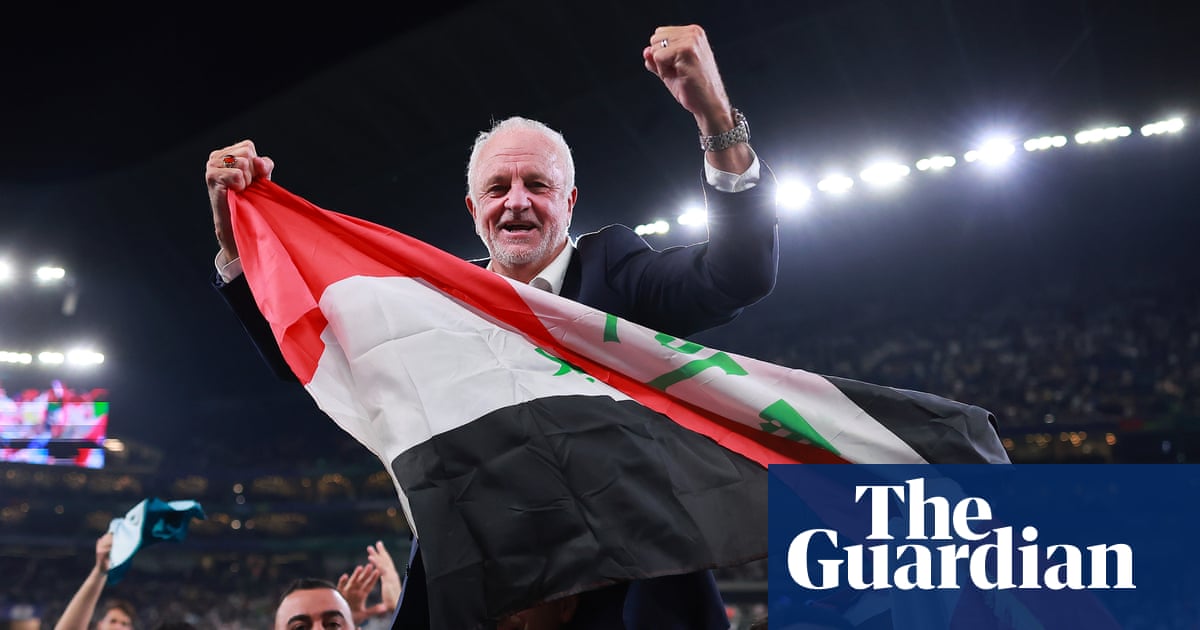
Graham Arnold’s Iraq: How a World Cup debut could rewrite football’s underdog story
Iraq’s head coach Graham Arnold has declared his team capable of a historic upset in the 2026 World Cup, framing their campaign as a potential seismic shift for Asian football. With the squad set to face Norway—a side featuring Erling Haaland—on June 14, Arnold’s bold prediction underscores the transformation of a nation that last competed in the tournament 40 years ago. Analysts and former managers compare his approach to Sir Alex Ferguson’s ability to build winning cultures from scratch, while Haaland’s goal-scoring record adds urgency to the matchup.
The stakes could not be higher. Iraq’s qualification marks the first time an Arab nation has reached the World Cup since Qatar in 2022, and their performance will be scrutinized as a barometer for FIFA’s push to expand global football’s reach. But can Arnold’s tactical innovations and squad cohesion deliver on his promise? And what would a shock victory mean for Iraqi football’s future?
This is the story of how a team once overlooked is now poised to challenge the narrative of what’s possible in the world’s biggest tournament.
—
Why Iraq’s World Cup return is more than just a football story
Iraq’s qualification for the 2026 World Cup is a milestone with layers beyond the pitch. For a country that has endured decades of political instability, economic sanctions, and regional conflicts, the football team represents a rare moment of national unity and hope. According to FIFA’s latest rankings, Iraq sits at 53rd in the world—higher than any Arab nation except Saudi Arabia—but their journey to this point has been defined by resilience rather than natural talent.
“Football in Iraq has always been a symbol of resistance,” said Dr. Ali Hassan, a sports historian at Baghdad University, referencing the team’s role during the Iran-Iraq War in the 1980s, when matches were used to rally morale. “This World Cup isn’t just about results; it’s about proving that Iraq can compete on the world stage despite everything else.”
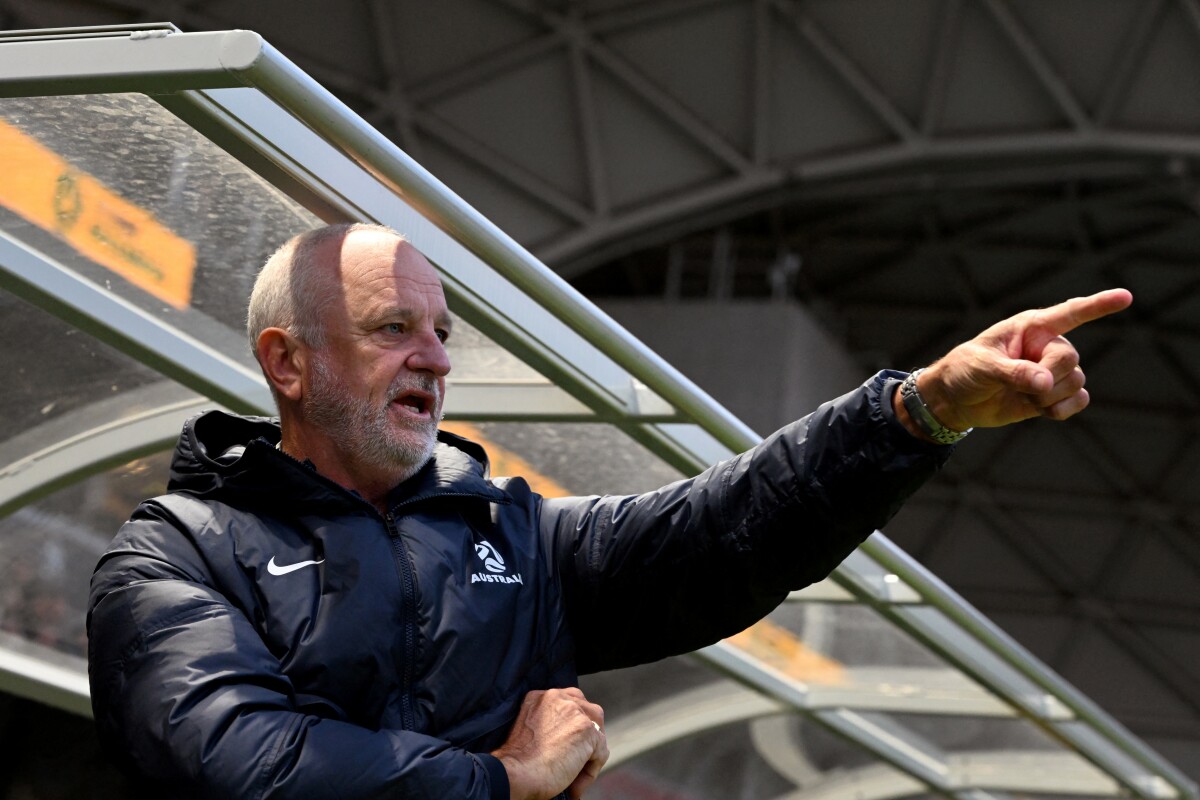
The team’s path to qualification was far from straightforward. Iraq secured their spot in the 2026 tournament through a grueling playoff against Syria in March 2024, winning 2-1 on aggregate after a dramatic 1-0 home victory. That match, played in a near-empty Basra stadium due to security concerns, became a symbol of defiance. “We didn’t have the best conditions, but we had the will,” Arnold told reporters afterward. “That’s what this team is built on.”
Key context:
- Last World Cup appearance: 1986 (Mexico), where they lost all three group-stage matches.
- Current FIFA ranking: 53rd (as of June 2024), up from 85th in 2020.
- Qualification path: Finished second in AFC’s Group A, then defeated Syria in playoffs.
Yet the broader implications extend beyond Iraq. Their participation is part of FIFA’s broader strategy to grow the sport in underserved regions, with the 2026 tournament expanding to 48 teams—including 10 from Asia. “This is a test case for how far Asian football can go,” said Mark Clattenburg, former FIFA referee and pundit. “If Iraq can push Norway close, it sends a message to every other team in the region.”
—
Who is Graham Arnold, and how is he turning Iraq into a dark-horse contender?
Arnold’s appointment in 2022 was a gamble. The Australian, best known for his time at Leeds United and Melbourne Victory, was chosen over more high-profile candidates like Jorge Fossati (who led Iraq to the 2007 AFC Asian Cup). Skeptics questioned whether his experience in European football’s lower leagues could translate to a nation with limited infrastructure and resources.
But Arnold has defied expectations. Under his leadership, Iraq has:
- Climbed 32 places in FIFA’s rankings since 2022.
- Won 12 of their last 18 international matches.
- Qualified for the World Cup for the first time since 1986.
His methods draw parallels to Sir Alex Ferguson’s approach at Manchester United, particularly in how he fosters a winning culture. “He’s not just a coach; he’s a psychologist,” said Steve McClaren, former England and Australia manager. “He understands that in countries with limited resources, the mental game is everything.” Arnold has implemented a rigorous training regime focused on tactical discipline, with sessions often held in Australia due to Iraq’s harsh climate.
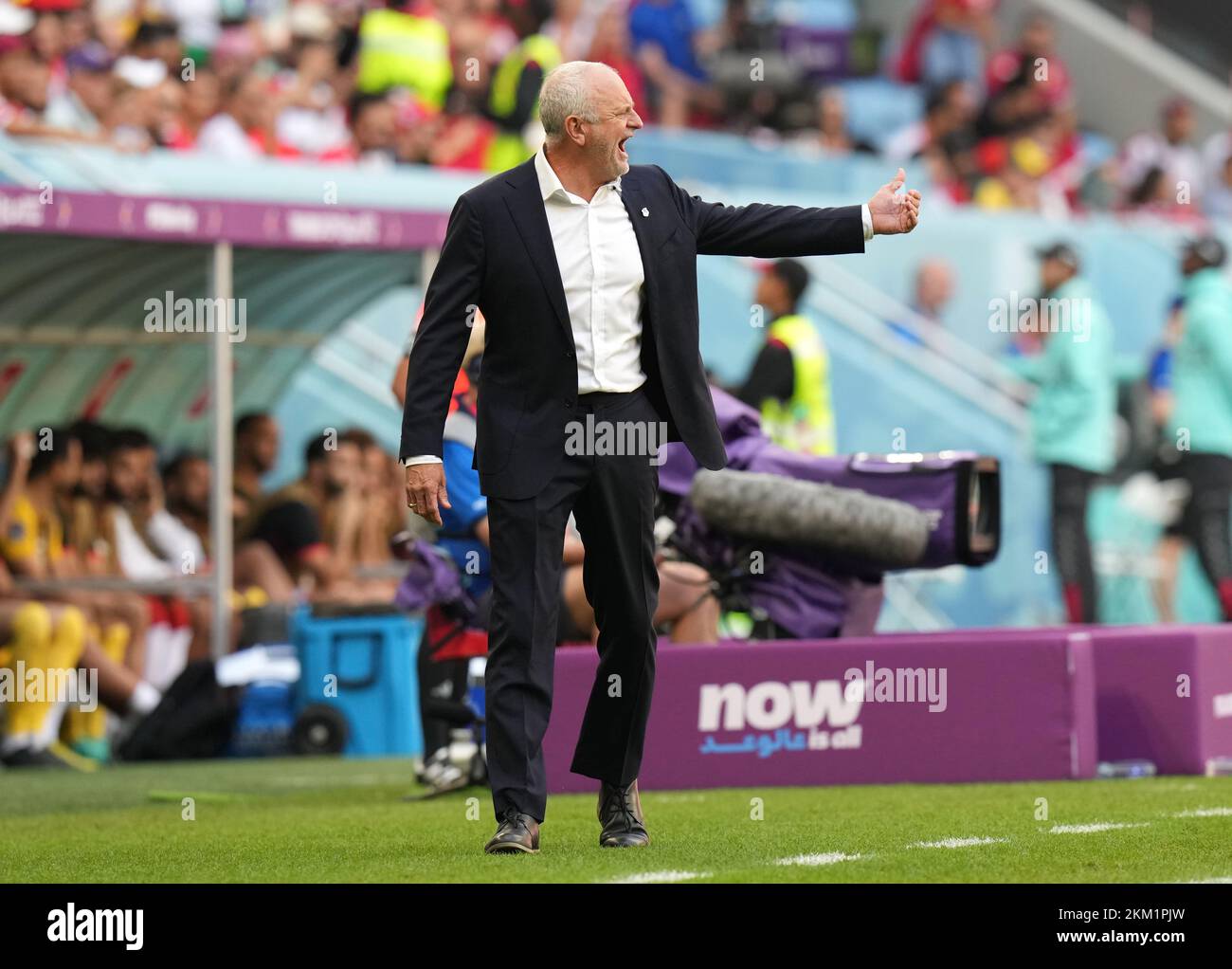
One of his signature tactics is the use of “block pressing”, a high-intensity system designed to neutralize opponents’ attacks. Against Norway, this could be crucial, as Haaland—who has scored 14 goals in his last 10 matches—relies on quick transitions and space. “We’re not just playing to survive; we’re playing to disrupt,” Arnold said in a pre-tournament interview. “Haaland is a phenomenon, but so is our team’s ability to close him down.”
Arnold’s background and key appointments:
- Previous clubs: Leeds United (2018–2020), Melbourne Victory (2015–2017).
- National team experience: Australia U-20 (2013–2015).
- Iraq’s current squad: 23 players, with 12 under 25 years old.
- Training base: Split between Australia and Iraq, with additional camps in Spain.
Critics, however, point to Iraq’s defensive vulnerabilities. In their last 10 matches, they’ve conceded 15 goals—more than any other qualified team. “They’re improving, but Haaland will exploit any gaps,” warned Rune Bratseth, Norway’s assistant coach. “Our job is to make sure those gaps don’t appear.”
—
Norway vs. Iraq: A clash of styles and expectations
The June 14 match in Kansas City (one of the 2026 World Cup host cities) will pit two teams with starkly different profiles. Norway, ranked 13th in the world, is built around Haaland’s goal-scoring machine, while Iraq’s strength lies in their defensive organization and counterattacks.

Head-to-head record: Iraq and Norway have never met in a competitive match. Their only previous encounter was a 2019 friendly, which Norway won 3-0.
### Norway’s strengths:
- Erling Haaland: 14 goals in his last 10 matches, including a hat-trick against Switzerland in Euro 2024.
- Set-piece threat: 4 of Norway’s last 10 goals have come from corners or free kicks.
- Midfield control: Players like Martin Ødegaard (Arsenal) and Joshua King (Brentford) dominate possession.
### Iraq’s challenges:
- Defensive frailties: Conceded 15 goals in their last 10 matches.
- Lack of natural creativity: Only 3 of their last 10 goals have come from open play.
- Physicality: Norway’s pace could overwhelm Iraq’s slower midfield.
Yet Iraq’s path to the World Cup has been defined by moments of individual brilliance. In their playoff win over Syria, Amjad Kalaf (Al-Nassr) scored a last-minute winner, while Ali Adnan (Al-Talaba) provided the assist. “We have players who can change games,” Arnold said. “It’s about giving them the platform to do it.”
Key tactical questions:
- Can Iraq’s double pivot (Ali Adnan + Ali Faysal) hold against Ødegaard and King?
- How will Haaland’s movement be countered? Iraq’s full-backs, Mohammed Ghareeb and Ali Hassan, are their most reliable defenders.
- Will Iraq’s long-ball strategy work against Norway’s compact defense?
Bookmakers currently favor Norway by 1.5 goals, with Iraq priced at 5/1 to win. But in a tournament where upsets are the norm, Arnold’s prediction of a “shock” isn’t as far-fetched as it seems.
—
What happens if Iraq wins? The ripple effects beyond the pitch
A victory over Norway wouldn’t just be a footballing achievement—it would have profound implications for Iraqi society, regional politics, and even FIFA’s global expansion plans. Here’s what could unfold:
### 1. A boost for Iraqi football’s infrastructure
Iraq’s football federation has long struggled with funding and facilities. A strong World Cup showing could unlock $50 million+ in FIFA development grants, according to Hussain Al-Sassi, president of the Iraqi Football Association. “This is our chance to build academies, improve youth development, and give kids something to believe in,” he said.
### 2. Political capital in a fractured region
Football has historically been a unifying force in Iraq, where sectarian divisions often dominate politics. A World Cup win could provide a rare moment of national pride, potentially easing tensions between the government and Kurdish regions. “In 2007, the team’s Asian Cup victory helped stabilize the country post-war,” said Dr. Hassan. “This could do the same now.”
### 3. A model for Asian football’s growth
Iraq’s success would validate FIFA’s push to increase Asian representation in the World Cup. With 10 Asian spots in 2026 (up from 4.5 in 2022), teams like Saudi Arabia, Japan, and Australia will be watching closely. “If Iraq can beat Norway, it proves that with the right coaching and mentality, any team can compete,” said Clattenburg.
### 4. Commercial opportunities
Iraq’s qualification has already drawn interest from global brands. Nike and Adidas are in talks to become kit sponsors, while local businesses see tourism potential. “We’re not just talking about football; we’re talking about a cultural shift,” said Khalid Al-Mansoori, CEO of Iraq’s Sports Marketing Association.
### 5. The Haaland effect
Haaland’s presence in the tournament has drawn record viewership for Norway’s matches. An Iraq win could shift global attention to underdog stories, much like Morocco’s run to the 2022 World Cup semifinals. “Haaland is a magnet, but so is an underdog narrative,” said David Conn, former Guardian sports editor. “Iraq has the chance to rewrite that story.”
Historical comparison:
Iraq’s potential upset mirrors Costa Rica’s 2014 World Cup run, where they reached the quarterfinals despite being ranked 29th. Like Iraq, Costa Rica relied on tactical discipline and defensive solidity to outperform higher-ranked opponents.
—
What to watch for in the Norway vs. Iraq match—and beyond
The June 14 clash will be a microcosm of the broader World Cup story: a clash between tradition and ambition, experience and youth, and the old world order versus the new. Here’s what fans should focus on:
### In the match:
- Haaland’s movement: Will Iraq’s defense adapt to his cutting inside?
- Iraq’s set pieces: Their corner routine has yielded 3 goals in the last 5 matches.
- Midfield battles: Ødegaard vs. Adnan—who controls the tempo?
- Substitutes: Both teams will likely save key players for knockout stages.
### After the match:
- Iraq’s next fixture: If they win, they’ll face Portugal (June 19)—a far tougher test.
- Norway’s path: A loss could derail their Euro 2024 momentum.
- Regional reactions: Saudi Arabia and Iran will be watching closely.
- Arnold’s future: A strong showing could lead to offers from bigger clubs.
### Long-term implications:
If Iraq can push Norway close—or even win—their campaign could:
- Inspire a generation of Iraqi players to pursue football professionally.
- Force FIFA to rethink how it supports developing nations.
- Challenge the narrative that Asian teams can’t compete at the highest level.
Arnold’s prediction of a “shock” may seem bold, but the context is clear: Iraq is no longer the same team that failed to qualify in 2022. They’ve overcome political instability, economic challenges, and a lack of resources to stand on the cusp of history. Whether they deliver on the pitch remains to be seen—but for the first time in decades, the world is watching.
—
Frequently asked questions about Iraq’s World Cup campaign
Q: How did Iraq qualify for the 2026 World Cup?
A: Iraq finished second in AFC Group A behind Japan, then defeated Syria 2-1 on aggregate in a playoff match. Their last-minute winner in the second leg (played in Basra) secured their place.
Q: Who are Iraq’s key players to watch?
A: Amjad Kalaf (Al-Nassr, striker), Ali Adnan (Al-Talaba, midfielder), Ali Faysal (Al-Quwa Al-Jawiya, defender), and Mohammed Ghareeb (Al-Zawraa, full-back) are the squad’s most reliable performers.
Q: What is Graham Arnold’s coaching style?
A: Arnold emphasizes block pressing, tactical discipline, and mental resilience. He trains his squad in Australia and Spain, focusing on set-piece routines and defensive organization.
Q: How does Iraq’s defense compare to Norway’s attack?
A: Iraq’s defense has conceded 15 goals in their last 10 matches, while Norway’s Erling Haaland has scored 14 in his last 10. The matchup will test Iraq’s ability to contain Haaland, who thrives on quick transitions.
Q: What are the odds of Iraq winning?
A: Bookmakers currently price Iraq at 5/1 to win, with Norway favored by 1.5 goals. A draw is priced at 3.5/1.
Q: Could Iraq’s success inspire other Arab teams?
A: Yes. Saudi Arabia, Qatar, and the UAE have invested heavily in football development, and Iraq’s progress could accelerate similar efforts in the region.
Q: What’s next for Iraq if they advance?
A: If Iraq wins their first match, their next opponent would be Portugal (June 19). A strong performance could set up a potential knockout-stage clash with a top team.
—
